Tag: scale

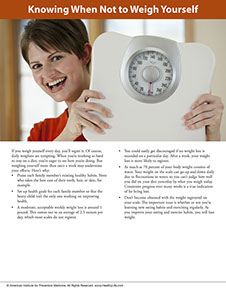
  • Knowing When Not To Weigh Yourself

    Weight Control

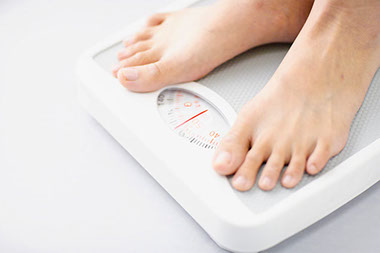
    Image on feet on a scale.

    If you weigh yourself every day, you’ll regret it. Of course, daily weigh-ins are tempting. When you’re working so hard to stay on a diet, you’re eager to see how you’re doing. But weighing yourself more than once a week may undermine your efforts. Here’s why:

    *  Praise each family member’s existing healthy habits. Note who takes the best care of their teeth, hair, or skin, for example.

    *  Set up health goals for each family member so that the heavy child isn’t the only one working on improving health.

    *  A moderate, acceptable weekly weight loss is around 1 pound. This comes out to an average of 2.3 ounces per day, which most scales do not register.

    *  You could easily get discouraged if no weight loss is recorded on a particular day. After a week, your weight loss is more likely to register.

    *  As much as 70 percent of your body weight consists of water. Your weight on the scale can go up and down daily due to fluctuations in water, so you can’t judge how well you did on your diet yesterday by what you weigh today. Consistent progress over many weeks is a true indication of fat being lost.

    *  Don’t become obsessed with the weight registered on your scale. The important issue is whether or not you’re learning new eating habits and exercising regularly. As you improve your eating and exercise habits, you will lose weight.
    Page from A Year of Health Hints book by the American Institute for Preventive Medicine. www.HealthyLife.com. All rights reserved.

    © American Institute for Preventive Medicine

  • Control Catastrophic Thinking

    Healthylife® Weigh

    Part 4

    Woman thinking.

    Seeing the worst possible outcome for a situation can lead to anxiety and racing thoughts. Avoid focusing on the negative aspects of a situation or how it could be even worse. The unknown future can seem scary and full of negative potential. Dispute each irrational thought with a rational one. Challenge your “worst case scenario” with a “best case scenario” and options in between.

    *  What is statistically likely in this scenario?

    *  How might this situation turn out better than expected?

    *  What can I do to reduce the chances of the situation getting worse?

    Think of a “mountain” that you build out of a “molehill.” Challenge your thought with rational thinking. Complete the following chart with two examples of your own.

    Catastrophic Thought

    Example: The more weight I lose, the more I am going to gain back later. I am better off staying overweight.

    Alternative Thought

    Losing weight will help my health now and in the future. I can learn tools to maintain my weight loss. Even a small weight loss will have a big impact on my health.

    © American Institute for Preventive Medicine