
Tag: score

  • Know Your Heart Risk

    MEDICAL NEWS

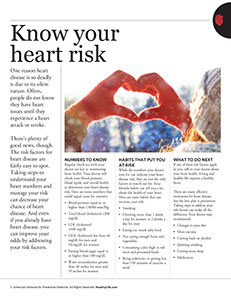
    Winter image of hands wearing red gloves making a heart shape.

    One reason heart disease is so deadly is due to its silent nature. Often, people do not know they have heart issues until they experience a heart attack or stroke.

    There’s plenty of good news, though. The risk factors for heart disease are fairly easy to spot. Taking steps to understand your heart numbers and manage your risk can decrease your chance of heart disease. And even if you already have heart disease, you can improve your odds by addressing your risk factors.

    Numbers to know

    Regular check-ins with your doctor are key to monitoring heart health. Your doctor will check your blood pressure, blood lipids, and overall health to determine your heart disease risk. Here are some numbers that could signal cause for concern:

    *  Blood pressure equal to or higher than 130/80 mm/Hg

    *  Total blood cholesterol ≥200 mg/dL

    *  LDL cholesterol  ≥100 mg/dL

    *  HDL cholesterol less than 40 mg/dL for men and 50 mg/dL for women

    *  Fasting blood sugar equal to or higher than 100 mg/dL

    *  Waist circumference greater than 40 inches for men and 35 inches for women

    Habits that put you at risk

    While the numbers your doctor tests for can indicate your heart disease risk, they are not the only factors to watch out for. Your lifestyle habits can tell you a lot about the health of your heart. Here are some habits that can increase your risk:

    *  Smoking

    *  Drinking more than 1 drink a day for women or 2 drinks a day for men

    *  Eating too much salty food

    *  Not eating enough fruits and vegetables

    *  Consuming a diet high in red meat and processed foods

    *  Being sedentary, or getting less than 150 minutes of exercise a week

    What to do next

    If any of these risk factors apply to you, talk to your doctor about your heart health. A long and healthy life requires a healthy heart.

    There are many effective treatments for heart disease, but the best plan is prevention. Taking steps to address your risk factors can make all the difference. Your doctor may recommend:

    *  Changes to your diet

    *  More exercise

    *  Cutting back on alcohol

    *  Quitting smoking

    *  Getting more sleep

    *  Medication
    © American Institute for Preventive Medicine
  • Learn How To Check Your Credit Report

    FINANCIAL HEALTH

    Image of finger pointing to the words 'Credit Report'

    The Consumer Financial Protection Bureau says everyone should check their credit report at least once a year. The information on your credit report could affect your ability to get a mortgage, car loan, a credit card or other loans. It can also affect the interest rate you get. Usually, a higher credit score makes it easier for you to get a loan and a lower interest rate. Most credit scores range from 300-850.

    You are entitled by law to a free report from all three credit reporting agencies (Equifax, Experian and TransUnion) once every 12 months. Take advantage of it – and check it over carefully when you receive it.

    But what should you look for when you get your report? Errors can happen, so be on the lookout for:

    *  Wrong name, phone number or address

    *  Accounts that don’t belong to you (this can happen when two people have similar names, or as a result of identity theft)

    *  Closed accounts reported as open

    *  Being listed as owner of an account where you are only an authorized user

    *  Accounts incorrectly reported as late or delinquent

    *  Wrong dates of payments, when the account was open or delinquency dates

    *  Same loan or debt listed multiple times (possibly with different names)

    *  Past errors that were corrected that may show up again

    *  Incorrect current balance or credit limit

    *  Accounts that appear more than once with different creditors listed (especially in the case of delinquent accounts or accounts in collections)

    If you find errors, contact:

    *  The credit reporting company who sent you the report, or

    *  The creditor or company that provided the incorrect information. This is known as the “furnisher” of the information.

    Your credit report tells you how to dispute inaccurate information. Sample dispute letters are available atwww.consumerfinance.gov. Go to Consumer Tools, then click on Credit Reports and Scores. You can use these letters if you find something incorrect on your credit report.

    How do I get my report?

    Many websites claim to offer free credit reports. But, some of them are trying to sell other products or services. To get your free credit report authorized by federal law, visit:

    *  AnnualCreditReport.com, or

    *  Call 1-877-322-8228

    This website offers free reports only, not scores. Your credit score is available for a fee. You do not have to buy any products or services advertised onannualcreditreport.com.

    You can also contact the credit agencies directly if you have questions or problems with your report:

    *  Equifax: 1-866-349-5191

    *  Experian: 1-888-397-3742

    *  TransUnion: 1-800-916-8800

    © American Institute for Preventive Medicine