Tag: screening

  • 4 Steps To Prevent Colorectal Cancer

    MEDICAL NEWS

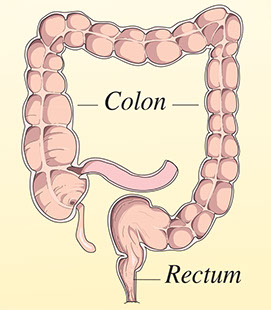
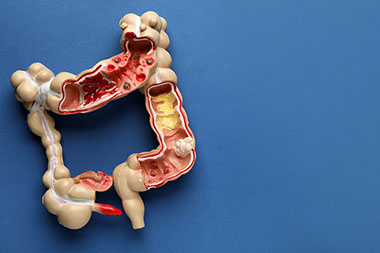
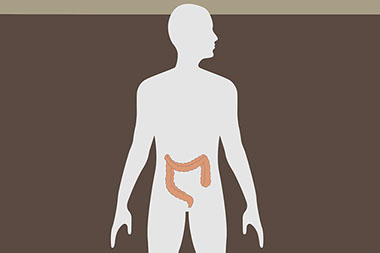
    Illustration of a colon.

    Colorectal cancer is the second leading cancer killer in our country. It takes the lives of about 50,000 people each year, according to the Centers for Disease Control and Prevention.

    Many of these deaths, however, could be prevented. Here’s what you need to know:

    1.Take care of your heart.Avoiding colorectal cancer is like getting a two-for-one deal. If you follow a heart-healthy lifestyle, you’ll also be lowering your risk of colorectal cancer. Don’t smoke, get regular exercise, and lose weight if you’re overweight. Limit red meat to no more than two servings per week. Finally, drink no more than one alcoholic drink per day for women, or two drinks per day for men.

    2.Know the symptoms.Signs of colorectal cancer usually include blood in your stool or stomach pain that doesn’t go away. See your doctor if you notice these signs.

    3.Find out your family history.If you have a close blood relative with the disease, you may be at a higher risk of getting it. Talk with your doctor about your risk.

    4.Get screened.Tests include stool blood tests that you do at home, sigmoidoscopy, and colonoscopy. Follow your doctor’s advice for screening tests and how often you need them. If you are at normal risk, begin screenings at age 50 and have them up to age 75. If you have risk factors for or a family history of colon polyps or colon cancer, you may need tests sooner and more often. During a colonoscopy, polyps can be removed before they turn into cancer. Screenings can save your life!

    © American Institute for Preventive Medicine

  • Cancer Awareness

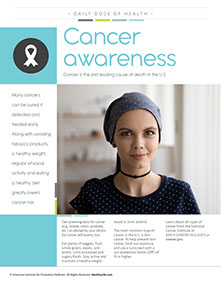
    Cancer

    Smiling female going through cancer.

    Cancer is the 2nd leading cause of death in the U.S.

    Many cancers can be cured if detected and treated early. Along with avoiding tobacco products, a healthy weight, regular physical activity and eating a healthy diet greatly lowers cancer risk.

    Get screening tests for cancer (e.g., breast, colon, prostate, etc.) as advised by your doctor. Do cancer self-exams, too.

    Eat plenty of veggies, fruit, whole grains, beans, and lentils. Limit processed and sugary foods. Stay active and maintain a healthy weight.

    Avoid or limit alcohol.

    The most common type of cancer in the U.S. is skin cancer. To help prevent skin cancer, limit sun exposure and use a sunscreen with a sun protection factor (SPF) of 15 or higher.

    Learn about all types of cancer from the National Cancer Institute at 800.4.CANCER (422.6237) orcancer.gov.

    Health at Home Lifetime book by the American Institute for Preventive Medicine. www.HealthyLife.com. All rights reserved.

    © American Institute for Preventive Medicine

  • Breast Cancer Awareness

    SELF-CARE CORNER

    Image of a group of women wearing pink shirts, smiling with thumbs up.

    During the month of October, many organizations, groups and individuals across the world increase awareness of breast cancer and raise funds to research the disease and find a cure.

    Breast cancer is the second most common kind of cancer in women. About 1 in 8 women born today in the United States will get breast cancer at some point. The good news is that many women can survive breast cancer if it’s found and treated early.

    *  If you are a woman age 40 to 49, talk with your doctor about when to start getting mammograms and how often to get them.

    *  If you are a woman age 50 to 74, be sure to get a mammogram every 2 years. You may also choose to get them more often.

    Risk factors for breast cancer in women include:

    *  Increasing age

    *  Changes in BRCA1, BRCA2, and other cancer genes

    *  Personal history of breast cancer or a mother or sister has or had breast cancer

    *  Dense breast tissue (shown on a mammogram)

    *  Certain abnormal breast changes that are not cancer. These changes are found during a breast biopsy.

    *  Radiation therapy to the chest before age 30

    *  Never giving birth or having a first full-term pregnancy after age 30. Never breast-fed  a baby.

    *  Being obese or overweight after menopause

    *  Hormone therapy (estrogen plus progestin) after menopause

    *  Alcohol-the more used, the greater the risk.

    *  Lack of physical activity throughout life

    Talk to a doctor about your risk for breast cancer, especially if a close family member of yours had breast or ovarian cancer. Your doctor can help you decide when and how often to get mammograms.

    FYI

    The third week of October is Male Breast Cancer Awareness Week. Though rare, men can get breast cancer too. For men, the lifetime risk of being diagnosed with breast cancer is about 1 in 1,000. Yearly, about 450 men in the U.S. die from breast cancer. Men should look for and report a lump or other change in a breast to their doctors.

    © American Institute for Preventive Medicine

  • Cervical Cancer

    Women’s Health

    Paper cut-out of cervix with white and pink pills.

    The cervix is the lower, narrow part of the uterus. Cancer of the cervix can occur at any age. It occurs most often in women who are over 30 years old. It is rare in women under the age of 20, but is also common in women in their 20s.

    Signs & Symptoms

    Screening tests, such as Pap tests and HPV (human papillomavirus) tests, are important because signs and symptoms are not often present in the early stages of the disease.

    Late Stage Symptoms

    *  Vaginal bleeding or spotting blood between menstrual periods or after menopause.

    *  Vaginal bleeding after sex, douching, or a pelvic exam.

    *  Vaginal bleeding that is not normal for you.

    *  Increased vaginal discharge.

    *  Pain in the pelvic area.

    *  Pain during sex.

    *  Blood in the urine.

    *  Signs of anemia (fatigue and dizziness).

    *  Poor appetite and weight loss.

    Causes, Risk Factors & Care

    The main risk factor is being infected with human papillomavirus (HPV). This is passed from one person to another during sex. There are many types of HPV. Certain high risk types cause most cervical cancers. Other types increase the risk for genital warts or other conditions that are not cancer. Not all women who are infected with HPV get cervical cancer and HPV is not present in all women who have cervical cancer either.

    The risk increases for persons who:

    *  Started having sex at an early age.

    *  Had or have sex with multiple sex partners. The more partners, the greater the risk.

    *  Had unprotected sex.

    *  Had or have sex with a partner who: has HPV, began having sex at a young age, and/or has or had many sexual partners.

    *  Not having routine Pap tests. These screen for abnormal cells that can turn into cancer. It can take several years for this to occur, but could happen in a short period of time, too. These changing cells can be treated so they don’t turn into cancer.

    *  Having a current or past sexually transmitted infection (STI), such as chlamydia. Having one kind of STI increases the risk of having another kind.

    *  Smoking.

    *  Long-term use of oral contraceptives.

    *  Being the daughter of a mother who took a drug known as DES during her pregnancy. (This drug was used from 1940 to 1970 to prevent miscarriages.)

    *  Taking drugs or having HIV/AIDS or any other condition that lowers the immune system.

    Prevention

    Two or three doses of HPV vaccine can help prevent the most common types of HPV that can cause cervical cancer and genital warts. The vaccines are advised for girls ages 11 to 12 years old, but can be given from age 9 years to age 26 years. Find out more about HPV vaccine fromcdc.gov/hpv.

    Treatment

    If found early, the cancer can be cured in most women. To find it early, have regular cervical cancer screenings. Get tested for human papillomavirus (HPV), chlamydia, and other sexually transmitted infections (STIs), as advised by your doctor.

    Treatment depends on what is found. The precancerous form of cervical cancer is called dysplasia. Mild cases of this can be monitored with more frequent Pap tests. Medical treatment can also be given. This includes laser therapy and removing part of the cervix. Surgery, radiation therapy, targeted therapy, immunotherapy, and/or chemotherapy also treat cervical cancer.

    If the cervical cancer has not spread and a woman wants to get pregnant in the future, just part of the cervix may be removed. If a woman does not want a future pregnancy, a hysterectomy may be chosen.

    Questions to Ask

    Self-Care / Prevention

    *  Have Pap tests and pelvic exams as often as your doctor advises.

    *  Use “Safer Sex” to help prevent HPV and other STIs.

    *  Get tested for HPV, as your doctor advises. Tell your partner(s) to get tested, too.

    *  Ask your doctor about getting the HPV vaccine.

    *  Don’t douche. If you do, don’t do this more than once a month.

    *  Don’t smoke or use tobacco. If you do, quit!

    If you have a low income, or do not have health insurance, you may be able to get a free or low-cost Pap test through the National Breast and Cervical Cancer Early Detection Program. To find out if you qualify, call 1-800-CDC-INFO (232-4636).

    Resources

    National Cancer Institute

    800.4.CANCER (422.6237)

    www.cancer.gov

    www.clinicaltrials.gov

    National Breast and Cervical Cancer Early Detection Program (NBCCEDP)

    www.cdc.gov/cancer/nbccedp

    National Cervical Cancer Coalition

    800.685.5531

    www.nccc-online.org
    Women's Self-Care book by the American Institute for Preventive Medicine. www.HealthyLife.com. All rights reserved.

    © American Institute for Preventive Medicine

  • Busting The Myths About Breast Cancer

    MEDICAL NEWS

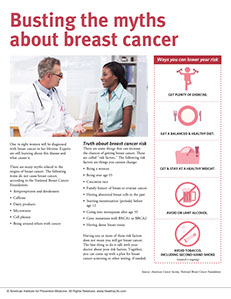
    Image of doctor and patient.

    One in eight women will be diagnosed with breast cancer in her lifetime. Experts are still learning about this disease and what causes it.

    There are many myths related to the origins of breast cancer. The following items do not cause breast cancer, according to the National Breast Cancer Foundation:

    *  Antiperspirants and deodorants

    *  Caffeine

    *  Dairy products

    *  Microwaves

    *  Cell phones

    *  Being around others with cancer

    Truth about breast cancer risk

    There are some things that can increase the chances of getting breast cancer. These are called “risk factors.” The following risk factors are things you cannot change:

    *  Being a woman

    *  Being over age 55

    *  Caucasian race

    *  Family history of breast or ovarian cancer

    *  Having abnormal breast cells in the past

    *  Starting menstruation (periods) before age 12

    *  Going into menopause after age 55

    *  Gene mutations with BRCA1 or BRCA2

    *  Having dense breast tissue

    Having one or more of these risk factors does not mean you will get breast cancer. The best thing to do is talk with your doctor about your risk factors. Together, you can come up with a plan for breast cancer screening or other testing, if needed.

    Ways you can lower your risk

    *  Get plenty of exercise.

    *  Eat a balanced & healthy diet.

    *  Get & stay at a healthy weight.

    *  Avoid or limit alcohol.

    *  Avoid tobacco, including second-hand smoke (research is ongoing)

    Sources: American Cancer Society, National Breast Cancer Foundation

    © American Institute for Preventive Medicine

  • Cervical Health

    Women’s Health

    Smiling women with laptop.

    Pap tests, pelvic exams, and a test for human papillomavirus (HPV) check for early signs of cervical cancer.

    If you are a female, start getting Pap tests at age 21 or within 3 years of the onset of sexual activity, whichever comes first. After that, get a Pap test at least every 3 years or as often as your doctor advises.

    If you are a female 30 to 65 years old, you may have an HPV test along with the Pap test. Talk to your doctor about which testing option, including how often, is right for you.

    Learn about cervical cancer from the Cancer Information Service at 800.4.CANCER (422.6237) andcancer.gov/types/cervical.

    Health at Home Lifetime book by the American Institute for Preventive Medicine. www.HealthyLife.com. All rights reserved.

    © American Institute for Preventive Medicine

  • Hassle-Free Screening Tips While Traveling

    WELL-BEING

    Image of airport check-in line.

    If you’re flying, make sure you familiarize yourself with the TSA screening process. You’ll have smooth flying if you do the following when passing through airport security:

    *Clothing:To maximize efficiency at the security checkpoint, avoid wearing clothing with metal and stow all metal items in carry-on luggage.

    *Zip it:Make sure any liquids are in 3-ounce bottles in a clear, quart-size, zip top plastic bag.

    *Footwear:Passengers are required to remove footwear for X-ray screening. Wearing footwear that can be easily removed helps speed the screening process.

    *Boarding pass and ID:When approaching the security checkpoint, passengers will be asked to present a boarding pass and a government-issued identification.

    *Electronics:Large electronics such as laptops should be removed from their cases for X-ray screening. E-readers and small electronics may stay in luggage.

    *Locking checked bags:When locking checked baggage, use a TSA recognized lock. A list of these locks can be found atwww.tsa.gov.

    © American Institute for Preventive Medicine

  • Colon & Rectal Cancers

    Abdominal & Urinary Conditions

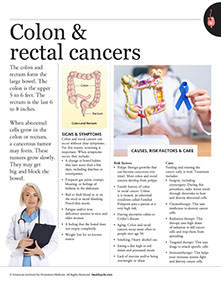
    The colon and rectum form the large bowel. The colon is the upper 5 to 6 feet. The rectum is the last 6 to 8 inches. When abnormal cells grow in the colon, a cancerous tumor may form. Colon tumors grow slowly. They may get big and block the bowel.

    Illustration of colon and rectum.

    Signs & Symptoms

    Colon and rectal cancers can occur without clear symptoms. For this reason, screening is important. When symptoms occur, they include:

    *  A change in bowel habits for 2 or more weeks or constipation or diarrhea for 1 or more weeks.

    *  Frequent gas pains, cramps, bloating, or feelings of fullness in the abdomen

    *  Red or dark blood in or on the stool or rectal bleeding. Pencil thin stools.

    *  Fatigue and/or iron deficiency anemia in men and older women

    *  A feeling that the bowel does not empty completely

    *  Weight loss for no known reason

    Causes, Risk Factors & Care

    Risk factors for colon and rectal cancers:

    *  Polyps (benign growths that can become cancerous over time). Most colon and rectal cancers develop from polyps.

    *  Family history of colon or rectal cancer. Unless it is treated, an inherited condition called Familial Polyposis puts a person at a very high risk.

    *  Having ulcerative colitis or Crohn’s disease.

    *  Aging. Colon and rectal cancers occur most often in people over age 50.

    *  Smoking. Heavy alcohol use.

    *  Eating a diet high in animal fat and low in fiber

    *  Lack of exercise and/or being very overweight

    Finding and treating the cancer early is vital. Treatment includes surgery, chemotherapy, and radiation therapy.

    Self-Care / Prevention

    Self-Care:

    *  Schedule and go to follow-up exams.

    *  Join a cancer support group.

    *  Follow a high fiber, low-fat diet. Eat whole-grain breads and cereals. Have at least 5 servings of vegetables and fruits a day.

    Prevention

    Colon and rectal cancers are completely curable if found early. Have screening tests as advised by your doctor.

    *  High-sensitivity fecal occult blood test

    *  Flexible sigmoidoscopy

    *  Colonoscopy

    How often testing needs to be done depends on the test(s) given. {Note: If you have a family history of colon polyps or colon or rectal cancers, screening tests may need to be started sooner than age 50.}

    *  Have colon polyps removed.

    *  Eat plenty of fruits, vegetables, and whole grains. Limit fat.

    When to Seek Medical Care

    Contact Doctor When:

    *  You have any symptoms of colon and rectal cancer listed on this page.

    *  You need to schedule screening tests for colon and rectal cancer. Follow the schedule your doctor advises.

    Resources

    The National Cancer Institute

    800.4.CANCER (422-6237)

    www.cancer.gov

    The American Cancer Society

    800.227.2345

    www.cancer.org

    Healthier at Home book by the American Institute for Preventive Medicine. www.HealthyLife.com. All rights reserved.

    © American Institute for Preventive Medicine

  • Is Your Heart Older Than You?

    MEDICAL NEWS

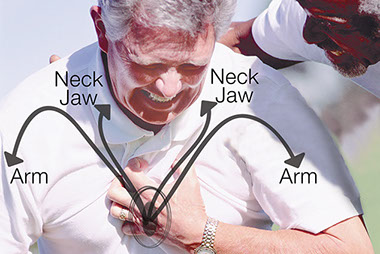
    Image of man suffering a heart attack.

    The year you were born reveals your age. It’s part of your identity. But despite the number on your driver’s license, your heart may be telling a different story.

    According to the Centers for Disease Control and Prevention, 75 percent of Americans have hearts that are older than their actual age. For men, the average heart age is 8 years older, and for women, it’s 5 years. This means many people are at high risk of heart attacks and strokes – even if they don’t know it.

    Your “heart age” is based on certain risk factors you may have for heart disease. This includes lifestyle habits, your body mass index, and certain health problems. You can lower your heart age by adopting heart-healthy habits such as a healthy diet, regular exercise, and not smoking.

    Signs of a heart attack

    *  Pressure, squeezing, or pain in the chest

    *  Pain in the jaw, neck, upper back, arms, or abdomen

    *  Trouble breathing

    *  Feeling dizzy or nauseated

    *  Cold sweats

    If you experience these symptoms, call 911 or have someone take you to the emergency room.

    Source: American Heart Association

    © American Institute for Preventive Medicine

  • Colorectal Cancer

    Cancer

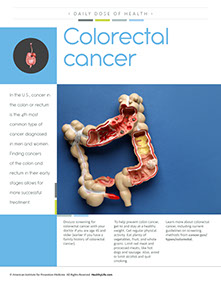
    Plastic model colon showing parts of the inside of the colon.

    In the U.S., cancer in the colon or rectum is the 4th most common type of cancer diagnosed in men and women. Finding cancers of the colon and rectum in their early stages allows for more successful treatment.

    Discuss screening for colorectal cancer with your doctor if you are age 45 and older (earlier if you have a family history of colorectal cancer).

    To help prevent colon cancer, get to and stay at a healthy weight. Get regular physical activity. Eat plenty of vegetables, fruit, and whole grains. Limit red meat and processed meats, like hot dogs and sausage. Also, avoid or limit alcohol and quit smoking.

    Learn more about colorectal cancer, including current guidelines on screening methods fromcancer.gov/types/colorectal.

    Health at Home Lifetime book by the American Institute for Preventive Medicine. www.HealthyLife.com. All rights reserved.

    © American Institute for Preventive Medicine