Healthylife® Weigh
Part 2
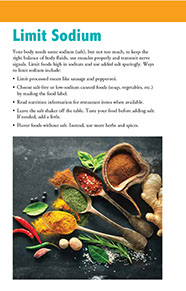
Your body needs some sodium to:
* Maintain the right balance of fluids in your body.
* Transmit nerve impulses.
* Contract and relax muscles.
Use added salt sparingly and limit foods high in sodium. Most people eat much more sodium than they need. There are important reasons to limit sodium in the diet. A low-sodium diet can help:
* Prevent high blood pressure. High blood pressure, if untreated, can lead to heart attack, stroke, poor eye health, headaches, and kidney failure.
* Lower your blood pressure if you have high blood pressure.
* Avoid swelling (edema) in legs, ankles, and internal organs.
* Reduce bloating and other side effects of premenstrual syndrome (PMS).
Limit sodium to 2,300 milligrams per day (about 1 teaspoon). If you have high blood pressure, consult your doctor about the amount of sodium you should have each day. He or she may suggest you limit your sodium intake to 1,500 milligrams per day (about ¾ teaspoon). This includes sodium from all sources- salt added during cooking and at the table, salt in processed food, and sodium that occurs naturally in foods.
Ways to Limit Sodium
* Choose low-sodium versions of canned foods, like soup, tomatoes and vegetables.
* Read nutrition information for restaurant items, when available. Choose from the “heart healthy” menu.
* Taste your food before adding salt. If needed, add a little.
* Leave the salt shaker off the table.
* Limit intake of processed meats like sausage and cold cuts.
Flavor Foods Without Salt
* Beef – Bay leaf, marjoram, nutmeg, onion, pepper, sage, thyme
* Lamb – Curry powder, garlic, rosemary, mint
* Pork – Garlic, onion, sage, pepper, oregano
* Veal – Bay leaf, curry powder, ginger, marjoram, oregano
* Chicken – Ginger, marjoram, oregano, paprika, rosemary, sage, tarragon, thyme
* Fish – Curry powder, dill, dry mustard, lemon juice, marjoram, paprika, pepper
* Carrots – Cinnamon, cloves, marjoram, nutmeg, rosemary, sage
* Corn – Cumin, curry powder, onion, paprika, parsley
* Green – beans Dill, curry powder, lemon juice, marjoram, oregano, tarragon, thyme
* Peas – Ginger, marjoram, onion, parsley, sage
* Potatoes – Dill, garlic, onion, paprika, parsley, sage
* Summer squash – Cloves, curry powder, marjoram, nutmeg, rosemary, sage
* Winter squash – Cinnamon, ginger, nutmeg, onion
* Tomatoes – Basil, bay leaf, dill, marjoram, onion, oregano, parsley, pepper

© American Institute for Preventive Medicine