Tag: security

  • 4 Financial Health Steps

    Financial Health

    Couple going over finances.

    1.  Track your monthly expenses.

    –  List fixed costs. These include mortgage or rent, car payment, phones and child care.

    –  List costs that vary, such as clothing, eating out, personal care, and entertainment.

    2.  Make and follow a plan to pay down debt. Do this on your own or with professional help.

    3.  Plan a budget. From your net income, aim for:

    –  50% for basics (house, food, transportation)

    –  30% for lifestyle choices (hobbies, phone and cable, personal care, pets, eating out)

    –  20% for short-term savings and retirement

    4.  Get tools to help you manage your financial health frommymoney.gov.

    Take Action: Keep Your Numbers Safe

    1.  Protect your bank account, credit card, driver’s license, social security, and other personal ID numbers.

    2.  Use secure websites, passwords, and PIN numbers. Change passwords often, using upper and lower case numbers and symbols. Consider using multi-factor authentication (MFA). This is an added layer of security to your information where a system requires you to present a combination of two or more credentials to verify your identity.
    ays to Well-Being book by the American Institute for Preventive Medicine. www.HealthyLife.com. All rights reserved.

    © American Institute for Preventive Medicine
  • Protect Yourself From Identity Theft

    Financial Health

    Manage and minimize misuse of your personal information

    Consumers lose billions of dollars every year to crooks who steal their identity and money through fraud. Avoid becoming a victim.

    Keep your personal information safe and secure:

    *  Put your Social Security card, Medicare card, military ID, and passport in a secure place, unless you need to use them. Memorize your social security number (SSN). Lock your purse or wallet in a safe place at work. Or carry your wallet with you.

    *  Shred or cut up bank statements, checks, credit card applications, expired charge cards, medical and insurance forms, and prescription labels you no longer need before throwing them away. Otherwise, keep them locked up. You can opt out of credit card offers received in the mail atwww.optoutprescreen.comor by calling (888) 567-8688.

    *  Use passwords and PIN numbers to protect your credit card and bank accounts, your smartphone, and all computer devices. Choose passwords with upper and lower case letters, numbers, and symbols. Nix using common items like your house numbers, phone number, and last four digits of your SSN.

    *  Install and regularly update anti-virus and anti-spyware on your smartphone and computer devices.

    *  Use only secure sites online when you need to give financial or personal information. These have Web addresses with “https” or “shttp” or show a lock symbol.

    *  When you are away, have someone you trust pick up your mail or have the post office hold it for you.

    Avoid scams:

    *  Do not give your social security number or bank account numbers to persons in emails or on the phone.

    *  Don’t wire money to strangers, to sellers who insist on wire transfers for payment, or to anyone who claims to be a relative or family friend in an emergency who wants to keep the request a secret.

    *  Check your credit card, medical bill, and bank statements when you receive them in the mail or online. Report charges you did not make to the company right away.

    *  To help avoid ATM theft, use machines inside banks and ones you are familiar with. Don’t use machines that have extra items, even brochure holders, that could be cameras or that say they are “card cleaners.”

    Action Step

    Request a free copy of your credit report once every 12 months from three nationwide consumer reporting companies – Equifax, Experian, and TransUnion. Call (877) 322-8228. Check the reports for accuracy.

    Ways to Well-Being book by the American Institute for Preventive Medicine. www.HealthyLife.com. All rights reserved.

    © American Institute for Preventive Medicine
  • Hassle-Free Screening Tips While Traveling

    WELL-BEING

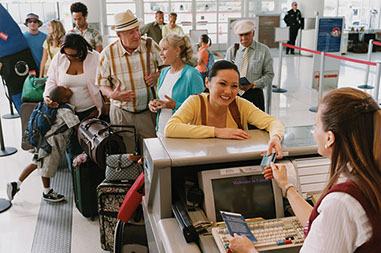
    Image of airport check-in line.

    If you’re flying, make sure you familiarize yourself with the TSA screening process. You’ll have smooth flying if you do the following when passing through airport security:

    *Clothing:To maximize efficiency at the security checkpoint, avoid wearing clothing with metal and stow all metal items in carry-on luggage.

    *Zip it:Make sure any liquids are in 3-ounce bottles in a clear, quart-size, zip top plastic bag.

    *Footwear:Passengers are required to remove footwear for X-ray screening. Wearing footwear that can be easily removed helps speed the screening process.

    *Boarding pass and ID:When approaching the security checkpoint, passengers will be asked to present a boarding pass and a government-issued identification.

    *Electronics:Large electronics such as laptops should be removed from their cases for X-ray screening. E-readers and small electronics may stay in luggage.

    *Locking checked bags:When locking checked baggage, use a TSA recognized lock. A list of these locks can be found atwww.tsa.gov.

    © American Institute for Preventive Medicine

  • How To Set Up An Emergency Fund

    FINANCIAL HEALTH

    Image of money in savings jar.

    An emergency fund is a great way to save yourself from financial disaster. It gives you peace of mind when unexpected expenses come up. And, it may help keep you out of debt when you need extra money for an emergency. People who don’t have emergency funds may have to turn to high-interest loans or more credit card debt.

    It can be difficult to set money aside when it’s being used for other day-to-day things. But, it is possible to do with a little discipline and planning. Here’s how:

    *Make it automatic.Have some money automatically put in a separate account with each paycheck. Even if the amount is small, it can add up over time. An automatic transfer is more convenient than doing it yourself. You may find that after a while, you don’t miss that extra money. You learn to get by without it.

    *Make it a priority.Pay your emergency fund first, before you use your paycheck for non-necessary items. Make a budget that doesn’t include your emergency money. This will ensure your bills and other necessities get paid without skipping your emergency fund payment.

    *Use a bank or credit union savings account.These are easier to access in an emergency than savings bonds, mutual funds or certificates of deposit (CDs). But, don’t put it in your regular checking account, where you may be tempted to use it for a non-emergency.

    *Keep the account totally separate.Make sure that account is for emergencies only. Make it a savings account instead of checking. Be sure the account doesn’t include fees or penalties.

    *“Do I need this?”Cover your credit card with a savings message to reduce non-essential spending.

    Creative ways to save

    Think of little ways you can change your daily routine to save money. You’ll be surprised how much you can save!

    Put away $.50 a day in loose change.

    Monthly savings: $15

    Yearly savings: $180

    Skip the coffee out and bring your own from home.

    Monthly savings: $80

    Yearly savings: $960

    Bring your own lunch 3 days a week instead of eating out.

    Monthly savings: $96

    Yearly savings: $1,152

    Eat dinner at home 2 more times per month.

    Monthly savings: $40-80

    Yearly savings: $480-960

    Source: Consumer Federation of America

    © American Institute for Preventive Medicine

  • Protect Your Personal Information

    FINANCIAL HEALTH

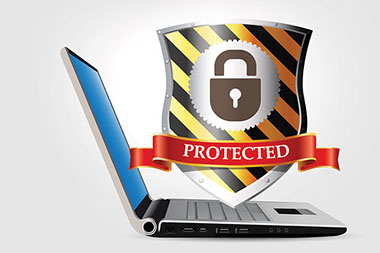
    Image of laptop with shield and lock key.

    Identity theft is a serious crime. It happens when someone steals your personal information such as your social security number or credit card numbers and uses it without your permission. You may see mistakes or mystery charges on your bank, credit card, or other account statements. You may receive bills for products or services you never received. Protect your personal information, urges the Federal Trade Commission. Get detailed information online atwww.ftc.gov/idtheft.

    *Keep your important papers secure.Limit what you carry in your wallet or purse. Pick up new checks at the bank instead of having them mailed to your home. Take outgoing mail to a collection box or the post office. Don’t leave it in your mailbox. Shred sensitive documents, receipts, credit card offers, insurance forms, checks, bank statements, and similar documents.

    *Secure your social security number.Only give it out when necessary (and ask if you can use a different kind of identification).

    *Protect your computer and mobile devices.Use anti-virus software. Don’t open files or click on links sent by strangers. Remove the memory cards from mobile devices before recycling them.

    *Protect your data online.Keep your passwords private. Don’t over share on social networking sites. If you post too much information about yourself, an identity thief can use that information to answer challenging questions on your accounts (birthdays, mother’s name, pet names, high school).

    © American Institute for Preventive Medicine

  • Stop! Thief

    FINANCIAL HEALTH

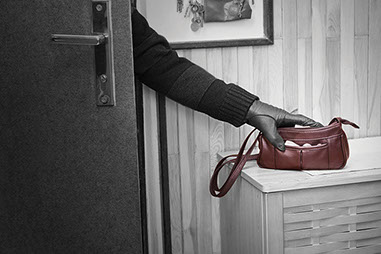
    Image of arm sneaking in from a door grabbing a purse on the counter.

    When your purse or wallet is lost or stolen, do you know the 8 steps you need to take right away because the thief is already cashing in on your loss? Act fast, advises the Federal Trade Commission:

    1. File a report with the police immediately. Get a copy in case your bank, credit card company, or insurance  company needs proof of the crime.

    2. Report the loss to your bank. Cancel checking and savings accounts. Open new ones, and stop payments on outstanding checks. Cancel each credit and charge card. Get new cards with new account numbers. Get a new ATM card, account number, and PIN or password.

    3. Call your utility companies. Tell them that someone may try  to get new service using your identification.

    4. Report your missing driver’s license to the department of  motor vehicles.

    5. Report missing cards to the major credit reporting agencies and place a fraud alert on your accounts: Equifax: 1-800-525-6285, Experian: 1-888-397-3742, TransUnion: 1-800-680-7289.

    6. Change the locks on your home and car if the keys were taken.

    7. Contact the Social Security Administration.    Call: 1-800-772-1213.

    8. Contact your insurance companies. Make sure no one tries to add someone to your policies.

    © American Institute for Preventive Medicine