Tag: self-care

  • Wellness Gifts 2

    Personal Safety

    Fitness tools shaped into a Christmas tree.

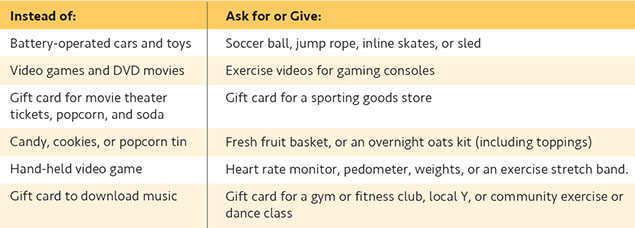
    Give presents that promote a healthy lifestyle. Keep their well-being and self-care in mind when making your list and checking it twice.

    Action Step:There are many thoughtful and joyful gifts to choose from that will enhance well-being, for adults and kids.

    A Year of Health Hints book by the American Institute for Preventive Medicine. www.HealthyLife.com. All rights reserved.

    © American Institute for Preventive Medicine

  • Care For The Caregiver

    FAMILY LIFE

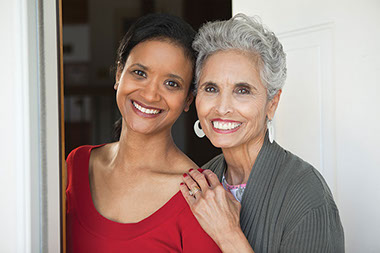
    Image of caregiver.

    Stress, anxiety, and burnout are never far from the doorsteps of millions of Americans who are caregivers as they often juggle the responsibilities of providing daily care for a loved one with dementia or another condition with the added demands of working, maintaining a household, or raising children.

    Too often caregivers don’t know how to ask for help, and friends and family members aren’t sure of how to lend a hand.

    “Caregivers will say ‘no’ when offered help because they worry it will reflect poorly on them or because they ‘don’t want to bother’ others. And some caregivers get so attached to their role that they just can’t let go,” said Nancy Alterman, a licensed clinical social worker with the New Jersey Institute for Successful Aging at the UMDNJ-School of Osteopathic Medicine.

    If you know a family member or close friend who is a caregiver, Alterman offers the following suggestions to help ease that person’s burden.

    *  Be sensitive about visiting by calling ahead to schedule a time that is convenient. But if the caregiver routinely declines offers of a visit, you may need to just show up with special foods or an easy activity like a puzzle.

    *  Avoid bringing a crowd, but visiting with at least one other person gives the caregiver a chance to go out with a friend, knowing that another trusted person is there for the patient’s needs.

    *  Instead of asking, “What can I do?” offer to grocery shop, go to the post office, do laundry or cook a meal that you can bring over.

    *  Be a good listener. Whether in person or by phone, sometimes just having a contact to the outside world is all the caregiver needs to help cope with that day’s burden.

    *  Be alert for signs of caregiver stress, such as denial, social withdrawal, sleeplessness, or lack of concentration.

    *  Offer to spend the night so the caregiver can get some rest. Lack of sleep can quickly lead to a deteriorating situation or a health crisis. Make sure the caregiver and the patient are discussing any sleep issues with their doctors.

    *  Research adult medical day services in your community and share that information with the caregiver. These medically supervised programs can actually help extend the time that the patient can remain at home.

    © American Institute for Preventive Medicine

  • Caregivers: Take Time For Yourself

    FAMILY LIFE

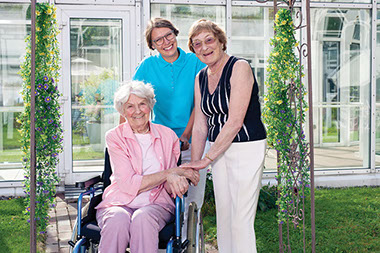
    Image of elderly female in wheechair with two caregivers.

    There’s no doubt: caregiving is a stressful job. If you help take care of an aging, ill, or disabled loved one, you are a caregiver. And although caregiving may take up a lot of your time, you need to make time for yourself too, says the Family Caregiving Alliance.

    If you’ve been trying to juggle caregiving with your other commitments, it’s time to take a moment and think about your own needs. If you keep doing things for others without taking time for yourself, your health and entire life could suffer. Caregivers of all ages can be prone to the following problems:

    *  Depression or anxiety

    *  High stress levels

    *  Poor quality sleep or not sleeping enough

    *  Unhealthy diet choices

    *  Lack of exercise

    *  Not getting needed health care for themselves

    *  Financial problems

    *  Feeling isolated and alone

    These factors together can create health and personal problems. Before you reach the point of burnout, try to find a way to get a break from caregiving. Think about what would relax you and help you recharge. Is it a lunch date with a friend? An aerobics or yoga class? A walk through the park? A soak in the tub? Whatever it is, you deserve the time to do it.

    How to find the time

    Not sure how to find time for yourself? Talk to others who can help out. Ask friends, neighbors, or family members to step in for just an hour or two so you can have a break. Or, if you can, have your loved one spend some time at an adult day care or respite center. If others have offered to help in any way, learn how to say, “Yes, that would be great,” and accept their offer. Many caregivers mistakenly think they need to do it all themselves – don’t!

    Many people feel guilty leaving their loved one for even a short while. But remember, you need to recharge yourself so you can be the best caregiver possible. You’re doing it for others just as much as for yourself.

    Talk to others

    Many caregiver support groups are available online and in local communities. Connecting with others who understand can go a long way in helping you feel better. The local Area Agency on Aging (AAA) is a good place to start. Some support groups are online, while others offer in-person meetings. Choose what is right for you.

    Remember:Taking time for you is not being selfish. It’s a necessity. You deserve some time to take care of your own needs. It will allow you to be the best you can be in all areas of your life.

    © American Institute for Preventive Medicine

  • Is Your Relationship In Trouble?

    SUCCESS OVER STRESS

    Image of couple not getting along.

    Is your relationship stormy? Indifferent? One-sided? According to Pennsylvania psychologist, Dr. Michael S. Broder, these are the three types of troubled relationships. They account for the high divorce rate, as well as the much higher percentage of non-married relationships that end.

    Stormy Relationship:

    This type has plenty of passion, but it may not be the positive kind. Positive passion is a relationship at its best. Too much negative passion results in a great amount of anger and discomfort. At the extreme, these relationships can become abusive and even dangerous. A relationship with a lot of passion and little or no comfort can still be highly charged romantically and sexually. In some cases the most passionate sex actually occurs after the meanest and volatile arguments. The sad part is that the cause of the anger is never dealt with or resolved. Thus, the pattern can continue indefinitely.

    Indifferent Relationship:

    With this type, most-if not all-of the passion is missing. There can be a very comfortable living arrangement, but partners may have little feeling or sexual desire for each other. Sometimes partners simply grow apart without anger, or there can be as much anger as there is in the typical stormy relationship. The main difference is that there’s just not the tendency to argue or do battle with each other. This may be a result of the partners’ personality styles, or the absence of passion-including negative passion. Instead, the relationship merely begins to die a slow and quiet death. In other words, it may be brain alive but heart dead.

    One-Sided Relationships:

    In this type, one person usually puts out much more effort and energy to maintain and nurture the relationship than does the other. One partner can be quite content, having all the passion and comfort he or she needs. Yet the other partner feels somewhat to totally unfulfilled.

    In all types of troubled relationships it is important to ask: “What is the potential for change?” If the answer is none, the next question to ask yourself is, “Is this where I still want to be?”

    Adapted from Can Your Relationship Be Saved? How to Know Whether to Stay or Go by Dr. Michael S. Broder.

    © American Institute for Preventive Medicine