HEALTHY EATING
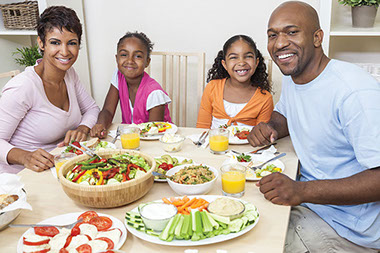
Even if you know you need to eat smaller portions, that’s only part of the battle. You’ll need to learn how to recognize serving sizes of foods so you can put the right amount on your plate each day. Here’s a list of food group servings to help:
Vegetables
Fresh, frozen or canned: 5 servings per day
Leafy greens: 1 cup
Cut-up vegetables: ½ cup
Cooked beans or peas: ½ cup
100% vegetable juice: ¼ cup
Fruits
Fresh, frozen, canned, or dried: 4 servings per day
Whole fruit: 1 medium fruit
Cut-up fruit: ½ cup
100% fruit juice: ¼ cup
Dried fruit: ¼ cup
Grains
6 servings per day
Bread: 1 slice (a 2-slice sandwich is 2 servings of grains)
Pasta or rice uncooked: 1 oz (⅛ cup)
Cooked rice, pasta, or cereal: ½ cup
Popcorn: 1 oz. (⅛ cup) uncooked
At least half should be whole grain and high in fiber.
Dairy
(or non-dairy milks with added calcium and vitamin D): 3 servings per day
1 cup milk or yogurt
1.5 oz. cheese (size varies depending on the type of cheese)
Meat & poultry
8 to 9 servings per week
3 oz. cooked meat or poultry, about the size of a deck of cards
1 egg or 2 egg whites
Choose lean meats with skin and fat removed.
Nuts, seeds, beans & legumes
5 servings per week
Nut butter: 1 Tbsp.
Nuts or seeds: 2 Tbsp.
Seafood/fish
2-3 servings a week
3 oz. cooked seafood, about the size of a checkbook
Choose fish that provides omega-3 fatty acids. Pregnant women should ask their doctors about safe types of fish to eat.
Fats & oils
3 servings per day
Vegetable oil, margarine, dressing: 1 Tbsp.
To help with portion sizes, you may wish to find out how many calories you should be eating. Use the National Institutes of Health Body Weight Planner atwww.supertracker.usda.gov. Keep this number in mind as you eat throughout the day.
Source: American Heart Association

© American Institute for Preventive Medicine