Tag: shopping

  • Shopping Around For Contact Lenses

    FINANCIAL HEALTH

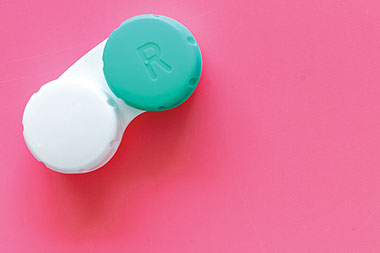
    Contact case holder.

    Many people wear contact lenses. But you don’t have to buy your contacts from your eye care provider. You can choose to get your contacts prescription from your provider and then shop around for lenses.

    Get an eye exam

    Before you go shopping for lenses, make sure your eyes are healthy. See your eye care provider regularly. Your provider might be an optometrist or ophthalmologist, depending on your needs.

    During your visit, your provider will check your eyes and determine your contact lens prescription.

    Getting your prescription

    Your eye care prescriber can give you your prescription after your exam. Your provider cannot charge you for your prescription. You may have to pay for the eye exam and contact lens fitting.

    What should my prescription include?

    Your contact lens prescription must include:

    *  Your name

    *  Date of your eye exam

    *  Date of prescription

    *  Doctor’s name, mailing address, phone number and fax number

    *  Power, material, and/or manufacturer of the prescribed lens

    *  Base curve of the lens

    *  Diameter of the lens, when needed

    Source: Federal Trade Commission
    © American Institute for Preventive Medicine

  • Develop Supermarket Savvy

    Weight Control

    A successful weight-control effort begins with smart food purchases. Here’s how to maneuver your way through the supermarket and also stay in control of your weight.

    *  Plan your low-fat meals and snacks in advance, then, using a list, shop only for what you need.

    *  Stay away from the aisles where pastries, potato chips, candies, or other potential problem foods are located.

    *  Shop for food after you’ve eaten, not when you’re hungry. You’ll choose food based on clear thinking, not hunger pangs.

    *  Choose fresh foods and vegetables over processed foods, which can deliver unwanted calories in the form of sauces and thickeners.

    *  Don’t try to rationalize buying high-calorie snack foods for others in the household. Having them around may very well undermine your weight-control efforts.

    *  Beware of high-calorie foods that, although advertised as “specials,” don’t do your diet any special favor.

    Selecting Snacks under 100 Calories

    Snacking seems to be an integral part of many people’s lifestyles, but when you’re trying to lose weight, your choices need to be prudent. Whether you crave crunchy, salty, fresh, or sweet foods, there’s a variety of food that will satisfy you yet help you lose weight. The table below lists 25 snacks that are all less than 100 calories each!

    Page from A Year of Health Hints book by the American Institute for Preventive Medicine. www.HealthyLife.com. All rights reserved.

    © American Institute for Preventive Medicine
  • To Market, To Market, Shop Smart

    Nutrition

    Choose healthy and low-calorie foods.

    Look at buying healthy, low-calorie foods. When you buy them, the more likely you are to eat them. And when you do not buy foods high in sugar, fat, and empty calories, they are not there to tempt you.

    Start with planning.

    Plan for meals that will be eaten at home, lunches that need to be packed, and for healthy snacks. Make a shopping list before you go to the store. And shop after you have eaten. If you are hungry, you will be more tempted to buy foods high in fat and/or sugar, such as cakes, cookies, cheese puffs, and other packaged snacks.

    Location! location!

    For nutrient-dense foods that are lower in calories, shop the perimeter of the store. To fill half your plate with fruits and veggies, start at the produce section. Then choose whole-grain cereals and packaged and canned products low in sodium from middle aisles. Try to avoid the cookie, candy, and chips aisles. Then choose fresh fish, lean meats, and dairy products low in fat. Finish in the freezer section for more fruits, veggies, and fish. Choose items without added sugars, fats, and sauces.

    Items to include on a healthy shopping list:

    *  Skim or 1% milk

    *  Low or reduced-fat cheeses

    *  Eggs or egg substitute

    *  Unprocessed meats, fish, poultry

    *  Low-sodium or no-salt added canned soups & vegetables

    *  Whole grain breads and cereals

    *  Rice crackers

    *  Low-sodium or unsalted crackers

    *  Frozen vegetables without added sauces

    *  Fresh fruits and vegetables

    *  Unsweetened tea

    *  Fat-free and reduced-fat salad dressings

    *  Unsalted nuts and seeds

    *  Canola and olive oils

    Action Step

    Remember to compare food labels for calories, fat, sugars, and vitamins and minerals per serving. Use coupons wisely.

    Page from Ways to Well-Being book by the American Institute for Preventive Medicine. www.HealthyLife.com. All rights reserved.

    © American Institute for Preventive Medicine
  • Grocery Shop With Confidence

    Healthylife® Weigh

    Part 3

    Couple grocery shopping.

    Grocery stores can be wonderful places to explore new foods. The average grocery store has over 10,000 different items. Some of these foods are healthy “everyday” food choices. Add these more often to your cart. Others are “sometimes” or “once in a while” foods. Add these foods less often.

    Tips for Healthy Grocery Shopping:

    1. Choose a low-stress time to grocery shop, if possible. Make sure you have enough time to do your shopping. Stressed grocery shopping can make it harder to stick to your healthy list.

    2. Have a healthy snack before going to the grocery store. This will help you avoid buying less healthy foods on impulse.

    3. Shop the outer edges of the grocery store. This is where you will find fresh produce, dairy, eggs, meats/poultry/seafood, and frozen fruits and vegetables. Go into inner aisles for specific items on your list, but not to browse.

    4. Look for recipes or tips in the produce department. Stores often provide tips for cooking vegetables or a chart showing which fruits and vegetables are in season.

    5. Look for products locally grown or raised. Locally grown produce and livestock can be more nutritious and tasty. Nutrients and flavor can break down during storage and transport. Locally grown food may also be grown more sustainably and buying it supports the community.

    6. Sample healthy foods. Samples, such as cheese cubes or crackers with dip, can take the edge off in a portion-controlled serving. A bite-sized sweet treat can satisfy a craving and help you avoid picking up a larger version of that treat.

    7. Avoid your weak areas. Avoid an aisle that has many unhealthy foods that you have difficulty resisting. Or, keep your eyes forward when walking by these foods.

    8. Buy treats in small portions. Avoid the super-size trap of large portions of unhealthy food. Rather than buying a full tub of ice cream or a boxed brownie mix that will yield a full pan of brownies, get small-sized versions. Choose a single-serving ice cream or an individual brownie at the bakery.

    9. Read labels. Many of the healthiest foods, such as fruits and vegetables, won’t have food labels at all. If they do, they only give a snapshot of the true value of the food.

    © American Institute for Preventive Medicine

  • Grocery Shopping With Kids

    Healthylife® Weigh

    Part 3

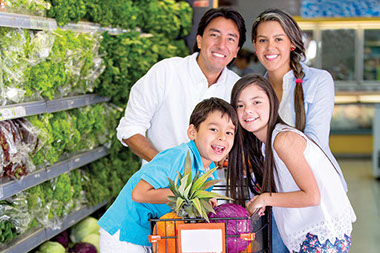
    Family of four grocery shopping.

    Grocery stores can be full of education and adventure for kids. Including kids in grocery shopping-and every part of meal prep-helps set up kids to make healthier choices later in life.

    *  Show the variety of different foods, especially in the produce section and grain aisle.

    *  Let kids pick out something colorful from the produce section. You can look up online what to do with it later!

    *  Ask kids to help you decide between healthy options (apple vs. orange). This encourages kids to make healthy choices.

    *  Discuss why certain foods are stored in the freezer or on the shelf.

    *  Ask younger kids to describe the foods you pick out. Use shapes, colors, and counting to identify foods on the shelf or in your cart.

    *  Ask older kids to help you read labels and signs in the store. Explain what these labels mean.

    © American Institute for Preventive Medicine
  • Plan Your Week

    Healthylife® Weigh

    Part 3

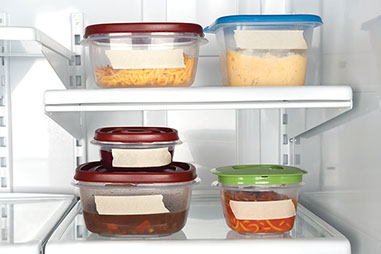
    Leftovers in the refrigerator.

    Plan about a half hour for writing your weekly meal plan and grocery list the first time. The more you plan, the easier it will become and the less time it will take.

    1. Check what you have at home. See what needs to be used up in your pantry, refrigerator, or freezer.

    2. Write down ideas, rather than specific recipes. (For example, “chicken and vegetables” or “broccoli soup.”) Find recipes after you have finished your plan. Some meals, like breakfast, may be easier to keep the same every day.

    3. Plan for meals to have leftovers. Plan to make extra food items that can be used for another meal. For example, make a double batch of quinoa to use in a casserole one day and a soup two days later.

    *  Have dinner leftovers at lunch the next day to further save on time.

    *  Freeze extra dinner servings in individual-serving freezer bags. Thaw and cook or microwave for a quick meal.

    © American Institute for Preventive Medicine
  • Plan Your Week 2

    Healthylife® Weigh

    Menus & Recipes

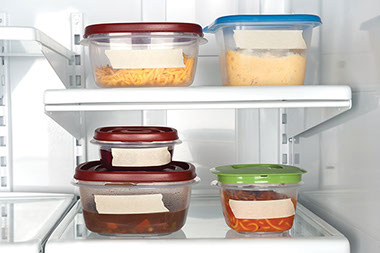
    Leftovers in the refrigerator.

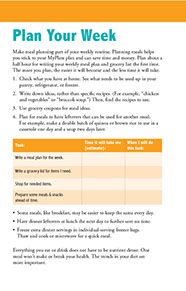
    Make meal planning part of your weekly routine. Planning meals helps you stick to your MyPlate plan and can save time and money. Plan about a half hour for writing your weekly meal plan and grocery list the first time. The more you plan, the easier it will become and the less time it will take.

    1. Check what you have at home. See what needs to be used up in your pantry, refrigerator, or freezer.

    2. Write down ideas, rather than specific recipes. (For example, “chicken and vegetables” or “broccoli soup.”) Then, find the recipes to use.

    3. Use grocery coupons for meal ideas.

    4. Plan for meals to have leftovers that can be used for another meal. For example, make a double batch of quinoa or brown rice to use in a casserole one day and a soup two days later.

    *  Some meals, like breakfast, may be easier to keep the same every day.

    *  Have dinner leftovers at lunch the next day to further save on time.

    *  Freeze extra dinner servings in individual-serving freezer bags. Thaw and cook or microwave for a quick meal.

    Everything you eat or drink does not have to be nutrient dense. One meal won’t make or break your health. The trends in your diet are more important.

    © American Institute for Preventive Medicine
  • Are You Addicted To Shopping?

    WELL-BEING

    Image of couple holding shopping bags.

    Whether you like to look at clothing, housewares, tools, or electronics, shopping is a favorite pastime for many people. As the holidays approach, shopping becomes even more popular. Big sales, special deals, and promotions all seek to get more people to buy, buy, buy.

    But for some people, shopping is more than just fun around the holidays. It can actually be an addiction, according to the National Institute on Alcohol Abuse and Alcoholism.

    Signs of Shopping Addiction

    Many people think addiction is only for drugs and alcohol. But many behaviors including shopping can become an addiction. Access to online shopping can make the problem worse. You can buy whatever you want from the privacy of your home and just a few mouse clicks.

    It can be difficult to know if you just like to shop, or if it’s really a problem. If three or more of these statements apply to you, you may be addicted to shopping:

    *  You frequently buy things you don’t need.

    *  You have many unopened packages of items or clothing with the tags still on.

    *  You purchase things you can’t afford by using credit cards.

    *  You hide your purchases from your spouse or family.

    *  You feel a strong need to shop when you’re sad, angry, or anxious.

    *  You have secret credit cards or open new cards when others ones are maxed out.

    *  You think obsessively about shopping and money.

    *  You buy much more than planned, and feel guilty or ashamed afterward.

    *  Your relationships with family or friends have been affected by your shopping.

    © American Institute for Preventive Medicine
  • How To Stop Impulse Buying

    FINANCIAL HEALTH

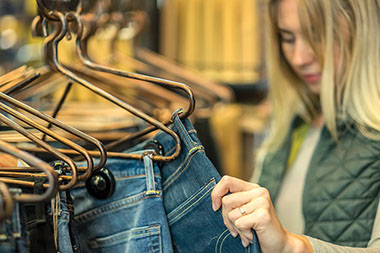
    Image of women looking at jeans.

    Many people have bought something at the store that they didn’t plan to get. If you buy something simply because you see it and want it, this is called an impulse buy.

    Some estimates show that the average American spends a few thousand dollars a year on impulse buys. These purchases can add up to big spending.

    If you’re trying to save money, take a look at your buying habits. It’s possible that your unplanned impulse purchases are standing in the way of a healthy budget and your long-term financial goals.

    Try not to dwell on past impulse purchases. Instead, look to the future and decide that you will resist the urge to buy things you don’t need.

    Why we impulse buy

    Stores use certain tricks and techniques to make impulse buys happen. Plus, specific things happen in our brains while shopping that can lead to an impulse buy. Some of the reasons we buy things on impulse:

    1.  A love of shopping and new things. Shopping can release feel-good chemicals in the brain. Once we experience this kind of pleasure, it can become a habit that is hard to break.

    2.  Fear of missing a deal. Our desire to save money can lead to impulse buying. We see a deal on something and wonder if we will regret not buying it later.

    3.  Hope that having this item will make our life better. For example, someone may think that buying a new blender means they will make a vegetable smoothie every day. Or, if someone is feeling depressed or angry, they may think this new item will fix their problem.

    How to stop impulse purchases

    If you think impulse buying is affecting you, there are ways to stop. Keep these things in mind when you go shopping:

    *  Stop and think about the price. Ask yourself whether that item is truly worth what it costs. Think about how many hours you would have to work to pay off that item. Is it really worth buying?

    *  Bring a list. Make your shopping list in advance and buy only those items.

    *  Don’t use credit cards. If possible, only shop with cash or a debit card. This means you won’t have seemingly unlimited funds. If that’s not possible, picture next month’s bill with that item on it. That number on your statement may make the item less appealing.

    *  Don’t shop when you’re hungry, stressed, angry or sad. These emotions can prompt you to buy unwanted things.

    © American Institute for Preventive Medicine
  • Stay Safe When Holiday Shopping

    FINANCIAL HEALTH

    Image of female on laptop with credit card in hand.

    The holidays are often a time for celebrations, get-togethers, and lots of shopping for gifts. Unfortunately, theft can happen any time of year, including during the holiday season. To keep yourself and loved ones safe when holiday shopping, consider these tips from the National Crime Prevention Council (NCPC):

    At malls and stores:

    *  To keep your money safe, carry your purse close to your body. Wallets are better kept in a front pocket, where they are harder to pickpocket.

    *  Have your keys ready when walking to your vehicle. Glance at the back seat and be aware of your surroundings before getting in.

    *  Don’t leave packages or valuables in your car where they can be seen. Take them home immediately, if possible, or keep them in the trunk.

    *  When shopping with children, teach them to go to a meeting place in case you get separated. Talk to them about finding store security guards or employees to help, if needed.

    When online shopping:

    *  Be sure you update anti-virus and anti-spyware software on your computer. Visitwww.bytecrime.org.

    *  Never give out your password or credit card information in response to emails. Valid companies will never ask for this type of information.

    *  Make sure the website is secure: look for a locked padlock at the bottom of the screen or “https” in the address at the top.

    *  Use secure payment methods, such as PayPal or Apple Pay, whenever possible. If using a credit card, check your transactions regularly and alert your bank if you notice anything suspicious.

    *  Check reviews of online stores to ensure the company is credible.

    Warm-up thefts are in season

    During the winter months, many people start their cars and let them warm up while they wait inside. This can be a prime opportunity for someone to steal your vehicle or items inside it, according to the NCPC. Here’s how to avoid these situations:

    *  Never leave your car running or keys in the ignition if you’re not in it, even for a minute.

    *  Always keep your car locked, and use anti-theft or alarm devices if you have them.

    *  Keep valuables out of sight (and preferably out of your car), such as phones, purses and electronics.

    © American Institute for Preventive Medicine