Tag: shots

  • Take A Shot At Allergies

    SELF-CARE CORNER

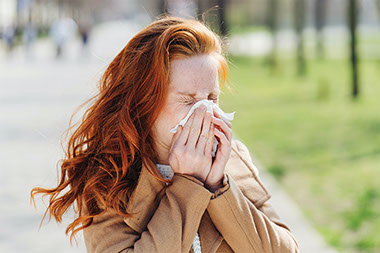
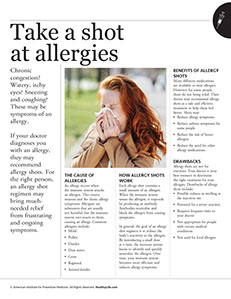
    Women outside using a tissue while sneezing.

    Chronic congestion? Watery, itchy eyes? Sneezing and coughing? These may be symptoms of an allergy.

    If your doctor diagnoses you with an allergy, they may recommend allergy shots. For the right person, an allergy shot regimen may bring much-needed relief from frustrating and ongoing symptoms.

    The cause of allergies

    An allergy occurs when the immune system attacks an allergen. This creates mucous and the classic allergy symptoms. Allergens are substances that are usually not harmful, but the immune system over-reacts to them, causing an allergy. Common allergens include:

    *  Mold

    *  Pollen

    *  Dander

    *  Dust mites

    *  Grass

    *  Ragweed

    *  Animal dander

    How allergy shots work

    Each allergy shot contains a small amount of an allergen. When the immune system senses the allergen, it responds by producing an antibody. Antibodies neutralize and block the allergen from causing symptoms.

    In general, the goal of an allergy shot regimen is to reduce the body’s reactivity to the allergen. By introducing a small dose at a time, the immune system learns to identify and quickly neutralize the allergen. Over time, your immune system becomes more efficient and reduces allergy symptoms.

    Benefits of allergy shots

    Many different medications are available to treat allergies. However, for some people, those do not bring relief. Their doctor may recommend allergy shots as a safe and effective treatment to help them feel better. Shots may:

    *  Reduce allergy symptoms

    *  Reduce asthma symptoms for some people

    *  Reduce the risk of future allergies

    *  Reduce the need for other allergy medications

    Drawbacks

    Allergy shots are not for everyone. Your doctor is your best resource to determine the right treatment for your allergies. Drawbacks of allergy shots include:

    *  Possible redness or swelling at the injection site

    *  Potential for a severe reaction

    *  Requires frequent visits to your doctor

    *  Not appropriate for people with certain medical conditions

    *  Not used for food allergies
    © American Institute for Preventive Medicine

  • Immunizations: Your Best Shot Against Infectious Diseases

    Healthy Travel

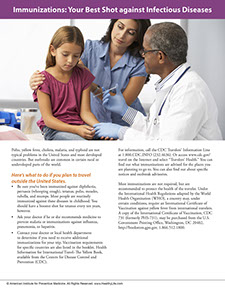
    Image of mother comforting young daughter as she gets a shot.

    Polio, yellow fever, cholera, malaria, and typhoid are not typical problems in the United States and most developed countries. But outbreaks are common in certain rural or undeveloped parts of the world.

    Here’s what to do if you plan to travel outside the United States.

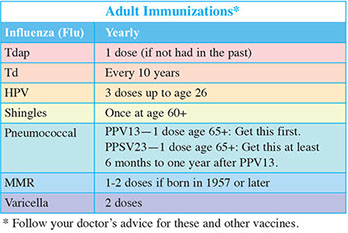
    *  Be sure you’ve been immunized against diphtheria, pertussis (whooping cough), tetanus, polio, measles, rubella, and mumps. Most people are routinely immunized against these diseases in childhood. You should have a booster shot for tetanus every ten years, however.

    *  Ask your doctor if he or she recommends medicine to prevent malaria or immunizations against influenza, pneumonia, or hepatitis.

    *  Contact your doctor or local health department to determine if you need to receive additional immunizations for your trip. Vaccination requirements for specific countries are also listed in the booklet, Health Information for International Travel-The Yellow Book, available from the Centers for Disease Control and Prevention (CDC).

    For information, call the CDC Travelers’ Information Line at 1.800.CDC.INFO (232.4636). Or accesswww.cdc.gov/travelon the Internet and select “Travelers’ Health.” You can find out what immunizations are advised for the places you are planning to go to. You can also find out about specific notices and outbreak advisories.

    Most immunizations are not required, but are recommended to protect the health of the traveler. Under the International Health Regulations adapted by the World Health Organization (WHO), a country may, under certain conditions, require an International Certificate of Vaccination against yellow fever from international travelers. A copy of the International Certificate of Vaccination, CDC 731 (formerly PHS-731), may be purchased from the U.S. Government Printing Office, Washington, DC 20402,http://bookstore.gpo.gov, 1.866.512.1800.

    Page image from A Year of Health Hints book by the American Institute for Preventive Medicine. www.HealthyLife.com. All rights reserved.

    © American Institute for Preventive Medicine
  • Immunization Schedule

    Medical Exams

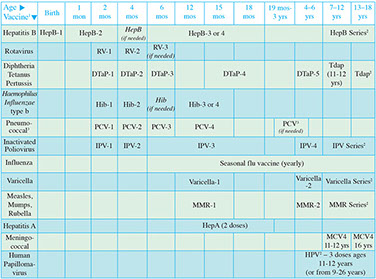
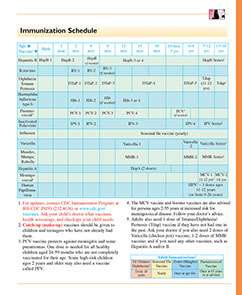
    1.  For updates, contact CDC Immunization Program at 800.CDC.INFO (232.4636) orwww.cdc.gov/vaccines. Ask your child’s doctor what vaccines, health screenings, and checkups your child needs.

    2.  Catch-up vaccines should be given to children and teenagers who have not already had them.

    3.  PCV vaccine protects against meningitis and some pneumonias. One dose is needed for all healthy children aged 24-59 months who are not completely vaccinated for their age.

    Vaccines for Traveling Abroad

    Before you travel to other countries, find out if you need certain vaccines. Get information from the CDC Travelers’ Information Line. Call 800.CDC.INFO (232.4636) or use thewww.cdc.gov/travelWeb site. Discuss your needs with your doctor.

    Page from the Healthier at Home book by the American Institute for Preventive Medicine. www.HealthyLife.com. All rights reserved.

    © American Institute for Preventive Medicine