Tag: sideeffects

  • Over-The-Counter Medication Safety

    Medication

    Over-the-counter (OTC) medications are ones that you can get without a prescription. Often, they are less potent than prescribed ones. When taken in large amounts, though, an OTC medicine might equal or exceed the dose of a prescribed medicine. Read the information on the label. To learn more about OTC medicine labels, accesswww.fda.gov. Search for “over-the-counter medicine label.”

    Use OTC Medicines Wisely

    *  Ask your doctor or health care provider what OTC products are safe for you to use and what you should take for pain and fever.

    *  To prevent harmful side effects and interactions, review all of the OTC medicines, supplements, and herbal remedies that you take with your doctor.

    *  Do not take OTC medicines on a regular basis unless your doctor tells you to.

    *  Read the package labels. Heed the warnings listed. If you are unsure whether or not an OTC medication will help or harm you, check with your doctor or pharmacist.

    *  Store medicines in a dry place and out of children’s reach. Do not call medicine “candy.”

    *  Before you take a medicine, check the expiration date. Discard expired medicines. Crush pills. Dissolve them in water. Mix this with used coffee grounds or kitty litter and put it in the garbage in a sealed bag.

    *  If you have an allergy to a medicine, check the list of ingredients on OTC medicine labels. Find out if what you are allergic to is in them. Some labels will warn persons with certain allergies to avoid taking that medicine.

    *  Do not take any OTC product if you are pregnant or nursing a baby unless your doctor or health care provider says it is okay.

    *  Before taking herbal remedies and supplements, check with your doctor.
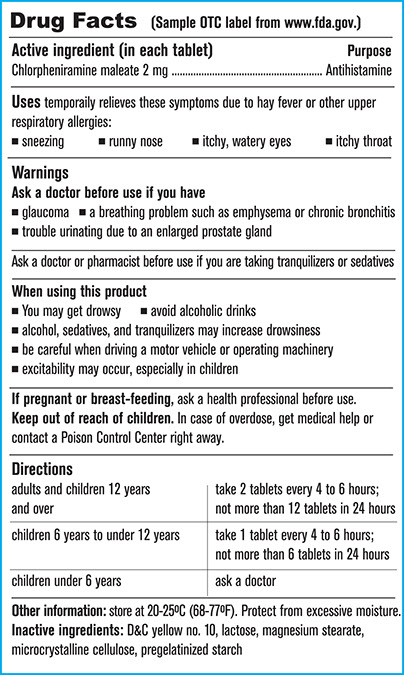
    Drug fact chart.

    Resources

    U.S. Food and Drug Administration
    www.fda.gov

    Page from the Healthier at Home book by the American Institute for Preventive Medicine. www.HealthyLife.com. All rights reserved.

    © American Institute for Preventive Medicine

  • Safe Use Of Medications

    Medication

    Image of man picking up medications.

    *  Things to tell your doctor:

    – Things you have had an allergic reaction to.

    – If you are pregnant or breast-feeding.

    – If another doctor is also treating you.

    – If you have diabetes or kidney or liver disease.

    – If you use alcohol, tobacco, or drugs.

    *  See that your doctor has an up-to-date list of all the medicines you take. This includes prescribed and over-the-counter (OTC) ones, vitamins, and herbal supplements. Keep an up-to-date list in your wallet.

    *  Ask your doctor these questions: What is the medicine for? When should I take it? How long do I need to take it? Should I take it with or without food? Can I crush the pill or open up the capsule if I can’t swallow it whole? Write the answers down.

    *  Give a list of all medicines and supplements you take to your local and mail order pharmacist. Harmful mixtures with other drugs and with foods can be identified.

    *  Get prescribed medicines from a licensed pharmacy.

    *  Keep medicines in their original containers or in ones with sections for daily doses.

    *  Let your doctor know about your past reactions to certain medicines. As some people age, they may be more sensitive to some medications, such as painkillers or sedatives.

    *  Ask about the possible side effects of a medication. Find out what you should do if you have any.

    *  Ask if you can drink alcohol while taking the medication(s). Alcohol can lessen the effects of some medicines. Other medicines, such as sedatives, can be deadly when used with alcohol.

    *  Don’t take someone else’s medication.

    *  Safely discard unused and expired medicines. Use a community drug take-back program. Or, take medicines from their containers and mix them with used coffee grounds or kitty litter. Put this in a sealable bag and place it in the trash.

    *  Try to reduce the need for some medications, such as sleeping pills or laxatives. A warm bath and a glass of milk might help you fall asleep. Having more fiber in your diet can reduce or replace the need for a laxative. Check with your doctor on ways other than medicines to help treat your problem.

    *  Even if you feel better, don’t stop taking a prescribed medicine unless your doctor tells you to. Also, don’t skip doses.

    Resources

    U.S. Food and Drug Administration

    www.fda.gov

    Page from the Healthier at Home book by the American Institute for Preventive Medicine. www.HealthyLife.com. All rights reserved.

    © American Institute for Preventive Medicine