Tag: simple

  • Setting Doable Goals For A Healthy Diet

    HEALTHY EATING

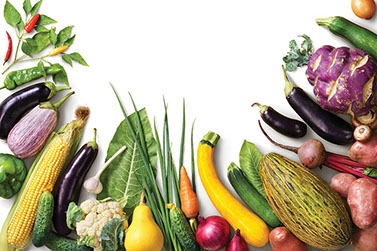
    A variety of vegetables.

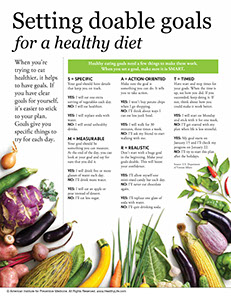
    When you’re trying to eat healthier, it helps to have goals. If you have clear goals for yourself, it’s easier to stick to your plan. Goals give you specific things to try for each day.

    Healthy eating goals need a few things to make them work. When you set a goal, make sure it is SMART.

    S = Specific

    Your goal should have details that keep you on track.

    Yes: I will eat one extra serving of vegetables each day.

    No: I will eat healthier.

    Yes: I will replace soda with water.

    No: I will avoid unhealthy drinks.

    M = Measurable

    Your goal should be something you can measure. At the end of the day, you can look at your goal and say for sure that you did it.

    Yes: I will drink five or more glasses of water each day.

    No: I’ll drink more water.

    Yes: I will eat an apple or pear instead of dessert.

    No: I’ll eat less sugar.

    A = Action-oriented

    Make sure the goal is something you can do. It tells you to take action.

    Yes: I won’t buy potato chips when I go shopping.

    No: I’ll think about ways I can eat less junk food.

    Yes: I will walk for 30 minutes, three times a week.

    No: I’ll ask my friend to start walking with me.

    R = Realistic

    Don’t start with a huge goal in the beginning. Make your goals doable. This will boost your confidence.

    Yes: I’ll allow myself one mini-sized candy bar each day.

    No: I’ll never eat chocolate again.

    Yes: I’ll replace one glass of soda with water.

    No: I’ll quit drinking soda.

    T = Timed

    Have start and stop times for your goals. When the time is up, see how you did. If you succeeded, keep doing it. If not, think about how you could make it work better.

    Yes: I will start on Monday and stick with it for one week.

    No: I’ll get started with my plan when life is less stressful.

    Yes: My goal starts on January 15 and I’ll check my progress on January 22.

    No: I’ll try to start this plan after the holidays.

    Source: U.S. Department of Veteran Affairs

    © American Institute for Preventive Medicine
  • An Easy Guide For Healthy Eating

    Nutrition

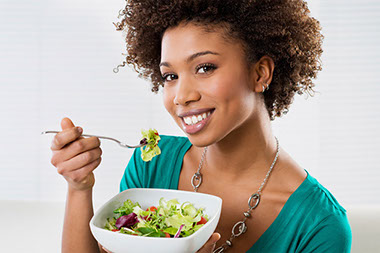
    Image of women eating a healthy salad.

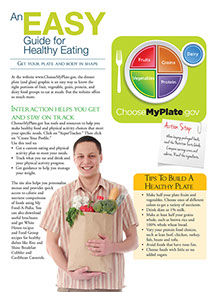
    Get your plate and body in shape.

    At the websitewww.ChooseMyPlate.gov, the dinner plate (and glass) graphic is an easy way to know the right portions of fruit, vegetable, grain, protein, and dairy food groups to eat at meals. But the website offers so much more.

    Interaction Helps You Get and Stay On Track

    ChooseMyPlate.govhas tools and resources to help you make healthy food and physical activity choices that meet your specific needs. Click on “SuperTracker.” Then click on “Create Your Profile.” Use this tool to:

    *  Get a custom eating and physical activity plan to meet your needs.

    *  Track what you eat and drink and your physical activity progress.

    *  Get guidance to help you manage your weight.

    The site also helps you personalize menus and provides quick access to calorie and nutrient comparisons of foods using My Food-A-Pedia. You can also download useful brochures and get White House recipes and Food Group recipes for healthy dishes like Rise and Shine Breakfast Cobbler and Caribbean Casserole.

    Tips to build a healthy plate

    *  Make half your plate fruits and vegetables. Choose ones of different colors to get a variety of nutrients.

    *  Drink skim or 1% milk.

    *  Make at least half your grains whole, such as brown rice and 100% whole wheat bread.

    *  Vary your protein food choices, such as lean beef, chicken, turkey, fish, beans and tofu.

    *  Avoid foods that have trans fats.

    *  Choose foods with little or no added sugars.

    Action Step

    When buying packaged foods, read the Nutrition Facts labels. Compare serving sizes and calories. Read the ingredients.

    Page from Ways to Well-Being book by the American Institute for Preventive Medicine. www.HealthyLife.com. All rights reserved.

    © American Institute for Preventive Medicine
  • Exercise On A Budget 2

    Fitness

    Image of women hiking.

    Lean times are no excuse to ignore your health.

    Don’t let gym memberships, personal training fees, or the cost of the latest exercise gadget weigh you down. Exercise is about moving, stretching, lifting, bending, breathing – things you can easily do at home. Or simply walk – around the block, at a mall, or on a local school’s track.

    Get started.

    Start with a few simple stretches to warm up your muscles. If you need help, go online for how-to instructions on everything from stretching to full routines. You can also find exercise tools to track your progress.

    No equipment necessary

    Do what you were taught in gym class – squats, push-ups, jumping jacks, and crunches. Lift your legs and arms, touch your toes, bend from side to side, jog in place, and twist. Just make sure you target all your major muscle groups at least once every week.

    No free weights? Try these substitutes.

    *  Use cans for triceps and biceps exercises instead of dumbbells.

    *  A gallon jug filled with water, sand, or powdered detergent is just as effective as a kettle bell for squats and arm lifts.

    *  Put a paper plate under one foot and lunge forward. You can also attach plates to both feet with rubber bands to simulate skating. Or, get down on all fours, put the plates under your hands and slide them back and forth for a great chest workout.

    *  Pantyhose move just as well as resistance bands for rowing and stretching routines.

    *  Use a chair or countertop as a push-up bench.

    *  A low, sturdy stool or a bottom stair can be used for a step exercise routine.

    Action Step

    Don’t wait until you have a block of time to exercise. You can do leg lifts in the elevator, calve raises in the grocery line, lunges as you walk the dog. Every little bit counts.

    Page image from Ways to Well-Being book by the American Institute for Preventive Medicine. www.HealthyLife.com. All rights reserved.

    © American Institute for Preventive Medicine
  • Easy Food Swaps For A Healthier You

    HEALTHY EATING

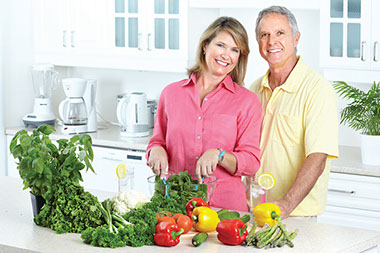
    Image of middle-aged couple preparing food in their kitchen.

    What if you could be healthier without making a bunch of drastic changes? No extreme dieting or starving, but just taking some small steps to improve your food choices. It is possible if you know which foods to eat more of, and which ones to scale back on. The American Heart Association recommends a few simple switches that can add up to better overall health:

    *  Don’t cook with butter, lard, or shortening. Use vegetable oils that are high in unsaturated fats. Great choices include olive, canola, walnut, and safflower oils.

    *  When purchasing canned soups or vegetables, look for lower-sodium or “no salt added” varieties. Choose frozen vegetables without added salt or sauces.

    *  Avoid foods with added sugar, such as canned fruits with syrup. Choose canned fruits with no sugar added and/or packed in 100 percent fruit juice.

    *  Use nonstick cooking spray instead of shortening for recipes that call for “greased” cookware.

    *  When buying bread or crackers, look for those labeled “whole grain” or “whole wheat.” These choices contain more fiber and nutrients than refined grains.

    *  Cut back on red meat by using ground turkey or chicken in place of ground beef in recipes. Turkey tacos, meatballs, or chili can be just as tasty and many people can’t tell the difference.

    These simple tips can help you cut back on saturated fat, excess sugar and sodium. This adds up to great health benefits without having to change your eating habits entirely.

    © American Institute for Preventive Medicine
  • Easy Protein Snacks

    HEALTHY EATING

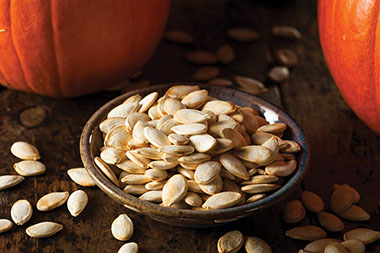
    Image of roasted pumpkin seeds.

    A great way to get healthy protein throughout the day is to make snacks with protein. The protein can help you feel fuller, holding you over until your next meal. These snacks may also help avoid a blood sugar crash that leaves you feeling sluggish and even hungrier than before. Try these ideas for tasty and easy-to-pack snacks:

    *  Hummus with sliced peppers, carrots, celery or cucumbers

    *  Peanut butter or almond butter with a banana

    *  ¼ cup of nuts, such as almonds, walnuts or pistachios with fresh fruit

    *  Roasted pumpkin seeds (buy them roasted or bake on a cookie sheet at 300º for 20 minutes)

    *  Tortilla with black beans, salsa and a sprinkle of low-fat cheese

    *  Roasted soy nuts (available at many supermarkets)

    *  A hard-boiled egg with leafy greens

    *  Low-fat string cheese with an apple or pistachios

    © American Institute for Preventive Medicine

  • Exercise On A Budget

    BE FIT

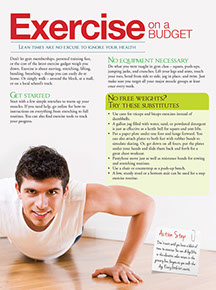
    Image of young man doing push-ups.

    Don’t let gym memberships, personal training fees, or the cost of the latest exercise gadget weigh you down. Exercise is about moving, stretching, lifting, bending, breathing – things you can easily do at home. Or simply walk – around the block, at a mall, or on a local school’s track.

    Get started

    Start with a few simple stretches to warm up your muscles. If you need help, go online for how-to instructions on everything from stretching to full routines. You can also find exercise tools to track your progress.

    No equipment necessary

    Do what you were taught in gym class – squats, push-ups, jumping jacks, and crunches. Lift your legs and arms, touch your toes, bend from side to side, jog in place, and twist. Just make sure you target all your major muscle groups at least once every week.

    No free weights? Try these substitutes

    *  Use cans instead of dumbbells to exercise biceps and triceps.

    *  A gallon jug filled with water, sand, or powdered detergent is just as effective as a kettle bell for squats and arm lifts.

    *  Put a paper plate under one foot and lunge forward. You can also attach plates to both feet with rubber bands to simulate skating. Or, get down on all fours, put the plates under your hands and slide them back and forth for a great chest workout.

    *  Pantyhose stretch just as well as resistance bands for rowing and stretching routines.

    *  A low, sturdy stool or a bottom stair can be used for a step exercise routine.

    © American Institute for Preventive Medicine
  • Family Meals: Healthy & Simple

    HEALTHY EATING

    Image of mother with 2 young kids wearing chef hats.

    Try these time-saving tips to make eating healthier simpler for you and your family, says Penny Kris-Etherton, PhD, RD, professor of nutrition at Penn State University.

    Plan out 2 to 4 weeks of healthy meals for breakfast, lunch, and dinner.Sit down and map out meals that include your family’s heart-healthy favorites. Update your list as you come across new recipe ideas.

    Use the weekend to make menus.Start by using the list from the first tip and make sure you grab the ingredients you need when you go grocery shopping. Keep an eye out for fresh, seasonal items that are on sale.

    If you work during the week, cook over the weekend and store leftovers in the fridge or freezer.Meals can be hassle-free when you’re just thawing and reheating for quick lunches and dinners.

    Cut up vegetables and keep them handy in the fridge.You’ll have ready-made nutritious snacks and ingredients.

    Shop sales, clip coupons, and buy fruits and vegetables in season.Look for less-expensive items. For example, blueberries cost less in spring and summer, when they’re in season. You’ll pay more in the fall and winter when they’re shipped from warmer continents.

    Skip the ready-made foods.They can be higher in sodium and often cost more than homemade foods.

    Replace high-calorie or high-fat favorites with nutrition-rich foods one at a time.Your family won’t feel shocked or deprived of their favorites if the changes to their diets are gradual. Try one change per week as a starting point.

    © American Institute for Preventive Medicine
  • 3 Steps To Cleaner Eating

    HEALTHY EATING

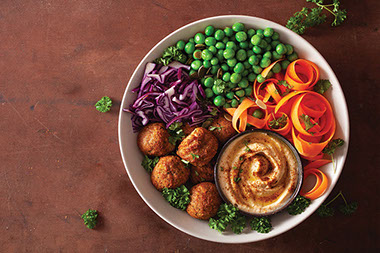
    A bowl of falafel with hummus, green peas, carrots, and purple cabbage.

    Eating well is one of the most important things you can do for your body. A well balanced diet contributes to overall health and protection from disease.

    Making micro or small changes to your diet eventually add up to better health. If you’re ready to clean up your food choices, here are three easy habits that can help.

    1. Focus on plants

    Instead of worrying about all the foods you shouldn’t be eating, focus on what you can include. Plant foods provide the best nutrition and should make up a majority of your diet.

    A good first step to cleaning up your diet is to add more plant foods to each meal and snack. These include:

    *  Fruits

    *  Vegetables

    *  Beans

    *  Nuts and seeds

    *  Whole grains

    *  Healthy oils like olive, sunflower, and avocado oil

    2. Have a salad or smoothie

    Choose a healthy salad or smoothie to make up the bulk of one meal each day. This is a simple way to increase your plant food intake while controlling calories and portion size.

    Make your daily smoothie or salad fiber-packed to promote fullness and digestive health. In addition to adding plenty of fruits and vegetables, consider including nuts, chia, hemp, or flax seeds for an extra boost of nutrients and fiber.

    3. Snack on whole foods

    Feeling deprived and hungry will quickly result in giving up on your healthy new eating habits. Clean eating is delicious and should make you feel good!

    So, keep tasty whole food snacks on hand to keep you satisfied all day long. Here are some ideas:

    *  Sliced apple with peanut butter

    *  Hardboiled egg and a piece of fruit

    *  Sliced vegetables and a piece of cheese

    *  Hummus with cucumbers

    *  Mixed nuts and a piece of fruit

    © American Institute for Preventive Medicine