Tag: skin

  • Understanding Psoriatic Arthritis

    MEDICAL NEWS

    Image of women's arm rash.

    Psoriatic arthritis (PA) is an inflammatory autoimmune condition in which the immune system mistakenly attacks the joints. Up to 1 in 3 people with the skin condition psoriasis will go on to develop PA.

    Most people who experience PA have had psoriasis for ten or more years. However, it is possible to develop PA without showing symptoms of psoriasis. PA is most likely to develop in middle age, though it can occur at any age. It can even occur in children.

    Signs & symptoms

    The most common symptom of PA is pain and swelling of the joints. The joints most likely to be affected include the fingers, ankles, wrists, and knees.

    Swelling of the fingers and toes is also common. This is called dactylitis, which causes discomfort and difficulty bending or using the fingers. In addition, the swelling can lead to stiffness and decreased range of motion, especially in the morning.

    Other symptoms of PA include fatigue, redness of the eyes, and pitting of the nails.

    Though PA is predominantly a joint condition, some organs of the body may be affected. For example, the digestive system, lungs, and heart can be damaged if the condition is left untreated.

    Diagnosis & treatment

    While there is no diagnostic test for PA, doctors make a diagnosis based on their observation, a health history, and by ruling out other possibilities. Tests that may be used include X-rays to assess the bones and joints and blood tests to look for markers of inflammation.

    Prompt treatment of PA is essential to prevent damage to the joints or organs. Unfortunately, there is no cure for PA, but many treatment options are available to manage pain and decrease inflammation.

    A primary care doctor, rheumatologist, and dermatologist may all be part of the care team for treating PA.

    Living with PA

    Thanks to the many effective treatments available, people with PA can reduce the side effects of the condition and lead active, healthy lives.

    In addition to medical resources, lifestyle habits such as exercise and eating an anti-inflammatory diet can help manage symptoms.

    If you have PA, always talk to your doctor to find out what activities or lifestyle choices are right for you.

    Sources: Arthritis Foundation, National Psoriasis Foundation

    © American Institute for Preventive Medicine

  • Uv Safety 2

    SELF-CARE CORNER

    Man's sun burn face popping out of swimming tube.

    Sitting in the warm sun can be great for your mental health and your daily dose of vitamin D. But too much sun exposure can pose a big problem. Before you get some rays, plan ahead so your fun in the sun doesn’t end with a painful sunburn.

    *Find shade:You don’t want to be in direct sunlight for too long. Find a shady area or an umbrella to sit under for some respite from the sun.

    *Wear clothing:The right clothes can help reduce sun damage. Choose lightweight, breathable fabrics that cover your arms, legs, chest and back. Find a wide-brimmed hat to cover your face and neck and buy sunglasses with 100% UV protection. Choose clothes with built-in UV protection, as well.

    *Rub in sunscreen:Wearing sunscreen is a habit you should practice year-round. Make sure you choose a sunscreen with at least SPF 15 – SPF 30 is a better choice. Reapply every two hours or immediately after swimming.

    How to soothe a sunburn

    It’s fun to play in the sun. But what do you do when the sun bites back? First things first, get out of the sun! Cover up your skin if you’re outside and find a cool, dark place. Then, get to work helping your skin recover.

    1.Take a cool bath or shower to cool down your skin.Avoid using harsh soaps or body washes, as these could make your skin dry out even more.

    2.Apply a moisturizer or aloe vera to the burn.This helps to trap moisture in your skin, which can help with healing. Aloe vera is anti-inflammatory, promotes circulation and may help stop bacteria from growing.

    3.Drink water.Your body fights a sunburn by drawing water to the surface of your skin. This could lead to dehydration, so be sure to replenish your fluids often.

    4.Take extra care.After a sunburn, it is very important that you stay out of the sun for the next few days so your skin can heal. Wear loose clothing and avoid any itchy fabrics.

    5.See a doctor if…you get severe blistering, develop a fever and chills, or see signs of infection, such as oozing pus or red streaks.

    © American Institute for Preventive Medicine

  • Work-Related Skin Problems

    WORK LIFE

    Electrician wearing gloves while working.

    Your skin is the largest organ on your body, and it has important functions. When it’s healthy, your skin helps:

    *  Regulate your body’s temperature

    *  Keep invaders like bacteria and fungus out

    *  Protect you from the elements, such as cold and sun

    Your job & your skin

    Your skin needs care and protection to stay healthy – at home and at work. Do you work with chemicals or harmful substances? Do you wash your hands often? People who work in these fields are more prone to work-related skin problems:

    *  Manufacturing

    *  Food production

    *  Construction

    *  Machine tool operation

    *  Printing

    *  Metal plating

    *  Leather processing

    *  Engine service

    *  Landscaping

    *  Farming

    *  Forestry

    *  Health care

    Healthy skin at work

    Take precautions to prevent skin irritation and injury at work. If you work with chemicals, follow these steps:

    *  Store all chemicals safely and label them correctly.

    *  Use proper waste containers.

    *  Have a material safety data sheet (MSDS) for every dangerous substance used at work.

    *  Wear protective gear like gloves, aprons, hats and masks.

    *  Take off oil- or chemical-soaked work clothes before you leave work.

    *  Know what to do if your skin comes in contact with a harmful substance.

    *  When possible, use tools to handle dangerous materials so they don’t touch your skin.

    *  If you work with radiation, wear protective clothing and gear to prevent exposure.

    If you wash your hands frequently at work:

    *  Do not clean your skin with chemicals. Use only cleansers designed for the skin.

    *  Apply lotion, cream or petroleum jelly after washing hands to prevent dryness, cracking and eczema.

    If you work outdoors, take sun protection seriously. Make sure you:

    *  Apply sunscreen at least every two hours if you’re in the sun.

    *  Wear sunglasses, a wide-brimmed hat and clothing that covers your body.

    Source: American Academy of Family Physicians

    © American Institute for Preventive Medicine

  • Winter Itch

    SELF-CARE CORNER

    Image of a snowman.

    All winter flakes are not made of snow. Cold weather, with its low relative humidity, wreaks havoc on your skin, making it dry and flaky. Skin dries out if it’s deprived of moisture, and this dryness often aggravates itchiness, resulting in a condition commonly referred to as “winter itch.” During the winter the air is drier, and indoor heating further robs your skin of moisture. Fortunately, there are several ways that you can replenish the water content of your skin.

    Dr. Robyn Gmyrek, a dermatologist and director of the Skin and Laser Center at New York-Presbyterian Hospital/Columbia University Medical Center, suggests the following skin advice:

    *Moisturize daily.Petrolatum or cream-based moisturizers are far better than lotions for normal to dry skin. If you have sensitive skin, choose a moisturizer without fragrance or lanolin. After bathing, apply moisturizer directly to your wet skin to ensure that the moisturizer can help to trap surface moisture.

    *Limit the use of hot water and soap.If you have “winter itch,” take short lukewarm showers or baths with a non-irritating, non-detergent-based cleanser. Immediately afterward, apply a thick cream or a petroleum-jelly-type moisturizer. Gently pat skin dry.

    *Humidify.Dry air can pull the moisture from your skin. Room humidifiers can be very helpful. However, be sure to clean the unit and change the water according to the manufacturer’s instructions to reduce mold and fungi.

    *Protect yourself from the wind.Cover your face and use a petrolatum-based balm for your lips.

    *Protect your skin from the sun.Remember that winter sun can also be dangerous to the skin. Even in the winter months you should use a sunscreen with a sun-protection factor of 15 or greater if you will be outdoors for prolonged periods.

    *Avoid winter tanning.Tanning beds and artificial sunlamps are always damaging to your skin and increase your risk of skin cancer.

    *Take vitamin D supplements.During the summer months your natural vitamin D production increases due to daily sun exposure, but when winter rolls around that exposure decreases. Taking vitamin supplements can ensure that you are getting the recommended amounts of vitamin D all year.

    © American Institute for Preventive Medicine

  • Yes, More Sunscreen!

    SELF-CARE CORNER

    Image of sun hat, sunglasses and sunscreen.

    Wear it. Wear plenty of it. And this summer is the first season for the new FDA regulations. Here’s what you need to know about labels and ingredients from Dr. Alan Friedman of Montefiore Medical Center.

    Water-resistant

    Sunscreens claiming to be waterproof and sweat proof are no longer on the shelves. In their place are 40- and 80-minute water-resistant sunscreens. They offer sun protection for a limited time when exposed to water. Choose the 80-minute water-resistant product and reapply after swimming or toweling off.

    Sun Protection Factor (SPF)

    Some people think that SPF measures the length of time users can be in the sun before getting sunburned. Not so. SPF defines the amount of ultraviolet B (UVB) radiation needed to cause sunburn, even while sunscreen is on. Sunscreens with SPF 2 through SPF 14 can prevent sunburn, but they provide no protection against skin cancer or premature skin aging. Such sunscreens must now carry a warning label stating, “Spending time in the sun increases your risk of skin cancer and early skin aging. This product has been shown only to help prevent sunburn, not skin cancer or early skin aging.”

    The FDA has yet to rule on whether products with SPF values higher than 50 provide extra protection compared to ones with SPF values of 50.

    For a sunscreen to reach its listed SPF, a full ounce (think of a shot glass full) needs to be applied. Recent research shows that people only apply 20-25% of this amount, unknowingly lowering the protection factor of their sunscreens. Best choice: SPF 30 or higher and plenty of it.

    Broad spectrum

    Until the final FDA requirements took effect, sunscreens were only evaluated and regulated for their ability to protect against UVB radiation, as measured by SPF. Now, sunscreens also are evaluated for their UVA protection. Sunscreens labeled as “broad spectrum” protect against both UVA and UVB radiation.

    “UVA penetrates deeper into the skin where it can accelerate skin aging and cause skin cancer. I call UVA the silent killer, because unlike UVB, it does not cause sunburns so it is hard to tell if you are getting harmful exposure,” said Dr. Friedman. “Broad spectrum sunscreen use should not be limited to beach outings or summer months. Recent research showed that the skin aging process is significantly slower among people who apply broad spectrum sunscreen daily, year round.”

    Read the ingredients

    Sunscreen companies use different mixtures of ingredients. Choose products that have a variety of sun-blocking agents. Dr. Friedman recommends selecting a sunscreen that contains several organic sun-blocking agents such as ecamsule, cinoxate, octyl salicylate, and benzophenones (oxybenzone). The different chemicals work in synergy to create greater sun protection than any one ingredient alone. Also, combining multiple agents allows companies to use less of each, which decreases the risk of any associated irritation.

    The best products also contain mineral, physical sun-blocking agents like zinc oxide and titanium oxide. In the past, these ingredients appeared chalky and left skin greasy, but newer products deliver “micronized” thinner, sheerer formulations. Products that contain talc and bentone gel prevent these ingredients from clumping, and improve cosmetic appearance.

    Look for pH stabilizers to hydrate and fortify the skin, like dimethicone, cyclomethicone, and sodium phosphate. When the skin is hydrated, its can heal and repair itself much more quickly.

    © American Institute for Preventive Medicine

  • 4 “S”S For Smooth Skin

    WELL-BEING

    Young female with a jar of lotion.

    Winter is hard on your skin. Dry indoor air, frequent washing and cold outside air can make skin itchy and painful. Your skin is the largest organ in your body and an important barrier. Protect it!

    1.  Stay safe with germs: Don’t skip handwashing because your hands are dry. You could end up sick or may spread germs to others. Instead, keep hand cream in your purse, pocket or desk. Apply the cream after you wash your hands.

    2.  Short showers: A long, hot shower strips skin of its protective oils. Keep showers and baths short and not too hot.

    3.  Slather moisturizer: After bathing, apply a rich cream or ointment before skin is fully dry. Petroleum jelly is a low-cost and effective choice.

    4.  Skip harsh soaps: Many products contain drying detergents. These can leave skin feeling irritated and dry. Look for products that don’t contain alcohol or fragrances.

    © American Institute for Preventive Medicine

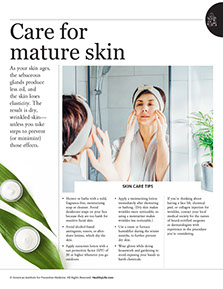
  • How To Care For Mature Skin

    Mature Health: Over Age 50

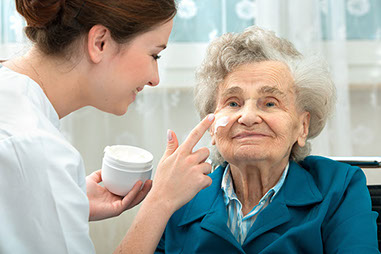
    Image of a caregiver placing cream on a mature women's face.

    As your skin ages, the sebaceous glands produce less oil, and the skin loses elasticity. The result is dry, wrinkled skin-unless you take steps to prevent (or minimize) those effects. Here’s what to do to stay one step ahead of Mother Nature.

    *  Shower or bathe with a mild soap or transparent glycerin soaps to prevent dry, flaky skin. Don’t use deodorant soaps on your face-they’re too harsh for sensitive facial skin.

    *  Avoid alcohol-based astringents, toners, or after-shave lotions, which dry the skin.

    *  Apply a moisturizing lotion immediately after showering or bathing. (Dry skin makes wrinkles more noticeable, so using a moisturizer makes wrinkles less noticeable.)

    *  Use a room or furnace humidifier during the winter months, to further prevent dry skin.

    *  When washing dishes or working with strong detergents, protect your hands with rubber gloves.

    *  Apply sunscreen lotion with a sun protection factor (SPF) of 15 or higher whenever you go outdoors.

    If you’re thinking about having a face lift, chemical peel, or collagen injection for wrinkles, contact your local medical society for the names of board-certified surgeons or dermatologists with experience in the procedure you’re considering.

    A Year of Health Hints book by the American Institute for Preventive Medicine. www.HealthyLife.com. All rights reserved.

    © American Institute for Preventive Medicine

  • Cellulitis

    Skin Conditions

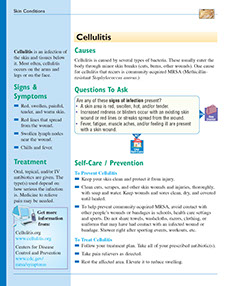
    Cellulitis is an infection of the skin and tissues below it. Most often, cellulitis occurs on the arms and legs or on the face.

    Signs & Symptoms

    *  Red, swollen, painful, tender, and warm skin.

    *  Red lines that spread from the wound.

    *  Swollen lymph nodes near the wound.

    *  Chills and fever.

    Causes

    Cellulitis is caused by several types of bacteria. These usually enter the body through minor skin breaks (cuts, burns, other wounds). One cause for cellulitis that recurs is community-acquired MRSA (Methicillin- resistant Staphylococcus aureus.)

    Treatment

    Oral, topical, and/or IV antibiotics are given. The type(s) used depend on how serious the infection is. Medicine to relieve pain may be needed.

    Questions to Ask

    Self-Care / Prevention

    To Prevent Cellulitis

    *  Keep your skin clean and protect it from injury.

    *  Clean cuts, scrapes, and other skin wounds and injuries, thoroughly, with soap and water. Keep wounds and sores clean, dry, and covered until healed.

    *  To help prevent community-acquired MRSA, avoid contact with other people’s wounds or bandages in schools, health care settings and sports. Do not share towels, washcloths, razors, clothing, or uniforms that may have had contact with an infected wound or bandage. Shower right after sporting events, workouts, etc.

    To Treat Cellulitis

    *  Follow your treatment plan. Take all of your prescribed antibiotic(s).

    *  Take pain relievers as directed.

    *  Rest the affected area. Elevate it to reduce swelling.

    Healthier at Home book by the American Institute for Preventive Medicine. www.HealthyLife.com. All rights reserved.

    © American Institute for Preventive Medicine

  • Uv Safety

    Skin Conditions

    Man holding sun block in hand with sun screen on face.

    Exposure to the sun’s UV rays causes most skin cancers. Even a few serious sunburns can raise the risk.

    Limit exposure to the sun. When in the sun, wear sun screen and lip balm with a sun protective factor (SPF) of 30 or higher.

    Ultraviolet (UV) radiation comes in three forms: UVA, UVB, and UVC. UVA and UVB rays cause skin and eye damage. UVC rays don’t reach the earth.

    UV rays also reflect off of surfaces like water, sand, and snow.

    Use sun screens that protect against both UVA and UVB rays. Choose eyewear that absorbs 99-100% of both UVA and UVB rays. Wrap-around sunglasses work best because they block UV rays from sneaking in from the side.

    High doses of UVA radiation comes from tanning beds.

    For the look of a tan, use sunless tanning lotions, sprays, and bronzers, instead of sun bathing, tanning beds, and sun lamps.

    Health at Home Lifetime book by the American Institute for Preventive Medicine. www.HealthyLife.com. All rights reserved.

    © American Institute for Preventive Medicine

  • 6 Benefits Of Drinking Water

    WELL-BEING

    Illustration of drinking water and it's benefits.

    Your body needs water for nearly every function. But, many people aren’t getting enough. While fluids from other drinks and even some foods can help hydrate you, drinking plain water has some advantages. It’s calorie-free, doesn’t cause cavities and doesn’t cost anything. Start filling up a reusable water bottle today and take advantage of these water perks:

    Headache prevention:Dehydration can cause a severe headache. If you drink water throughout the day, you can avoid this.

    Better workout:Water is needed for proper energy levels and muscle function. Drink enough before and after workouts to avoid dehydration and sluggishness.

    Joint pain relief:Dehydration can cause achy bones and joints. Water is needed to keep joints lubricated and healthy.

    Healthier skin:Staying hydrated helps your skin stay hydrated, too. This can make skin feel healthier.

    Healthy weight:Drinking water instead of soda or sugary drinks can save you hundreds of extra calories and help get to, or stay at, a healthy weight.

    Healthier kidneys and bladder:Drinking enough water helps prevent kidney stones and urinary tract infections.

    Talk with your doctor about how much water you should drink each day. People with end stage kidney disease, heart failure or certain other conditions may need to limit their fluids.

    © American Institute for Preventive Medicine