Tag: Skin Conditions

  • Say Goodbye To Winter Rash

    SELF-CARE CORNER

    Female using face cream on cheeks.

    Winter weather can create havoc for your skin. Cold air, low humidity, and the use of central heating all contribute to skin becoming dry, red, and itchy. A winter rash is a common skin condition that develops in the cool months.

    In addition, cool temperatures and dry air create a condition ripe for flair-ups for people who have skin conditions. This includes eczema or psoriasis.

    If you are prone to winter rashes, there are simple steps you can take to protect your skin and keep you comfortable all winter long.

    Keep your skin moisturized

    A thick, cream-based moisturizer is often a good choice in the winter. Because winter rashes are usually caused by dryness of the skin, find a lotion or cream that keeps your skin soft and smooth.

    Moisturize right after you bathe while your skin is still damp. For patches of skin that are dry, red, or itchy, you can apply lotion as often as needed.

    Avoid hot showers or baths

    Soaking in a steaming hot bath or shower might sound nice, but all that hot water can dry out your skin. When you bathe or shower, keep the water warm and limit your time to five or ten minutes.

    For some people, bathing every other day can aid in keeping the skin moisturized by allowing the skin’s natural oils to accumulate.

    Use a humidifier

    In cooler months, the air is cold and it also contains less water. If your home heating system does not have built-in humidity control, you may choose to purchase a humidifier to add moisture to the air.

    Ideal indoor air humidity should be between 30-50%. If you are using a humidifier, aim to stay in that range to prevent dryness.

    When to seek treatment for a rash

    Call your doctor if you have any of these symptoms:

    *  You develop open cuts or sores

    *  Your dry skin keeps you from sleeping

    *  You have itching without a visible rash

    *  Your self-care efforts do not relieve your dry skin

    © American Institute for Preventive Medicine
  • Understanding Psoriatic Arthritis

    MEDICAL NEWS

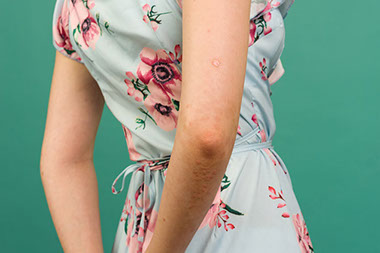
    Image of women's arm rash.

    Psoriatic arthritis (PA) is an inflammatory autoimmune condition in which the immune system mistakenly attacks the joints. Up to 1 in 3 people with the skin condition psoriasis will go on to develop PA.

    Most people who experience PA have had psoriasis for ten or more years. However, it is possible to develop PA without showing symptoms of psoriasis. PA is most likely to develop in middle age, though it can occur at any age. It can even occur in children.

    Signs & symptoms

    The most common symptom of PA is pain and swelling of the joints. The joints most likely to be affected include the fingers, ankles, wrists, and knees.

    Swelling of the fingers and toes is also common. This is called dactylitis, which causes discomfort and difficulty bending or using the fingers. In addition, the swelling can lead to stiffness and decreased range of motion, especially in the morning.

    Other symptoms of PA include fatigue, redness of the eyes, and pitting of the nails.

    Though PA is predominantly a joint condition, some organs of the body may be affected. For example, the digestive system, lungs, and heart can be damaged if the condition is left untreated.

    Diagnosis & treatment

    While there is no diagnostic test for PA, doctors make a diagnosis based on their observation, a health history, and by ruling out other possibilities. Tests that may be used include X-rays to assess the bones and joints and blood tests to look for markers of inflammation.

    Prompt treatment of PA is essential to prevent damage to the joints or organs. Unfortunately, there is no cure for PA, but many treatment options are available to manage pain and decrease inflammation.

    A primary care doctor, rheumatologist, and dermatologist may all be part of the care team for treating PA.

    Living with PA

    Thanks to the many effective treatments available, people with PA can reduce the side effects of the condition and lead active, healthy lives.

    In addition to medical resources, lifestyle habits such as exercise and eating an anti-inflammatory diet can help manage symptoms.

    If you have PA, always talk to your doctor to find out what activities or lifestyle choices are right for you.

    Sources: Arthritis Foundation, National Psoriasis Foundation

    © American Institute for Preventive Medicine

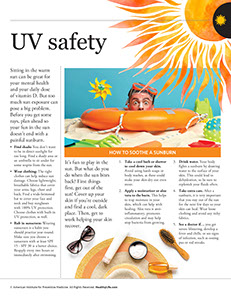
  • Uv Safety 2

    SELF-CARE CORNER

    Man's sun burn face popping out of swimming tube.

    Sitting in the warm sun can be great for your mental health and your daily dose of vitamin D. But too much sun exposure can pose a big problem. Before you get some rays, plan ahead so your fun in the sun doesn’t end with a painful sunburn.

    *Find shade:You don’t want to be in direct sunlight for too long. Find a shady area or an umbrella to sit under for some respite from the sun.

    *Wear clothing:The right clothes can help reduce sun damage. Choose lightweight, breathable fabrics that cover your arms, legs, chest and back. Find a wide-brimmed hat to cover your face and neck and buy sunglasses with 100% UV protection. Choose clothes with built-in UV protection, as well.

    *Rub in sunscreen:Wearing sunscreen is a habit you should practice year-round. Make sure you choose a sunscreen with at least SPF 15 – SPF 30 is a better choice. Reapply every two hours or immediately after swimming.

    How to soothe a sunburn

    It’s fun to play in the sun. But what do you do when the sun bites back? First things first, get out of the sun! Cover up your skin if you’re outside and find a cool, dark place. Then, get to work helping your skin recover.

    1.Take a cool bath or shower to cool down your skin.Avoid using harsh soaps or body washes, as these could make your skin dry out even more.

    2.Apply a moisturizer or aloe vera to the burn.This helps to trap moisture in your skin, which can help with healing. Aloe vera is anti-inflammatory, promotes circulation and may help stop bacteria from growing.

    3.Drink water.Your body fights a sunburn by drawing water to the surface of your skin. This could lead to dehydration, so be sure to replenish your fluids often.

    4.Take extra care.After a sunburn, it is very important that you stay out of the sun for the next few days so your skin can heal. Wear loose clothing and avoid any itchy fabrics.

    5.See a doctor if…you get severe blistering, develop a fever and chills, or see signs of infection, such as oozing pus or red streaks.

    © American Institute for Preventive Medicine

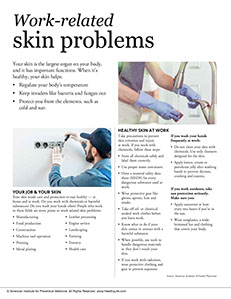
  • Work-Related Skin Problems

    WORK LIFE

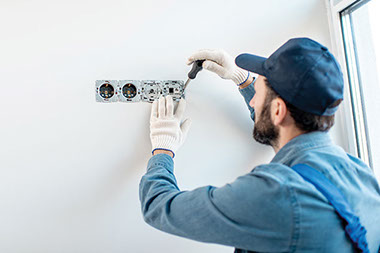
    Electrician wearing gloves while working.

    Your skin is the largest organ on your body, and it has important functions. When it’s healthy, your skin helps:

    *  Regulate your body’s temperature

    *  Keep invaders like bacteria and fungus out

    *  Protect you from the elements, such as cold and sun

    Your job & your skin

    Your skin needs care and protection to stay healthy – at home and at work. Do you work with chemicals or harmful substances? Do you wash your hands often? People who work in these fields are more prone to work-related skin problems:

    *  Manufacturing

    *  Food production

    *  Construction

    *  Machine tool operation

    *  Printing

    *  Metal plating

    *  Leather processing

    *  Engine service

    *  Landscaping

    *  Farming

    *  Forestry

    *  Health care

    Healthy skin at work

    Take precautions to prevent skin irritation and injury at work. If you work with chemicals, follow these steps:

    *  Store all chemicals safely and label them correctly.

    *  Use proper waste containers.

    *  Have a material safety data sheet (MSDS) for every dangerous substance used at work.

    *  Wear protective gear like gloves, aprons, hats and masks.

    *  Take off oil- or chemical-soaked work clothes before you leave work.

    *  Know what to do if your skin comes in contact with a harmful substance.

    *  When possible, use tools to handle dangerous materials so they don’t touch your skin.

    *  If you work with radiation, wear protective clothing and gear to prevent exposure.

    If you wash your hands frequently at work:

    *  Do not clean your skin with chemicals. Use only cleansers designed for the skin.

    *  Apply lotion, cream or petroleum jelly after washing hands to prevent dryness, cracking and eczema.

    If you work outdoors, take sun protection seriously. Make sure you:

    *  Apply sunscreen at least every two hours if you’re in the sun.

    *  Wear sunglasses, a wide-brimmed hat and clothing that covers your body.

    Source: American Academy of Family Physicians

    © American Institute for Preventive Medicine
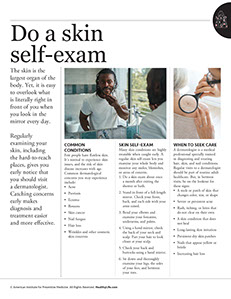
  • Do A Skin Self-Exam

    SELF-CARE CORNER

    Man looking at himself in mirror.

    The skin is the largest organ of the body. Yet, it is easy to overlook what is literally right in front of you when you look in the mirror every day.

    Regularly examining your skin, including the hard-to-reach places, gives you early notice that you should visit a dermatologist. Catching concerns early makes diagnosis and treatment easier and more effective.

    Common conditions

    Few people have flawless skin. It’s normal to experience skin issues, and the risk of skin disease increases with age. Common dermatological concerns you may experience include:

    *  Acne

    *  Psoriasis

    *  Eczema

    *  Rosacea

    *  Skin cancer

    *  Nail fungus

    *  Hair loss

    *  Wrinkles and other cosmetic skin concerns

    Skin Self-exam

    Many skin conditions are highly treatable when caught early. A regular skin self-exam lets you examine your whole body and monitor any moles, blemishes, or areas of concern.

    1.  Do a skin exam about once a month after exiting the shower or bath.

    2.  Stand in front of a full-length mirror. Check your front, back, and each side with your arms raised.

    3.  Bend your elbows and examine your forearms, underarms, and palms.

    4.  Using a hand mirror, check the back of your neck and scalp. Part your hair to look closer at your scalp.

    5.  Check your back and buttocks using a hand mirror.

    6.  Sit down and thoroughly examine your legs, the soles of your feet, and between your toes.

    When to seek care

    A dermatologist is a medical professional specially trained in diagnosing and treating hair, skin, and nail conditions. Regular visits to a dermatologist should be part of routine adult healthcare. But, in between visits, be on the lookout for these signs:

    *  A mole or patch of skin that changes color, size, or shape

    *  Severe or persistent acne

    *  Rash, itching, or hives that do not clear on their own

    *  A skin condition that does not heal

    *  Long-lasting skin irritation

    *   Persistent dry skin patches

    *  Nails that appear yellow or brittle

    *  Increasing hair loss

    © American Institute for Preventive Medicine
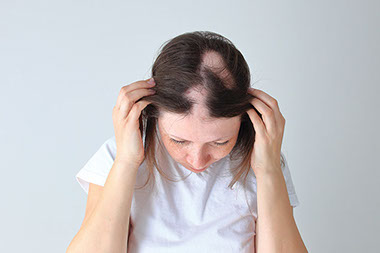
  • Disappearing Hair: Know About Alopecia

    SELF-CARE CORNER

    Women showing hair loss.

    Hair loss is a normal part of life and aging. The average person loses 100 strands of hair from their scalp every day. Usually, these hairs grow back as part of a hair follicle’s lifecycle.

    However, as people get older, hair loss usually outpaces hair regrowth. In addition, some people may be susceptible to losing their hair early in life.

    Alopecia, another name for hair loss, can be frustrating, embarrassing, and tough to manage. But, there may be options available to slow, halt, or reduce the appearance of thinning hair.

    Causes of alopecia

    There are many different types of alopecia, each with a different cause.

    For example, androgenetic alopecia, commonly known as pattern baldness, is linked to your genetics. If your dad or mom experienced pattern baldness, the likelihood is you will too.

    Other causes include:

    *  Aging

    *  Genetics

    *  Hormones

    *  Stress

    *  Thyroid dysfunction

    *  Medications

    *  Chemical hair treatments

    *  Autoimmune reactions

    Treatment options

    The best way to manage hair loss depends on the cause. While some forms of alopecia may be slowed or halted, others are irreversible. Your medical doctor or dermatologist is your best resource when exploring treatments for alopecia.

    Options may include:

    *  Topical medications or shampoos

    *  Oral medications

    *  Corticosteroid injections

    *  Hair transplant

    *  Wigs or hairpieces

    Caring for your hair

    How you treat your hair may contribute to alopecia in some cases. The better care you take of the hair you have, the healthier it will be.

    *  Use a gentle shampoo that won’t remove moisture from your hair.

    *  Apply conditioner after every shampoo.

    *  Limit how long and how often you blow-dry your hair.

    *  Avoid wearing your hair in a tight bun, ponytail, or braid.

    *  Brush or comb your hair gently. Avoid tugging.

    If you are dealing with alopecia, talk to your doctor to find out the cause and discuss the best treatment options for you.

    © American Institute for Preventive Medicine
  • How To Build Strong, Healthy Nails

    SELF-CARE CORNER

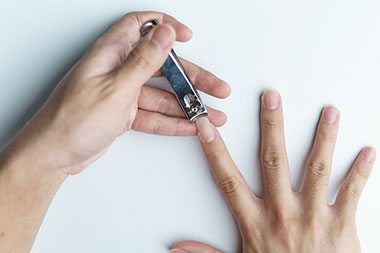
    Close up of hands clipping nails.

    Taking proper care of your nails is more than a matter of looks. Clear, strong nails are a marker of good physical health. They reflect everything from your level of stress to the quality of your diet.

    It may seem like a simple thing, but caring for your nails is an essential part of a comprehensive self-care routine. Healthy nails don’t happen by chance. Here is what you need to know to keep your nails in excellent condition.

    Keep nails trimmed and shaped

    Don’t wait for nails to break or become jagged before giving them a good trim. Fingernails, in particular, need frequent grooming to maintain a healthy shape.

    For best health, cut nails straight across. Then, use an emery board to give them a rounded shape at the tips. This will prevent breakage and minimize the risk of ingrown nails.

    The nails on your fingers grow three times faster than the nails on your toes. Plan to trim and shape them more often than your toenails.

    Care for your cuticles

    The cuticle seals the skin of your finger around the nail. Never trim or move the cuticles as this disrupts the seal and increases your risk of a nail infection. If you go for a manicure, let the technician know to leave the cuticles alone.

    Cuticles benefit from extra moisture, especially in the winter months. You can use a special cuticle moisturizer. Or, even simple hand lotion massaged into the nail area will improve cuticle health.

    Limit manicures and pedicures

    Harsh nail products and regular use of polish weaken your nails. Wearing artificial nails can make your nails thin and brittle, as well as increase the risk of infection.

    Enjoy manicures and pedicures on occasion, but make sure to give your nails a break in between. Letting your nails enjoy time without polish or products will keep them healthy and less prone to breakage.

    If you really love artificial nails, save them for special occasions and opt for a simple french manicure whenever possible.

    Don’t forget your toenails

    Because toenails do not grow as fast, they often don’t get as much care and attention. But don’t fall into the habit of ignoring them.

    Inspect toenails regularly and watch for sharp edges or ingrown nails. Also, keep a close eye out for changes in nail color which could signal a nail problem or even an infection.

    Wear comfortable shoes that don’t pinch the toes and use flip-flops at public showers or pools. These steps will keep the toenails clean and healthy.

    © American Institute for Preventive Medicine

  • Dry Skin

    Skin Conditions

    Signs & Symptoms

    *  Itchy skin. The skin can be red from scratching it.

    *  Chapped skin.

    *  Skin cracks, peels, and/or flakes.

    Causes

    *  Aging. The body naturally produces less oil and moisture.

    *  Cold winter weather. Dry air or heat.

    *  Washing the skin often. Using harsh skin products.

    *  Chronic and excessive sun exposure.

    *  Allergies. An underactive thyroid gland. Diabetes. Kidney disease. Other skin conditions, such as psoriasis.

    Treatment

    Dry skin is not a serious health risk. It can be managed with self-care. When dry skin is a symptom of a health problem, treating the problem treats the dry skin.

    Questions to Ask

    Self-Care / Prevention

    *  Drink 8 or more glasses of water a day.

    *  Apply an oil- based lotion daily.

    *  Wear rubber gloves when you wash dishes.

    *  Take showers instead of baths. Use warm (not hot) water. Try sponge baths.

    *  Apply a moisturizing cream while your skin is damp. Use products with lanolin.

    *  If you do bathe, do so for only 15 to 20 minutes in lukewarm water. Pat yourself dry. Do not rub.

    *  Put soap on a washcloth, not right on the skin.

    *  Use a mild liquid soap, like Cetaphil lotion or use a fatted soap. Avoid deodorant, medicated, or alkaline soaps.

    *  Don’t use moisturizers with fragrances, preservatives, or alcohol.

    *  Use a night cream for the face.

    *  Stay out of the strong sun. Do not use tanning salons. When in the sun, use a sunblock with a sun protection factor (SPF) of at least 15.

    *  Don’t scratch or rub dry skin.

    Resources

    American Academy of Dermatology

    866.503.SKIN (503.7546)

    www.aad.org

    Healthier at Home book by the American Institute for Preventive Medicine. www.HealthyLife.com. All rights reserved.

    © American Institute for Preventive Medicine
  • Warts

    Skin Conditions

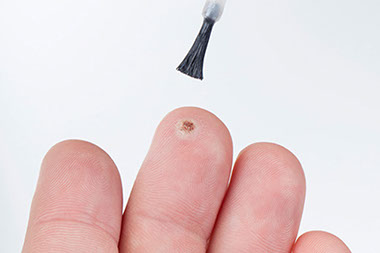
    Image of medication being applied to wart on finger.

    Warts are small skin growths. Most are harmless and painless. They can appear on any part of the body.

    Signs & Symptoms

    *  Common warts. These are firm and often have a rough surface. They are round or have an irregular shape. They are found on places subject to injury, such as the hands, fingers, and knees. Common warts are flesh-colored to brown. They may spread, but are not cancer.

    *  Flat warts. These are smooth and flesh-colored. They are found mainly on the hands and face and may itch.

    *  Plantar warts. These occur on the soles of the feet. They look like corns or calluses and may have little black dots in the center. They can be painful.

    *  Digitate warts. These threadlike warts grow on the scalp.

    *  Filiform warts. These are long, narrow, small growths. They appear mainly on the neck, eyelids, or armpits.

    *  Genital warts. SeeSexually Transmitted Infections (STIs) – Human Papillomavirus (HPV).

    Causes

    Warts are caused by human papillomaviruses. One of these viruses may enter the body through a cut or nick in the skin. Scratching or picking at warts may spread them to other sites. Some persons are more prone to getting warts than others. People who cannot fight off disease are also more at risk for warts. You cannot get warts from frogs or toads.

    Treatment

    Treatment for warts depends on their location, type, and severity and how long they have been on the skin. About 50% of warts go away in 6 to 12 months without treatment.

    Self-care measures can be used for warts not on the face or genitals. Medical treatment includes liquid nitrogen, chemical injections, topical medicines, laser surgery, and minor surgery.

    Questions to Ask

    Self-Care / Prevention

    *  Don’t touch, scratch, or pick at warts.

    *  Never cut or burn a wart off.

    *  Try an over-the-counter wart remover with salicylic acid. This can be a liquid or it can be in a medicated wart pad or patch. {Note: Do not use these wart removers on the face or genitals.} Follow package directions. A pumice stone helps remove the dead skin during this treatment.

    *  Ask your doctor about Retin A for flat warts.

    *  During treatment for plantar warts, put pads or cushions in your shoes. This can help relieve the pain when you walk.

    To Prevent Warts

    *  Don’t touch, scratch, or pick at warts.

    *  Wear plastic sandals or shower shoes in locker rooms and public swimming pool areas.

    *  Change shoes often to air them out.

    Resources

    Skinsight

    www.skinsight.com

    Healthier at Home book by the American Institute for Preventive Medicine. www.HealthyLife.com. All rights reserved.

    © American Institute for Preventive Medicine
  • Eczema

    Skin Conditions

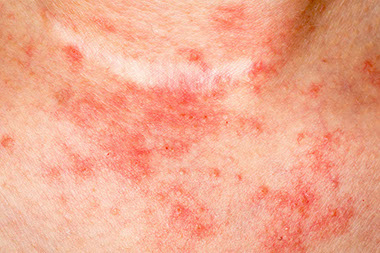
    Image of an eczema rash.

    Eczema (atopic dermatitis) is a chronic skin condition. It usually appears on the scalp, face, neck, or creases of the elbows, wrists, and knees. It usually improves as you get older, but can be a lifetime problem.

    Signs & Symptoms

    Patches of skin that are:

    *  Dry, red, and scaly

    *  Blistered and swollen

    *  Sometimes thick, discolored, or oozing and crusting

    Causes, Risk Factors & Care

    Eczema tends to run in families. It is also more common in persons who have allergies or asthma. Contact with cosmetics, dyes, deodorants, skin lotions, permanent press fabrics, and other allergens can aggravate eczema; so can wool fabrics, stress, exposure to extreme weather conditions, and eating foods, such as eggs, milk, seafood, or wheat products.

    Your doctor may prescribe antibiotics for skin infections and/or other medicines if self-care does not relieve symptoms.

    Self-Care

    *  Don’t scratch! This makes eczema worse. Your skin can get infected. Keep your fingernails cut short.

    *  Don’t take baths too often. Add bath oil to the water. Sponge bathe in between tub baths. Take quick showers.

    *  Use warm (not hot) water when you take a bath or shower.

    *  Use a mild soap or no soap at all on the areas of eczema.

    *  Don’t use wool clothes and blankets.

    *  Use a light, nongreasy and unscented lotion on your skin after you wash. Don’t use lotions that have alcohol. They can dry the skin.

    *  Try to keep from sweating. For example, don’t wear too many clothes for the weather.

    *  Wear rubber gloves when you do housework. Put talcum powder or cornstarch inside the gloves, or use latex gloves lined with cotton.

    *  Avoid foods, chemicals, cosmetics, and other things that make your eczema worse.

    When to Seek Medical Care

    Contact Doctor When:

    *  You have signs of an infection: Fever; and/or large amount of weeping or crusting skin areas.

    *  Your skin is red, you can’t stop scratching, and this keeps you from sleeping.

    *  You get no relief from self-care.

    Health at Home Lifetime book by the American Institute for Preventive Medicine. www.HealthyLife.com. All rights reserved.

    © American Institute for Preventive Medicine