Tag: Skin Conditions

  • Age Spots

    Skin Conditions

    Age spots are skin blemishes that come with aging. All age spots are generally harmless. They are more a cosmetic issue than a medical one. It is important, though, to distinguish them from skin cancer.

    Signs & Symptoms

    *  Small or large, flat, freckle-like marks that are different shades of brown (liver spots). These most often appear on the arms, backs of hands, back, face, or shoulders.

    *  Brown or yellow slightly raised spots (seborrheic warts)

    *  Red, pinpoint blemishes (cherry angiomas)

    Causes

    Aging skin is thinner and more sensitive to the sun’s rays. Small, dark patches appear in response.

    In general, age spots do not need medical treatment. A doctor can freeze an age spot with liquid nitrogen or remove it in a minor surgical procedure, if skin cancer is suspected.

    Prevention

    Reduce exposure to the sun. When you are outdoors, use a sunscreen with a sun protection factor (SPF) of 15 or higher.

    Self-Care

    To Help Make Age Spots Less Noticeable:

    *  Avoid sun exposure.

    *  Try a bleaching cream.

    *  Apply lemon juice twice a day to age spots.

    *  Dab buttermilk on spots and lightly pat dry.

    *  Use fresh aloe gel on spots. Do this twice a day for a month.

    *  Use a mild, moisturizing make-up.

    When to Seek Medical Care

    Contact Doctor When:

    *  You suspect the spots are skin cancer.

    *  An age spot bleeds, itches, or tingles.

    *  You have bothersome age spots that resist fading after using self-care.

    *  You want advice on removing age spots; on creams with the medicine Retin-A; or on chemical peels.
    Health at Home Lifetime book by the American Institute for Preventive Medicine. www.HealthyLife.com. All rights reserved.

    © American Institute for Preventive Medicine
  • Insect Stings

    Skin Conditions

    Signs & Symptoms

    *  Quick, sharp pain.

    *  Swelling.

    *  Itching.

    *  Redness at the sting site.

    *  Hives.

    Insect stings can even result in a severe allergic reaction.

    Causes

    Insect stings come from bumblebees, honeybees, hornets, wasps, yellow jackets, and fire ants.

    Treatment

    Self-care treats mild reactions to insect stings. A severe allergic reaction needs immediate care. Symptoms of a severe allergic reaction usually happen soon after or within an hour of the sting.

    If you have had a severe allergic reaction to an insect sting, you should carry an emergency insect sting kit, prescribed by your doctor. You should also wear a medical alert tag that lets others know that you are allergic to insect stings. Persons who have had severe reactions to bee or wasp stings should ask their doctor about allergy shots.

    Questions to Ask

    Self-Care / Prevention

    To Avoid Insect Stings

    *  Keep food and drink containers tightly covered. (Bees love sweet things, like soft drinks.)

    *  Don’t wear perfume, colognes, or hair spray when you are outdoors.

    *  Don’t wear bright colors, like white or yellow. Choose neutral colors, like tan or khaki. Wear snug clothing that covers your arms and legs.

    *  Don’t go barefoot. If camping, look for insects in your shoes before you put them on.

    *  Wear an insect repellent, especially if you are sensitive to insect stings.

    *  Be careful when you work outdoors, pull weeds, mow tall grass, and work around shutters. Bees often build hives behind shutters.

    *  If an insect that stings gets in your car, stop the car. Put the windows down. Once the insect leaves, resume driving.

    *  Check for and repair openings in your window screens.

    To Treat an Insect Sting Without a Severe Allergic Reaction

    *  For a bee sting, gently scrape out the stinger as soon as possible. Use a blunt knife, credit card, or a fingernail. Yellow jackets, wasps, and hornets don’t lose their stingers.

    *  Don’t pull the stinger out with your fingers or tweezers. Don’t squeeze the stinger. It contains venom. You could re-sting yourself.

    *  Clean the sting area with soapy water.

    *  Remove jewelry from bitten fingers, wrists, etc. It may be difficult to remove jewelry once swelling occurs.

    *  Put a cold compress (ice in a cloth, etc.) on the sting. Don’t put ice directly on the skin. Hold the cold compress on the site for 10 to 15 minutes.

    *  Keep the sting area lower than heart level.

    *  Take an over-the-counter medicine for pain as directed on the label.

    *  For itching and swelling, apply a topical 1% hydrocortisone cream and/or take an over- the-counter antihistamine, such as Benadryl, if okay with your doctor. Follow directions on the labels.

    Signs of Severe Allergic Reaction

    *  Fainting or decreasing level of consciousness.

    *  Shortness of breath or difficulty breathing or swallowing.

    *  Severe swelling all over or of the face, lips, tongue, and/or throat.

    *  Pale or bluish lips, skin, and/or fingernails.

    *  Wheezing.

    *  Dizziness, weakness, and/or numbness.

    *  Cool, moist skin or sudden onset of pale skin and sweating.

    Healthier at Home book by the American Institute for Preventive Medicine. www.HealthyLife.com. All rights reserved.

    © American Institute for Preventive Medicine
  • Safe Ways To Get Rid Of Warts

    SELF-CARE CORNER

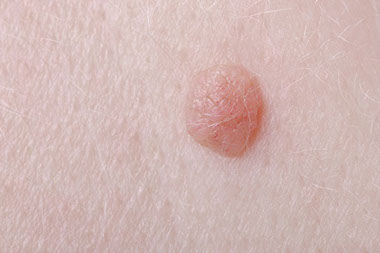
    Close up image of a wart.

    Warts are noncancerous growths caused by a contagious virus. Common warts usually appear on the hands, and plantar warts appear on the bottoms of the feet.

    Most common and plantar warts are harmless and will go away on their own with time. But, they may cause pain or embarrassment. As a result, many people would rather see them gone sooner rather than later.

    Wart basics

    If you’re not sure whether you have a wart, it’s best to see your doctor. Some skin cancers can look like warts.

    You can get warts from other people or from touching a surface that had the wart virus on it. The virus that causes warts is known as human papillomavirus (HPV). Children and teens get warts most often, but they can happen to anyone.

    Keep warts away

    It’s best to try and avoid getting warts in the first place. To help avoid warts, doctors say:

    *  Don’t go barefoot in public showers, bathrooms, locker rooms, and around swimming pools. Wear flip flops or waterproof shoes.

    *  Don’t share towels or personal items with others unless it has been washed.

    *  Wash hands regularly, including before and after eating, after using the bathroom, and after touching shared surfaces like doorknobs and ATMs.

    *  Finally, never pick at or scratch warts. This can spread the wart to other parts of the body.

    Medicines for warts

    There are a few ways to help speed the healing process for warts and get rid of them sooner. They include:

    *Wart medicine:Look for one that contains salicylic acid as the active ingredient. This medicine helps peel the wart off gradually. It can be purchased in a liquid or gel you apply to the skin, or in patches that stick on the wart.

    *Wart freezing sprays:An over-the-counter wart freezing spray can help get rid of warts. The spray blisters the wart and the skin around it, allowing it to fall off in a few days.

    *Duct tape:Some studies suggest that applying duct tape to the wart may help it go away. Put a small piece of duct tape over the wart and change the tape every couple of days. This may help peel the wart off.

    Be patient with any wart treatment. It may take several applications before the wart goes away. If these home remedies aren’t working, talk to your doctor. Most dermatologists offer stronger wart removal treatments when needed.

    Sources: American Academy of Dermatology, American Academy of Family Physicians

    © American Institute for Preventive Medicine

  • Bedsores

    Skin Conditions

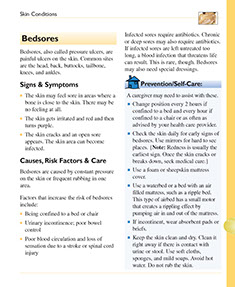
    Image of older man sitting on bed.

    Bedsores, also called pressure ulcers, are painful ulcers on the skin. Common sites are the head, back, buttocks, tailbone, knees, and ankles.

    Signs & Symptoms

    *  The skin may feel sore in areas where a bone is close to the skin. There may be no feeling at all.

    *  The skin gets irritated and red and then turns purple.

    *  The skin cracks and an open sore appears. The skin area can become infected.

    Causes & Risk Factors

    Bedsores are caused by constant pressure on the skin or frequent rubbing in one area. Factors that increase the risk of bedsores include:

    *  Being confined to a bed or chair

    *  Urinary incontinence; poor bowel control

    *  Poor blood circulation and loss of sensation due to a stroke or spinal cord injury

    Infected sores require antibiotics. Chronic or deep sores may also require antibiotics. If infected sores are left untreated too long, a blood infection that threatens life can result. This is rare, though. Bedsores may also need special dressings.

    Self-Care / Prevention

    A caregiver may need to assist with these.

    *  Change position every 2 hours if confined to a bed and every hour if confined to a chair or as often as advised by your health care provider.

    *  Check the skin daily for early signs of bedsores. Use mirrors for hard to see places. {Note: Redness is usually the earliest sign. Once the skin cracks or breaks down, seek medical care.}

    *  Use a foam or sheepskin mattress cover.

    *  Use a waterbed or a bed with an air filled mattress, such as a ripple bed. This type of airbed has a small motor that creates a rippling effect by pumping air in and out of the mattress.

    *  If incontinent, wear absorbent pads or briefs.

    *  Keep the skin clean and dry. Clean it right away if there is contact with urine or stool. Use soft cloths, sponges, and mild soaps. Avoid hot water. Do not rub the skin.

    *  Apply cornstarch to the skin.

    *  Lift (do not drag or slide) an immobile person.

    *  Don’t sit on donut-shaped cushions.

    *  Put pillows between knees and ankles so they don’t touch.

    *  Use sheepskin under heels and buttocks.

    *  Don’t massage bony body parts.

    *  Eat well and get adequate fluids.

    *  Ask your doctor about taking a vitamin C supplement.

    *  Handle a person with bedsores gently.

    *  Apply topical medication, as advised.

    When to Seek Medical Care

    Contact Doctor When:

    *  The skin is cracked.

    *  Sores show signs of infection (fever; redness; pain; heat; pus; swelling).

    *  Sores have not improved after 2 weeks of self-care.

    Health at Home Lifetime book by the American Institute for Preventive Medicine. www.HealthyLife.com. All rights reserved.

    © American Institute for Preventive Medicine

  • Get Vaccines To Prevent Measles

    Skin Conditions

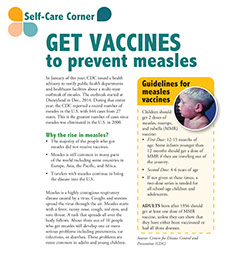
    Image of toddler getting a shot by a doctor.

    In January 2015, CDC issued a health advisory to notify public health departments and healthcare facilities about a multi-state outbreak of measles. The outbreak started at Disneyland in Dec., 2014. During that entire year, the CDC reported a record number of measles in the U.S. with 644 cases from 27 states. This is the greatest number of cases since measles was eliminated in the U.S. in 2000.

    Why the rise in measles?

    *  The majority of the people who got measles did not receive vaccines.

    *  Measles is still common in many parts of the world including some countries in Europe, Asia, the Pacific, and Africa.

    *  Travelers with measles continue to bring the disease into the U.S.

    Measles is a highly contagious respiratory disease caused by a virus. Coughs and sneezes spread the virus through the air. Measles starts with a fever, runny nose, cough, red eyes, and sore throat. A rash that spreads all over the body follows. About three out of 10 people who get measles will develop one or more serious problems including pneumonia, ear infections, or diarrhea. These problems are more common in adults and young children.

    Guidelines for measles vaccines

    Children should get 2 doses of measles, mumps, and rubella (MMR) vaccine:

    *  First Dose: 12-15 months of age. Some infants younger than 12 months should get a dose of MMR if they are traveling out of the country.

    *  Second Dose: 4-6 years of age

    *  If not given at these times, a two-dose series is needed for all school-age children and adolescents.

    Adults born after 1956 should get at least one dose of MMR vaccine, unless they can show that they have either been vaccinated or had all three diseases.

    Health News by the American Institute for Preventive Medicine. www.HealthyLife.com. All rights reserved.

    © American Institute for Preventive Medicine
  • Shingles (And We’re Not Talking About Your Roof)

    SELF-CARE CORNER

    Image of shingles the rash on a person's back.

    Shingles is a painful viral infection that affects 30% of Americans every year. It is caused by Varicella Zoster virus, the same virus that causes chicken pox.

    The outbreak occurs mostly in people 50 years of age and older. The virus can lie dormant in the nerve tissue of the body for many years, then becomes activated and causes shingles later in life.

    According to the Centers for Disease Control and Prevention, shingles is not passed from one person to another. However, the virus that causes shingles can spread from a person with active shingles to another person who has never had chicken pox. In such cases, the person exposed to the virus might develop chickenpox, not shingles.

    “If you are diagnosed with shingles, you are contagious as long as you have blisters and ulcers. It is important to cover your rash and wash your hands frequently. It also is important to avoid people who have not received the chicken pox vaccine, pregnant women and anyone with a weak immune system,” said Dr. Khalilah Babino, physician at Loyola University Health System and assistant professor in the Department of Family Medicine at Loyola University Chicago Stritch School of Medicine.

    A shingles outbreak can last several weeks. Before the rash appears, the following symptoms may occur:

    *  Fatigue

    *  Headache

    *  Tingling

    *  Itching

    *  Burning Pain

    After a few days, a blistering rash in clusters appears. The shingles rash is always located along the involved nerve pattern called a dermatome, typically in a band on one side of the body. Most often, the rash is on the chest and/or back, but can occur on other body parts.

    “If you develop shingles on your face, especially near your eye, you should seek immediate medical care as this type may result in loss of vision,” Dr. Babino said. The blisters that form will pop in a few days and become open sores, which are contagious. Usually, these ulcers scab over within 7 to 10 days and the rash goes away within 4 weeks.

    “Fortunately, there is antiviral medication to help slow the virus and speed recovery. The earlier the medication is started, the more effective it is against the virus. I recommend starting these medications within 72 hours of the onset of rash. Since shingles can be very painful, you might also need prescription pain medication,” Dr. Babino said.

    Most people with shingles do not suffer any complications. Still, there is a 10% chance of developing a painful condition called post-herpetic neuralgia after the rash has gone away. The pain can last from a few months to a year.

    You can decrease your risk of developing shingles and its complications by getting the shingles vaccine. One dose of shingles vaccine is advised for adults age 60 years and older, but can be given between the ages of 50 and 59.

    “People who have had shingles previously can still receive the vaccine. If you are above the age of 50 years old, you should talk to your health care provider about the shingles vaccine,” Dr. Babino said.

    © American Institute for Preventive Medicine

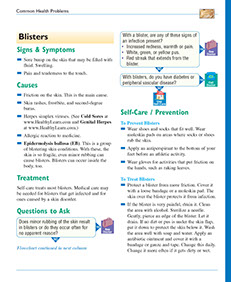
  • Blisters

    Skin Conditions

    Signs & Symptoms

    *  Sore bump on the skin that may be filled with fluid. Swelling.

    *  Pain and tenderness to the touch.

    Causes

    *  Friction on the skin. This is the main cause.

    *  Skin rashes, frostbite, and second-degree burns.

    *  Herpes simplex viruses.

    *  Allergic reaction to medicine.

    *  Epidermolysis bullosa (EB). This is a group of blistering skin conditions. With these, the skin is so fragile, even minor rubbing can cause blisters. Blisters can occur inside the body, too.

    Treatment

    Self-care treats most blisters. Medical care may be needed for blisters that get infected and for ones caused by a skin disorder.

    Questions to Ask

    Self-Care / Prevention

    To Prevent Blisters

    *  Wear shoes and socks that fit well. Wear moleskin pads on areas where socks or shoes rub the skin.

    *  Apply an antiperspirant to the bottom of your feet before an athletic activity.

    *  Wear gloves for activities that put friction on the hands, such as raking leaves.

    To Treat Blisters

    *  Protect a blister from more friction. Cover it with a loose bandage or a moleskin pad. The skin over the blister protects it from infection.

    *  If the blister is very painful, drain it. Clean the area with alcohol. Sterilize a needle. Gently, pierce an edge of the blister. Let it drain. If no dirt or pus is under the skin flap, pat it down to protect the skin below it. Wash the area well with soap and water. Apply an antibiotic ointment and cover it with a bandage or gauze and tape. Change this daily. Change it more often if it gets dirty or wet.

    Healthier at Home book by the American Institute for Preventive Medicine. www.HealthyLife.com. All rights reserved.

    © American Institute for Preventive Medicine
  • Poison Ivy, Oak & Sumac

    Skin Conditions

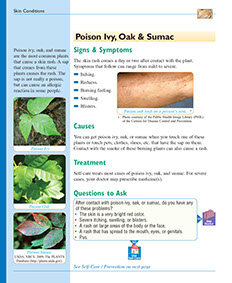
    Poison ivy, oak, and sumac are the most common plants that cause a skin rash. A sap that comes from these plants causes the rash. The sap is not really a poison, but can cause an allergic reaction in some people.

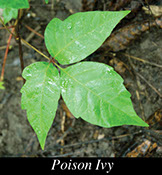
    Image of posion ivy leaf.
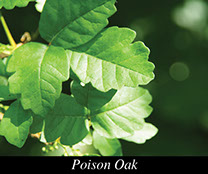
    Image of poison oak leaf.
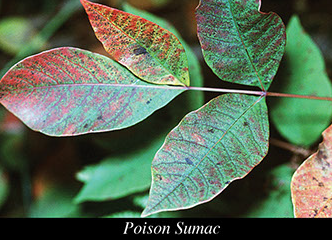
    Image of poison sumac.

    Signs & Symptoms

    The skin rash comes a day or two after contact with the plant. Symptoms that follow can range from mild to severe.

    *  Itching.

    *  Redness.

    *  Burning feeling.

    *  Swelling.

    *  Blisters.

    Causes

    You can get poison ivy, oak, or sumac when you touch one of these plants or touch pets, clothes, shoes, etc. that have the sap on them. Contact with the smoke of these burning plants can also cause a rash.

    Treatment

    Self-care treats most cases of poison ivy, oak, and sumac. For severe cases, your doctor may prescribe medicine(s).

    Questions to Ask

    Self-Care / Prevention

    To Prevent Getting a Rash

    *  Know what these plants look like and avoid them.

    – Poison ivy and poison oak both have 3 leaflets per stem. This is why you may have heard the saying, “Leaflets three, let them be.”

    – Each branch of poison sumac has 7 to 13 leaflets on a reddish stem. A single leaf is on the end of the stem. The others are paired along each side of the stem. Poison sumac grows in wetlands.

    *  Use an over-the-counter lotion (IvyBlock), which blocks skin contact with the sap. Use it as directed.

    *  Wear pants and long-sleeved shirts.

    *  Use an over-the-counter product (e.g., Tecnu) that removes poison ivy sap.

    *  Rinse the affected area with water.

    *  To help prevent an allergic reaction, do the things listed below. Do them within 6 hours of contact with one of the plants.

    – Remove all clothes and shoes that have touched the plant.

    – Wash the skin area well with soap and water.

    – Use an over-the-counter product (e.g., Tecnu) that removes poison ivy sap.

    To Treat Poison Ivy, Oak, or Sumac

    *  Take a cold shower, put the rash area in cold water, or pour cold water over it. Use soap when you shower.

    *  To relieve itching, take an over-the-counter antihistamine, such as Benadryl. Follow the label’s directions.

    *  For weeping blisters, mix 2 teaspoons of baking soda in 4 cups of water. Dip squares of gauze in this mixture. Cover the blisters with wet gauze for 10 minutes, 4 times a day. Do not apply this to the eyes.

    *  Wash all clothes and shoes with hot water and a strong soap. Bathe pets that have come in contact with the plant. The sap can stay on pets for many days. Clean items used to wash clothing and pets. Wear rubber gloves when you do all these things.

    *  Keep your hands away from your eyes, mouth, and face.

    *  Do not scratch or rub the rash.

    *  Take baths with lukewarm water. Add an over- the-counter product called Aveeno colloidal oatmeal.

    *  Apply any of these to the skin rash:

    – Calamine (not Caladryl) lotion.

    – Over-the-counter hydrocortisone cream. Follow the directions on the label.

    – A paste of 3 teaspoons of baking soda and 1 teaspoon of water.

    Healthier at Home book by the American Institute for Preventive Medicine. www.HealthyLife.com. All rights reserved.

    © American Institute for Preventive Medicine

  • Skin Check

    SELF-CARE CORNER

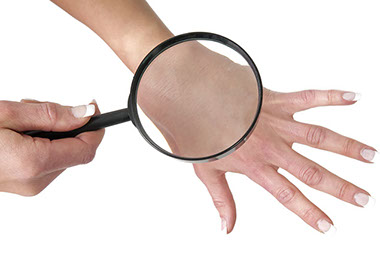
    Close-up image of a person checking to see if they have any skin moles on their hand.

    It is important to understand what will help prevent skin cancer and what might actually increase your risk, according to Caliber I.D., a company that makes diagnostic lab instruments.

    Fact: All skin types and ethnic groups can develop skin cancer. While it is true that Caucasians have a greater risk of skin-related cancer, everyone should protect their skin against the sun’s harmful rays.

    Although fair-skinned people can often easily see stage 1 melanoma (dark spots, changing or new moles) and other cancers, darker skin makes catching it in the early stages more unlikely. Also, darker-skinned people tend to develop a more lethal type of melanoma that develops on the soles of the feet, between the toes, and on the palms of the hands.

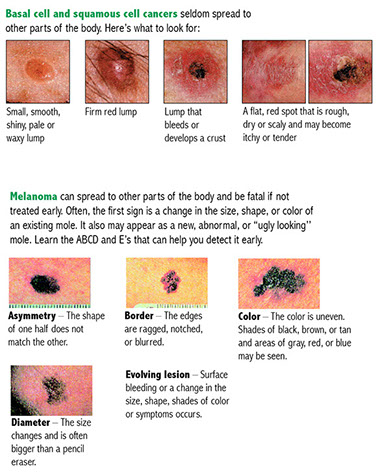
    Let your health care provider know if you have any of these signs.

    Chart showing the different types of skin cancers.

    © American Institute for Preventive Medicine

  • Boils

    Skin Conditions

    Boils are common, but usually minor, skin problems. Most often, they occur in areas where the skin becomes chaffed and where there are hair follicles. This includes the neck, buttocks, armpits, and genitals. A boil can range in size from that of a pea to a ping pong ball.

    Signs & Symptoms

    *  A round or cone-shaped lump or pimple that is red, tender, painful, or throbs.

    *  Pus may be visible under the skin’s surface after several days.

    *  The boil usually bursts open on its own after 10 to 14 days.

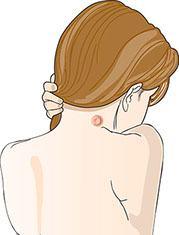
    Illustration of a boil.

    Causes

    Boils are caused when a hair follicle or oil gland becomes infected with staph bacteria. Boils can be very contagious. Risk factors that make them more likely to occur include:

    *  Poor hygiene.

    *  Overuse of corticosteroid medicine.

    *  Diabetes.

    *  Short, curly hair that has a tendency to grow back down into the skin.

    Treatment

    Self-care treats boils. If this is not enough, your doctor may need to lance and drain the boil and prescribe an antibiotic.

    Questions to Ask

    Self-Care / Prevention

    *  Don’t scratch, squeeze, or lance boils.

    *  Put a hot water bottle over a damp washcloth and place it on the boil.

    *  Soak in a warm tub. Use an antibacterial soap. If boil is ready to burst open, take warm showers instead.

    *  Take an over-the-counter medicine for pain and swelling as directed.

    *  Wash your hands after contact with a boil. Keep clothing and other items that were in contact with the boil away from others.

    *  Once the boil begins to drain, keep it dry and clean. Loosely cover the boil with a sterile gauze dressing. Use first-aid tape to keep it in place. Replace the dressing if it gets moist.

    *  Wash bed linens, towels, and clothing in hot water. Do not share towels, sports equipment, etc.

    *  Don’t wear tight-fitting clothes over a boil.

    Healthier at Home book by the American Institute for Preventive Medicine. www.HealthyLife.com. All rights reserved.

    © American Institute for Preventive Medicine