Tag: Sleep Basics

  • Help For Restless Legs

    SELF-CARE CORNER

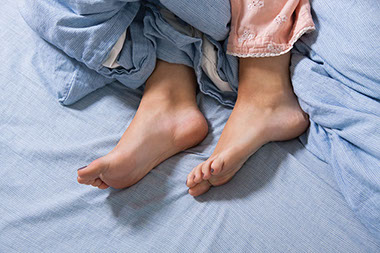
    Close up feet laying in bed.

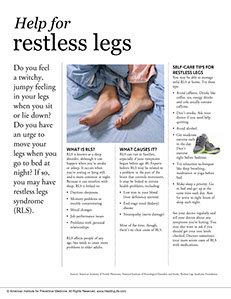
    Do you feel a twitchy, jumpy feeling in your legs when you sit or lie down? Do you have an urge to move your legs when you go to bed at night? If so, you may have restless legs syndrome (RLS).

    What is RLS?

    RLS is known as a sleep disorder, although it can happen when you’re awake or asleep. It occurs when you’re resting or lying still, and is more common at night. Because it can interfere with sleep, RLS is linked to:

    *  Daytime sleepiness

    *  Memory problems or trouble concentrating

    *  Mood changes

    *  Job performance issues

    *  Problems with personal relationships

    RLS affects people of any age, but tends to cause more problems in older adults.

    What causes it?

    RLS can run in families, especially if your symptoms began before age 40. Experts believe RLS may be related to a problem in the part of the brain that controls movement. It may be linked to certain health problems, including:

    *  Low iron in your blood (iron deficiency anemia)

    *  End-stage renal (kidney) disease

    *  Neuropathy (nerve damage)

    Most of the time, though, there’s no clear cause of RLS.

    Self-care tips for restless legs

    You may be able to manage mild RLS at home. Try these tips:

    *  Avoid caffeine. Drinks like coffee, tea, energy drinks and cola usually contain caffeine.

    *  Don’t smoke. Ask your doctor if you need help quitting.

    *  Avoid alcohol.

    *  Get moderate exercise early in the day. Don’t exercise right before bedtime.

    *  Try relaxation techniques like deep breathing, meditation or yoga before bed.

    *  Make sleep a priority. Go to bed and get up at the same time each day. Aim for seven to eight hours of sleep each night.

    See your doctor regularly and tell your doctor about any symptoms you’re having. You may also want to ask if you should get your iron levels checked. Doctors sometimes treat more severe cases of RLS with medications.

    Sources: American Academy of Family Physicians, National Institute of Neurological Disorders and Stroke, Restless Legs Syndrome Foundation
    © American Institute for Preventive Medicine
  • Snoring And Your Health

    SELF-CARE CORNER

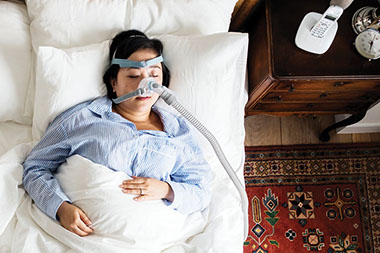
    Women sleeping while wearing a CPAP machine.

    Occasional snoring is often harmless. It may happen when a person has a stuffy nose or is lying on their back. But if you snore every night, talk with a doctor. Long-term snoring can lead to health problems.

    Sleep suffers

    Snoring can make you wake up many times during the night. You probably won’t remember these awakenings. They interfere with your body’s ability to get good, sound sleep.

    Without quality sleep, you may feel tired nearly every day. This can lead to problems at work, school or home. In severe cases, it can lead to dangers like car collisions if you fall asleep at the wheel.

    Obstructive sleep apnea

    Sometimes snoring is a sign of a health problem called obstructive sleep apnea (OSA). Signs of OSA include:

    *  Loud snoring that happens nearly every night

    *  Pauses in breathing during sleep (this can happen hundreds of times per night)

    *  Choking or gasping for air during the night

    *  Feeling very tired even after a full night’s sleep

    *  Trouble concentrating or being irritable

    *  Waking up with a headache

    OSA can also cause heart problems because it can increase a person’s risk of high blood pressure, stroke or heart disease. It can also cause an irregular heartbeat, known as an arrhythmia.

    How to fix snoring

    There are many ways to reduce or eliminate snoring. First, see a doctor to get checked for any health problems. Your doctor may recommend:

    *  If you smoke, quit. Smoking can make snoring worse and leads to other serious health problems.

    *  Limit or avoid alcohol. Don’t drink alcohol close to bedtime. Alcohol relaxes throat muscles and can cause more snoring and pauses in breathing.

    *  Work toward a healthy weight if you are overweight. Being overweight often makes snoring worse.

    If these measures don’t help, ask your doctor about other options. Certain devices and surgery can help some people quit snoring.

    Relationship problems

    Snoring can cause social problems too. Some people find that their marriage or domestic partnership suffers. Partners may not be able to sleep in the same room because of the noise.

    Sources: American Academy of Otolaryngology – Head and Neck Surgery

    © American Institute for Preventive Medicine
  • Stop Snoring

    SELF-CARE CORNER

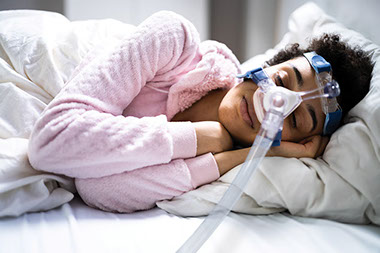
    Women wearing a CPAP mask while sleeping.

    Almost everyone snores sometimes. But some people snore a lot, and it may be disruptive to their sleep and those around them. Snoring may just be a nuisance, but it could also be a sign of a serious problem.

    What is snoring?

    Snoring is the harsh sound made when air vibrates the tissue around your airway while you breathe. When you sleep, it’s normal for your throat to relax and your tongue to slide back into your mouth. However, if anything obstructs the flow of air, you get vibrations known as snoring.

    The sound can range from gentle to grating, depending on the degree of obstruction or the specific structure of your airway.

    Causes

    *  Stuffy nose from a cold or allergies

    *  Sleep position

    *  Bulky throat tissue from large tonsils or adenoids

    *  Your unique mouth anatomy

    *  Being overweight

    *  Poor muscle tone due to age, alcohol consumption, or sleep deprivation

    *  A serious condition called Obstructive Sleep Apnea (OSA)

    What makes snoring dangerous?

    Excessive snoring may be a sign of obstructive sleep apnea (OSA). This condition occurs when breathing is fully or partially obstructed for more than 10 seconds during sleep. You may wake with a snort or gasp and then fall back to sleep for another cycle of snoring, followed by breath obstruction.

    People with OSA often sleep poorly due to multiple cycles of apnea disrupting deep sleep. They are also at higher risk for high blood pressure, heart conditions, and stroke.

    Talk to your doctor if you or your partner notice you are frequently snoring.

    Warning signs for OSA:

    *  Feeling very drowsy during the day

    *  Morning headaches

    *  Gasping or choking at night

    *  High blood pressure

    *  Snoring disrupting your bed partner’s sleep

    *  Chest pain at night

    If your doctor determines you do not have OSA, you may want to try other strategies to reduce snoring:

    *  Sleep on your side.

    *  Avoid alcohol and caffeine at night.

    *  Lose some weight.

    *  Treat nasal congestion.

    *  Try devices such as nasal strips or nasal dilators.

    *  Explore ways to get better sleep.

    © American Institute for Preventive Medicine
  • Weighted Blankets – A Sleep Saver?

    WELL-BEING

    Bed with weighted blankets.

    Weighted blankets have become popular – but do you need one?

    Weighted blankets are designed to feel very heavy. They are usually filled with glass or plastic pellets that add weight. Some people believe the extra weight can feel like a hug. This may have a calming effect.

    Before you invest in a weighted blanket, here’s what to know:

    *  No large studies say that weighted blankets have proven health benefits. But some smaller studies have found that they can help a person calm down when stressed. They may also help some people with insomnia and anxiety, according to the National Sleep Foundation.

    *  Weighted blankets come in different sizes and weights. You may wish to use one that weighs around 10 percent of your body weight.

    *  Never use a weighted blanket on a baby or toddler.

    © American Institute for Preventive Medicine

  • 8 Healthy Sleep Habits

    Sleep Well

    Bed with blue bedding.

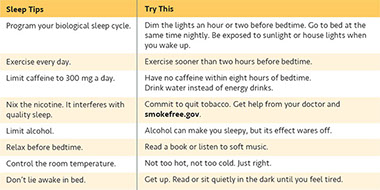
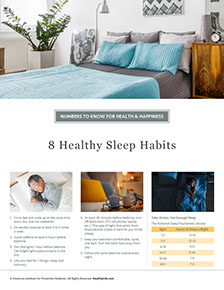
    1. Go to bed and wake up at the same time every day, even on weekends.

    2. Do aerobic exercise at least 3 to 4 times a week.

    3. Avoid caffeine at least 6 hours before bedtime.

    4. Dim the lights 1 hour before bedtime. Get bright light exposure early in the day.

    5. Use your bed for 2 things−sleep and intimacy.

    6. At least 30 minutes before bedtime, turn off electronics (TV, cell phone, laptop, etc.). The type of light that emits from these devices makes it hard for you to fall asleep.

    7. Keep your bedroom comfortable, quiet, and dark. Turn the clock face away from you.

    8. Follow the same bedtime routine every night.

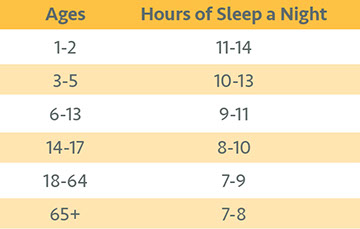
    Take Action: Get Enough Sleep

    The National Sleep Foundation advises:

    © American Institute for Preventive Medicine

  • Deep Sleep Is Vital To Health

    Sleep Well

    Pink eye mask with closed eyes and gold stars around it.

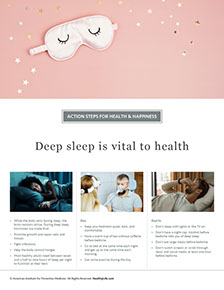
    *  While the body rests during sleep, the brain remains active. During deep sleep, hormones are made that:

    *  Promote growth and repair cells and tissues

    *  Fight infections

    *  Help the body control hunger

    *  Most healthy adults need between seven and a half to nine hours of sleep per night to function at their best.

    Dos

    *  Keep your bedroom quiet, dark, and comfortable.

    *  Have a warm cup of tea without caffeine before bedtime.

    *  Go to bed at the same time each night and get up at the same time each morning.

    *  Get some exercise during the day.

    Don’ts

    *  Don’t sleep with lights or the TV on.

    *  Don’t have a night cap. Alcohol before bedtime robs you of deep sleep.

    *  Don’t eat large meals before bedtime.

    *  Don’t watch screens or scroll through news and social media at least one hour before bedtime.

    © American Institute for Preventive Medicine
  • Lights Out

    Sleep Well

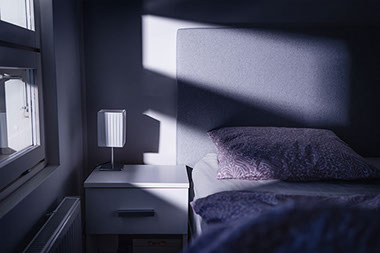
    Window light hitting the bed.

    Light exposure has a critical effect on sleep. At night, dim the lights and shut off electroncis, such as TVs, tablets, and smartphones that emit blue light, 30 minutes before bedtime. Aim for complete darkness when sleeping. Waking to natural light can also help you sleep better at night, by helping your brain regulate its hormones and help your body develop healthier sleep rhythms.

    Be More Earth-Friendly

    Using primarily natural light at home and work can save a significant amount in energy used in buildings, while increasing health and comfort for occupants.

    © American Institute for Preventive Medicine
  • Sleep Tips

    Sleep Well

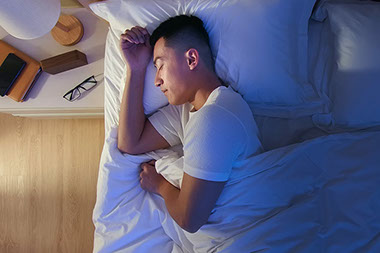
    Man sleeping.

    Nothing makes you feel better than a good night’s sleep.

    *  Do physical exercise daily.

    *  Follow a regular daily schedule for meals and snacks.

    *  Don’t have more than 1 alcoholic drink with or after dinner. Avoid large meals near bedtime.

    *  Plan to wake up about the same time everyday. Avoid long naps during the day.

    *  Get sunlight everyday, especially in the afternoon.

    *  Dim the lights in the house an hour or two before going to bed.

    *  Follow a bedtime routine. Keep your bedroom dark, quiet, and comfortable.

    *  Limit caffeine. Do not have any for 6 hours before bedtime.

    © American Institute for Preventive Medicine
  • Sleep Well, Be Well

    Sleep Well

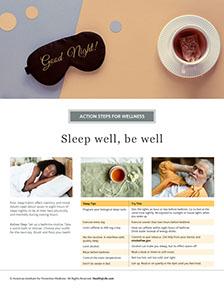
    A cup of tea and an eye mask with the word "Good Night!"

    Poor sleep habits affect memory and mood. Adults need about seven to eight hours of sleep nightly to be at their best physically and mentally during waking hours.

    Action Step: Set up a bedtime routine. Take a warm bath or shower. Choose your outfit for the next day. Brush and floss your teeth.

    © American Institute for Preventive Medicine
  • Sweet Slumber

    Sleep Well

    Dream catcher.

    A good night’s sleep repairs your body and recharges your brain. Getting enough quality sleep is essential to your physical health and emotional well-being. Without it, you’re at risk for chronic disease, problems thinking, mental health issues, and obesity. If you’re not getting enough sleep, even 1-2 hours more per night can make a difference in your day-to-day functioning.

    The right amount of good quality sleep (7 to 9 hours for most adults) helps you be your best self.

    © American Institute for Preventive Medicine