Tag: Sleep & Rest

  • 8 Healthy Sleep Habits

    Sleep Well

    Bed with blue bedding.

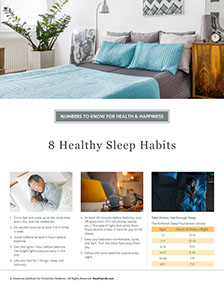
    1. Go to bed and wake up at the same time every day, even on weekends.

    2. Do aerobic exercise at least 3 to 4 times a week.

    3. Avoid caffeine at least 6 hours before bedtime.

    4. Dim the lights 1 hour before bedtime. Get bright light exposure early in the day.

    5. Use your bed for 2 things−sleep and intimacy.

    6. At least 30 minutes before bedtime, turn off electronics (TV, cell phone, laptop, etc.). The type of light that emits from these devices makes it hard for you to fall asleep.

    7. Keep your bedroom comfortable, quiet, and dark. Turn the clock face away from you.

    8. Follow the same bedtime routine every night.

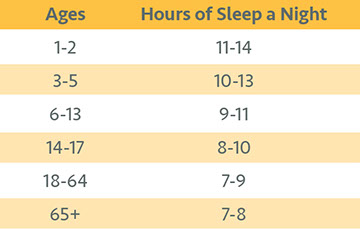
    Take Action: Get Enough Sleep

    The National Sleep Foundation advises:

    © American Institute for Preventive Medicine

  • Deep Sleep Is Vital To Health

    Sleep Well

    Pink eye mask with closed eyes and gold stars around it.

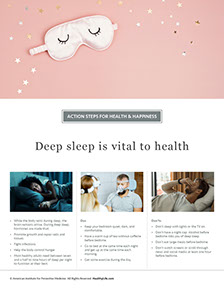
    *  While the body rests during sleep, the brain remains active. During deep sleep, hormones are made that:

    *  Promote growth and repair cells and tissues

    *  Fight infections

    *  Help the body control hunger

    *  Most healthy adults need between seven and a half to nine hours of sleep per night to function at their best.

    Dos

    *  Keep your bedroom quiet, dark, and comfortable.

    *  Have a warm cup of tea without caffeine before bedtime.

    *  Go to bed at the same time each night and get up at the same time each morning.

    *  Get some exercise during the day.

    Don’ts

    *  Don’t sleep with lights or the TV on.

    *  Don’t have a night cap. Alcohol before bedtime robs you of deep sleep.

    *  Don’t eat large meals before bedtime.

    *  Don’t watch screens or scroll through news and social media at least one hour before bedtime.

    © American Institute for Preventive Medicine

  • Lights Out

    Sleep Well

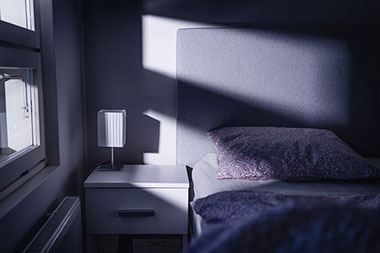
    Window light hitting the bed.

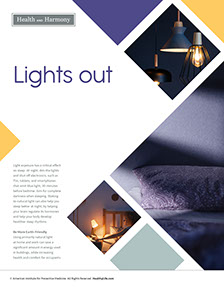
    Light exposure has a critical effect on sleep. At night, dim the lights and shut off electroncis, such as TVs, tablets, and smartphones that emit blue light, 30 minutes before bedtime. Aim for complete darkness when sleeping. Waking to natural light can also help you sleep better at night, by helping your brain regulate its hormones and help your body develop healthier sleep rhythms.

    Be More Earth-Friendly

    Using primarily natural light at home and work can save a significant amount in energy used in buildings, while increasing health and comfort for occupants.

    © American Institute for Preventive Medicine

  • Sleep Apnea

    Sleep Well

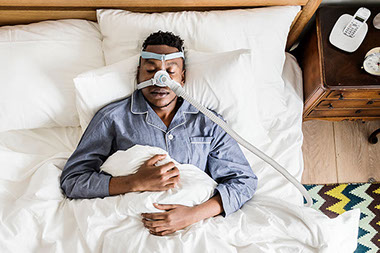
    Man wearing a CPAP machine while sleeping.

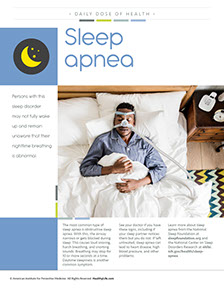
    Persons with this sleep disorder may not fully wake up and remain unaware that their nighttime breathing is abnormal.

    The most common type of sleep apnea is obstructive sleep apnea. With this, the airway narrows or gets blocked during sleep. This causes loud snoring, harsh breathing, and snorting sounds. Breathing may stop for 10 or more seconds at a time. Daytime sleepiness is another common symptom.

    See your doctor if you have these signs, including if your sleep partner notices them but you do not. If left untreated, sleep apnea can lead to heart disease, high blood pressure, and other problems.

    Learn more about sleep apnea from the National Sleep Foundation atsleepfoundation.organd the National Center on Sleep Disorders Research atnhlbi.nih.gov/health/sleep-apnea.

    © American Institute for Preventive Medicine

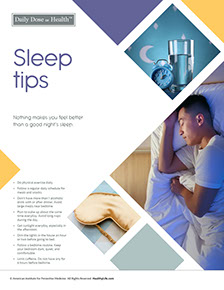
  • Sleep Tips

    Sleep Well

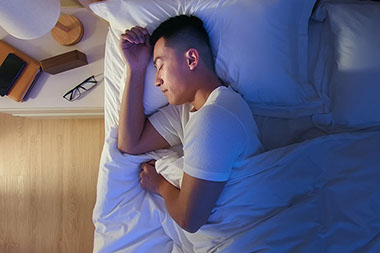
    Man sleeping.

    Nothing makes you feel better than a good night’s sleep.

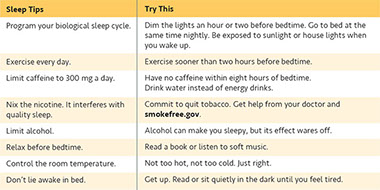
    *  Do physical exercise daily.

    *  Follow a regular daily schedule for meals and snacks.

    *  Don’t have more than 1 alcoholic drink with or after dinner. Avoid large meals near bedtime.

    *  Plan to wake up about the same time everyday. Avoid long naps during the day.

    *  Get sunlight everyday, especially in the afternoon.

    *  Dim the lights in the house an hour or two before going to bed.

    *  Follow a bedtime routine. Keep your bedroom dark, quiet, and comfortable.

    *  Limit caffeine. Do not have any for 6 hours before bedtime.

    © American Institute for Preventive Medicine

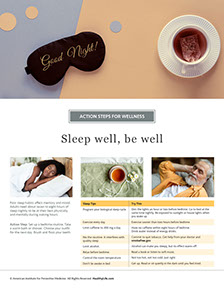
  • Sleep Well, Be Well

    Sleep Well

    A cup of tea and an eye mask with the word "Good Night!"

    Poor sleep habits affect memory and mood. Adults need about seven to eight hours of sleep nightly to be at their best physically and mentally during waking hours.

    Action Step: Set up a bedtime routine. Take a warm bath or shower. Choose your outfit for the next day. Brush and floss your teeth.

    © American Institute for Preventive Medicine

  • Sweet Slumber

    Sleep Well

    Dream catcher.

    A good night’s sleep repairs your body and recharges your brain. Getting enough quality sleep is essential to your physical health and emotional well-being. Without it, you’re at risk for chronic disease, problems thinking, mental health issues, and obesity. If you’re not getting enough sleep, even 1-2 hours more per night can make a difference in your day-to-day functioning.

    The right amount of good quality sleep (7 to 9 hours for most adults) helps you be your best self.

    © American Institute for Preventive Medicine

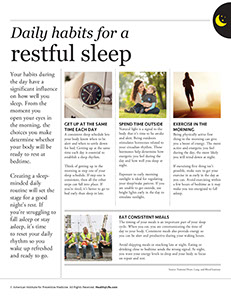
  • Daily Habits For A Restful Sleep

    SELF-CARE CORNER

    Clock sitting on night stand.

    Your habits during the day have a significant influence on how well you sleep. From the moment you open your eyes in the morning, the choices you make determine whether your body will be ready to rest at bedtime.

    Creating a sleep-minded daily routine will set the stage for a good night’s rest. If you’re struggling to fall asleep or stay asleep, it’s time to reset your daily rhythm so you wake up refreshed and ready to go.

    Get up at the same time each day

    A consistent sleep schedule lets your body know when to be alert and when to settle down for bed. Getting up at the same time each day is essential to establish a sleep rhythm.

    Think of getting up in the morning as step one of your sleep schedule. If step one is consistent, then all the other steps can fall into place. If you’re tired, it’s better to go to bed early than sleep in late.

    Spend time outside

    Natural light is a signal to the body that it’s time to be awake and alert. Being outdoors stimulates hormones related to your circadian rhythm. These hormones help determine how energetic you feel during the day and how well you sleep at night.

    Exposure to early morning sunlight is ideal for regulating your sleep/wake pattern. If you are unable to get outside, use bright lights early in the day to simulate sunlight.

    Exercise in the morning

    Being physically active first thing in the morning can give you a boost of energy. The more active and energetic you feel during the day, the more likely you will wind down at night.

    If exercising first thing isn’t possible, make sure to get your exercise in as early in the day as you can. Avoid exercising within a few hours of bedtime as it may make you too energized to fall asleep.

    Eat consistent meals

    The timing of your meals is an important part of your sleep cycle. When you eat, you are communicating the time of day to your body. Consistent meals also provide energy so you can be alert and productive during your waking hours.

    Avoid skipping meals or snacking late at night. Eating or drinking close to bedtime sends the wrong signal. At night, you want your energy levels to drop and your body to focus on repair and rest.

    Source: National Heart, Lung, and Blood Institute

    © American Institute for Preventive Medicine

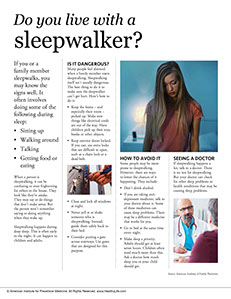
  • Do You Live With A Sleepwalker?

    SELF-CARE CORNER

    Young women sleepwalking.

    If you or a family member sleepwalks, you may know the signs well. It often involves doing some of the following during sleep:

    *  Sitting up

    *  Walking around

    *  Talking

    *  Getting food or eating

    When a person is sleepwalking, it can be confusing or even frightening for others in the house. They look like they’re awake. They may say or do things that don’t make sense. But the person won’t remember saying or doing anything when they wake up.

    Sleepwalking happens during deep sleep. This is often early in the night. It can happen to children and adults.

    Is it dangerous?

    Many people feel alarmed when a family member starts sleepwalking. Sleepwalking itself isn’t usually dangerous. The best thing to do is to make sure the sleepwalker can’t get hurt. Here’s how to do it:

    *  Keep the home – and especially their room – picked up. Make sure things like electrical cords are out of the way. Have children pick up their toys, books or other objects.

    *  Keep exterior doors locked. If you can, use extra locks that are difficult to open, such as a chain lock or a dead bolt.

    *  Close and lock all windows at night.

    *  Never yell at or shake someone who is sleepwalking. Instead, guide them safely back to their bed.

    *  Consider putting a gate across stairways. Use gates that are designed for this purpose.

    How to avoid it

    Some people may be more prone to sleepwalking. However, there are ways to lower the chances of it happening. They include:

    *  Don’t drink alcohol.

    *  If you are taking anti-depressant medicine, talk to your doctor about it. Some of these medicines can cause sleep problems. There may be a different medicine that works for you.

    *  Go to bed at the same time every night.

    *  Make sleep a priority. Adults should get at least seven hours. Children often need much more than this. Ask a doctor how much sleep you or your child should get.

    Seeing a doctor

    If sleepwalking happens a lot, talk to a doctor. There is no test for sleepwalking. But your doctor can check for other sleep problems or health conditions that may be causing sleep problems.

    Source: American Academy of Family Physicians

    © American Institute for Preventive Medicine

  • Help For Restless Legs

    SELF-CARE CORNER

    Close up feet laying in bed.

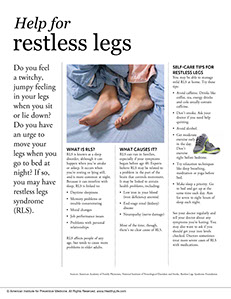
    Do you feel a twitchy, jumpy feeling in your legs when you sit or lie down? Do you have an urge to move your legs when you go to bed at night? If so, you may have restless legs syndrome (RLS).

    What is RLS?

    RLS is known as a sleep disorder, although it can happen when you’re awake or asleep. It occurs when you’re resting or lying still, and is more common at night. Because it can interfere with sleep, RLS is linked to:

    *  Daytime sleepiness

    *  Memory problems or trouble concentrating

    *  Mood changes

    *  Job performance issues

    *  Problems with personal relationships

    RLS affects people of any age, but tends to cause more problems in older adults.

    What causes it?

    RLS can run in families, especially if your symptoms began before age 40. Experts believe RLS may be related to a problem in the part of the brain that controls movement. It may be linked to certain health problems, including:

    *  Low iron in your blood (iron deficiency anemia)

    *  End-stage renal (kidney) disease

    *  Neuropathy (nerve damage)

    Most of the time, though, there’s no clear cause of RLS.

    Self-care tips for restless legs

    You may be able to manage mild RLS at home. Try these tips:

    *  Avoid caffeine. Drinks like coffee, tea, energy drinks and cola usually contain caffeine.

    *  Don’t smoke. Ask your doctor if you need help quitting.

    *  Avoid alcohol.

    *  Get moderate exercise early in the day. Don’t exercise right before bedtime.

    *  Try relaxation techniques like deep breathing, meditation or yoga before bed.

    *  Make sleep a priority. Go to bed and get up at the same time each day. Aim for seven to eight hours of sleep each night.

    See your doctor regularly and tell your doctor about any symptoms you’re having. You may also want to ask if you should get your iron levels checked. Doctors sometimes treat more severe cases of RLS with medications.

    Sources: American Academy of Family Physicians, National Institute of Neurological Disorders and Stroke, Restless Legs Syndrome Foundation

    © American Institute for Preventive Medicine