Tag: sleep

  • Snoring And Your Health

    SELF-CARE CORNER

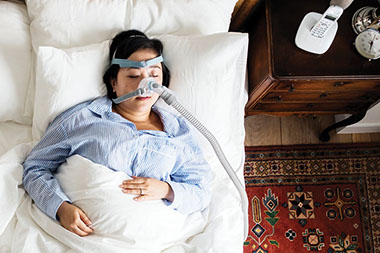
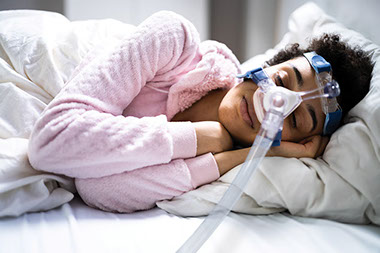
    Women sleeping while wearing a CPAP machine.

    Occasional snoring is often harmless. It may happen when a person has a stuffy nose or is lying on their back. But if you snore every night, talk with a doctor. Long-term snoring can lead to health problems.

    Sleep suffers

    Snoring can make you wake up many times during the night. You probably won’t remember these awakenings. They interfere with your body’s ability to get good, sound sleep.

    Without quality sleep, you may feel tired nearly every day. This can lead to problems at work, school or home. In severe cases, it can lead to dangers like car collisions if you fall asleep at the wheel.

    Obstructive sleep apnea

    Sometimes snoring is a sign of a health problem called obstructive sleep apnea (OSA). Signs of OSA include:

    *  Loud snoring that happens nearly every night

    *  Pauses in breathing during sleep (this can happen hundreds of times per night)

    *  Choking or gasping for air during the night

    *  Feeling very tired even after a full night’s sleep

    *  Trouble concentrating or being irritable

    *  Waking up with a headache

    OSA can also cause heart problems because it can increase a person’s risk of high blood pressure, stroke or heart disease. It can also cause an irregular heartbeat, known as an arrhythmia.

    How to fix snoring

    There are many ways to reduce or eliminate snoring. First, see a doctor to get checked for any health problems. Your doctor may recommend:

    *  If you smoke, quit. Smoking can make snoring worse and leads to other serious health problems.

    *  Limit or avoid alcohol. Don’t drink alcohol close to bedtime. Alcohol relaxes throat muscles and can cause more snoring and pauses in breathing.

    *  Work toward a healthy weight if you are overweight. Being overweight often makes snoring worse.

    If these measures don’t help, ask your doctor about other options. Certain devices and surgery can help some people quit snoring.

    Relationship problems

    Snoring can cause social problems too. Some people find that their marriage or domestic partnership suffers. Partners may not be able to sleep in the same room because of the noise.

    Sources: American Academy of Otolaryngology – Head and Neck Surgery

    © American Institute for Preventive Medicine

  • Stay Healthy With Shift Work

    WORK LIFE

    Doctor on phone working the night shift.

    For many people, shift work is a great way to get in hours around family commitments. For some people, shift work is simply part of their profession. Nurses, doctors, first responders and many others work shifts because it’s necessary.

    When you don’t work a 9 to 5 shift, it can be harder to find time to eat well and exercise. In the middle of the night, most restaurants and stores are closed. You may also feel tired and less motivated to exercise and eat well. But there are some ways to get around these obstacles.

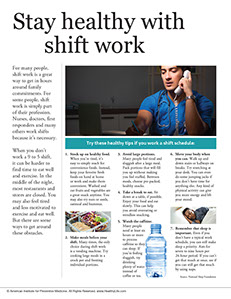
    Try these healthy tips if you work a shift schedule:

    1.  Stock up on healthy food. When you’re tired, it’s easy to simply reach for convenience foods. Instead, keep your favorite fresh foods on hand at home or work and make them convenient. Washed and cut fruits and vegetables are a great snack anytime. You may also try nuts or seeds, oatmeal and hummus.

    2.  Make meals before your shift. Many times, the only choice during shift work is a vending machine. Try cooking large meals in a crock pot and freezing individual portions.

    3.  Avoid large portions. Many people feel tired and sluggish after a large meal. Pack portions that will fill you up without making you feel stuffed. Between meals, choose pre-packed, healthy snacks.

    4.  Take a break to eat. Sit down at a table, if possible. Enjoy your food and eat slowly. This can help you avoid overeating or mindless snacking.

    5.  Watch the caffeine.  Many people need at least six hours or more to process caffeine so they can sleep. If you’re feeling sluggish, try drinking plenty of water instead of coffee or tea.

    6.  Move your body when you can. Walk up and down stairs or hallways on breaks. Try stretching at your desk. You can even do some jumping jacks if you don’t have time for anything else. Any kind of physical activity can give you more energy and lift your mood.

    7.  Remember that sleep is important. Even if you don’t have a typical work schedule, you can still make sleep a priority. Aim for seven to nine hours per 24-hour period. If you can’t get that much at once, see if you can still get that much by using naps.

    Source: National Sleep Foundation

    © American Institute for Preventive Medicine
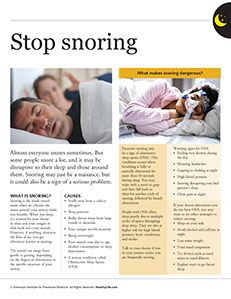
  • Stop Snoring

    SELF-CARE CORNER

    Women wearing a CPAP mask while sleeping.

    Almost everyone snores sometimes. But some people snore a lot, and it may be disruptive to their sleep and those around them. Snoring may just be a nuisance, but it could also be a sign of a serious problem.

    What is snoring?

    Snoring is the harsh sound made when air vibrates the tissue around your airway while you breathe. When you sleep, it’s normal for your throat to relax and your tongue to slide back into your mouth. However, if anything obstructs the flow of air, you get vibrations known as snoring.

    The sound can range from gentle to grating, depending on the degree of obstruction or the specific structure of your airway.

    Causes

    *  Stuffy nose from a cold or allergies

    *  Sleep position

    *  Bulky throat tissue from large tonsils or adenoids

    *  Your unique mouth anatomy

    *  Being overweight

    *  Poor muscle tone due to age, alcohol consumption, or sleep deprivation

    *  A serious condition called Obstructive Sleep Apnea (OSA)

    What makes snoring dangerous?

    Excessive snoring may be a sign of obstructive sleep apnea (OSA). This condition occurs when breathing is fully or partially obstructed for more than 10 seconds during sleep. You may wake with a snort or gasp and then fall back to sleep for another cycle of snoring, followed by breath obstruction.

    People with OSA often sleep poorly due to multiple cycles of apnea disrupting deep sleep. They are also at higher risk for high blood pressure, heart conditions, and stroke.

    Talk to your doctor if you or your partner notice you are frequently snoring.

    Warning signs for OSA:

    *  Feeling very drowsy during the day

    *  Morning headaches

    *  Gasping or choking at night

    *  High blood pressure

    *  Snoring disrupting your bed partner’s sleep

    *  Chest pain at night

    If your doctor determines you do not have OSA, you may want to try other strategies to reduce snoring:

    *  Sleep on your side.

    *  Avoid alcohol and caffeine at night.

    *  Lose some weight.

    *  Treat nasal congestion.

    *  Try devices such as nasal strips or nasal dilators.

    *  Explore ways to get better sleep.

    © American Institute for Preventive Medicine
  • Weighted Blankets – A Sleep Saver?

    WELL-BEING

    Bed with weighted blankets.

    Weighted blankets have become popular – but do you need one?

    Weighted blankets are designed to feel very heavy. They are usually filled with glass or plastic pellets that add weight. Some people believe the extra weight can feel like a hug. This may have a calming effect.

    Before you invest in a weighted blanket, here’s what to know:

    *  No large studies say that weighted blankets have proven health benefits. But some smaller studies have found that they can help a person calm down when stressed. They may also help some people with insomnia and anxiety, according to the National Sleep Foundation.

    *  Weighted blankets come in different sizes and weights. You may wish to use one that weighs around 10 percent of your body weight.

    *  Never use a weighted blanket on a baby or toddler.

    © American Institute for Preventive Medicine
  • How To Prevent Jet Lag

    Healthy Travel

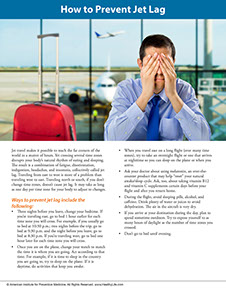
    Image of man covering his face while at the airport.

    Jet travel makes it possible to reach the far corners of the world in a matter of hours. Yet crossing several time zones disrupts your body’s natural rhythm of eating and sleeping. The result is a combination of fatigue, disorientation, indigestion, headaches, and insomnia, collectively called jet lag. Traveling from east to west is more of a problem than traveling west to east. Traveling north or south, if you don’t change time zones, doesn’t cause jet lag. It may take as long as one day per time zone for your body to adjust to changes.

    Ways to prevent jet lag include the following:

    *  Three nights before you leave, change your bedtime. If you’re traveling east, go to bed 1 hour earlier for each time zone you will cross. For example, if you usually go to bed at 10:30 p.m.; two nights before the trip, go to bed at 9:30 p.m. and the night before you leave, go to bed at 8:30 p.m. If you’re traveling west, go to bed one hour later for each time zone you will cross.

    *  Once you are on the plane, change your watch to match the time it is where you are going. Act according to that time. For example, if it is time to sleep in the country you are going to, try to sleep on the plane. If it is daytime, do activities that keep you awake.

    *  When you travel east on a long flight (over many time zones), try to take an overnight flight or one that arrives at nighttime so you can sleep on the plane or when you arrive.

    *  Ask your doctor about using melatonin, an over-the-counter product that may help “reset” your natural awake/sleep cycle. Ask, too, about taking vitamin B12 and vitamin C supplements certain days before your flight and after you return home.

    *  During the flight, avoid sleeping pills, alcohol, and caffeine. Drink plenty of water or juices to avoid dehydration. The air in the aircraft is very dry.

    *  If you arrive at your destination during the day, plan to spend some time outdoors. Try to expose yourself to as many hours of daylight as the number of time zones you crossed.

    *  Don’t go to bed until evening.

    Page image from A Year of Health Hints book by the American Institute for Preventive Medicine. www.HealthyLife.com. All rights reserved.

    © American Institute for Preventive Medicine

  • Save By Staying Healthy

    Medical Care

    An ounce of prevention is worth more than a pound of cure. The healthier you are, the less you will need to pay for medical care. Also, the state of your health is one of the main factors in setting the cost of health and life insurance.

    Don’t send money up in smoke.

    Cigarette smoking is bad for your health. It’s bad for your wallet, too. A person who smokes two packs a day spends over $3,000 a year just on cigarettes. Hundreds of dollars more are spent on extra dental and medical costs. The cost of health, life, and disability insurance is about 30% higher for persons who smoke.

    Weight does matter.

    Obesity is a leading cause of preventable death. Losing weight can lower the risk for type 2 diabetes, heart disease, and other chronic diseases. These can cost you and your employer a lot of money to treat. Obese persons who buy health insurance on their own may have to pay more. Insurance companies may even turn them down.

    Be fit at little or no cost.

    Take part in fitness programs at work. Join a mall walkers program. Walk with a friend. Follow along with fitness programs on TV. Or, if you have a stationary bike, ride it while you watch TV. Being active every day is a huge investment in your health.

    Look at your genes.

    Find out what health problems both sides of your family have or had. Start with your parents, brothers, and sisters. Then find out about ones your grandparents, uncles, aunts, and first cousins have or had. Once you know what health problems run in your family, talk with your doctor. He/she can suggest ways to lower your risk of getting them.

    Don’t back quacks.

    Find out about products and treatments that don’t work or could cause harm fromwww.quackwatch.organdwww.fda.gov. Don’t waste money on things that don’t help.

    Be savvy about AD-vice.

    Check with your doctor before you follow advice from Web sites and ads that promote products. Many are costly and give little or no benefit.

    Detect to protect.

    Have screening tests and exams that can help detect health problems in early stages when they are easier and less costly to treat. Follow your doctor’s advice.

    Money well spent.

    If you have no health insurance or your health plan does not pay for screening tests or doctor visits, it is still important to have them. Paying for these now could save you thousands in medical costs in the future. Tests may cost less than you think.

    Know thy “health self.”

    The more you know about your health problems, the easier it is to make informed choices about how to take care of them. Find out what you need to do from your doctor. Get reliable facts, too, from trusted sources.

    Follow your doctor’s treatment plan.

    This helps to improve your health. It helps keep problems from getting worse. For example, keeping blood pressure under control can reduce the risk of having a stroke or a heart attack.

    A shot in the arm for your health.

    Get vaccines, as needed, to prevent illnesses. This applies to children, as well as adults. The Centers for Disease Control and Prevention give guidelines for vaccines every year. Find out what they are atwww.cdc.gov/vaccines. Also, if you plan to travel to other countries, find out what vaccines you should get. Find out fromwww.cdc.gov/travel.

    Know about the Vaccines for Children (VFC) Program.

    Your children may be able to get free or low-cost vaccines. Find out fromwww.cdc.gov/vaccines/programs/vfc/default.htm.

    Cover image to the Healthy Savings book by the American Institute for Preventive Medicine. www.HealthyLife.com. All rights reserved.

    © American Institute for Preventive Medicine

  • Get Enough Sleep 2

    Healthylife® QuitWell™

    Part 5

    Women sleeping.

    Not getting enough sleep can affect nearly every aspect of your day:

    *  Less energy and desire to work on your goals

    *  Feeling down, anxious, or other negative feelings

    *  Decreased creativity, making it harder to solve problems or imagine doing things differently

    *  Increased cravings for tobacco/nicotine to stay alert

    *  More unstable blood sugar levels, leading to less healthy eating and stronger cravings for nicotine

    Tips for Improving Sleep

    *  Get to bed a little earlier than normal when quitting. This may help cut out an evening cigarette and can help your body recover.

    *  Create a comfortable place to sleep. Make sure your bed, pillows, and bedding are comfortable.

    *  Maintain a slightly cooler temperature in the bedroom.

    *  Avoid looking at a screen (TV, laptop, smartphone, tablet, etc.) 30 minutes before bed.

    *  Create a bedtime and waketime routine.

    *  Reserve the bed for sleep and sex. Avoid doing other activities in bed, like work or having a tough discussion.

    *  Have a small snack before bed if you are hungry.

    * Avoid foods high in sugar or refined carbohydrates just before bed. The rise in blood sugar can provide a burst of energy that keeps you alert and makes it difficult to fall asleep.

    *  Avoid foods that are likely to cause acid reflux (heartburn), gas, cramping, or indigestion if you are prone to these problems. Fatty or spicy foods, beans, garlic, peanuts, and dairy cause discomfort for some people.

    What action can you take tonight to improve your sleep?

    © American Institute for Preventive Medicine
  • 8 Healthy Sleep Habits

    Sleep Well

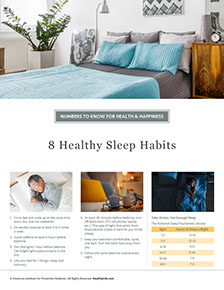
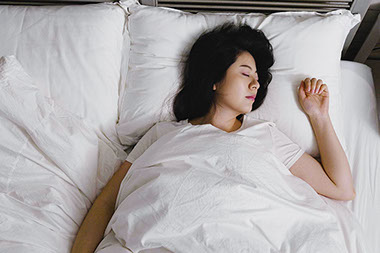
    Bed with blue bedding.

    1. Go to bed and wake up at the same time every day, even on weekends.

    2. Do aerobic exercise at least 3 to 4 times a week.

    3. Avoid caffeine at least 6 hours before bedtime.

    4. Dim the lights 1 hour before bedtime. Get bright light exposure early in the day.

    5. Use your bed for 2 things−sleep and intimacy.

    6. At least 30 minutes before bedtime, turn off electronics (TV, cell phone, laptop, etc.). The type of light that emits from these devices makes it hard for you to fall asleep.

    7. Keep your bedroom comfortable, quiet, and dark. Turn the clock face away from you.

    8. Follow the same bedtime routine every night.

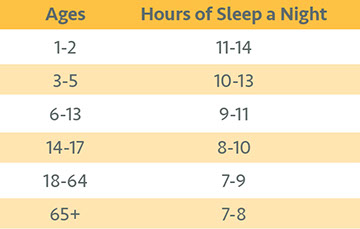
    Take Action: Get Enough Sleep

    The National Sleep Foundation advises:

    © American Institute for Preventive Medicine

  • Simple Ways To Get Better Sleep

    WELL-BEING

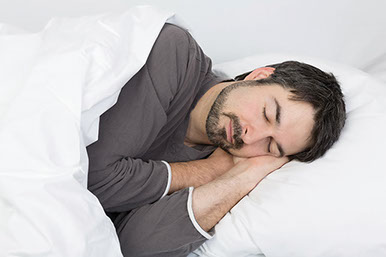
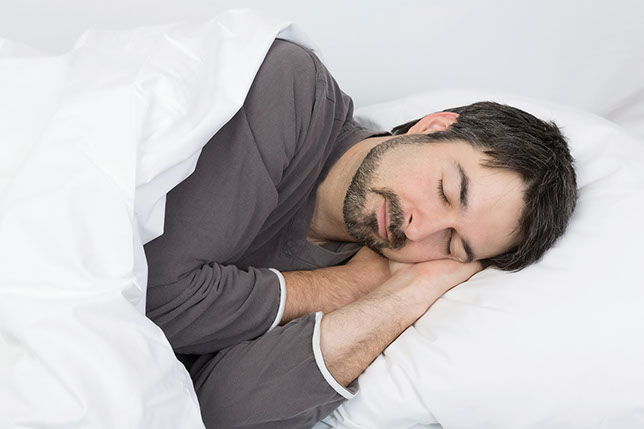
    Image of man sleeping.

    Lack of sleep can affect the body in many ways. Beyond just feeling tired, long-term sleep deprivation may be linked to health problems such as heart disease, obesity and depression. Try these tips to get better sleep each night:

    *Have a consistent schedule.Get up at the same time each morning and go to bed at the same time each night. This will help to set your body’s internal clock. Over time, you’ll fall asleep quicker and may sleep better throughout the night.

    *Skip screens.The light given off by smartphones, tablets and computers can actually keep you awake. Avoid electronics in the evening, at least 2 hours before bedtime.

    *Think about skipping naps.Although a nap may feel great when you’re tired, it could be causing more sleep problems. Napping can interfere with your sleep schedule and make you too alert at bedtime. If you have trouble falling asleep at night, skip the nap and get to bed a little sooner.

    *Get moving.Exercise during the day has been shown to improve sleep quality. Walking, jogging, or any activity you enjoy can be helpful. Don’t exercise within 2 hours of bedtime, though, if you have trouble falling asleep.

    *Be careful about caffeine.That afternoon cup of coffee could still be in your system at bedtime, making it difficult to fall asleep. Try to avoid soda, tea and coffee after lunch.

    *Don’t smoke.Nicotine interferes with sleep and harms your health in many other ways. If you need help quitting, talk to your doctor or visitsmokefree.govfor free help with quitting. It’s never too late to quit.

    *Don’t eat a big meal before bed.Heavy meals can interfere with sleep and make you restless. Eat dinner about 2 to 3 hours before bedtime. If you need a snack, make it small and light, such as yogurt and fruit or a handful of nuts.

    Source: National Sleep Foundation

    © American Institute for Preventive Medicine
  • Sleep, But How?

    MEDICAL NEWS

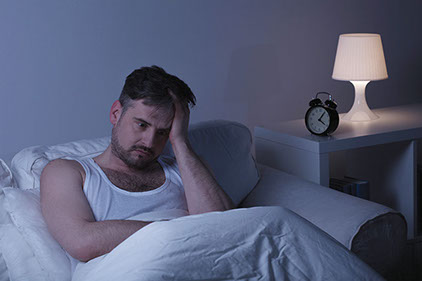
    Image of man awake in bed.

    “We know that how much you sleep and the quality of your sleep can have a tremendous impact on your overall health,” said Dr. David J. Earnest, professor at the Texas A&M Health Science Center College of Medicine, who studies circadian rhythms-the human body’s master clock.

    “We’re starting to recognize that sleep deprivation and disorders are more prevalent than any other health disorder that affects Americans,” he said.

    If you feel like there’s a deeper cause to your sleep woes, you may be like 1 in 10 Americans who suffer from insomnia or other sleep disorders, including these:

    Delayed Sleep Phase Disorder (DSPD)-a tendency to go to bed later (around 2 or 4 in the morning) and to sleep until the early afternoon. This kind of disorder can interfere with a normal work or school schedule.

    Advanced Sleep Phase Disorder (ASPD)-the tendency to go to bed earlier (6 or 8 in the evening) and to wake earlier than most people (around 3 or 5 in the morning). While this kind of disorder doesn’t typically interfere with a normal work or school schedule, it can pose a challenge for social activities or events that occur later in the evening.

    Non-24-Hour Sleep-Wake Syndrome-a circadian rhythm that is 25 hours or longer, which leads to sleep and wake times becoming gradually later.

    Jet Lag-one of the most common and usually occasional sleep disorders that occurs when your internal clock is out of synch with a new time zone. After traveling to a new time zone, you may find it difficult to fall and stay asleep during suitable times.

    Shift Work-with constantly changing shifts, it can be difficult for workers to adjust to their new sleep schedules. Shift work has been linked with a higher risk of developing metabolic or cardiovascular diseases.

    Sleep Apnea-breathing temporarily stops due to a blockage of the upper airways during sleep. Most people with sleep apnea do not know that they have it. Symptoms include daytime sleepiness, irritability, depression, and fatigue the next day, because their sleep lacks quality.

    Narcolepsy-extreme sleepiness during the day, usually resulting in suddenly falling asleep. It’s caused by a dysfunction in the brain mechanism that controls sleeping and waking.

    Restless Leg Syndrome (RLS)-itching, tingling, or burning in the lower legs, that makes it difficult to get comfortable and fall asleep.

    If you think you might have a sleep disorder, discuss your symptoms with your doctor or a sleep specialist.

    © American Institute for Preventive Medicine