Tag: Smart Food Choices

  • How Sweet It Is

    HEALTHY EATING

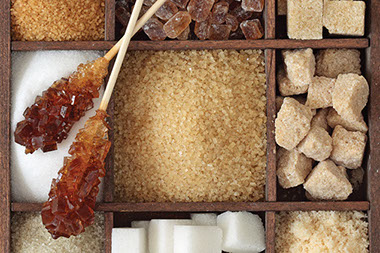
    Image of different types of sweeteners.

    Is sugar really bad for us? How about artificial or low-calorie sweeteners?

    Our bodies need one type of sugar, called glucose, to survive. “Glucose is the number one food for the brain, and it’s an extremely important source of fuel throughout the body,” said Dr. Kristina Rother, pediatrician with the National Institute on Health and expert on sweeteners.

    But there’s no need to add glucose to your diet, because your body can make the glucose it needs by breaking down food molecules like carbohydrates, proteins, and fats. Some sugars are found naturally in foods such as fruits, vegetables, and milk.

    Much of the sugar we eat isn’t found naturally in food but is added during processing or preparation.

    Although sugar itself isn’t bad, said Dr. Rother, “Sugar has a bad reputation that’s mostly deserved because we consume too much of it. It’s now in just about every food we eat.”

    You can cut down on added sugars. NIH in Health offers these suggestions:

    *  Choose water, fat-free milk, or unsweetened tea or coffee instead of sodas, sports drinks, energy drinks, and fruit drinks.

    *  Reduce sugar in recipes. If a recipe says 1 cup, use 2/3 cup.

    *  To enhance flavor, add vanilla, cinnamon, or nutmeg.

    *  Eat fresh, canned, frozen, and dried fruits without added sugar. Choose fruits canned in their own juice rather than in syrup.

    *  Use fruits to top foods like cereal and pancakes rather than sugars, syrups, or other sweet toppings.

    *  Read the ingredients list to pick food with little or no added sugar.

    © American Institute for Preventive Medicine
  • No Yoke?

    HEALTHY EATING

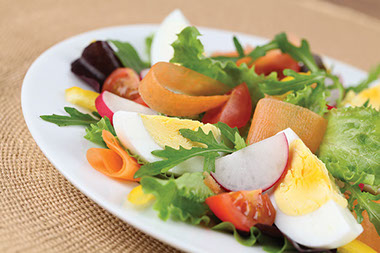
    Image of salad with hard boil eggs.

    Adding eggs to a salad with a variety of raw vegetables is an effective method to improve the absorption of carotenoids. Those are fat-soluble nutrients that help reduce inflammation and oxidative stress, according to research from Purdue University. “Eating a salad with a variety of colorful vegetables provides several unique types of carotenoids, including beta-carotene, lutein, zeaxanthin, and lycopene,” said Wayne Campbell, a professor of nutrition science. “The lipid contained in whole eggs (including the yoke especially) enhances the absorption of all these carotenoids.”

    This research is published in the American Journal of Clinical Nutrition.

    FYI:

    The 2010 Dietary Guidelines for Americans recommends limiting dietary cholesterol to no more than 300 mg a day. (A single egg has almost 200 mg.) The 2015 Dietary Guidelines, to be published later this year, will no longer restrict dietary cholesterol. Why? The 2015 Dietary Guidelines Advisory Committee’s found no evidence to show a strong enough link between consuming dietary cholesterol and blood cholesterol levels. As with all medical guidelines, discuss your particular needs with your doctor.

    © American Institute for Preventive Medicine

  • Nutritional Treasure In The Trash

    HEALTHY EATING

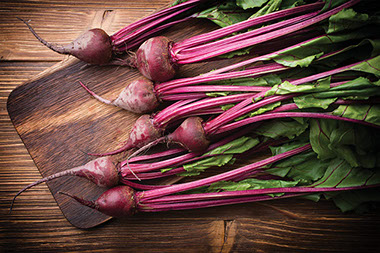
    Image of beets with the greens still attached.

    Sometimes the best parts of the vegetables get thrown in the trash. So next time you’re cooking up vegetables and are about to toss out those extra parts, stop. Many vegetable parts are perfectly edible and are packed with nutrients and flavor.

    Here are some tips from the American Institute for Cancer Research to make the most of your veggies:

    *  Roasted pumpkin seeds are a fall favorite, but you can roast seeds from any winter squash, including butternut, acorn, and spaghetti squash. Squash seeds are a great source of protein. To roast, scoop out seeds, rinse, and drain. Let them dry, spread flat on a baking pan and bake at 300ºF for about 20-30 minutes until golden brown.

    *  Using the whole cauliflower, including the stem, in cauliflower “steaks” is trendy right now. Cut all the way through a cauliflower head from the top to make cauliflower steaks, which can be broiled or pan roasted. Or instead of mashed potatoes, try mashing the whole cooked cauliflower including the stem.

    *  Use a vegetable peeler or large knife to remove the thick, tough outer layer of the broccoli stem (if you use a knife, make 4 lengthwise cuts along the 4 sides of the stem to make a long rectangle). Try making creamy broccoli soup, which includes both the broccoli stems and florets.

    *  Buy beets with the greens still attached and it’s like getting two vegetables in one. Beet greens contain loads of vitamin C and beta-carotene-nutrients linked to lower cancer risk. Separate the greens from the beets by cutting just above where the stem begins. They’re great sautéed in olive oil, with garlic, salt, and pepper to taste.

    © American Institute for Preventive Medicine
  • Oatmeal: A Good Choice For A Power Breakfast

    HEALTHY EATING

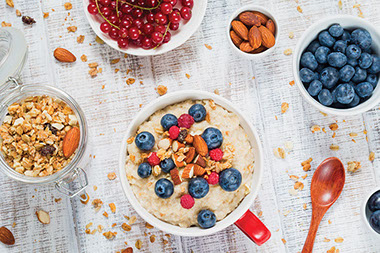
    Image of a bowl of oatmeal with berries and almonds.

    You probably already know that oatmeal is healthy, and perhaps you’ve been told it “sticks to your ribs.” But what’s the science behind oatmeal’s healthy history?

    Oatmeal can keep you full

    Avoid a mid-morning hunger attack, and you’ll be less tempted to pick up a donut. Oatmeal contains a special kind of fiber known as oat beta glucan. These beta glucans can increase levels of certain hormones that may help control appetite.

    Oatmeal helps digestion

    Oatmeal’s soluble fiber content is widely recommended to help keep bowels running smoothly. Regular intake of fiber-rich foods, like oatmeal, can help avoid bloating and uncomfortably hard stools.

    Oats can improve cholesterol

    High cholesterol is a major risk factor for heart disease. Studies have shown that eating oats regularly can lower “bad” LDL cholesterol due to its oat beta glucan fiber.

    Even if you eat a gluten-free diet, oats can be a healthy choice. They contain B vitamins and magnesium, which may be lacking in many people who don’t eat gluten. Look for oats labeled “gluten free” to avoid any gluten contamination that could happen during processing.

    Tips if you don’t like oatmeal

    Oatmeal can be eaten a variety of ways, so don’t rule it out if you haven’t enjoyed it in the past. Far beyond apple cinnamon and other sugary flavor packets often found in the supermarket, you can try it savory, add it to other foods, or even eat it for dinner!

    Consider these ideas:

    *  Add oats to turkey burgers or meatloaf to stretch your meat further and add health benefits

    *  Sprinkle oats over baked apples for a healthy “apple crisp”

    *  Use oats in casseroles or dinner rolls

    Sources: Oldways Whole Grains Council, Academy of Nutrition and Dietetics

    © American Institute for Preventive Medicine

  • Spring Clean Your Diet With Green Eating

    HEALTHY EATING

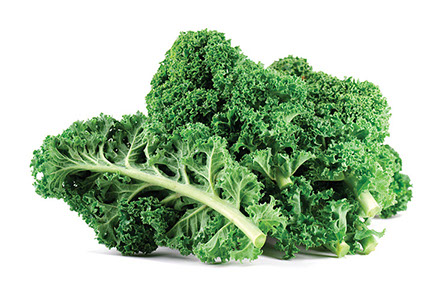
    Image of kale.

    Bright emerald green is symbolic of spring and food bursting with flavor and nutrients. Spring “clean” your diet, suggests Kari Kooi, a registered dietitian at The Methodist Hospital in Houston. She recommends these 5 green powerhouse foods:

    *Asparagus:These green spears offer a bounty of nutrients. Asparagus is high in an antioxidant that can help reduce skin damage from the sun. Also, asparagus contains the most folate of any vegetable. Folate plays a vital role in heart health and the prevention of birth defects.

    *Avocado:Add some thin slices of smooth avocado to your sandwich or salad without feeling guilty. The monounsaturated fat in avocado is what’s mostly responsible for avocado’s super-food status. This type of happy fat can help drive down levels of bad cholesterol.

    *Brussels sprouts:These baby cabbages are loaded with antioxidants and filling fiber. A cruciferous vegetable, Brussels sprouts contain powerful cancer-fighting sulfur compounds that are responsible for their pungent aroma. These green vegetables take on a whole new flavor and crispy texture when roasted in the oven.

    *Kale:This beautiful ruffled green is being called “the queen of greens.” Kale is brimming with eye-nourishing phytochemicals that have been shown to prevent macular degeneration (vision loss) and cataracts. Kale is a better source of calcium than spinach.

    *Kiwifruit:Rich in vitamin C, potassium, and fiber, kiwis make a perfect portable snack. Just slice a kiwifruit in half and scoop out the emerald sweet and tart flesh with a spoon.

    © American Institute for Preventive Medicine