Tag: smoke

  • Smokeless Inhalation

    Healthylife® QuitWell™

    Part 4

    Senior women deep breathing.

    This is one of the best Urge Tamers you will learn. Do this deep breathing when you have an urge.

    1. Breathe in deeply through your nose.

    2. Hold your breath for 3 seconds.

    3. Slowly breathe out through pursed lips to make a “whooshing” sound.

    4. Keep breathing this way until the urge goes away. Sometimes you may need to do the smokeless inhalation 2-3 times, or up to 12-13 times. An increase in oxygen helps you feel relaxed.

    The smoking cycle:

    Avoiding tobacco/nicotine and using smokeless inhalation can help you break the cycle.

    © American Institute for Preventive Medicine

  • Review & Prepare 6

    SleepWell® Program

    Week 3

    Image of man sleeping.

    Look at your pattern of sleep over the past week. Compare it to your sleep patterns over the past few weeks of tracking.

    Answer the following:

    *  I fall asleep more quickly now.

    *  I have more daytime energy.

    *  I wake up fewer times during the night.

    *  If or when I do wake up, I am able to fall asleep again more quickly.

    *  Changes I made to my bedtime and waking routines.

    *  Changes I made to what I do in bed or in the bedroom.

    *  Are you ready for another week of attention to your sleep?

    Shift Your Bedtime

    If you think your sleep has improved during the past week, you can begin to shift your bedtime earlier. Do this gradually. Only make a shift when your sleep quality is high. This means:

    *  You are able to fall asleep within 15 minutes of getting into bed.

    *  You are rarely waking up during sleep.

    *  If you do wake up, you are able to go back to sleep within 15 minutes.

    *  You stay asleep until your planned wake time.

    *  You wake feeling refreshed.

    If your sleep quality has not improved, maintain the original schedule for another week. When you are ready, shift your bedtime 15 minutes earlier. Keep the same wake time. This will give you more time to sleep as your body becomes trained to sleep in bed.

    © American Institute for Preventive Medicine

  • Copd

    Respiratory conditions

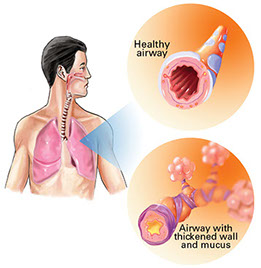
    The letters COPD are for chronic obstructive pulmonary disease. This is lung disease that worsens over time. With COPD, airways are narrowed and blocked. The lungs are damaged. Having COPD makes it hard to breathe in and out. In the U.S. and throughout the world, COPD is a major cause of illness and death. Most often, COPD is due to one or both of these problems:

    *  Chronic bronchitis. This causes swelling and the build-up of mucus in the lungs.

    *  Emphysema. This damages the walls of the air sacs in the lungs.

    Illustration of COPD.

    Signs & Symptoms

    *  A chronic cough. The cough brings up mucus or phlegm.

    *  Shortness of breath. This is usually worse with exercise or when you exert yourself.

    *  Feeling like you can’t take a full, deep breath

    *  Chest tightness

    *  Wheezing. This is a whistling sound when you breathe.

    *  Frequent colds and other respiratory infections

    *  Swelling in the legs, ankles, and feet

    Symptoms of COPD usually start after 40 years of age and slowly worsen over time.

    Diagnosis

    COPD is usually diagnosed with a breathing test called spirometry. Spirometry measures how much air your lungs can hold and how fast you can blow air out of your lungs. It is a simple and fast test. Your doctor or nurse technician will ask you to take a deep breath and then breathe out as hard and as fast as you can into a mouthpiece. The spirometer will measure and record the results.

    A chest X-ray or CT scan can also diagnose COPD. Sometimes, a blood sample is taken  to test levels of oxygen and carbon dioxide in the blood.

    Causes

    *  Smoking. This is the main cause. More than 90 percent of people with COPD are smokers or former smokers.

    *  Breathing in other lung irritants over a long period of time. These include air pollution and dust or chemicals used in the mining and textile industries.

    *  In some rare cases, having a genetic disorder called Alpha-1 antitrypsin deficiency. This is due to a defective protein in the blood.

    When to Seek Medical Care

    Reasons to Call Your Health Care Provider

    *  You have a much harder time catching your breath.

    *  You have sudden tightness in your chest.

    *  You cough a lot more, it becomes difficult to cough, or you cough up yellow, green, brown or red-colored mucus.

    *  You have a fever.

    *  You have heart palpitations or a faster pulse   than usual.

    *  You have a sudden increase or loss of appetite.

    *  You have blurry vision or see double.

    *  You become unusually dizzy or sleepy or you can’t think clearly.

    *  You are anxious or depressed.

    Reasons to Get Emergency Care

    *  Your lips or fingernails are blue or gray.

    *  It is hard for you to talk or walk.

    *  Your breathing is fast and hard, even after taking medicine.

    *  Your heart is beating very fast or irregularly.

    Prevention

    The best way to prevent COPD is to not smoke. If you smoke, commit to quit! Talk to your doctor about over-the-counter or prescribed medications that can help you quit. To increase your chances of success, take part in a stop smoking class or program.

    *  Avoid secondhand smoke and other lung irritants.

    *  If you work in an at-risk industry, wear protective clothing and equipment. Follow the safety measures of your workplace.

    You can get help to quit smoking from:

    1-877-44U-QUIT (448-7848)

    1-800-QUIT-NOW (784-8669)

    www.lungusa.org

    www.smokefree.gov

    Treatment

    Work with your health care provider to develop and follow a treatment plan to meet your needs.

    Medications

    *  Bronchodilators relieve shortness of breath and keep airways open.

    *  Anticholinergics relax airway muscles.

    *  Inhaled steroids reduce swelling in the airways.

    *  Antibiotics and antiviral drugs treat infections that occur with COPD and that make it worse.

    Oxygen Therapy

    Your doctor may prescribe oxygen therapy if oxygen levels in your blood are too low. Oxygen is provided by an oxygen cylinder or concentrator and delivered through a nasal tube. It can help you be more active and lead a better life.

    *  Use your oxygen, as advised by your doctor or care specialist.

    *  Do not smoke or let people around you smoke while oxygen is in use.

    *  Before you travel, ask your doctor how to have your oxygen needs met. Discuss where you plan to go and your method of travel. If you are flying, check with the airline for rules about traveling with oxygen. You may need a letter from your doctor or copies of your oxygen prescription, so plan ahead.

    Vaccines

    People who have COPD are more likely to be sicker longer and may have more serious health problems when they get the flu or pneumonia.

    *  Get a yearly flu shot. Get information fromwww.cdc.gov/fluor 1-800-CDC-INFO (232-4636).

    *  Get a pneumonia vaccine, as advised by your doctor.

    *  Lower your risk of illness. Wash your hands often with soap and water and keep them away from your eyes, nose, and mouth. When you can’t wash your hands, use alcohol-based hand cleaners. Avoid crowded places when possible.

    Pulmonary Rehabilitation

    You work with a team of health care providers to create a personal treatment plan and set goals. You learn to manage your COPD to live a more normal life. Pulmonary rehabilitation includes:

    *  Exercise. This strengthens your muscles and improves your endurance. It makes it easier for you to move, do activities, and take care of yourself. You will find out how often to exercise, for how long, and how hard to push yourself.

    *  Emotional Support. Many people who have COPD also deal with depression, anxiety, and low self-esteem. Some programs offer emotional support, group counseling, and/or relaxation training.

    *  Disease Education. You will learn how to quit smoking, eat healthy, and manage symptoms.

    Self-Care

    Quit smoking! This is the most important thing you can do to manage your COPD.

    Learn your triggers and know how to avoid them.

    *  Don’t smoke.

    *  Control household triggers, such as dust. Wear a filter mask when you vacuum, dust, and do hobbies or work that involve dust and other irritants. Use a damp (not dry) cloth for dusting.

    *  Keep your home well-ventilated.

    *  Do not use aerosols, ammonia, lye, kerosene, powders or solvents. Find out about products that are safe for you and the environment at Indoor Air Quality (IAQ) House atwww.epa.gov/iaqandwww.epa.gov.

    *  Stay inside when air quality is poor. Find Air Quality Index forecasts fromwww.airnow.gov.

    *  Follow your health care provider’s advice for using air filters and air purifiers.

    Manage your coughing.

    *  Do not take over-the-counter cough or other medicines unless your doctor tells you to. Your health care provider can teach you techniques for coughing comfortably and productively.

    *  Unless you are told by your doctor to limit your fluids, drink at least 8 glasses of water a day to keep mucus thin and easier to cough up.

    Practice pursed lip breathing to relieve shortness of breath:

    *  Relax. Close your mouth. Breathe in through your nose. Do this slowly and count: one, two.

    *  Purse your lips like you are going to whistle. Breathe out slowly and count: one, two, three, and four.

    *  Do not do this tight-lipped.

    Resources

    The Asthma and Allergy Foundation of America

    800.7.ASTHMA (727.8462)

    www.aafa.org

    National Heart, Lung, and Blood Institute

    301.592.8573

    www.nhlbi.nih.gov

    COPD brochure by the American Institute for Preventive Medicine. www.HealthyLife.com. All rights reserved.

    © American Institute for Preventive Medicine

  • Balance Of Choice

    Healthylife® Weigh

    Part 1

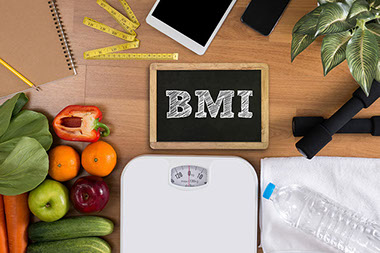
    Dumbbells, scale, towel, fruit, BMI body mass index formula rate formula in a board.

    Learn what is pulling you toward your goal and what is holding you back. All thoughts and feelings are valid. Is your goal more important to you than the challenges to achieve it? Are you pursuing this goal just because someone said you “should” do it? If you think of something later, come back to this to add another point.

    Benefits – “Pros” vs Costs-“Cons”

    Making a change.

    Pro Example: I will have more energy.

    Con Example: I won’t be able to have sweets as often as I do now.

    Not changing.

    Pro Example: I can keep all of my current habits.

    Con Example: I could keep putting on more weight.

    © American Institute for Preventive Medicine

  • Quit Smoking

    Healthylife® Weigh

    Part 3

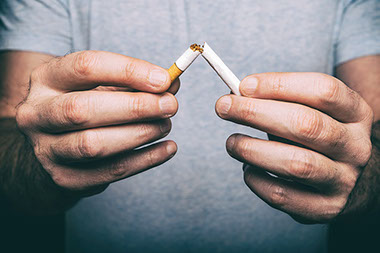
    Hands breaking a cigarette in half.

    Smoking and the use of other tobacco products causes serious harm to the body, including cancer, cardiovascular disease, and emphysema. Smoking can also complicate diabetes and other health conditions.

    If you are smoking, try to quit. Talk to your doctor about tools to help you quit. Call 800-QUIT-NOW (800-784-8669) to talk to someone who can help you quit.

    Quitting smoking may cause some weight gain as your body learns to regulate blood sugar and appetite normally again. Smoking can also be a coping strategy for stress, so you will need to learn new ways to manage stress. It is worth it to quit smoking.

    © American Institute for Preventive Medicine

  • Harmful Hookahs

    WELL-BEING

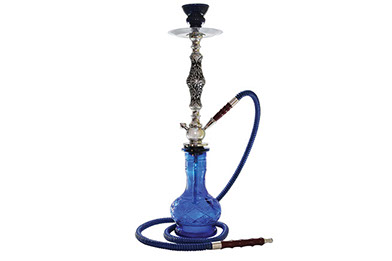
    Image of a hookah.

    Despite warnings from the CDC that hookah smoking can be just as dangerous as cigarettes, many young adults believe that using the water pipes is not harmful to their health, according to a UCLA School of Nursing study.

    Researchers visited three Southern California hookah lounges and asked patrons between the ages of 18  and 30, “Do you believe smoking a hookah is harmful  to your health?”

    Fifty-seven percent said they thought that it was not. When asked why they thought hookahs were not harmful, 47% said they believed that the smoke gets filtered through water, and 35% said they thought that fruit used to flavor the tobacco would detoxify tobacco’s harmful chemicals. Still others, 16%, said they assumed hookahs are not harmful because the tobacco is not addictive and does not contain nicotine.

    Unfortunately, none of those beliefs is true.

    © American Institute for Preventive Medicine

  • This Home Fix Can Save Your Life

    WELL-BEING

    Illustration of a house.

    It’s odorless, colorless, and causes lung cancer. You could be breathing it every day and not know it. It’s radon, and it’s a major health threat in nearly all areas of the country.

    What is radon?

    Radon is a naturally occurring gas that is found in soil. It makes its way into buildings through cracks, joints, and gaps in the basement or foundation. Once inside, it can build up and result in dangerously high levels. High levels of radon can cause lung cancer. The Surgeon General has warned that radon is the second leading cause of lung cancer in the U.S. today. Only smoking causes more deaths from lung cancer.

    The CDC estimates that more than 20,000 people die every year from lung cancer caused by radon. Even people who have never smoked can get lung cancer from radon. But, if you smoke, your chance of lung cancer is even higher.

    How do I know if my house has radon?

    The only way to detect radon in your house is through a radon test. Many hardware stores carry these tests, or you can get a test through your state’s radon office. Follow the instructions exactly as listed on the test. The tests are not expensive and are easy to use. Usually you need to leave the test in your house for a set amount of time. Then, you’ll follow instructions to mail it to a lab to get your results.

    No level of radon is safe. But, if your test shows a level of 4 or higher, you need to fix your house.

    How do I get rid of radon?

    There is an effective way to get radon out of your house and keep it from coming back. A radon mitigation system involves putting a special pipe device in your basement. The pipe has a fan inside that blows the radon back outside.

    Every state has radon removal companies who can install these systems. The Environmental Protection Agency says you should use a company that is accredited by the National Radon Safety Board or the National Radon Proficiency Program.

    Radon is one health problem no one should live with. Get a radon testing kit today. Your health and life are worth it.

    Take action against radon

    To order a radon test kit, call: 1-800-SOS-RADON

    (1-800-767-7236)

    For answers to radon questions, call: 1-800-55-RADON (557-2366)

    For questions about fixing radon levels in your house, call: 1-800-644-6999.

    © American Institute for Preventive Medicine