Tag: smoking

  • Altering Triggers

    Healthylife® QuitWell™

    Part 4

    A morning cup of coffee.

    Actions, especially habits, are linked. For example, you may light up a cigarette without thinking when you start your car, end a meal, drink coffee, or hear your alarm clock. If you dip or use other forms of tobacco/nicotine, you may have similar triggers.

    Altering triggers can help you break your automatic habits.

    Scrambling

    Scramble your routine to stop the triggers before they happen.

    1. Change your morning routine.

    2. Change your work area and the times of the day you do things.

    3. Change the route you take to work.

    4. Change the way you talk on the phone.

    5. Take a walk with a water bottle instead of a coffee break.

    6. Sit in a new place at the dining room or kitchen table.

    7. What other ways can you change your routines?

    © American Institute for Preventive Medicine

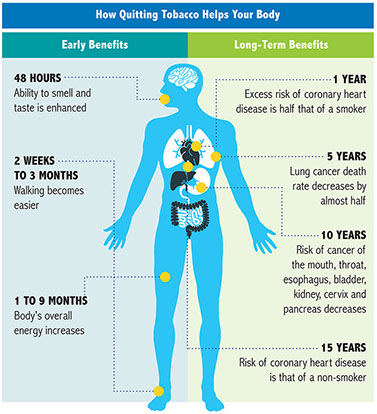
  • How Smoking Hurts The Body

    Healthylife® QuitWell™

    Part 1

    Concept image of doctor with icons of different human organs.

    Heart Disease

    Smoking is the greatest risk factor for heart disease. A smoker’s chance of having a heart attack is 3 times that of a non-smoker. High blood pressure is a major cause of stroke and a prime risk factor for heart disease. High blood pressure is more severe in smokers. People with high blood pressure can lower their risk of heart disease by 50% when they quit.

    1. Carbon monoxide reduces oxygen going to the heart.

    2. The heart works harder to move  the oxygen through the body. Breathing speeds up.

    3. Nicotine causes the blood vessels to constrict. Blood pressure goes up. The heart becomes more stressed.

    4. A greater amount of cholesterol forms on the blood vessel walls.

    5. Over time, less oxygen puts strain on the heart and heart cells die.

    Cancer

    Cigarette smoke has been proven to contain cancer-causing agents (carcinogens) and co-agents (co-carcinogens). The parts of the body that come into direct contact with smoke are more likely to develop cancer: lungs, mouth, trachea, esophagus, and larynx. The breakdown products in smoke also affect other organs that do not come into direct contact with smoke:  the pancreas, kidney, and bladder.

    Chronic Bronchitis

    Chronic bronchitis can make it very hard to breathe. This is because the lining of your bronchial tubes (the tubes that air goes through to get to your lungs) becomes inflamed and irritated. While acute (temporary) bronchitis caused by a cold or virus usually goes away within a few weeks, excess mucus and lung damage can mean months and months of coughing and breathlessness.

    1. Cigarette smoke paralyzes hair like fibers (cilia) that line and clean the bronchial tubes.

    2. Excess mucus is produced in the tubes. The result is a mucus plug.

    3. Chronic coughing is the way a smoker removes the plug so oxygen can get in.

    Emphysema

    Emphysema can also make it very difficult to breathe. This problem develops in a different way than chronic bronchitis:

    1. Oxygen enters the blood stream through air sacs in the lungs. The ‘tars’ from cigarette smoke gather on the lung walls and burst the sacs.

    2. These heavy tars also make the lungs longer and less able to stretch.

    3. Breathing becomes difficult.

    © American Institute for Preventive Medicine

  • Negative Reinforcement

    Healthylife® QuitWell™

    Part 4

    Women wearing a rubber band around wrist.

    If you are punished for doing something, you are less likely to keep doing it. If a person threw a bucket of water in your face each time you walked around the block, you would take fewer walks.

    Urge Zapper

    1. Place a stretchy band on your wrist.

    2. Snap your wristband whenever you have an urge to use tobacco/nicotine.

    Tobacco Consequence Control

    When you get an urge, think of something you want to avoid-shortness of breath, cancer, heart disease, or letting someone down. What do you want to avoid?

    As the urge goes away, reward yourself by thinking of something you are looking forward to with quitting-feeling in control, breathing more easily, or having more money. What do you look forward to?

    Butt Bottle Revival

    1. Keep your butt bottle where you can see it.

    2. Open it up and smell.

    3. Add water to highlight the foul odor.

    © American Institute for Preventive Medicine

  • Smokeless Inhalation

    Healthylife® QuitWell™

    Part 4

    Senior women deep breathing.

    This is one of the best Urge Tamers you will learn. Do this deep breathing when you have an urge.

    1. Breathe in deeply through your nose.

    2. Hold your breath for 3 seconds.

    3. Slowly breathe out through pursed lips to make a “whooshing” sound.

    4. Keep breathing this way until the urge goes away. Sometimes you may need to do the smokeless inhalation 2-3 times, or up to 12-13 times. An increase in oxygen helps you feel relaxed.

    The smoking cycle:

    Avoiding tobacco/nicotine and using smokeless inhalation can help you break the cycle.

    © American Institute for Preventive Medicine

  • Review & Prepare 5

    SleepWell® Program

    Week 2

    Image of women on computer.

    Answer the following.

    *  How did your sleep this week compare to the first week?

    *  What changes did you made to my sleep environment?

    *  What changes did you make to your eating habits?

    *  What Changes did you make to your exercise habits?

    *  What changes will you continue?

    *  What is one S.M.A.R.T. goal you have for next week?

    © American Institute for Preventive Medicine

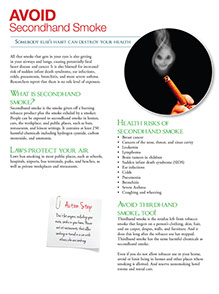
  • Avoid Secondhand Smoke

    Tobacco Cessation

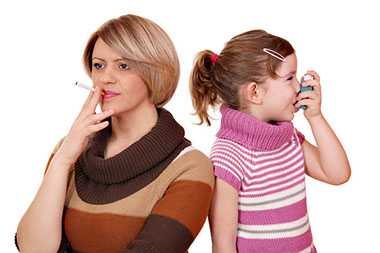
    Image of women smoking and child using an asthma inhaler.

    Somebody else’s habit can destroy your health.

    All that smoke that gets in your eyes is also getting in your airways and lungs, causing potentially fatal heart disease and cancer. It is also blamed for increased risk of sudden infant death syndrome, ear infections, colds, pneumonia, bronchitis, and more severe asthma. Researchers report that there is no safe level of exposure.

    What is secondhand smoke?

    Secondhand smoke is the combination of smoke given off a burning tobacco product and the smoke exhaled by a smoker. People can be exposed to secondhand smoke in homes, cars, the workplace, and public places, such as bars, restaurants, and leisure settings. It contains at least 250 harmful chemicals including hydrogen cyanide, carbon monoxide, and ammonia.

    Laws protect your air.

    Federal law bans smoking on most public transportation and in federally owned buildings. Many states and local governments have passed laws that ban smoking in public facilities, such as schools, hospitals, airports, bus terminals, parks, and beaches, as well as private workplaces, including restaurants and bars.

    Health risks of secondhand smoke:

    *  Breast cancer

    *  Cancers of the nose, throat, and sinus cavity

    *  Leukemia

    *  Lymphoma

    *  Brain tumors in children

    *  Sudden infant death syndrome (SIDS)

    *  Ear infections

    *  Colds

    *  Pneumonia

    *  Bronchitis

    *  Severe Asthma

    *  Coughing and wheezing

    Avoid thirdhand smoke, too!

    Thirdhand smoke is the residue left from tobacco smoke that lingers on a person’s clothing, skin, hair, and on carpet, drapes, walls, and furniture. And it does this long after the tobacco use has stopped. Thirdhand smoke has the same harmful chemicals as secondhand smoke.

    Even if you do not allow tobacco use in your home, avoid or limit being in homes and other places where smoking is allowed. And reserve nonsmoking hotel rooms and rental cars.

    Action Step

    Don’t let anyone, including your mate, smoke in your home. Never eat at restaurants that allow smoking or travel in a car with others who are smoking.
    Page from Ways to Well-Being book by the American Institute for Preventive Medicine. www.HealthyLife.com. All rights reserved.

    © American Institute for Preventive Medicine

  • How To Help Me Quit

    Healthylife® QuitWell™

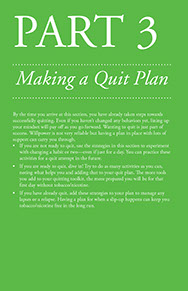
    Part 3

    Friends sitting talking and drinking tea.

    1.Be patient.I am trying to free myself from tobacco/nicotine. Quitting may make me tense, anxious, and prone to sudden mood swings. This is because I am doing without something I was used to having. Soon I will be secure in my ability to manage and I will be better than ever. Please bear with me a little longer.

    2.Be curious.For years I have been using tobacco/nicotine to pass the time, to reward myself, to calm myself, to wake up, to help me think, and to get through stressful events. Now I am coping all on my own. Ask me how I am managing; ask me what my life is like without nicotine. It’s all very new to me and I may want to talk about it.

    3.Be sensitive.All day long I must deal with the urge to use tobacco/nicotine. Sometimes it seems as if just about everything makes me think about it: getting ready for work, talking on the phone, ending a meal… I could really use your help to distract myself from these thoughts. Unless I mention it first, please don’t bring up the subject of my quitting.

    4.Be supportive.I really need someone to root for me right now, someone to be on my side. I enjoy the special attention (like rewarding my first week without tobacco/nicotine with a special treat) that you give me while I am in the “crawling” stage of quitting.

    5.Be positive. Sometimes I feel it is hard to remember all the good things that come with quitting. I like it when you notice the positive changes that you see in me. It means a lot to know that you are proud of me.

    6.Be confident.I want to make it, but sometimes I am not sure that I have what it takes to quit. I need the people around me to believe that I can do it… and to say so.

    What else will be helpful to you? Share this with those who want to support you.

    © American Institute for Preventive Medicine
  • Nicotine Replacement Therapy

    Healthylife® QuitWell™

    Part 3

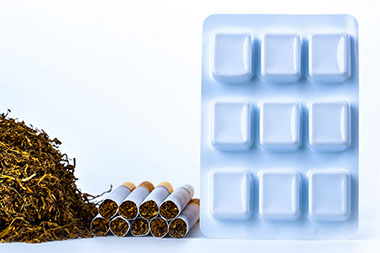
    Image of nicotine gum to help stop smoking.

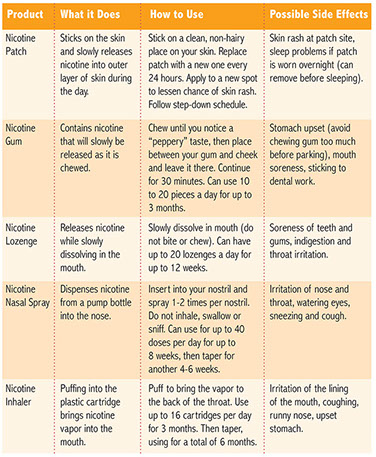
    All of these products contain nicotine. Patches, gum, and lozenges are available other-the-counter. The nicotine nasal spray and nicotine inhaler require a prescription.

    © American Institute for Preventive Medicine
  • Smokeless Tobacco & Your Health

    Healthylife® QuitWell™

    Part 1

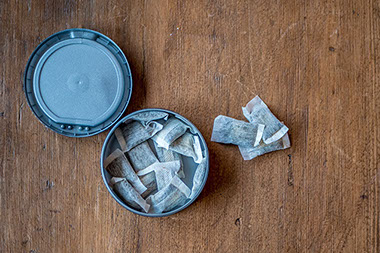
    Image of chewing tobacco.

    Smokeless tobacco includes chewing tobacco, which may also be called oral tobacco or spit tobacco. Smokeless tobacco also includes both moist and dry snuff, snus, and dissolvable tobacco products. Smokeless tobacco is not a safe form of tobacco, even if that is often how it is marketed by tobacco companies. Smokeless tobacco carries many serious risks.

    Smokeless tobacco can cause cancers of the:

    *  Mouth, tongue, cheek & gums

    *  Esophagus

    *  Pancreas

    Smokeless tobacco can also cause:

    *  Sores in the mouth called leukoplakia that can become cancer

    *  Stained teeth

    *  Bad breath

    *  Gum disease, cavities, tooth decay, and tooth loss

    *  Bone loss around the teeth

    *  Heart disease

    *  High blood pressure

    *  Increased risk of heart attack and stroke

    *  Pregnancy complications and low birth weight

    © American Institute for Preventive Medicine
  • Review & Prepare 6

    SleepWell® Program

    Week 3

    Image of man sleeping.

    Look at your pattern of sleep over the past week. Compare it to your sleep patterns over the past few weeks of tracking.

    Answer the following:

    *  I fall asleep more quickly now.

    *  I have more daytime energy.

    *  I wake up fewer times during the night.

    *  If or when I do wake up, I am able to fall asleep again more quickly.

    *  Changes I made to my bedtime and waking routines.

    *  Changes I made to what I do in bed or in the bedroom.

    *  Are you ready for another week of attention to your sleep?

    Shift Your Bedtime

    If you think your sleep has improved during the past week, you can begin to shift your bedtime earlier. Do this gradually. Only make a shift when your sleep quality is high. This means:

    *  You are able to fall asleep within 15 minutes of getting into bed.

    *  You are rarely waking up during sleep.

    *  If you do wake up, you are able to go back to sleep within 15 minutes.

    *  You stay asleep until your planned wake time.

    *  You wake feeling refreshed.

    If your sleep quality has not improved, maintain the original schedule for another week. When you are ready, shift your bedtime 15 minutes earlier. Keep the same wake time. This will give you more time to sleep as your body becomes trained to sleep in bed.

    © American Institute for Preventive Medicine