Tag: snack

  • Make A Healthy, Filling Snack With Hummus

    HEALTHY EATING

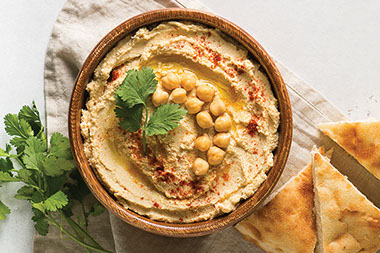
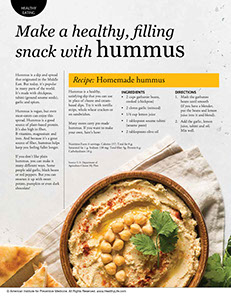
    A bowl of hummus.

    Hummus is a dip and spread that originated in the Middle East. But today, it’s popular in many parts of the world. It’s made with chickpeas, tahini (ground sesame seeds), garlic and spices.

    Hummus is vegan, but even meat-eaters can enjoy this spread. Hummus is a good source of plant-based protein. It’s also high in fiber,  B vitamins, magnesium and iron. And because it’s a great source of fiber, hummus helps keep you feeling fuller longer.

    If you don’t like plain hummus, you can make it many different ways. Some people add garlic, black beans or red peppers. But you can sweeten it up with sweet potato, pumpkin or even dark chocolate!

    Hummus is a healthy, satisfying dip that you can use in place of cheese and cream-based dips. Try it with tortilla strips, whole wheat crackers or on sandwiches.

    Many stores carry pre-made hummus. If you want to make your own, here’s how:

    Ingredients

    *  2 cups garbanzo beans, cooked (chickpeas)

    *  2 cloves garlic (minced)

    *  1/4 cup lemon juice

    *  1 tablespoon sesame tahini (sesame paste)

    *  2 tablespoons olive oil

    Directions

    1. Mash the garbanzo beans until smooth (if you have a blender, put the beans and lemon juice into it and blend).

    2. Add the garlic, lemon juice, tahini and oil. Mix well.

    Nutrition Facts: 6 servings. Calories 157; Total fat 8 g; Saturated fat 1 g; Sodium 138 mg; Total fiber 5g; Protein 6 g; Carbohydrates 18 g.

    Source: U.S. Department of Agriculture Choose My Plate
    © American Institute for Preventive Medicine

  • Popcorn: A Healthy Corn Option

    HEALTHY EATING

    Popcorn in a bowl on a yellow background.

    Fresh corn is healthy, but there’s another great way to enjoy corn: popcorn.

    When you think of popcorn, you might think of movie theatres and lots of butter. But popcorn is a naturally healthy food without all the extra butter, oil and salt.

    Popcorn is whole grain corn. It’s made from a specific type of corn that pops open when it’s heated. It can be a healthy alternative to higher-calorie snacks like potato chips and crackers. One cup of air-popped corn has just 31 calories and over one gram of fiber.

    To keep it healthy, go light on the butter, oil and salt.

    Source: United States Department of Agriculture

    © American Institute for Preventive Medicine
  • Eat Whole Fruit

    Nutrition

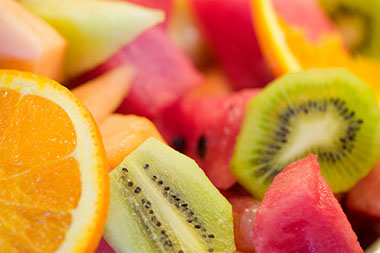
    Image of fresh fruit.

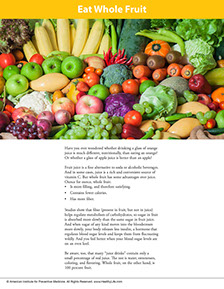
    Have you ever wondered whether drinking a glass of orange juice is much different, nutritionally, than eating an orange? Or whether a glass of apple juice is better than an apple?

    Fruit juice is a fine alternative to soda or alcoholic beverages. And in some cases, juice is a rich and convenient source of vitamin C. But whole fruit has some advantages over juice. Ounce for ounce, whole fruit:

    *  Is more filling, and therefore satisfying.

    *  Contains fewer calories.

    *  Has more fiber.

    Studies show that fiber (present in fruit, but not in juice) helps regulate metabolism of carbohydrates, so sugar in fruit is absorbed more slowly than the same sugar in fruit juice. And when sugar of any kind moves into the bloodstream more slowly, your body releases less insulin, a hormone that regulates blood sugar levels and keeps them from fluctuating wildly. And you feel better when your blood sugar levels are on an even keel.

    Be aware, too, that many “juice drinks” contain only a small percentage of real juice. The rest is water, sweeteners, coloring, and flavoring. Whole fruit, on the other hand, is 100 percent fruit.

    Page from A Year of Health Hints book by the American Institute for Preventive Medicine. www.HealthyLife.com. All rights reserved.

    © American Institute for Preventive Medicine
  • Add A Stress-Busting Food To Your Day

    Healthylife® Weigh

    Part 6

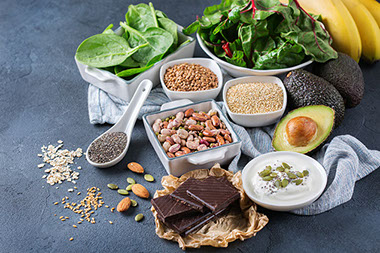
    Variety of food items high in magnesium.

    What you eat may impact your mood. Make sure you are eating a balanced diet with nutrient-dense foods. B vitamins and magnesium can be helpful for managing anxiety and boosting your mood. Avoid foods and drinks high in sugar that can cause mood swings and fatigue.

    B Vitamins

    B vitamins can stimulate the brain’s production of serotonin. This helps you relax and feel good.

    Good Sources of B Vitamins

    *  Animal products: fish, poultry, meat, eggs, or dairy

    *  Whole grains, beans and lentils

    *  Fruits and vegetables, especially leafy greens, papayas, oranges, and cantaloupe

    *  Fortified breakfast cereals and enriched soy or rice milk

    *  Nuts, such as almonds, pistachios, and walnuts

    Magnesium

    Magnesium has a calming effect on the brain. It can help relax muscles, blood vessels, and the gastrointestinal tract. Magnesium can also boost serotonin and reduce mood swings.

    Good Sources of Magnesium:

    *  Dark leafy greens

    *  Nuts, seeds, and dried fruit

    *  Beans and lentils

    *  Whole grains

    *  Avocados and bananas

    *  Dark chocolate

    *  Yogurt

    *  Fish

    © American Institute for Preventive Medicine
  • Make Your Own Smoothie

    HEALTHY EATING

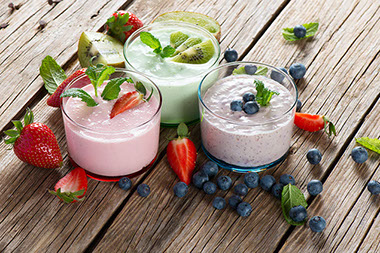
    Image of 3 different smoothies.

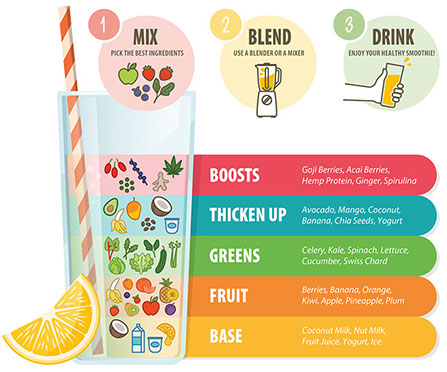
    Don’t settle for a restaurant smoothie that likely has loads of added sugar and very little nutrition. Instead, use this formula to make your own smoothies at home. All you need is a blender or juicer and the fresh ingredients you enjoy. Have fun with it and try different ingredients each time until you discover your favorite recipe.

    Illustration on how to make your own smoothie.

    © American Institute for Preventive Medicine

  • Seeds 101

    HEALTHY EATING

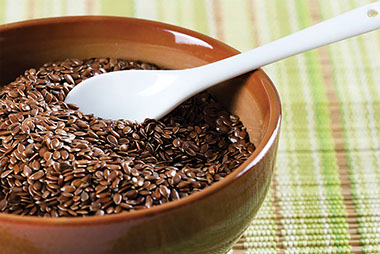
    Image of flax seeds in a bowl.

    Edible seeds can play an important part in the human diet, not only because they’re nutritious, but they can also add appearance, texture, and taste to a variety of foods. Experts at the Institute of Food Technologists provide a short lesson in popular seeds:

    Seed: Chia

    Origin:Mexico, Central America

    Taste:Mild, slightly nutty

    Uses:Cookies, salads, oatmeal, soups, yogurt, baked goods

    Nutritional Value:Contains the highest levels of total omega-3 fatty acids of any plant source, rich in fiber, protein, antioxidants, vitamins, and minerals

    Health Benefits:Helps control blood sugar levels, promotes satiety (feeling of fullness after eating), and slows the breakdown of carbohydrates

    Fun Fact:When added to water, chia seeds can swell to 12 times their weight in liquid and create a gel that could be used as an alternative to eggs and some oils in recipes.

    Seed: Quinoa

    Origin:South America

    Taste:Mild, slightly nutty

    Uses:Breakfast cereals, artisan-style breads, muffins, pizza crusts, bakery products, salads, meat-free burgers, vegan and vegetarian products

    Nutritional Value:Contains the highest protein levels of all the cereal grains, good source of magnesium, vitamin E, potassium and fiber

    Health Benefit:Provides all of the essential amino acids for optimal health

    Fun Fact:The United Nations has declared 2013 the “International Year of Quinoa.” Pronounced KEEN-wha.

    Seed: Flax

    Origin:Eastern Mediterranean to India

    Taste:Mild, nutty

    Uses:Soups, salads, stews, hamburgers, hot and cold cereals, chilies, sauces and dips, fruit smoothies, cookies, muffins and bread dough, dairy-free milk product for people with lactose-allergies

    Nutritional Value:Source of polyunsaturated fat, omega-3 fatty acids, essential amino acids, antioxidants, folate, vitamin B-6, magnesium potassium, and iron

    Health Benefit:Easily digestible

    Fun Fact:The seed was valued as both a food and a medicine in ancient Mesopotamia 10,000 years ago.

    Seed: Sunflower

    Origin:North America

    Taste:Mild

    Uses:Baked goods such as bagels, muffins, multigrain breads, and in trail mixes, hot breakfast cereals, coated in chocolate for confectionary applications, sprinkled in yogurt or on salads, and much more

    Nutritional Value:Contains polyunsaturated oil

    Health Benefit: Weight management

    Fun Fact:Used by Native Americans as a high-energy food source

    © American Institute for Preventive Medicine