Tag: sneezing

  • Allergies

    General Health Conditions

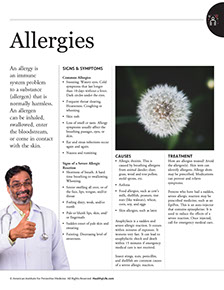
    An allergy is an immune system problem to a substance (allergen) that is normally harmless. An allergen can be inhaled, swallowed, or come in contact with the skin.

    Signs & Symptoms

    For Common Allergies

    *  Sneezing. Watery eyes. Cold symptoms that last longer than 10 days without a fever. Dark circles under the eyes.

    *  Frequent throat clearing. Hoarseness. Coughing or wheezing.

    *  Skin rash.

    *  Loss of smell or taste.

    *  Ear and sinus infections occur again and again.

    Signs of a Severe Allergic Reaction

    *  Shortness of breath. A hard time breathing or swallowing. Wheezing.

    *  Severe swelling all over, or of the face, lips, tongue, and/or throat.

    *  Feeling dizzy, weak, and/or numb.

    *  Pale or bluish lips, skin, and/or fingernails.

    *  Cool, moist skin or sudden onset of pale skin and sweating.

    *  Fainting. Decreasing level of awareness.

    Causes

    *  Allergic rhinitis. This is caused by breathing allergens from animal dander; dust; grass, weed and tree pollen; mold spores, etc.

    *  Asthma.

    *  Food allergies. Common ones are milk, fish, nuts, wheat, corn, and eggs.

    *  Skin allergies.

    Anaphylaxis is a sudden and severe allergic reaction. It occurs within minutes of exposure. It worsens very fast. It can lead to anaphylactic shock and death within 15 minutes if emergency medical care is not received.

    Insect stings, nuts, penicillin, and shellfish are common causes of a severe allergic reaction.

    Treatment

    How are allergies treated? Avoid the allergen(s). Skin tests can identify allergens. Allergy shots may be prescribed. Medications can prevent and relieve symptoms. Persons who have had a sudden, severe allergic reaction may be prescribed medicine, such as an EpiPen. This is used for a severe reaction before getting emergency medical care.

    Questions to Ask

    Self-Care / Prevention

    For a Severe Allergic Reaction

    *  Take prescribed medicine, such as an EpiPen, as advised. Then get emergency care!

    *  Wear a medical ID alert tag for things that cause a severe allergic reaction.

    *  Avoid things you are allergic to.

    For Other Allergic Reactions

    *  If mild symptoms occur after you take a medicine, call your doctor for advice.

    *  For hives and itching, take an OTC antihistamine, such as Benadryl. Take it as prescribed by your doctor or as directed on the label.

    *  Don’t use hot water for baths, showers, or to wash rash areas. Heat worsens most rashes and makes them itch more.

    *  For itching, use an oatmeal bath or calamine (not Caladryl) lotion. You can also use a paste made with 3 teaspoons of baking soda and 1 teaspoon of water.

    *  Avoid things you are allergic to.

    *  Read food labels. Don’t eat foods that have things you are allergic to. When you eat out, find out if menu items have things you are allergic to before you order them.

    Resources

    Asthma and Allergy Foundation of America 800.7.ASTHMA (727.8462)
    www.aafa.org

    Healthier at Home book by the American Institute for Preventive Medicine. www.HealthyLife.com. All rights reserved.

    © American Institute for Preventive Medicine
  • Hay Fever

    Ear, Nose & Throat Conditions

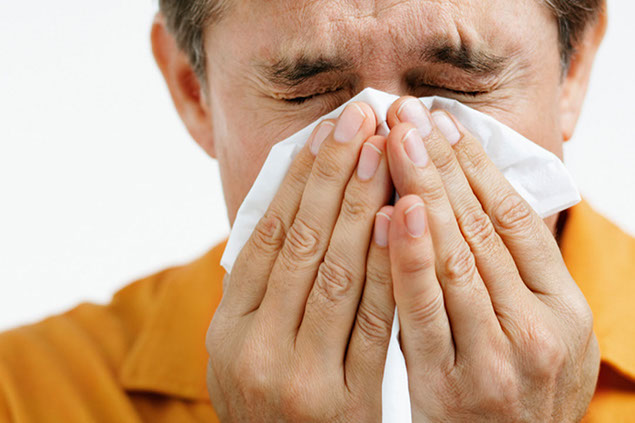
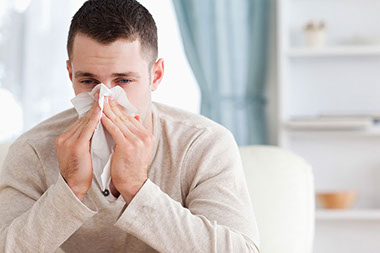
    Image of man blowing nose with tissue.

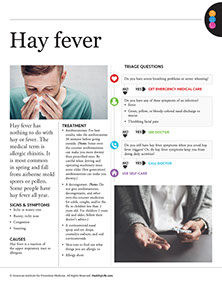
    Hay fever has nothing to do with hay or fever. The medical term for hay fever is allergic rhinitis. It is most common in spring and fall when a lot of ragweed is in the air. Some people have hay fever all year, though.

    Signs & Symptoms

    *  Itchy or watery eyes.

    *  Runny, itchy nose.

    *  Congestion.

    *  Sneezing.

    Causes

    Hay fever is a reaction of the upper respiratory tract to allergens.

    Treatment

    Talk to your doctor if self-care measures do not help. He or she may prescribe:

    *  Antihistamines. For best results, take the antihistamine 30 minutes before going outside. {Note: Some over-the-counter antihistamines can make you more drowsy than prescribed ones. Be careful when driving and operating machinery since some antihistamines can make you drowsy.}

    *  A decongestant. {Note: Do not give antihistamines, decongestants, and other over-the-counter medicines for colds, coughs, and/or the flu to children less than 2 years old. For children 2 years old and older, follow their doctor’s advice.

    *  A corticosteroid nasal spray and eye drops, cromolyn sodium, and oral corticosteroids.

    *  Skin tests to find out what things you are allergic to.

    *  Allergy shots.

    It is best to take what your doctor advises instead of testing over-the-counter products on your own.

    Questions to Ask

    Self-Care / Prevention

    *  If you are allergic to pollen and molds, let someone else do outside chores. Mowing the lawn or raking leaves can make you very sick.

    *  Keep windows and doors shut and stay inside when the pollen count or humidity is high. Early morning is sometimes the worst.

    *  Avoid tobacco smoke and other air pollutants.

    *  Don’t have pets. If you have a pet, keep it out of the bedroom. When you can, keep the pet outdoors.

    *  Use an air conditioner or air cleaner in your house, especially in the bedroom. Electronic air filters are better than mechanical ones. Clean the filter often. Or, try a doctor-approved air purifier, especially in the bedroom. Devices with HEPA filters can be very effective in cleaning indoor air.

    To limit dust, mold, and pollen:

    *  Put a plastic cover on your mattress or cover it completely with an allergen-free mattress cover.

    *  Sleep with no pillow or with the kind your doctor or health care provider recommends. If you use a pillow, cover it with an allergen-free cover.

    *  Don’t dry sheets and blankets outside.

    *  Try not to have stuffed animals kept in the bedroom. If you must, have only one that can be washed. Wash it in hot water once a week.

    *  Use curtains and rugs that can be washed often. Don’t use carpeting.

    *  Dust and vacuum often. Wear a dust filter mask when you do.

    *  Put an electronic air filter on your furnace or use portable air purifiers.

    *  Shower or bathe and wash your hair after heavy exposure to pollen, dust, etc.

    Resources

    Asthma and Allergy Foundation of America

    800.7.ASTHMA (727.8462)

    www.aafa.org

    Healthier at Home book by the American Institute for Preventive Medicine. www.HealthyLife.com. All rights reserved.

    © American Institute for Preventive Medicine
  • Allergies Annoying You?

    SELF-CARE CORNER

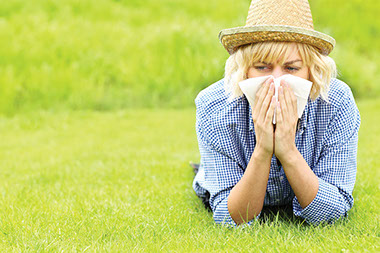
    Women outside blowing her nose.

    A runny nose, sneezing, itchy eyes… allergy symptoms can be miserable and common. More than 50 million Americans have allergies.

    People can get allergies at different times of the year. This is because different allergy triggers come and go as the seasons change:

    *  If you have allergies in the spring, you may be allergic to tree pollen.

    *  People who notice allergy symptoms in the summer are usually allergic to grass or weed pollen.

    *  Those who notice their allergies getting worse in late summer to fall are probably reacting to ragweed pollen.

    *  Allergy symptoms related to wet, rainy weather are often due to mold.

    *  If you have allergies year-round, you may be allergic to something indoors like dust mites or pet dander.

    What does allergy medicine do?

    There are many medicines available today that treat allergies. Each one works in a different way and can help people with different types of allergies. With the help of your doctor, you can find a solution that helps control your allergy symptoms. This can include:

    *  Antihistamines. They stop histamine, which is a chemical that the body releases when it is exposed to an allergen. These can help tackle all types of allergy symptoms, from runny nose to itching. Some antihistamines are pills, and others are nose sprays.

    *  Nasal (nose) sprays. Some allergy nose sprays contain an antihistamine ingredient. Others may contain a steroid to help stop swelling and inflammation, which causes a runny nose and sneezing. Nose sprays can help shut down the allergic reaction that starts in the nose.

    *  Eye drops. Eye drops for allergies are helpful for people who notice itchy or watery eyes. They don’t usually help with sneezing or other allergy symptoms.

    *  Immunotherapy. Includes allergy shots or small tablets placed under the tongue. These treatments expose the body to a small amount of the allergen over time. Your healthcare provider will have to give these to you.

    With all the treatments available today, you don’t have to live with miserable allergy symptoms. But talk with your healthcare provider before you try any new medicines.

    Sources: American Academy of Family Physicians, Asthma and Allergy Foundation of America

    © American Institute for Preventive Medicine