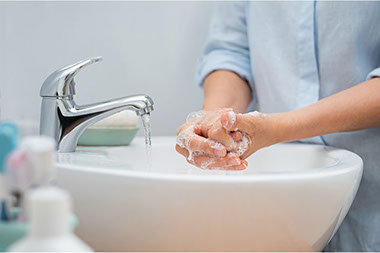
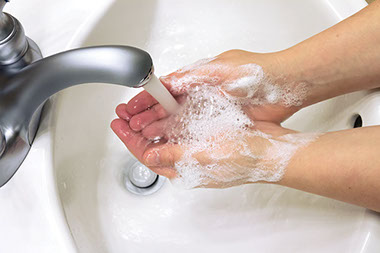
Think you know how to wash your hands? Think again. A 2013 study in the Journal of Environmental Health showed that only 5% of people properly wash their hands on a daily basis. Cintas Corporation and Henry the Hand Foundation have teamed up to dispel the 5 most common handwashing myths.
Keeping hands clean is one of the most important ways to avoid getting sick and spreading germs. Researchers at the NIH found that people touch their faces on average 3.6 times per hour. So handwashing is the answer. Test your knowledge about the best way to clean your hands.
1. It doesn’t matter how long I wash my hands as long as I use soap – FALSE
The next time you’re in the restroom and washing your hands, think of the chorus of your favorite song. Studies show that you should scrub your hands with soap for a minimum of 15-30 seconds in order to effectively remove germs.
2. Hand sanitizers can replace washing your hands with soap and water – FALSE
Washing hands with soap and water is the best and most effective way to reduce the number of microbes and germs on hands. Although alcohol-based (at least 60%) hand sanitizers can quickly reduce the number of germs on hands in some situations, they are not as effective as soap and water when it comes to removing and inactivating dangerous gastrointestinal illness-causing germs.
3. The hotter the water you use for handwashing, the better – FALSE
Studies show that water temperature does not affect germ removal. In fact, there is no research to prove that higher temperatures improve handwashing at all. Hotter water can also dry out skin, which leaves your skin more susceptible to germs and can make handwashing painful. It is best to wash your hands with the temperature that you find comfortable.
4. You don’t have to dry your hands after washing them – FALSE
Studies show that germs can be more easily transferred to and from wet hands, which is why drying hands is essential to staving off bacteria after handwashing.
5. Hand dryers are more hygienic than paper towels – FALSE
Researchers found that paper towels are superior to air dryers and can help remove bacteria, unlike air dryers, which can increase bacteria counts. Because air dryers have been shown to spread bacteria between 3 and 6 feet from the device, paper towels are also far less likely to contaminate other restroom users.