WELL-BEING

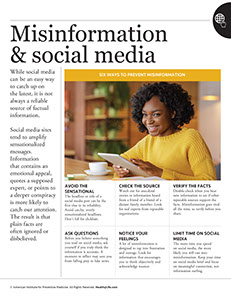
While social media can be an easy way to catch up on the latest, it is not always a reliable source of factual information.
Social media sites tend to amplify sensationalized messages. Information that contains an emotional appeal, quotes a supposed expert, or points to a deeper conspiracy is more likely to catch our attention. The result is that plain facts are often ignored or disbelieved.
Six ways to prevent misinformation
Avoid the sensational
The headline or title of a social media post can be the first clue to its reliability. Avoid catchy, overly sensationalized headlines. Don’t fall for clickbait.
Check the source
Watch out for anecdotal stories or information heard from a friend of a friend of a distant family member. Look for real experts from reputable organizations.
Verify the facts
Double-check when you hear new information to see if other reputable sources support the facts. Misinformation goes viral all the time, so verify before you share.
Ask questions
Before you believe something you read on social media, ask yourself if you truly think the information is accurate. A moment to reflect may save you from falling prey to fake news.
Notice your feelings
A lot of misinformation is designed to tap into frustration and outrage. Look for information that encourages you to think objectively and acknowledge nuance.
Limit time on social media
The more time you spend on social media, the more likely you will run into misinformation. Keep your time on social media brief and focus on meaningful connection, not information surfing.
© American Institute for Preventive Medicine