Tag: socks

  • Compression Socks: A Fitness Friend?

    BE FIT

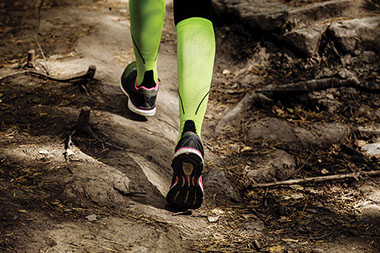
    Close up of running legs wearing compression socks.

    Some athletes use compression socks during their exercise or sports activities. They look like tights, knee-high socks or sleeves that go over the calves.

    Compression socks are not new. They have been used for years to help with leg pain, swelling, blood clots and varicose veins. They work by gently squeezing the legs to help move blood upward.

    But do they help with exercise performance?

    Lack of evidence for exercise performance

    While compression socks aren’t usually harmful, they’re not proven to be helpful for exercise. Studies have not found that compression socks help a person’s athletic ability.

    Still, there may be some benefit to using them if your doctor says it’s okay. Some evidence suggests that compression socks may help slightly with exercise recovery. A review of several small studies found that for some people, compression socks could help with muscle soreness. But, because these results haven’t been proven in large studies, it’s too early to say whether they will work for most people.

    Some people enjoy the feeling of pressure on the legs. They may feel that it helps them exercise longer. If that’s the case, compression socks can be a good way to help you stay active.

    Using compression socks

    If you’re interested in compression socks, ask your doctor about them. They can help with:

    *  Legs that feel achy or heavy

    *  Swelling in the feet or legs from standing or sitting for long hours

    *  Pain from varicose veins

    *  Preventing blood clots, especially after surgery or for people who can’t move around easily. This could be after an injury or for people who have an illness that requires them to be in bed for long periods.

    Some compression socks are tighter than others. Your doctor can give you a prescription for them, or you may purchase them online. Ask your doctor how long you should wear them, and what to do if you find the socks uncomfortable.

    Sources: British Journal of Sports Medicine, Journal of Sports Science and Medicine, U.S. National Library of Medicine

    © American Institute for Preventive Medicine
  • Footwear And Foot Care For Travelers

    Healthy Travel

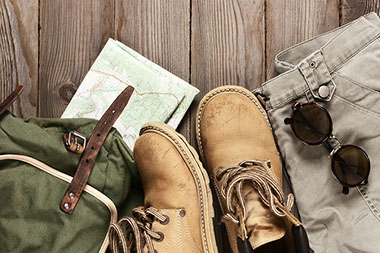
    Image of hiking boots, backpack and map.

    Hours of shopping and sightseeing can leave your feet tired, aching, and sore. Here’s what to do to save yourself the agony of sore feet, blisters, and other foot problems.

    To prepare your feet for the rigors of travel, do each of these exercises several times a day.

    *  Take off your shoes and socks, and pick up a pencil with your toes as you sit.

    *  Rotate your feet in a circular motion in one direction, then in the other.

    *  Point your toes to the ceiling, then to the floor.

    *  Stand, and roll up on your toes and hold for a count of 25.

    *  If you have foot problems and plan to travel, see your podiatrist. He or she may be able to remove corns, for example, or take care of other problems that might cause discomfort if you’re going to be on your feet a lot.

    *  Pack comfortable shoes that you’ve already worn several times. Walking or jogging shoes are best. Avoid high heels, dress oxfords, or other fashion footwear that don’t adequately support your feet.

    *  Take along two pairs of walking shoes, and alternate footwear every other day.

    *  Wear cotton socks, not nylon. (And don’t go sockless.)

    *  If your ankles and feet tend to swell, wear support stockings. Support hose are available for both men and women.

    If these suggestions fail to prevent achy feet or blisters, try these remedies.

    *  Soak your feet in a tub of cool water to which you’ve added one cup of Epsom salts for every gallon of water.

    *  Wash and thoroughly dry your feet every day. Then apply a powder to help absorb perspiration.

    *  Gently massage your feet with a moisturizing lotion. Begin at your toes and work up to your ankles. Massaging the feet can also help to relieve foot cramps.

    *  Don’t pop blisters. Instead, cushion them with a corn pad or bunion pad.

    Page image from A Year of Health Hints book by the American Institute for Preventive Medicine. www.HealthyLife.com. All rights reserved.

    © American Institute for Preventive Medicine