HEALTHY EATING
Many food products contain “sea salt” as an ingredient instead of table salt, also commonly called “salt.” In particular, many so-called natural food products say they use sea salt. But is sea salt any healthier than old-fashioned table salt?
What’s the difference?
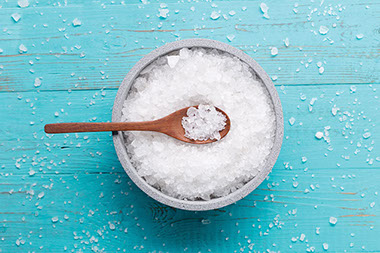
In general, sea salt has a coarse, crunchy texture. Table salt has a more fine grind and may have a weaker taste. In foods like potato chips or sea salt caramels, some people prefer the flavor and texture of sea salt.
Sea salt is made from evaporated sea water. It’s usually not processed, so it may be considered a more “natural” choice. It may contain trace levels of minerals like magnesium, potassium and calcium. But, these minerals are found in small amounts. So, eating sea salt is not a reliable way to get more minerals in your diet.
Table salt comes from mined salt deposits. It is processed into a fine texture. During this process, it usually loses its other minerals. However, most table salt brands contain added iodine, which is a necessary nutrient that many people don’t get enough of. Table salt may also contain some additives to prevent clumping.
Same in sodium
Although sea salt shows up in many “natural” food products, it’s not usually healthier. Sea salt and table salt have about 40 percent sodium by weight.
Some types of sea salt say that they contain less sodium than table salt. To check this, read the Nutrition Facts panel on the package. Table salt contains about 575 mg of sodium in ¼ teaspoon.
Going coarser
Some very coarse salts like kosher salt may have slightly less sodium, teaspoon for teaspoon. This is because the larger crystal size makes it less compact, so you can’t get as much salt into your measuring spoon.
In these cases, using a coarse type of salt in cooking may help you reduce sodium content, but probably not by very much. Some people prefer the taste and texture of a very coarse salt. But don’t use it thinking that you’ll really reduce your sodium intake.
Choose the type of salt you prefer, and use it sparingly. One type isn’t healthier than another. Talk to your doctor about how much sodium you should eat each day.
Source: American Heart Association
© American Institute for Preventive Medicine