Tag: speech

  • Get The Facts About Stuttering

    MEDICAL NEWS

    Adult helping child with speech.

    Speech is an important part of communicating. Yet millions of people cope with a speech disability every day.

    What is stuttering?

    Stuttering is a problem that affects how your speech flows. People who stutter may:

    *  Stretch words out for too long when speaking

    *  Have pauses where they can’t get a word out

    *  Repeat whole words or parts of words

    *  Have uncontrolled movements when speaking, such as trembling in the jaw or excessive blinking

    Scientists don’t fully understand why stuttering happens. But we do have plenty of facts about this speech disorder. Learn more about what it is and how you can help someone who has it.

    FACT #1: Stuttering isn’t related to intelligence.

    Stuttering isn’t a problem with being confused or less intelligent. In fact, many intelligent and successful people have dealt with this speech disorder.

    FACT #2: Finishing a word or sentence for someone is not helpful.

    People who don’t understand stuttering may get frustrated or impatient when someone stutters. They may just want to say the word for them so they can keep talking. This is not helpful and could make stuttering worse.

    FACT #3: Stuttering is not caused by stress or being tense.

    Experts believe that people who stutter may have some brain differences. These  differences affect how a person’s brain works when they speak. But it’s not caused by anxiety, stress or a mental health condition. However, being stressed could make stuttering worse for a person who already has the disorder.

    FACT #4: Stuttering is more common in children.

    Many children stutter while they are learning how to speak and understand others. Most of the time, children stop stuttering before they become adults. They may need help from their doctor and a speech-language pathologist. If you’re concerned about your child’s stuttering, talk to their pediatrician.

    If you have concerns about stuttering, finding words or other speech issues, talk to your doctor about seeing a licensed speech-language pathologist.

    Sources: American Speech-Language-Hearing Association, National Institutes of Deafness and Other Communication Disorders

    © American Institute for Preventive Medicine
  • Stroke (Brain Attack)

    First Aid

    A stroke is also called a “brain attack.” With a stroke, brain cells die due to a blood clot or rupture of a blood vessel in the brain. The end result is brain damage (and possible death).

    In the U.S., strokes are the 3rd leading cause of death. They are the leading cause of adult disability.

    Signs & Symptoms

    *  Sudden numbness or weakness of the face, arm, or leg, especially on one side of the body.

    *  Sudden confusion, trouble speaking or understanding.

    *  Sudden trouble seeing in one or both eyes.

    *  Sudden trouble walking, dizziness, loss of balance or coordination.

    *  Sudden severe headache with no known cause.

    Causes

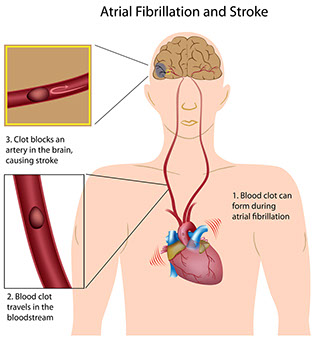
    Most strokes are caused by a blood clot in an artery in the neck or brain. Some are caused by bleeding into or around the brain.

    Risk Factors for a Stroke

    *  Previous stroke or transient ischemic attack (TIA)-a temporary lack of blood supply to the brain.

    *  Atrial fibrillation. This is an irregular beating of the heart.

    *  High blood pressure. Cigarette smoking. Diabetes. Coronary artery disease.

    *  Being a male over age 70.

    Illustration of how a stroke is caused.

    Prevention

    *  Take medicine(s), as prescribed, to control blood pressure, blood cholesterol, diabetes, and atrial fibrillation. Aspirin may help reduce the risk of stroke in women ages 55-79 years. Discuss this with your doctor.

    *  Get to and stay at a healthy weight. Get regular exercise.

    *  Don’t smoke. If you smoke, quit. Use alcohol in moderation. Manage stress.

    Questions to Ask

    Self-Care / Prevention

    First Aid before Emergency Care

    *  Note the time when the first sign(s) of stroke occurred. Report this time to emergency personnel. For the most common type of strokes, a clot-busting drug should to be given within 3 hours of the start of symptoms.

    *  Do not give the person anything to eat or drink. Do not give aspirin.

    Healthier at Home book by the American Institute for Preventive Medicine. www.HealthyLife.com. All rights reserved.

    © American Institute for Preventive Medicine