Tag: sports

  • Kids, Puberty & Sports

    BE FIT

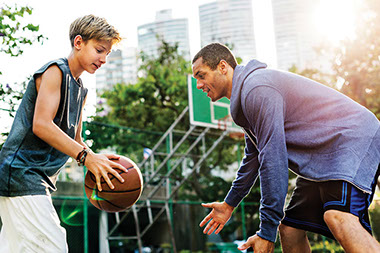
    Adult and teen playing basketball.

    Sports can be a great way for kids to develop social skills, teamwork and resilience. But it’s important to know that athletic ability changes as kids grow.

    Growth affects performance

    During puberty, boys and girls have a growth spurt that can change their athletic ability. After going through puberty:

    *  Boys may notice more muscle strength and overall bigger body size.

    *  Girls often lose some muscle mass. They may temporarily lose some of their speed or agility.

    *  Kids could feel “clumsy” as they adjust to being taller. The brain hasn’t yet adjusted to this new height and may affect balance skills or body control.

    *  It may be harder to throw or hit a ball with longer arms.

    *  Girls may have headaches, mood swings or cramps during menstruation.

    Puberty & knee injuries

    As kids get taller and heavier, they have a higher risk of anterior cruciate ligament (ACL) injury. The ACL is an important ligament that supports the knee.

    ACL injuries can be serious. They may require surgery and can increase the risk of knee arthritis later in life.

    Most ACL injuries happen when a person suddenly stops, changes direction, jumps or lands on the ground. They don’t usually happen from a blow to the knee. Sometimes an ACL injury causes a “popping” sound as it occurs.

    ACL injuries may cause swelling, severe pain, and inability to put weight on the knee. If your child injures their knee, see a doctor right away.

    Positive support is key

    Coaches who know about the effects of puberty can help kids. In addition, parents can help their kids by being positive and supportive. Yelling at kids or being put down may cause them to quit their sport. Remember that changes caused by puberty are only temporary.

    Source: American Academy of Pediatrics

    © American Institute for Preventive Medicine
  • Youth Sports Safety

    Family Fitness

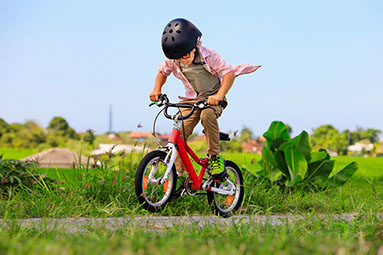
    Young child riding a bike.

    Every year, millions of children are injured while playing sports and doing physical activities. Most of these injuries could be prevented.

    Wearing a safety helmet helps prevent a closed head injury when biking, inline skating, etc.

    Some states and localities have mandatory laws for helmet usage.

    All helmets sold in the U.S. must meet the Consumer Product Safety Commission standard. There must be a sticker on the inside stating this. The fit of the helmet is not tested by the standards, so you should try the helmet on your child’s head before buying.

    Learn more about safety helmets from the Bicycle Helmet Safety Institute athelmets.org.

    Get youth sports safety guidelines from the National Youth Sports Health & Safety Institute atacsm.org/nyshsi/best-practices.

    A Year of Health Hints book by the American Institute for Preventive Medicine. www.HealthyLife.com. All rights reserved.

    © American Institute for Preventive Medicine
  • Can You Take A Hit?

    BE FIT

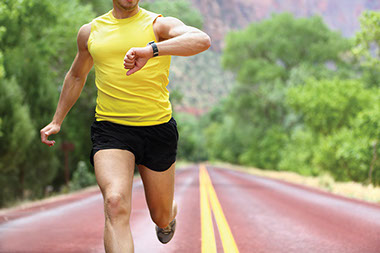
    Image of man running while looking at his watch.

    Short sprints might boost your fitness by significant levels in just 2 weeks. Really short sprints-like 6 seconds.

    Researchers at Abertay University in Scotland have claimed that people can improve their fitness levels with just small amounts of exercise.

    Participants were asked to cycle all out for 6 seconds then rest for one minute, repeating the cycle 10 times. They found that after 2 weeks participants recorded a 10% improvement in fitness.

    The 6-second bursts are one of the shortest sprint durations ever used in high-intensity training (HIT). HIT involves short bursts of intense exercise and achieves similar results to long-distance endurance training.

    However, the method is much less time consuming and comes with a lower risk of injury, making it ideal for athletes wishing to remain injury free.

    © American Institute for Preventive Medicine
  • Get Your Game On

    BE FIT

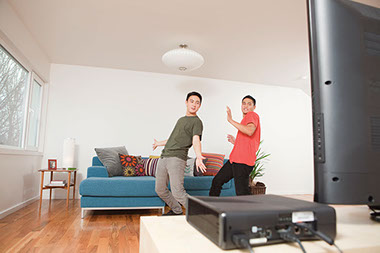
    Image of two males playing active video game, such as the Wii.

    Active video games, also known as “exergames,” are not the perfect solution to getting the nation moving, but they can play a role in getting some people up off the couch and moving right in front of it.

    Michigan State University researchers reviewed published research of studies of these games and say that most of the games provide only “light-to-moderate” intensity physical activity.

    And that, they say, is not nearly as good as what would be real exercise, but video gaming may be a step in the right direction. They generally do not provide the recommended 30 minutes of moderate activity per day, but for some people, the researchers said, light activity can sometimes be enough.

    The researchers named the three video gaming systems that offer active video games as ways to increase physical activity: Nintendo’s Wii, Xbox 360 (Kinect), and PlayStation 3 (Move). The study was published in Health Education and Behavior.

    © American Institute for Preventive Medicine

  • Get Your Healthy Game Day On

    SELF-CARE CORNER

    Image of football field.

    The excitement of football, and even the activities and feelings of anticipation leading up to games, can be unhealthy in ways many do not realize, according to Jody Gilchrist, a cardiac nurse practitioner at the University of Alabama at Birmingham.

    Critical matchups, tight games, and crushing defeats can trigger adrenaline that reduces blood flow to the heart and other muscles and increases heart rate and blood pressure. Over time, these high levels of stress hormones can hurt your heart-even though a football game may be deemed good stress.

    Adding to the effects of stress on the body would be unhealthier foods at the tailgate party, and heavier eating and drinking during the game. Not a winning combination. Here are some tailgating tips:

    *  Help minimize stress by watching the game with people you enjoy.

    *  Knock out a few pushups and sit ups during commercial breaks.

    *  Chew gum or squeeze a stress ball to reduce anxiety and control your emotions.

    *  Take a brief walk at halftime, or if you are attending the game, take a walk around the stadium or to another section to meet a friend.

    *  Manage your net dietary intake by planning ahead and making healthier choices at other times of the day in anticipation of splurging a bit during the game.

    *  If tailgating at the stadium, try to conserve calories earlier in the day.

    *  If tailgating at home, consider using vegetables in place of chips for dips, and substitute Greek yogurt for sour cream or cream cheese dips.

    *  Because sodium causes fluid retention-something especially bad for heart patients-a good rule of thumb is to avoid foods that have more than 1 mg of sodium per calorie. At about 0.5 mg of sodium per calorie, natural foods such as fresh fruits and vegetables generally contain much less, so opt for them whenever possible.

    *  Do your best to avoid soft drinks, which are extremely high in sugar.

    In the end, your health will win-even if your team does not.

    © American Institute for Preventive Medicine
  • Physical Fitness And Sports

    BE FIT

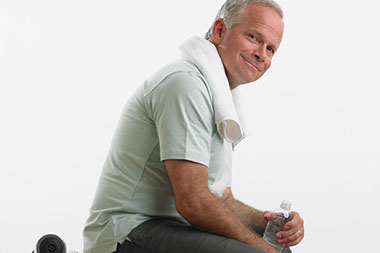
    Image of older man ready to exercise.

    Along with healthy eating, physical activity increases your chances of living longer. Exercise can also help:

    *  Control your blood pressure, blood sugar, and weight

    *  Lower your “bad” cholesterol and raise your “good” cholesterol

    *  Prevent heart disease, colorectal and breast cancer, and type 2 diabetes

    And that’s not all. Being more active can:

    *  Be fun

    *  Help you look your best

    *  Improve your sleep

    *  Make your bones, muscles, and joints stronger

    *  Lower your chances of becoming depressed

    *  Reduce falls and arthritis pain

    *  Help you feel better about yourself

    For adults, most health benefits come with at least 150 minutes a week of moderate-intensity physical activity, such as brisk walking. Extra benefits occur with more physical activity. Both aerobic (endurance) and muscle-strengthening (resistance) physical activity are helpful.

    Children need 60 minutes of play with moderate to vigorous activity every day. If this sounds like a lot, consider that eight to 18 year olds spend an average of 7.5 hours a day sitting. This includes using computers, video games, cell phones and watching TV and movies.

    Make exercise fun

    No matter what shape you are in, you can find activities that you enjoy. If you think of exercise as a chore that you have to do, it can be harder to stick with it.

    *  Choose activities you enjoy and look forward to. Do ones you enjoyed as a child.

    *  Set up a walking program with a friend, family member, or coworker you enjoy being with.

    *  Wear a pedometer to track your steps. Aim for a goal of 10,000 steps a day.

    *  Enjoy a sunny day and fresh air with outdoor activities.

    *  Play outdoors with your children and grandchildren.

    *  Use fitness facilities at your work.

    © American Institute for Preventive Medicine