Tag: Sports Injuries

  • Compression Socks: A Fitness Friend?

    BE FIT

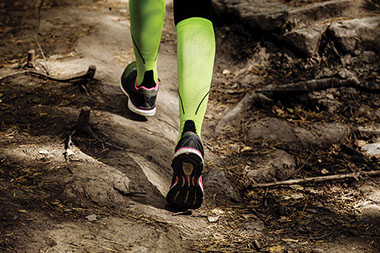
    Close up of running legs wearing compression socks.

    Some athletes use compression socks during their exercise or sports activities. They look like tights, knee-high socks or sleeves that go over the calves.

    Compression socks are not new. They have been used for years to help with leg pain, swelling, blood clots and varicose veins. They work by gently squeezing the legs to help move blood upward.

    But do they help with exercise performance?

    Lack of evidence for exercise performance

    While compression socks aren’t usually harmful, they’re not proven to be helpful for exercise. Studies have not found that compression socks help a person’s athletic ability.

    Still, there may be some benefit to using them if your doctor says it’s okay. Some evidence suggests that compression socks may help slightly with exercise recovery. A review of several small studies found that for some people, compression socks could help with muscle soreness. But, because these results haven’t been proven in large studies, it’s too early to say whether they will work for most people.

    Some people enjoy the feeling of pressure on the legs. They may feel that it helps them exercise longer. If that’s the case, compression socks can be a good way to help you stay active.

    Using compression socks

    If you’re interested in compression socks, ask your doctor about them. They can help with:

    *  Legs that feel achy or heavy

    *  Swelling in the feet or legs from standing or sitting for long hours

    *  Pain from varicose veins

    *  Preventing blood clots, especially after surgery or for people who can’t move around easily. This could be after an injury or for people who have an illness that requires them to be in bed for long periods.

    Some compression socks are tighter than others. Your doctor can give you a prescription for them, or you may purchase them online. Ask your doctor how long you should wear them, and what to do if you find the socks uncomfortable.

    Sources: British Journal of Sports Medicine, Journal of Sports Science and Medicine, U.S. National Library of Medicine

    © American Institute for Preventive Medicine
  • Be A Good Sport

    BE FIT

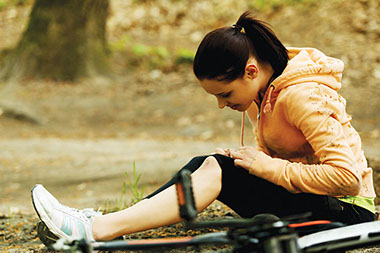
    Image of women with knee injury from riding a bike.

    Whether you’ve never had a sports injury and you’re trying to keep it that way or you’ve had an injury and don’t want another, the following tips from the National Institute of Arthritis and Musculoskeletal and Skin Diseases can help:

    *  Avoid bending knees past 90 degrees when doing half knee bends.

    *  Avoid twisting knees by keeping feet as flat as possible during stretches.

    *  When jumping, land with your knees bent.

    *  Do warm-up exercises not just before vigorous activities like running, but also before less vigorous ones such as golf.

    *  Don’t overdo.

    *  Do warm-up stretches before activity. Stretch the Achilles tendon, hamstring, and quadriceps areas and hold the positions. Don’t bounce.

    *  Cool down following vigorous sports. For example, after a race, walk or walk/jog for 5 minutes so your pulse comes down gradually.

    *  Wear properly fitting shoes that provide shock absorption and stability.

    *  Use the softest exercise surface available, and avoid running on hard surfaces like asphalt and concrete. Run on flat surfaces. Running uphill may increase the stress on the Achilles tendon and the leg itself.

    © American Institute for Preventive Medicine

  • Can You Take A Hit?

    BE FIT

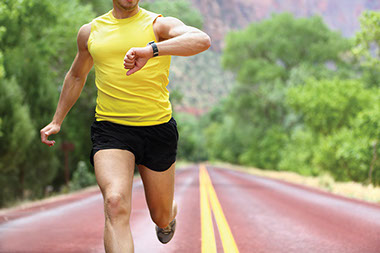
    Image of man running while looking at his watch.

    Short sprints might boost your fitness by significant levels in just 2 weeks. Really short sprints-like 6 seconds.

    Researchers at Abertay University in Scotland have claimed that people can improve their fitness levels with just small amounts of exercise.

    Participants were asked to cycle all out for 6 seconds then rest for one minute, repeating the cycle 10 times. They found that after 2 weeks participants recorded a 10% improvement in fitness.

    The 6-second bursts are one of the shortest sprint durations ever used in high-intensity training (HIT). HIT involves short bursts of intense exercise and achieves similar results to long-distance endurance training.

    However, the method is much less time consuming and comes with a lower risk of injury, making it ideal for athletes wishing to remain injury free.

    © American Institute for Preventive Medicine
  • Physical Fitness And Sports

    BE FIT

    Image of older man ready to exercise.

    Along with healthy eating, physical activity increases your chances of living longer. Exercise can also help:

    *  Control your blood pressure, blood sugar, and weight

    *  Lower your “bad” cholesterol and raise your “good” cholesterol

    *  Prevent heart disease, colorectal and breast cancer, and type 2 diabetes

    And that’s not all. Being more active can:

    *  Be fun

    *  Help you look your best

    *  Improve your sleep

    *  Make your bones, muscles, and joints stronger

    *  Lower your chances of becoming depressed

    *  Reduce falls and arthritis pain

    *  Help you feel better about yourself

    For adults, most health benefits come with at least 150 minutes a week of moderate-intensity physical activity, such as brisk walking. Extra benefits occur with more physical activity. Both aerobic (endurance) and muscle-strengthening (resistance) physical activity are helpful.

    Children need 60 minutes of play with moderate to vigorous activity every day. If this sounds like a lot, consider that eight to 18 year olds spend an average of 7.5 hours a day sitting. This includes using computers, video games, cell phones and watching TV and movies.

    Make exercise fun

    No matter what shape you are in, you can find activities that you enjoy. If you think of exercise as a chore that you have to do, it can be harder to stick with it.

    *  Choose activities you enjoy and look forward to. Do ones you enjoyed as a child.

    *  Set up a walking program with a friend, family member, or coworker you enjoy being with.

    *  Wear a pedometer to track your steps. Aim for a goal of 10,000 steps a day.

    *  Enjoy a sunny day and fresh air with outdoor activities.

    *  Play outdoors with your children and grandchildren.

    *  Use fitness facilities at your work.

    © American Institute for Preventive Medicine

  • Race Drinking

    BE FIT

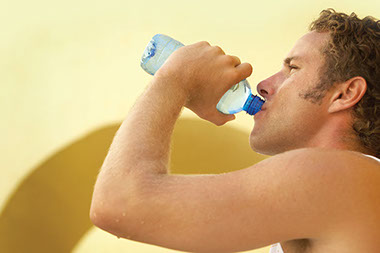
    Image of man drinking from a water bottle.

    Nearly half of recreational runners may be drinking too much fluid during races, according to a survey of runners by Loyola University Health System researchers. Expert guidelines recommend runners drink only when thirsty. But the Loyola survey found that 36.5% of runners drink according to a preset schedule or to maintain a certain body weight and 8.9% drink as much as possible.

    Drinking too much fluid while running can cause a potentially fatal condition called exercise-associated hyponatremia. It occurs when runners drink even when they are not thirsty. Drinking too much during exercise can dilute the sodium content of blood to abnormally low levels.

    Drinking only when thirsty will prevent overconsumption of fluids. “It’s the safest known way to hydrate during endurance exercise,” said Loyola sports medicine physician Dr. James Winger. The study is in the British Journal of Sports Medicine.

    Symptoms of hyponatremia can include nausea, vomiting, headache, confusion, loss of energy, muscle weakness, spasms or cramps. In extreme cases, the condition can lead to seizures, unconsciousness, and coma.

    © American Institute for Preventive Medicine
  • Shin Splints Can Sidetrack Your Running Routine

    BE FIT

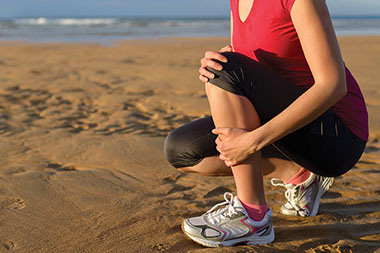
    Image of women holding her shin.

    If shin splints are keeping you from making the most of your runs this spring, you’re not alone. Shin splints-pain in the front of the lower legs-is common among those who exercise regularly. This ailment especially affects runners.

    According to Dr. Matthew Silvis, associate professor of family medicine and orthopedics at Penn State Hershey, shin splints are among the most common complaints in spring for people back on the road or trail after a long winter.

    The term shin splints generally refers to pain and soreness along the shinbone, or tibia, the largest bone of the lower leg. The pain comes from overuse of the muscles and tendons around the bone. Added or unusual stress on and around the shinbone causes it to become inflamed and sore.

    If you’re already dealing with shin splints, icing the area can help. So can taking an over-the-counter anti-inflammatory medicine if needed for pain. Wait to return to your activity until you’re pain-free for 2 weeks.

    The fix

    Give the body time to adjust when changing an exercise routine. Doing too much too soon can bring on shin splints. If untreated, a more serious injury-stress fracture-can result. Stress fractures-tiny cracks in the bone-usually come from overuse. To avoid this:

    *  Gradually increase the amount or intensity of a workout to avoid too much stress on the legs.

    *  Follow a regular, gentle stretching routine that includes the calves. Keeping the muscles around the shinbone flexible can help prevent  shin splints.

    *  Wear well-fitting, supportive athletic shoes. And replace them every 300 to 500 miles.

    *  Balance running workouts with other training that isn’t as stressful on the legs. Examples are cycling, cross-training, and swimming.

    © American Institute for Preventive Medicine

  • Sprains, Strains, And Injuries: The Rice Fix

    BE FIT

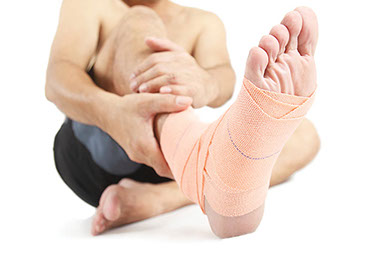
    Image of sprained foot.

    Whether you’re headed off the trail or staying on track, kicking a ball or throwing one, you’ll likely need to know about the RICE fix when you sprain, strain, or injure something.

    Dr. William Levine, chief of sports medicine at NewYork-Presbyterian Hospital/Columbia University Medical Center, recommends RICE, a first-aid technique that can be applied to most sprains, strains and joint injuries.

    *Rest:If you are injured during any activity, stop the activity immediately and rest the injured area. Do not try to work through the pain.

    *Ice:For the first 24 to 48 hours, apply ice packs to the injured area every 2 hours for 15 minutes. Make sure that the ice (a handy bag of frozen peas works well) is not in direct contact with the skin; a cotton handkerchief covering is helpful.

    *Compress:Bandage the area firmly, extending the wrapping above and below the injury. This pressure will stop any bleeding and reduce any swelling of the injured area.

    *Elevate:Whenever possible, elevate the injured area above the level of your heart. Elevation and compression are typically used for acute injuries such as a twisted ankle.

    © American Institute for Preventive Medicine
  • Stay In The Game

    SELF-CARE CORNER

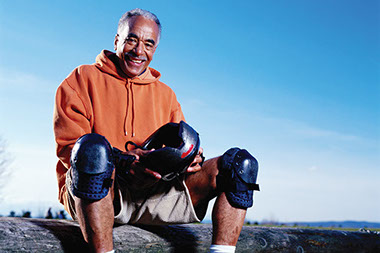
    Image of older man wearing knee pads while holding a helmet.

    Although many athletes understand the importance of keeping their muscles and bones healthy, it’s also important for them to take care of their skin. Sports equipment, especially protective helmets and pads, creates a warm, moist and dark environment for the germs that can cause skin infections to grow.

    “Athletes are at an increased risk of skin infection, which can have serious consequences and may take them-and their teammates-out of the game for days, weeks or months,” said dermatologist Jeffrey V. Benabio. “If athletes notice anything on their skin that itches, burns or may be infected, they should see a board-certified dermatologist or sports medicine doctor.”

    To help prevent skin infections, Dr. Benabio recommends that coaches, athletes, and athletic trainers follow these tips:

    *  Keep cuts and scrapes clean and covered with a bandage until healed. A cut or scrape weakens the skin’s defense and allows germs that cause infections to enter.

    *  Prevent blisters to reduce infections. Apply a pad, gel or spray to areas that routinely blister. To help prevent blisters on the feet, ankles and hands, consider using specialized gloves and socks or wearing two pairs of socks. Athletes should also make sure that their footwear fits properly.

    *  Wear moisture-wicking clothes. This helps keep the athlete’s skin dry and prevents germs from growing.

    *  Wear sandals in the locker room. Wearing sandals or other shoes helps reduce infections on the feet.

    *  Shower after every practice and game. In addition, athletes should use an antimicrobial soap and wash their entire body.

    *  Do not share personal care items. Athletes should always use a clean towel after showering and use their own towels, soaps, razors and other personal care items.

    *  Wash clothes and towels after each use. Sports bags should also be washed, as germs that cause infections can remain in the bags and grow.

    *  Disinfect equipment, including protective gear, daily. For proper disinfection, follow the manufacturers’ instructions.

    *  Perform regular skin checks. Athletes should check their skin daily, especially those in high-risk sports, such as wrestling. Look for any changes, such as cuts, sores, redness, swelling and pus, and report any changes to an athletic trainer or doctor.

    © American Institute for Preventive Medicine

  • Take Golf Injuries Seriously

    BE FIT

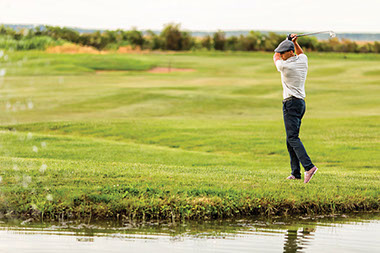
    Image of man playing golf.

    Golf doesn’t hold the same kind of injury risk as high-impact sports such as football or hockey. But the repetitive motion and twisting of the spine can set the stage for potential injuries that may be underestimated for this low-impact lifetime sport.

    Mike Markee, instructor of physical therapy and athletic training at Saint Louis University, has spent time on the senior PGA tour and developed exercise and fitness programs for golfers.

    “It is possible to avoid injury and improve performance, especially through muscle strength and proper form,” Markee said. “The great thing is that the same things that help you avoid injury also will improve your game.”

    It comes down to these 3 tips:

    1.Warm up and keep moving.There can be a lot of down time in golf, so it takes deliberate focus to keep moving. Stretch before, during, and after the game. If you’re able to walk and the course allows, skip the cart and get a few miles under your belt by the end of the game.

    2.Strengthen your core.Golfers use the muscles closest to the spine, including hip and shoulder muscles. This is where the power comes from in your golf swing. A weakness in your core can lead to an unbalanced swing, with some muscles compensating for others. You can develop more power by training the right muscles. Now we know that strength training and flexibility aren’t polar opposites and, in fact, core strength training can actually improve your performance.

    3.Develop good body mechanics.Golf’s main injury risk comes from the repeated motions of the swing. Working with a pro to learn to swing properly can help you reduce forces on the spine due to twisting and rotating and ensure that you aren’t developing bad habits that can take their toll on your back, shoulder and elbow.

    © American Institute for Preventive Medicine
  • Train Like An Olympian

    BE FIT

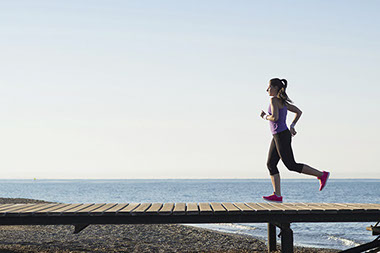
    Image of women running.

    Olympic athletes inspire us with their fierce discipline and natural talent as they smash records, going higher, farther and faster. Their can-do   spirit motivates us all to take on  new challenges.

    Whether your goal is to complete your first marathon or improve your golf game, there are lessons to be learned from the best of the best.

    Saint Louis University assistant professor of physical therapy, Chris Sebelski, gives this guidance on how to train like a champion:

    *Set a goal and break it down.For instance, if you’re training to get in shape for a cross-country hiking trip, you might aim to walk 3 miles a day for the first 2 weeks and build up to 10 miles a day by the end of 10 weeks.

    *Cross-train.Cross-training reduces risks of overtraining and helps avoid injury. It also enhances muscle performance and stimulates the mind so you don’t become bored by too much repetition.

    *Work out with others.Olympic athletes don’t train alone and they don’t train only with those at the same skill level. Run with different people. On one day, partner with someone slower than your normal pace. You’ll stay out longer and practice endurance. Another day, run with someone faster than your average pace. You’ll do a more intense cardio workout.

    *Create a team.Olympic athletes know that they cannot do it on their own. You shouldn’t expect to either. Seek people and methods that can help you accomplish your goal. It could be a face-to-face session with a trainer, a nutrition class, or an online chat room of like-minded people.

    *Find your motivation.Olympians use lots of techniques to manage their emotions. This year, for example, athletes reported using yoga, meditation, and even watching their favorite TV shows to calm themselves before an event.

    *Put on an Olympic attitude.For most of us, our jobs, families and personal commitments mean we can’t spend as much time training as a world champion might. But  you can adopt the mentality of  an Olympian during the time you  do train.

    *Enjoy.Regardless of the scale of your goal, train for and accomplish a physical goal you set for yourself. Crossing that finish line is a feeling unlike any other.

    © American Institute for Preventive Medicine