Tag: stability

  • How To Prevent Motion Sickness

    Healthy Travel

    Motion sickness is like a hangover you don’t deserve. Symptoms include fatigue, dizziness, nausea, vomiting, pallor, and sweating. Experts think this misery results because your eyes and inner ear receive conflicting messages when you travel by car, boat, or plane. The inner ear, which is responsible for your sense of balance, tells your body it’s moving in one direction, while your eyes tell you you’re moving in another. So closing your eyes can reduce the conflict. The following steps can also help prevent motion sickness.

    Aboard ship:

    *  Spend as much time as you can on deck in the fresh air.

    *  If you’re going to be spending the night (or nights) on a boat, try to get a cabin near the middle of the craft, close to the waterline, where there’s less pitching and rolling.

    On a plane:

    *  Request a seat over the wings. Avoid sitting in the tail section; it’s the bumpiest.

    *  Open the overhead vents and direct air at your face.

    On land transportation:

    *  Fix your gaze on the scenery straight ahead, not to the side.

    *  Sit near an open window, for fresh air, unless you’re traveling through a heavily polluted area.

    *  If you’re traveling by car, offer to drive. The person at the wheel never gets motion sickness.

    In addition, the following steps are helpful no matter what your means of transportation.

    *  Get plenty of rest before setting out. Fatigue makes you more vulnerable to motion sickness.

    *  Avoid drinking alcohol before or during travel, and don’t overindulge the night before.

    *  Take an over-the-counter motion sickness medication (such as Dramamine) approximately 30 minutes before travel begins. Read the package for cautions and other important information.

    *  If over-the-counter medications don’t bring relief, ask your doctor about a prescription medication containing scopolamine, available as a patch that’s usually worn behind your ear.

    *  Don’t read while traveling and don’t try to focus on any other stationary object. Aboard a ship, lie down on your back and close your eyes.

    *  If any of your traveling companions get sick, move as far away from them as possible; otherwise, you may get sick, too.

    Some people report that taking tablets of powdered gingerroot relieves their motion sickness. Others find relief by pressing on an acupressure point about midway on the inside of the wrist, where the hand and forearm meet.

    If preventive measures fail and you feel sick anyway, you can try the following:

    *  Breathe slowly and deeply.

    *  Remove yourself from smoke and food odors, and get some fresh air.

    *  To reduce tension and anxiety, concentrate on relaxing all your muscles, as though you’re a limp rag doll, and visualize a peaceful scene.

    *  To settle a queasy stomach, eat dry crackers.
    Page image from A Year of Health Hints book by the American Institute for Preventive Medicine. www.HealthyLife.com. All rights reserved.

    © American Institute for Preventive Medicine

  • Use Ladders Safely

    Home Safety

    Image of a ladder.

    Follow safety tips to keep you from an injury sustained on a ladder.

    *  Make sure your ladder is long enough for you to reach the job without standing on the top three steps or overextending your body.

    *  Check the ladder for cracks or weak spots before you use it. Metal ladders should have nonskid steps and footings. (Don’t paint a ladder; you’ll hide defects.)

    *  Make sure the soles of your shoes or boots are dry and have enough tread to prevent slipping.

    *  Always steady a ladder on firm ground or a flat board.

    *  Never place a ladder in front of a door that someone may open.

    *  Wear tools on a belt or keep them in your pocket so you can keep your hands free when climbing up or down a ladder.

    *  To avoid losing your balance while standing on a ladder, don’t lean too far back or to the side.

    *  Don’t use a ladder outdoors on a very windy day.

    *  To avoid electrocution, don’t use metal ladders near power lines.

    A Year of Health Hints book by the American Institute for Preventive Medicine. www.HealthyLife.com. All rights reserved.

    © American Institute for Preventive Medicine
  • A Matter Of Balance

    WELL-BEING

    Illustration of 3 people figures with one of them falling.

    A fall for a senior is not simply a matter of shaking it off and standing back up. A fall could mean a broken hip or a bruise, and some seniors really “can’t get up.” Falls are a major threat to the health and independence of older adults.

    The best solution is preventing falls in the first place. And a recent study in the British Medical Journal pointed to the success of exercise programs in reducing falls that cause injuries and broken bones.

    Risk factors for falls include muscle weakness, especially in the legs, and poor balance-all linked to lack of exercise or certain medical conditions. Poor vision and confusion can also lead to falls. Even some medications can cause dizziness. To lower your risk for falls, CDC recommends you do four things:

    1. Exercise to improve balance and strength.

    Walking, using a stretch band and lifting weights increase muscle strength. Yoga and tai chi improve balance. Follow your doctor’s advice for exercise.

    2. Have your doctor or pharmacist review all prescribed and over-the-counter medications you take.

    Some, when taken alone or with other medications or alcohol can make you dizzy or sleepy and raise your risk for falls. Also, let your doctor know if you feel lightheaded when you get up from sitting in a chair or out of bed. Before you get out of bed, sit on the edge of it for a minute or two and get up slowly.

    3. Get an eye exam from an eye doctor at least once a year.

    Follow his or her advice for wearing corrective lenses and/or using low-vision aids. Get treatment for cataract, glaucoma, macular degeneration and other eye conditions as needed.

    4. Make your house safer.

    *  Keep the inside of your house well lit. Use night lights.

    *  Have secure handrails on both sides of  all stairs.

    *  Keep stairs and walk paths clear from clutter and tripping hazards.

    *  Install grab bars in the tub/shower and next to the toilet. If needed, use a shower chair that has rubber tips on the legs and a hand-held shower.

    *  If you use throw rugs, use ones with nonskid backs. Or, put nonslip rug pads or carpet tape underneath rugs.

    *  Wear sturdy shoes with thin, nonslip soles. Avoid going barefoot.

    *  Avoid using a step ladder or a chair to stand on. Keep items you use often in easy-to-reach places.

    *  Be mindful of where your pet and his or her toys are to avoid tripping over them.

    © American Institute for Preventive Medicine
  • Abs: The Core Of A Healthy Body

    BE FIT

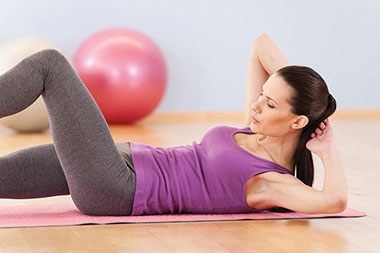
    Image of women doing abdominal exercises.

    Strong abdominal muscles can do more than just make you look slimmer. Healthy ab muscles can help you improve posture and alleviate back pain. For those who thought ab exercises were only for achieving a “six pack,” it’s time to discover all the benefits of a strong midsection.

    Your abdominal muscles are part of the body’s core muscles, which support your entire body when you sit, stand and move. For those who don’t like sit-ups or can’t get on the floor, there are other options to strengthen and tone these important muscles. In fact, “vertical” core exercises may be even more effective than sit-ups.

    Try this standing core exercise that’s suitable for beginners:

    *  Stand facing a wall. Place your feet shoulder-width apart and push your hands against the wall.

    *  Bend your knee and bring your leg toward the wall. Keep the other foot flat on the floor at all times.

    *  Step your leg across the other one in front. Then, step the same leg out to the side.

    *  Bend the knee again and open your leg to the outside, using your hip. Then, swing the leg to the inside.

    Repeat these exercises with the other leg. Concentrate on keeping your abs tight each time you lift and move your leg. Try to repeat them several times, and increase the number of reps as you get stronger.

    Source: American College of Sports Medicine

    © American Institute for Preventive Medicine
  • Hey, Want To Improve Your Balance?

    SELF-CARE CORNER

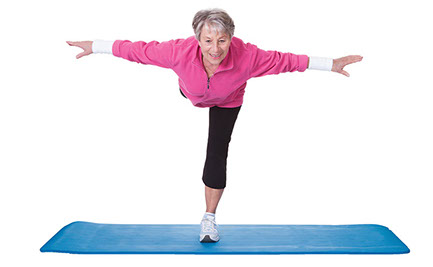
    Image of older women balancing on one leg while bending over half way.

    Everyone wants to prevent falls and improve balance, at any age. NIH in Health offers these daily exercises to steady your balance (and you could do these while talking on the phone or at work too):

    *  Stand on one leg at a time for a minute. Slowly increase the time. Try to balance with your eyes closed or without holding on to anything.

    *  Stand on your toes for a count of 10, and then rock back on your heels for a count of 10.

    *  Move your hips in a big circle to the left, and then to the right. Do not move your shoulders or feet. Repeat 5 times.

    © American Institute for Preventive Medicine