Short for cardiovascular training, “cardio” helps strengthen your heart and other muscles. Cardio also causes the brain to release natural substances, called endorphins, that give you a natural “high.” Aerobic exercise also promotes brain health and challenges your mind.
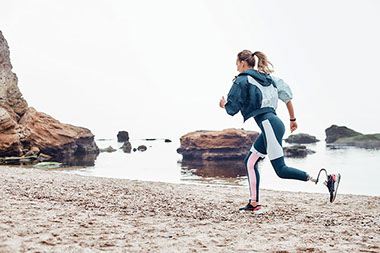
Cardio training uses large movements that involve multiple muscle groups, such as your legs, buttocks, and abdominals, all at once. Popular aerobic activities are brisk walking, running, cycling, swimming, and low-impact aerobic dancing.
Low-Intensity, Steady-State (LISS) Cardio
Do this type of cardio at a low-to-moderate intensity level. With LISS cardio, you should be breathing at a rate that still allows you to be able to talk to someone. Some examples are walking around your neighborhood or riding a bike at a moderate pace. This type of cardio is most helpful when maintained for 30-45 minutes. Work up to this length of time.
Group Exercise Classes (e.g., Zumba®, step, kick-boxing, spin)
* Find a class through your local community center, YMCA, or another fitness center. Many classes are offered in the mornings and evenings and on weekends to accommodate busy work schedules.
* Find an instructor who teaches in a style and tempo you feel comfortable with.
* For your first class, arrive early and let the instructor know it is your first time. They may help you set up your equipment or introduce you to someone else in the class who can help you.
* High-impact aerobics can strain the knees, hips, and ankles. Step aerobics is lower-impact but should still be avoided by anyone with knee problems.
* Modify exercises to a level that you can do comfortably. Ask the instructor for advice.
Walking
* Find a safe place to walk. Your neighborhood, a large shopping mall, or local park may offer safe options. Many fitness centers also have indoor walking tracks or treadmills.
* Hold your head up and keep your back straight.
* Bend your elbows as you swing your arms.
* Take long, easy strides.
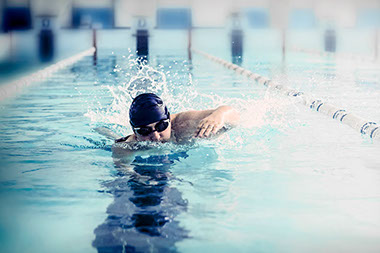
Swimming
* Swim in a pool or lake supervised by a lifeguard. If the area is unsupervised, do not swim alone.
* Take lessons to learn to swim safely and to improve your technique.
* Rest frequently and drink water. It can be harder to notice that you are sweating in the pool and becoming dehydrated.
* Wear goggles to protect your eyes.
* Wear a swim cap if you have long hair. This will help keep hair out of your face and reduce drag.
* Rinse off after swimming and use lotion to keep your skin from drying out.
High-Intensity Interval Training (HIIT)
LISS is a good place to start with cardio training. Within a few weeks, start to incorporate HIIT training as well. This type of cardio is much more effective at boosting your metabolism and helping with fat loss.
To do HIIT, alternate between longer periods of low-intensity exercise and shorter bursts of high-intensity exercise. The high-intensity parts should be short, such a walking as fast as you can for 30 seconds, to get your heart rate up. You should feel like you are working at 90% of your maximum effort. Immediately switch to low-intensity exercise, like walking at a medium pace, for a minute or two to bring your heart rate down. Repeat this pattern several times. Work up to 15 to 20 minutes of HIIT. You can also do intervals of 30 seconds of high-intensity exercise and 30 seconds of low-intensity exercise.
HIIT revs up your metabolic furnace and you can burn a lot of calories in a short period of time. This may be more interesting and enjoyable than exercising at the same rate for your entire workout.
You can use the same types of exercises that you enjoy for LISS (like running or biking). Or, you can use other full-body exercises, such as jumping jacks and push-ups. Search “HIIT ideas” online or download an app that provides workouts on a timer.
Plan a HIIT Workout with Popsicle Sticks
1. Get at least a dozen popsicle sticks.
2. Write one short exercise on each popsicle stick. Write exercises you know how to do and enjoy. Ideas:
– Jumping jacks – Push-ups
– Lunges – Bicep curls
– Squats – Side leg lifts
– Front leg lifts – Mountain climbers
– Bicycle kicks – Tricep dips
– Reverse lunges – Jumping rope (or pretending to)
3. Put the sticks in a cup or a jar.
4. Pull out 4 sticks. You will be doing these activities after a short warm up.
5. Warm up for 5 minutes by briskly walking or doing jumping jacks. Notice that your heart rate is higher.
6. Set a timer for 15 minutes.
7. Do the 1st activity as many times as you can in one minute.
8. Walk for one minute.
9. Do the 2nd activity as many times as you can for one minute.
10. Walk for one minute.
11. Do the 3rd activity as many times as you can for one minute.
12. Walk for one minute.
13. Do the 4th activity as many times as you can for one minute.
14. Walk for one minute.
15. Repeat steps 7 through 14.
Ideas Using Your Popsicle Sticks
Keep your jar of exercise ideas out where you can see it. Pull a stick:
* When a commercial break comes on TV or the radio.
* In the morning after you wake up.
* While studying or reading and you need a break.
* When you feel anxious or overwhelmed.
Do the activity on the stick for one minute. Or, set a goal to do a certain number of that exercise. For example, 25 jumping jacks. Keep your popsicle sticks fresh! Add new ideas and things you like to do. Remove sticks that you dread pulling.