Tag: strain

  • Sprains, Strains, And Injuries: The Rice Fix

    BE FIT

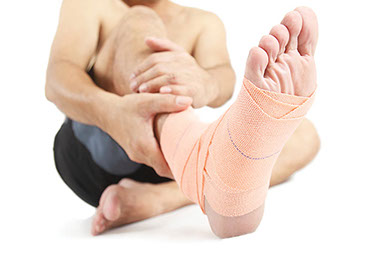
    Image of sprained foot.

    Whether you’re headed off the trail or staying on track, kicking a ball or throwing one, you’ll likely need to know about the RICE fix when you sprain, strain, or injure something.

    Dr. William Levine, chief of sports medicine at NewYork-Presbyterian Hospital/Columbia University Medical Center, recommends RICE, a first-aid technique that can be applied to most sprains, strains and joint injuries.

    *Rest:If you are injured during any activity, stop the activity immediately and rest the injured area. Do not try to work through the pain.

    *Ice:For the first 24 to 48 hours, apply ice packs to the injured area every 2 hours for 15 minutes. Make sure that the ice (a handy bag of frozen peas works well) is not in direct contact with the skin; a cotton handkerchief covering is helpful.

    *Compress:Bandage the area firmly, extending the wrapping above and below the injury. This pressure will stop any bleeding and reduce any swelling of the injured area.

    *Elevate:Whenever possible, elevate the injured area above the level of your heart. Elevation and compression are typically used for acute injuries such as a twisted ankle.

    © American Institute for Preventive Medicine

  • Take Golf Injuries Seriously

    BE FIT

    Image of man playing golf.

    Golf doesn’t hold the same kind of injury risk as high-impact sports such as football or hockey. But the repetitive motion and twisting of the spine can set the stage for potential injuries that may be underestimated for this low-impact lifetime sport.

    Mike Markee, instructor of physical therapy and athletic training at Saint Louis University, has spent time on the senior PGA tour and developed exercise and fitness programs for golfers.

    “It is possible to avoid injury and improve performance, especially through muscle strength and proper form,” Markee said. “The great thing is that the same things that help you avoid injury also will improve your game.”

    It comes down to these 3 tips:

    1.Warm up and keep moving.There can be a lot of down time in golf, so it takes deliberate focus to keep moving. Stretch before, during, and after the game. If you’re able to walk and the course allows, skip the cart and get a few miles under your belt by the end of the game.

    2.Strengthen your core.Golfers use the muscles closest to the spine, including hip and shoulder muscles. This is where the power comes from in your golf swing. A weakness in your core can lead to an unbalanced swing, with some muscles compensating for others. You can develop more power by training the right muscles. Now we know that strength training and flexibility aren’t polar opposites and, in fact, core strength training can actually improve your performance.

    3.Develop good body mechanics.Golf’s main injury risk comes from the repeated motions of the swing. Working with a pro to learn to swing properly can help you reduce forces on the spine due to twisting and rotating and ensure that you aren’t developing bad habits that can take their toll on your back, shoulder and elbow.

    © American Institute for Preventive Medicine