Tag: stress

  • Care For The Caregiver

    FAMILY LIFE

    Image of caregiver.

    Stress, anxiety, and burnout are never far from the doorsteps of millions of Americans who are caregivers as they often juggle the responsibilities of providing daily care for a loved one with dementia or another condition with the added demands of working, maintaining a household, or raising children.

    Too often caregivers don’t know how to ask for help, and friends and family members aren’t sure of how to lend a hand.

    “Caregivers will say ‘no’ when offered help because they worry it will reflect poorly on them or because they ‘don’t want to bother’ others. And some caregivers get so attached to their role that they just can’t let go,” said Nancy Alterman, a licensed clinical social worker with the New Jersey Institute for Successful Aging at the UMDNJ-School of Osteopathic Medicine.

    If you know a family member or close friend who is a caregiver, Alterman offers the following suggestions to help ease that person’s burden.

    *  Be sensitive about visiting by calling ahead to schedule a time that is convenient. But if the caregiver routinely declines offers of a visit, you may need to just show up with special foods or an easy activity like a puzzle.

    *  Avoid bringing a crowd, but visiting with at least one other person gives the caregiver a chance to go out with a friend, knowing that another trusted person is there for the patient’s needs.

    *  Instead of asking, “What can I do?” offer to grocery shop, go to the post office, do laundry or cook a meal that you can bring over.

    *  Be a good listener. Whether in person or by phone, sometimes just having a contact to the outside world is all the caregiver needs to help cope with that day’s burden.

    *  Be alert for signs of caregiver stress, such as denial, social withdrawal, sleeplessness, or lack of concentration.

    *  Offer to spend the night so the caregiver can get some rest. Lack of sleep can quickly lead to a deteriorating situation or a health crisis. Make sure the caregiver and the patient are discussing any sleep issues with their doctors.

    *  Research adult medical day services in your community and share that information with the caregiver. These medically supervised programs can actually help extend the time that the patient can remain at home.

    © American Institute for Preventive Medicine

  • Does Stress Lead To Cancer?

    SUCCESS OVER STRESS

    Image of older female.

    Whether due to work, family or finances, most of us have felt stressed at some point in our lives. And to make matters worse, some studies have shown that stress can lead to depression, anxiety, or a weakened immune system. But can it cause cancer?

    The National Cancer Institute says no. There is no evidence that stress alone can lead to cancer. But, habits such as smoking, drinking, and eating unhealthy foods may be linked to cancer. These are often done in response to high stress events.

    Bottom line:cope with stress in healthy ways, such as exercising, deep breathing, meditation, and getting help from your doctor, if needed. Lowering your overall stress levels will help you feel your best emotionally and physically. And, don’t worry about whether the occasional stressful event may cause cancer. The experts say it won’t.

    © American Institute for Preventive Medicine

  • Exercise Is Healthy For Your Mind

    BE FIT

    Image of older Asian couple brisk walking.

    Regular exercise offers many health benefits. You may already know it helps you stay strong and healthy, and can help you lose weight. It can also help prevent heart disease, diabetes, arthritis, and other diseases. But exercise is doing good for another vital organ in your body: your brain.

    Studies are now showing that regular aerobic exercise can help your brain work better. This includes:

    * Better memory

    * Ability to switch tasks

    * Ability to plan activities and stay organized

    * Possible reduced risk of Alzheimer’s disease

    Although researchers don’t know exactly why exercise helps the mind, there are some possibilities. It increases blood supply to the brain, and helps it form connections. These connections are responsible for forming memories and thinking about future activities. Exercise also improves an area of the brain that remembers and learns.

    Source: National Institute on Aging

    © American Institute for Preventive Medicine

  • Stress Relief For Caregivers

    Mature Health: Over Age 50

    Image of a caregiver helping a man in a wheelchair.

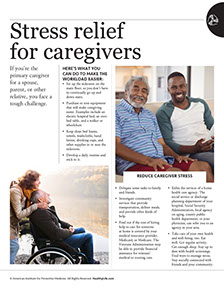
    If you’re the primary caregiver for a spouse, parent, or other relative, you face a tough challenge. Here’s what you can do to make the workload easier.

    *  Set up the sickroom on the main floor, so you don’t have to continually go up and down stairs.

    *  Purchase or rent equipment that will make caregiving easier. Examples include an electric hospital bed, an over-bed table, and a walker or wheelchair.

    *  Keep clean bed linens, towels, washcloths, hand lotion, drinking cups, and other supplies in or near the sickroom.

    *  Develop a daily schedule and stick to it.

    To reduce the stress of your ongoing responsibility:

    *  Delegate some tasks to family and friends.

    *  Investigate community services that provide transportation, deliver meals, and provide other kinds of help.

    *  Enlist the services of a home health care agency. The social service or discharge planning department of your hospital, Social Security Administration, local agency on aging, county public health department, or your physician, can refer you to an agency in your area.

    *  Plan to get out of the house to shop or socialize at least one day a week.

    *  Find out if the cost of hiring help to care for someone at home is covered by your medical insurance provider, Medicaid, or Medicare. The Veterans Administration may be able to provide financial assistance for veterans’ medical or nursing care.

    A Year of Health Hints book by the American Institute for Preventive Medicine. www.HealthyLife.com. All rights reserved.

    © American Institute for Preventive Medicine

  • Add A Stress-Busting Food To Your Day

    Healthylife® Weigh

    Part 6

    Variety of food items high in magnesium.

    What you eat may impact your mood. Make sure you are eating a balanced diet with nutrient-dense foods. B vitamins and magnesium can be helpful for managing anxiety and boosting your mood. Avoid foods and drinks high in sugar that can cause mood swings and fatigue.

    B Vitamins

    B vitamins can stimulate the brain’s production of serotonin. This helps you relax and feel good.

    Good Sources of B Vitamins

    *  Animal products: fish, poultry, meat, eggs, or dairy

    *  Whole grains, beans and lentils

    *  Fruits and vegetables, especially leafy greens, papayas, oranges, and cantaloupe

    *  Fortified breakfast cereals and enriched soy or rice milk

    *  Nuts, such as almonds, pistachios, and walnuts

    Magnesium

    Magnesium has a calming effect on the brain. It can help relax muscles, blood vessels, and the gastrointestinal tract. Magnesium can also boost serotonin and reduce mood swings.

    Good Sources of Magnesium:

    *  Dark leafy greens

    *  Nuts, seeds, and dried fruit

    *  Beans and lentils

    *  Whole grains

    *  Avocados and bananas

    *  Dark chocolate

    *  Yogurt

    *  Fish

    © American Institute for Preventive Medicine

  • How To Reduce Stress At Work

    WORK LIFE

    Image of smiling employee.

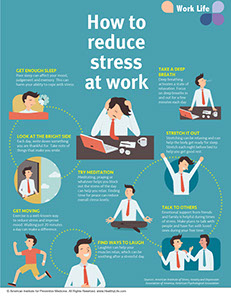
    Get enough sleep:Poor sleep can affect your mood, judgement and memory. This can harm your ability to cope with stress.

    Look at the bright side:Each day, write down something you are thankful for. Take note of things that make you smile.

    Get moving:Exercise is a well-known way to reduce stress and improve mood. Walking just 20 minutes a day can make a difference.

    Try meditation:Meditating, praying or whatever helps you block out the stress of the day can help you relax. Finding time for peace can reduce overall stress levels.

    Find ways to laugh:Laughter can help your muscles relax, which can be soothing after a stressful day.

    Take a deep breath:Deep breathing activates a state of relaxation. Focus on deep breaths in and out for a few minutes each day.

    Stretch it out:Stretching can be relaxing and can help the body get ready for sleep. Stretch each night before bed to help you get good rest.

    Talk to others:Emotional support from friends and family is helpful during times of stress. Make plans to talk with people and have fun with loved ones during your free time.

    Sources: American Institute of Stress, Anxiety and Depression Association of America, American Psychological Association

    © American Institute for Preventive Medicine