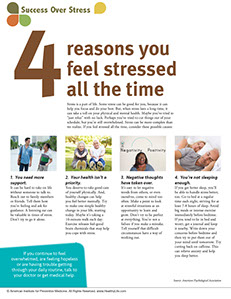
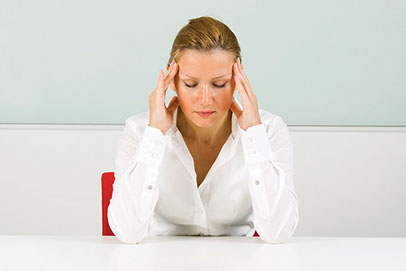
Stress is a feeling you get when faced with a challenge, according to the Office on Women’s Health. While everyone responds to stress differently, there are common signs. These include changes in eating habits, feeling as if you have no control, forgetfulness, headaches, lack of energy and focus, short temper, trouble sleeping, upset stomach, and aches and pains. Studies show that women have more physical symptoms of stress than men.
“Women experiencing stress differently from men often has to do with the roles they impose on themselves,” explains Susanne Fogger, assistant professor in the University of Alabama at Birmingham School of Nursing.
“Ask a woman what her roles are and she may reply: wife, mother, sister, friend, caregiver, cook, cleaner, worker, and so on. Ask a man what his role is and he may mention worker, husband, father – but he may not incorporate as many roles as women often do.”
Fogger notes, “Women often have difficulty letting go [of roles] without feeling guilty about not being able to maintain that role.”
But letting the pressure of this load continually weigh on the body can lead to trouble.
“Our bodies release the stress hormones cortisol and norepinephrine during stressful events, and these are responsible for the elevation of blood pressure, heart rate, and blood glucose levels,” explains Aimee Holland, a women’s health nurse practitioner program coordinator at UAB.
“It’s not good for the human body to continuously be exposed to stress hormones, because this can lead to depression, anxiety, obesity, heart disease, high blood pressure, sleep disorders, and menstrual changes,” Holland says.
In fact, “stress is erosive,” says Fogger, “in the sense that the longer a person remains under what they perceive as stress, the less their body is able to fight off infection because their natural immune system decreases. Stress is inevitable, and not all stress is bad, but how one handles it makes the difference in being able to stay healthy or getting sick.”
*Exercise daily.If your body’s in shape, you’ll be better able to tolerate stress.
*Stop working within 1 to 2 hours of going to bed.Your brain needs time to unwind.
*Eat a balanced diet of nutrient-rich foods.Limit the amount of high-glucose, high-carbohydrate foods you eat. Take it easy on booze, too. Alcohol is really a depressant, not a way to relax.
*Keep life simple.Get rid of the things in your life that don’t match up with or help you achieve your life goals. And remember to surround yourself with good people.