Tag: stretching

  • What To Do When Your Heel Hurts

    SELF-CARE CORNER

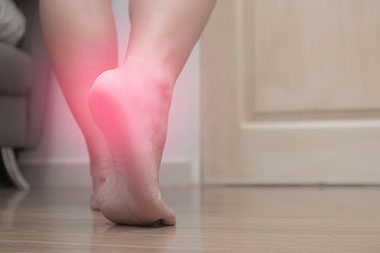
    Image of heel walking on bare floor.

    Heel pain is the most common foot and ankle problem. Often, a sore heel is not serious. But if you ignore it and keep using the foot, it could get worse.

    When it comes to heel pain, the first clue is where the heel hurts. Pain at the bottom of the heel is different from pain behind the heel.

    Pain underneath the heel

    *  Plantar fasciitis. This happens when activity inflames the tissue band that runs along the bottom of the foot. Sometimes, people get plantar fasciitis from wearing shoes that don’t properly support their foot. It’s often worse when you first get up in the morning. It can usually be resolved with rest, wearing special inserts in the shoes and/or physical therapy.

    *  Heel spur. A heel spur is a buildup of calcium that causes a bony bump on the heel bone. It usually happens if a person has plantar fasciitis for a long time. Treatment is usually similar to plantar fasciitis treatment.

    *  Stone bruise. Stepping on a hard object like a stone can injure the bottom of the heel. If you stepped on something recently, try to rest and protect the foot for a few days until it feels better. Wear shoes when you go outside to prevent this from happening in the future.

    Pain behind the heel

    Pain in the back of the heel is usually due to a problem with the Achilles tendon. This tendon connects the heel bone to the calf muscle. Heavy activity or exercise can put too much stress on the tendon too quickly. This can cause Achilles tendinitis, which includes small tears and inflammation in the tendon. Treatment may include:

    *  Physical therapy

    *  Rest

    *  Ice

    *  Orthotic(s) (shoe inserts)

    *  Night splint (device worn at night to protect the foot and tendon)

    People who have Achilles tendinitis may need to avoid the activity that caused it, such as running or jumping.

    Respect your feet

    Many people ignore heel pain, hoping it will go away. But, untreated problems with the foot may only get worse over time without treatment. If your heel pain lasts more than a couple of days, or if you have a health condition like diabetes, see a doctor right away.

    Source: American Academy of Orthopaedic Surgeons, American College of Foot and Ankle Surgeons
    © American Institute for Preventive Medicine
  • Get Flexible!

    Fitness

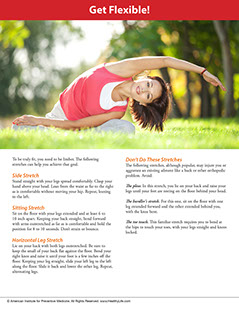
    To be truly fit, you need to be limber. The following stretches can help you achieve that goal.

    Side Stretch

    Stand straight with your legs spread comfortably. Clasp your hand above your head. Lean from the waist as far to the right as is comfortable without  moving your hip. Repeat, leaning to the left.

    Sitting Stretch

    Sit on the floor with your legs extended and at least 6 to 10 inch apart. Keeping your back straight, bend forward with arms outstretched as far as is comfortable and hold the position for 8 to 10 seconds. Don’t strain or bounce.

    Horizontal Leg Stretch

    Lie on your back with both legs outstretched. Be sure to keep the small of your back flat against the floor. Bend your right knee and raise it until your foot is a few inches off the floor. Keeping your leg straight, slide your left leg to the left along the floor. Slide it back and lower the other leg. Repeat, alternating legs.

    Don’t Do These Stretches

    The following stretches, although popular, may injure you or aggravate an existing ailment like a back or other orthopedic problem. Avoid:

    The plow. In this stretch, you lie on your back and raise your legs until your feet are resting on the floor behind your head.

    The hurdler’s stretch. For this one, sit on the floor with one leg extended forward and the other extended behind you, with the knee bent.

    The toe touch. This familiar stretch requires you to bend at the hips to touch your toes, with your legs straight and knees locked.

    Page image from A Year of Health Hints book by the American Institute for Preventive Medicine. www.HealthyLife.com. All rights reserved.

    © American Institute for Preventive Medicine

  • Stretching And Rehabilitation

    Healthylife® Weigh

    Part 5

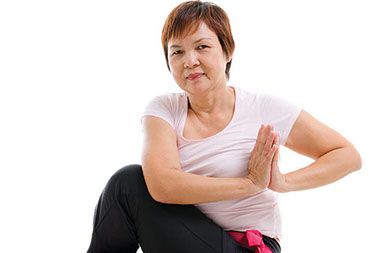
    Smiling women stretching.

    These exercises make your body more flexible. This helps you prevent injury during exercise and everyday activities. Stretching can also help you relax and is a tool for stress management. Tips:

    *  Stretch all muscle groups. Induce mild tension (not pain or burn) for 10 to 30 seconds.

    *  Don’t bounce while stretching. Make movements slow and controlled.

    *  Breathe slowly. Inhale while stretch is released. Exhale when moving into the stretch.

    *  Stretch after each cardio or resistance training workout.

    *  Stretch as a stand-alone workout or as a way to wind down at the end of the day.

    Examples of Stretching Exercises:

    Shoulder Shrug: Shrug your shoulders up toward your head. Then lower them. Repeat 4 times. Slowly circle your shoulders forward 8 times and then backward 8 times.

    Hamstring Stretch: Sit on the floor with your right leg straight. Bend your left leg and touch your foot against your straight leg. Stretch forward to touch the toes of your right foot. Hold for 4 counts. Then do this on the other side.

    © American Institute for Preventive Medicine
  • 5 Things To Know About Yoga

    BE FIT

    Image of women in yoga position.

    Yoga typically combines physical postures, breathing exercises, and meditation or relaxation. Researchers are studying how yoga may be used to help improve health and to learn more about its safe use. If you’re thinking about practicing yoga, here are 5 things you should know from the National Center for Complementary and Alternative Medicine:

    1. Studies suggest that yoga may be beneficial for a number of conditions. Recent studies in people with chronic low-back pain suggest that a carefully adapted set of yoga poses can help reduce pain and improve function. Other studies also suggest that practicing yoga (as well as other forms of regular exercise) might have other health benefits such as reducing heart rate and blood pressure, and may also help relieve anxiety and depression.

    2. Research suggests that yoga is not helpful for asthma, and studies looking at yoga and arthritis have had mixed results.

    3. Yoga is generally considered to be safe in healthy people when practiced appropriately. However, people with high blood pressure, glaucoma, or sciatica, and women who are pregnant should modify or avoid some yoga poses.

    4. Practice safely and mindfully. Everyone’s body is different, and yoga postures should be modified based on individual abilities. Inform your instructor about any medical issues you have, and ask about the physical demands of yoga.

    5. Talk to your doctor about any complementary health practices you use, including yoga. Give them a full picture of what you do to manage your health. This will help ensure coordinated and safe care.

    © American Institute for Preventive Medicine
  • Stretching Exercises To Do At Your Desk

    WORK LIFE

    Image of office with employees working on computers.

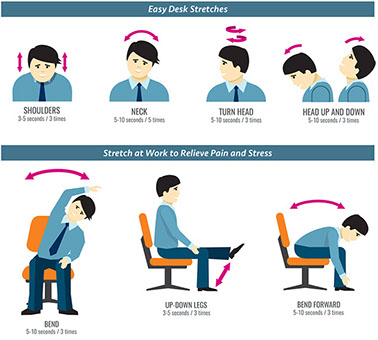
    Stretching has many health benefits, including better flexibility and posture. It can help relieve soreness from tense muscles and the effects of sitting for long periods. Stretching may also help you feel more energized and reduce stress. Take a few minutes every day to stretch at your desk. You may find that you feel better, physically and mentally.

    Illustration showing different desk stretches.

    © American Institute for Preventive Medicine