Tag: Stroke & Circulatory Health

  • Get To Know An Aed

    MEDICAL NEWS

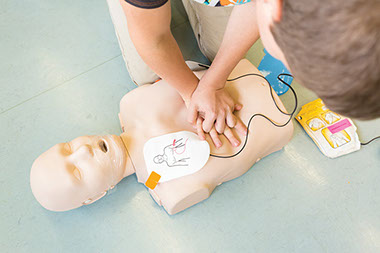
    Person training to use an AED.

    Automated external defibrillators help a person who is in cardiac arrest. They can deliver an electric shock to help get the heart beating normally again.

    You may have seen AEDs at places like stores, malls, hotels or gyms. Many public places have them and they are usually mounted on a wall.

    What is cardiac arrest?

    Cardiac arrest and a heart attack are not the same thing.

    In a heart attack, a blockage stops blood flow to the heart. But with cardiac arrest, the heart’s electrical rhythm isn’t working properly. The heart stops pumping, or is “arrested.” A heart attack can cause cardiac arrest.

    Why should I learn to use an AED?

    Sudden cardiac arrest is a major cause of death. An AED is the only way to restore a person’s heart rhythm during cardiac arrest. Knowing how to do cardiopulmonary resuscitation (CPR) is also helpful.

    You still need to call 911 if someone is in cardiac arrest. But it takes a few minutes for an ambulance to arrive. In those minutes, an AED could be life-saving.

    When to use one

    If a person has cardiac arrest, they will be completely unresponsive. If the person cannot talk or wake up, check to see if they are breathing. If they aren’t breathing and don’t have a pulse, start CPR and ask someone else to get the AED, if possible.

    What to do

    Even if you’re not trained, you can use an AED on someone in cardiac arrest. The machine helps guide you along. Here’s what to do:

    *  Call 911 or have someone else call.

    *  If possible, have someone do chest compressions or CPR while someone else gets the AED ready.

    *  Turn on the AED.

    *  Remove clothes from the person’s chest. Dry their skin with a cloth if needed.

    *  Put the pads on the chest as pictured on the pads.

    *  Do not place AED pads on top of a pace maker.

    *  First, the AED will measure the person’s heart rhythm. Don’t touch the person while this happens.

    *  If the person needs a shock, the AED will tell you.

    *  The AED will tell you when it gives a shock and what to do next. Stand back while it gives a shock through the pads.

    Together, CPR and an AED can save lives.

    Sources: American Heart Association, American Red Cross

    © American Institute for Preventive Medicine

  • What To Do About Varicose Veins

    SELF-CARE CORNER

    Doctor and patient talking.

    Do you have bulging veins on your legs? The veins may be blue, purple or red in color. If so, you may have varicose veins.

    What are varicose veins?

    Your heart is always pumping blood out to your organs. Then, the blood goes back to the heart through the veins. Veins have special valves that push the blood back toward the heart.

    Sometimes these valves stop working correctly. This may happen if valves get weaker over time. Then the blood pools in the vein, unable to move. Blood that is pooling in a vein may cause the bulge or bump of a varicose vein.

    Not just cosmetic

    Some people don’t like the look of varicose veins. But they can also cause other problems. Varicose veins may itch or cause pain, swelling or heaviness in the legs.

    They can also continue to weaken the vein over time. This can cause skin changes like open sores or hard, thick areas of skin.

    Medical options

    Ask your doctor about medical procedures that can help. Options may include:

    *  Lasers that heat the vein and close it off

    *  Injections that seal the vein closed

    *  Surgery to remove the vein if non-invasive options don’t work

    Helping at home

    If varicose veins bother you, there are some things you can do.

    *  First, work toward a healthy weight. Being overweight puts more pressure on the veins.

    *  Be active. Exercise gets your blood pumping. This helps move blood out of the veins.

    *  Ask your doctor about compression stockings. These can help relieve pain and heaviness for some people. These are available at drug stores and online without a prescription if your doctor gives you the okay to wear them.

    *  Put your legs up. When possible, keep your legs up above your heart.

    *  Don’t wear clothes that are very tight around the waist or upper thighs.

    Source: National Heart, Lung and Blood Institute, National Institutes of Health

    © American Institute for Preventive Medicine
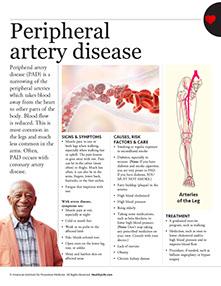
  • Peripheral Artery Disease

    Heart & Circulation Problems

    Peripheral artery disease (PAD) occurs when blood vessels outside of the heart become too narrow to supply enough oxygen to the limbs. Blood flow is reduced. This is most common in the legs and much less common in the arms. Often, PAD occurs with coronary artery disease.

    Signs & Symptoms

    *  Muscle pain in one or both legs when walking, especially when walking fast or uphill. The pain lessens or goes away with rest. Pain can be in the calves (most often) or thighs. Much less often, it can also be in the arms, fingers, lower back, buttocks, or the foot arches.

    *  Fatigue that improves with rest

    With severe disease, symptoms are:

    *  Muscle pain at rest, especially at night

    *  Cold or numb feet

    *  Weak or no pulse in the affected limb

    *  Pale, bluish-colored toes

    *  Open sores on the lower leg, toes, or ankles

    *  Shiny and hairless skin on affected areas

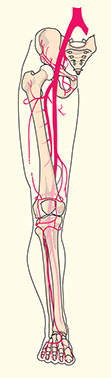
    Illustration of arteries of the leg.

    Arteries of the Leg

    Causes, Risk Factors & Care

    *  Smoking

    *  Diabetes, especially in women. {Note: If you have diabetes and smoke cigarettes, you are very prone to peripheral vascular disease. If you have diabetes, YOU MUST NOT SMOKE.}

    *  Fatty buildup (plaque) in the arteries High cholesterol

    *  High blood pressure

    *  Being elderly

    *  Taking some medications, such as beta- blockers, to lower high blood pressure. {Note: Don’t stop taking any prescribed medicines on your own. Consult with your doctor.}

    *  Agent Orange exposure

    Treatment for peripheral artery disease includes:

    *  A graduated exercise program, such as walking.

    *  Medicines, such as ones to lower cholesterol and/or high blood pressure and to improve blood flow

    *  Surgery, if needed, such as balloon angioplasty or bypass surgery

    Prevention

    *  Don’t smoke. If you smoke, quit.

    *  Do regular exercise.

    *  Get to and/or stay at a healthy weight.

    *  Follow a diet low in saturated fat and cholesterol.

    Self-Care

    *  Follow measures under “Prevention” in this topic.

    *  Follow a graduated walking program as advised by your doctor.

    *  Take medicines as prescribed.

    *  Take good care of your feet:

    – Check the feet daily.

    – Don’t walk barefoot.

    – Wear comfortable, roomy shoes. Avoid sandals and high heels.

    – Cut toenails straight across. Do not cut nails close to the skin.

    – Use an antifungal foot powder to avoid athlete’s foot.

    When to Seek Medical Care

    Contact Doctor When:

    *  You have any pain, redness, or a leg or foot wound and you have a history of diabetes or peripheral vascular disease.

    *  The pain, redness, and swelling extend up the ankle to the leg.

    *  The skin of your foot has turned grayish to black in color.

    *  Repeated muscle pain occurs in a leg when you walk and it goes away with rest.

    *  Leg pain occurs when you are at rest.

    Get Immediate Care When:

    You have all of these problems:

    *  Sudden onset of pain

    *  Rapid skin color changes: white, red, blue, grayish, or black

    *  You cannot feel sensation in your foot for the first time.

    Health at Home Lifetime book by the American Institute for Preventive Medicine. www.HealthyLife.com. All rights reserved.

    © American Institute for Preventive Medicine
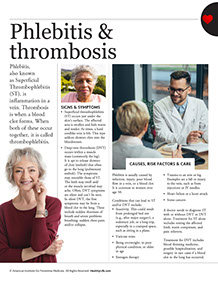
  • Phlebitis & Thrombosis

    Heart & Circulation Problems

    Phlebitis is inflammation in a vein. Thrombosis is when a blood clot forms. When both of these occur together, it is called thrombophlebitis.

    Signs & Symptoms

    *  Superficial phlebitis (SP) occurs just under the skin’s surface. The affected area is swollen and feels warm and tender. At times, a hard ropy vein is felt. This type seldom showers clots into the bloodstream.

    *  Deep-vein thrombosis (DVT) occurs within a muscle mass (commonly the leg). It is apt to release showers of clots (emboli) that often go to the lung (pulmonary emboli). The symptoms may resemble those of SP; the limb may swell and/or the muscle involved may ache. Often, DVT symptoms are silent and can’t be seen. In silent DVT, the first symptoms may be from a blood clot to the lung. These include sudden shortness of breath and severe problems breathing; sudden chest pain; and/or collapse.

    Causes, Risk Factors & Care

    Phlebitis is usually caused by infection, injury, or poor blood flow in a vein. It is common in women over age 50. Conditions that can lead to SP and/or DVT include:

    *  Inactivity. This could result from prolonged bed rest, a sedentary job, or a long trip, especially in a cramped space, such as sitting in the economy class section of a plane.

    *  Varicose veins

    *  Being overweight, in poor physical condition, or older in age

    *  Estrogen therapy

    *  Trauma to an arm or leg. Examples are a fall or injury to the vein, such as from injections or IV needles.

    *  Heart failure or a heart attack

    *  Some cancers

    A doctor needs to diagnose SP with or without DVT or DVT alone. Treatment for SP alone includes resting the affected limb, warm compresses, and pain relievers.

    Treatment for DVT includes blood thinning medicine, possible hospitalization, and surgery if a blood clot to the lung has occurred.

    Prevention

    *  Avoid sitting or standing for long periods without moving around.

    *  Inform your doctor if you have a history of varicose veins, superficial phlebitis (SP), or deep-vein thrombosis (DVT) and take estrogen.

    *  Don’t sit with your legs crossed. Don’t wear tight garments below the waist, such as knee-high hosiery.

    *  On trips, drink a lot of fluids (no alcohol) and move about at least every hour. While sitting, exercise the legs.

    *  If you’re confined to a bed or a chair, stretch often. Push with the feet, pretending you’re pressing on a gas pedal and then release it. Do this with one foot, then the other.

    *  Avoid tobacco.

    Self-Care

    It is best to let your doctor diagnose if you have phlebitis or thrombosis. If SP is diagnosed, you may be told to follow these self-care measures:

    *  Wear elastic support stockings as prescribed by your doctor.

    *  Rest the affected limb as advised. Elevate it when you rest.

    *  Apply moist, warm compresses to the area of pain.

    *  Take an over-the-counter medicine for pain and inflammation. Take the one your doctor advises.

    *  Don’t massage or rub the limb.

    *  Don’t sit or stand for long periods of time. When you sit, elevate the limb. Continue with your regular activities, though, as much as you can.

    *  Follow “Prevention” measures in this topic.

    When to Seek Medical Care

    Contact Doctor When:

    You have 1 or more of these problems:

    *  Redness, pain, and a burning feeling in the leg

    *  Swelling and the feeling of a cordlike vein beneath the skin along the length of the vein

    Get Immediate Care When:

    *  You have symptoms of a blood clot to the lung:

    –  Sudden onset of chest pain with calf pain

    –  Sudden shortness of breath and severe problems breathing

    –  Rapid heartbeat

    –  Cough with bloody sputum (sometimes)

    –  Chest pain in a person who has had a recent operation or illness that has kept them in bed

    *  You have symptoms of deep-vein thrombosis (DVT):

    –  Swelling and warmth in the leg

    –  Pain in the ankle, calf, or thigh that does not go away with rest

    –  The affected skin area is red and tender.

    Health at Home Lifetime book by the American Institute for Preventive Medicine. www.HealthyLife.com. All rights reserved.

    © American Institute for Preventive Medicine