Tag: Substance Use & Abuse

  • Drink Responsibly

    Substance Use & Abuse

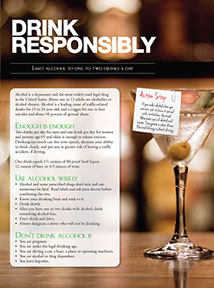
    Limit alcohol to one to two drinks a day.

    Alcohol is a depressant and the most widely used legal drug in the United States. About one in 13 adults are alcoholics or alcohol abusers. Alcohol is a leading cause of traffic-related deaths for 15 to 24 year olds and a trigger for one in four suicides and about 50 percent of spousal abuse.

    Enough is enough.

    Two drinks per day for men and one drink per day for women and persons age 65 and older is enough to release tension. Drinking too much can slur your speech, decrease your ability to think clearly, and put you at greater risk of having a traffic accident, if driving.

    One drink equals 1-1/2 ounces of 80-proof hard liquor, 12 ounces of beer, or 4-5 ounces of wine.

    Use alcohol wisely:

    *  Alcohol and some prescribed drugs don’t mix and can sometimes be fatal. Read labels and ask your doctor before combining the two.

    *  Know your drinking limit and stick to it.

    *  Drink slowly.

    *  After you have one to two drinks with alcohol, drink something alcohol-free.

    *  Don’t drink and drive.

    *  Always designate a driver who will not be drinking.

    Don’t drink alcohol if:

    *  You are pregnant.

    *  You are under the legal drinking age.

    *  You are driving a car, a boat, a plane or operating machines.

    *  You are alcohol or drug dependent.

    *  You have hepatitis.

    Action Step

    If you order alcohol when you eat out, ask to have it served with, not before, the meal. Alternate sips of alcohol and water. Designate a sober driver. Buzzed driving is drunk driving.
    Page from Ways to Well-Being book by the American Institute for Preventive Medicine. www.HealthyLife.com. All rights reserved.

    © American Institute for Preventive Medicine
  • Driving Yourself To Drink

    Substance Use & Abuse

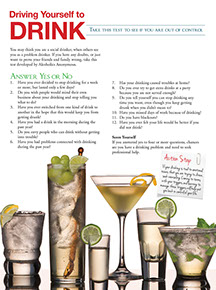
    Take this test to see if you are out of control.

    You may think you are a social drinker, when others see you as a problem drinker. If you have any doubts, or just want to prove your friends and family wrong, take this test developed by Alcoholics Anonymous.

    Answer Yes or No:

    1.  Have you ever decided to stop drinking for a week or more, but lasted only a few days?

    2.  Do you wish people would mind their own business about your drinking and stop telling you what to do?

    3.  Have you ever switched from one kind of drink to another in the hope that this would keep you from getting drunk?

    4.  Have you had a drink in the morning during the past year?

    5.  Do you envy people who can drink without getting into trouble?

    6.  Have you had problems connected with drinking during the past year?

    7.  Has your drinking caused troubles at home?

    8.  Do you ever try to get extra drinks at a party because you are not served enough?

    9.  Do you tell yourself you can stop drinking any time you want, even though you keep getting drunk when you didn’t mean to?

    10. Have you missed days of work because of drinking?

    11. Do you have blackouts?

    12. Have you ever felt your life would be better if you did not drink?

    Score Yourself: If you answered yes to four or more questions, chances are you have a drinking problem and need to seek professional help.

    Action Step

    If your drinking is tied to emotional issues that you are trying to drown, seek counseling. Coming to terms with your triggers and learning to manage those triggers will help put you back in control of your life.

    Page from Ways to Well-Being book by the American Institute for Preventive Medicine. www.HealthyLife.com. All rights reserved.

    © American Institute for Preventive Medicine
  • Drug Addiction Triggers

    Substance Use & Abuse

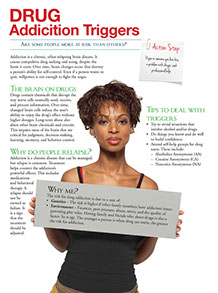
    Are some people more at risk than others?

    Addiction is a chronic, often relapsing brain disease. It causes compulsive drug seeking and using, despite the harm it costs. Over time, brain changes occur that destroy a person’s ability for self-control. Even if a person wants to quit, willpower is not enough to fight the urges.

    The brain on drugs

    Drugs contain chemicals that disrupt the way nerve cells normally send, receive, and process information. Over time, changed brain cells reduce the user’s ability to enjoy the drug’s effect without higher dosages. Long-term abuse also alters other brain chemicals and circuits. This impairs areas of the brain that are critical for judgment, decision-making, learning, memory, and behavior control.

    Why do people relapse?

    Addiction is a chronic disease that can be managed, but relapse is common. Treatment helps counter the addiction’s powerful effects. This includes medications and behavioral therapy. A relapse should not be viewed as failure. It is a sign that the treatment should be adjusted.

    Why me?

    The risk for drug addiction is due to a mix of:

    *  Genetics – The risk is higher if other family members have addiction issues.

    *  Environment – Finances, peer pressure, abuse, stress, and the quality of parenting play roles. Having family and friends who abuse drugs is also a factor. So is age. The younger a person is when drug use starts, the greater the risk for addiction.

    Tips to deal with triggers:

    *  Try to avoid situations that involve alcohol and/or drugs.

    *  Do things you know and do well to build confidence.

    *  Attend self-help groups for drug users. These include:

    – Alcoholics Anonymous (AA)

    – Cocaine Anonymous (CA)

    – Narcotics Anonymous (NA)

    Action Step

    If you or someone you love has a problem with drugs, seek professional help.

    Page from Ways to Well-Being book by the American Institute for Preventive Medicine. www.HealthyLife.com. All rights reserved.

    © American Institute for Preventive Medicine

  • Face Up To Your Drinking Habits

    Substance Use & Abuse

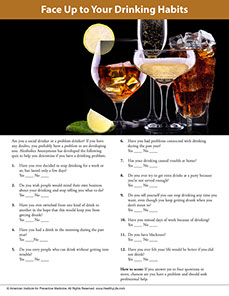
    Are you a social drinker or a problem drinker? If you have any doubts, you probably have a problem or are developing one. Alcoholics Anonymous has developed the following quiz to help you determine if you have a drinking problem.

    1.  Have you ever decided to stop drinking for a week or so, but lasted only a few days?  Yes ____ No ____

    2.  Do you wish people would mind their own business about your drinking and stop telling you what to do?  Yes ____ No ____

    3.  Have you ever switched from one kind of drink to another in the hope that this would keep you from getting drunk?  Yes ____ No ____

    4.  Have you had a drink in the morning during the past year?  Yes ____No ____

    5.  Do you envy people who can drink without getting into trouble?  Yes ____ No ____

    6.  Had problems connected with drinking during the past year?  Yes ____ No ____

    7.  Has your drinking caused trouble at home?  Yes ____ No ____

    8.  Do you ever try to get extra drinks at a party because you’re not served enough?

    Yes ____      No ____

    9.  Do you tell yourself you can stop drinking any time you want, even though you keep getting drunk when you don’t mean to?  Yes ____ No ____

    10. Have you missed days of work because of drinking?  Yes ____ No ____

    11. Do you have blackouts?  Yes ____ No ____

    12. Have you ever felt your life would be better if you did not drink?  Yes ____ No ____

    How to score: If you answer yes to four questions or more, chances are you have a problem and should seek professional help.

    Page from A Year of Health Hints book by the American Institute for Preventive Medicine. www.HealthyLife.com. All rights reserved.

    © American Institute for Preventive Medicine
  • Limit Alcohol

    Healthylife® Weigh

    Part 3

    Glass of wine for 2 at dinner.

    Alcoholic beverages provide calories with little or no nutrients. Alcohol can damage your heart, liver, brain, and other body systems. It can cause high blood pressure and increases your risk for some cancers. Drinking can also decrease your immunity, making it harder for your body to fight disease.

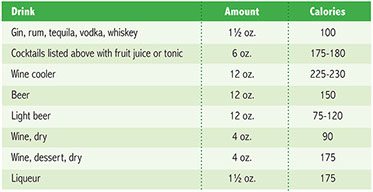
    Chart showing alcoholic drink, calories per amount.

    Effects of Alcohol on Weight Management

    *  It stimulates the appetite.

    *  It can make it harder to keep track of how much you’ve eaten.

    *  It can cause a drop in blood sugar. This can make you tired and less able to concentrate. It can also cause you to crave something sweet.

    If you drink alcohol, do so wisely.

    *  Don’t drink and drive. Designate a driver who will not be drinking. Volunteer to stay sober.

    *  Drink slowly. You will probably drink less.

    *  Drink alcohol with a meal. Food slows alcohol absorption.

    *  Drink a full glass of water between each alcoholic drink.

    © American Institute for Preventive Medicine

  • Alcohol Increases Risk For Breast Cancer

    SELF-CARE CORNER

    Image of middle-aged women smiling wearing a pink blazer.

    Breast cancer is the second leading cause of cancer death for women in the United States, after lung cancer. Dr. Erica Mayer, a breast cancer expert at Dana-Farber Cancer Institute, says there are at least 5 simple ways women can reduce their risk of getting the disease:

    1.Limit alcohol.Research has shown having too much alcohol can increase your risk of breast cancer. If you choose to drink alcohol-including beer, wine, or liquor-limit yourself to no more than one half to one drink a day on average.

    2.Get a mammogram.Many health organizations advise women to get regular mammograms starting at age 40. “Mammography screening does not prevent or cure breast cancer, but it may detect the disease before symptoms occur,” said Dr. Mayer.

    3.Eat a healthy diet and keep your weight under control.The American Cancer Society recommends a diet rich in vegetables, fruits, whole grains, and fiber. “High-fat diets can lead to being overweight or obese, which is a risk factor for breast cancer,” said Dr. Mayer.

    4.Exercise.There’s growing evidence that physical activity reduces a woman’s breast cancer risk.

    5.Determine if you have family history of breast cancer and be vigilant to early detection.Twenty to 30% of people who develop breast cancer have a family history of the disease. About 5 to 10% of women carry a BRCA1 or BRCA 2 mutation, the so called “breast cancer genes.”

    © American Institute for Preventive Medicine
  • The Buzz About Alcohol

    WELL-BEING

    Image of lemon water.

    Drinking at social events or bars and the ease that a little buzz provides make it hard to limit yourself when friends gather around a pitcher of beer. Dennis Donovan, director of the Alcohol and Drug Abuse Institute at the University of Washington, has advice for how to drink moderately-or not at all.

    *Count your drinks.In many cases, people lose track of how much they’ve had. This is especially true when sharing a pitcher of beer and someone refills the glass.

    *Know a standard serving size.Large wine glasses, higher alcohol content in some beers, and generous liquor pours in mixed drinks make the “I only had one!” claim questionable.

    *One drink, one hour.Most people’s bodies can process about one drink per hour. Pace yourself to one drink an hour or so, and every hour or two you might take a drink “off” and have water or another non-alcoholic beverage instead. Also, make sure to eat.

    *Ginger ale looks like a cocktail.Teetotalers not wanting to attract attention or questions can stick to ginger ale or other non-alcoholic drinks that look like cocktails.

    *Say no.Firmly, confidently turn down drinks and become resistant to social pressure and arm-twisting. Practice saying: “No, I’ve reached my limit” or “I’m not drinking tonight.”

    © American Institute for Preventive Medicine
  • Wine Confusion: Healthy Or Not?

    MEDICAL NEWS

    Image of a wine bottle with 2 glasses of wine and grapes.

    Wine has been making the headlines in recent months as a “healthy” choice. Some studies suggest the compounds and antioxidants in wine can reduce your risk of heart disease, cancer, and more.

    This can be confusing if you’ve been told that alcohol isn’t good for you. Should you drink wine to get healthier, or skip it?

    There is no perfect answer for everyone. It’s important to note that these studies are promising, but they’re not enough to say that wine is a healthy choice. Many of these studies were done in labs, on mice, or were done with supplements instead of real wine. And for some, the possible benefits of wine wouldn’t be worth the risk. Wine is also high in calories and sugar. This can add to obesity and affect blood sugar, especially in diabetics. In addition, wine and alcohol can interact with certain medicines.

    Many people can enjoy alcohol in  small amounts without problems. But if you have a history of alcoholism or your doctor has told you not to drink, you should not drink wine or any alcoholic beverage.

    The Centers for Disease Control and Prevention (CDC) says that drinking too much alcohol, even wine, can harm your health. So if you decide to drink, be sure you do it in moderation.

    So what is “moderation”? According to the Dietary Guidelines for Americans, moderation is up to one drink per day for women and up to two drinks per day for men-and only by adults of legal drinking age.

    The bottom line:

    If you already have a drink once in a while, switching to red wine may be healthier than other choices such as beer or spirits. But the health benefits of red wine are not fully understood. So, experts do not recommend it as a daily drink for everyone.

    © American Institute for Preventive Medicine