Tag: success

  • Setting Doable Goals For A Healthy Diet

    HEALTHY EATING

    A variety of vegetables.

    When you’re trying to eat healthier, it helps to have goals. If you have clear goals for yourself, it’s easier to stick to your plan. Goals give you specific things to try for each day.

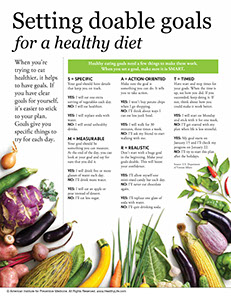
    Healthy eating goals need a few things to make them work. When you set a goal, make sure it is SMART.

    S = Specific

    Your goal should have details that keep you on track.

    Yes: I will eat one extra serving of vegetables each day.

    No: I will eat healthier.

    Yes: I will replace soda with water.

    No: I will avoid unhealthy drinks.

    M = Measurable

    Your goal should be something you can measure. At the end of the day, you can look at your goal and say for sure that you did it.

    Yes: I will drink five or more glasses of water each day.

    No: I’ll drink more water.

    Yes: I will eat an apple or pear instead of dessert.

    No: I’ll eat less sugar.

    A = Action-oriented

    Make sure the goal is something you can do. It tells you to take action.

    Yes: I won’t buy potato chips when I go shopping.

    No: I’ll think about ways I can eat less junk food.

    Yes: I will walk for 30 minutes, three times a week.

    No: I’ll ask my friend to start walking with me.

    R = Realistic

    Don’t start with a huge goal in the beginning. Make your goals doable. This will boost your confidence.

    Yes: I’ll allow myself one mini-sized candy bar each day.

    No: I’ll never eat chocolate again.

    Yes: I’ll replace one glass of soda with water.

    No: I’ll quit drinking soda.

    T = Timed

    Have start and stop times for your goals. When the time is up, see how you did. If you succeeded, keep doing it. If not, think about how you could make it work better.

    Yes: I will start on Monday and stick with it for one week.

    No: I’ll get started with my plan when life is less stressful.

    Yes: My goal starts on January 15 and I’ll check my progress on January 22.

    No: I’ll try to start this plan after the holidays.

    Source: U.S. Department of Veteran Affairs
    © American Institute for Preventive Medicine

  • Step-By-Step

    Weight Control

    Walk off extra weight and improve health problems.

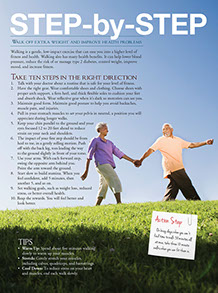
    Walking is a gentle, low-impact exercise that can ease you into a higher level of fitness and health. Walking also has many health benefits. It can help lower blood pressure, reduce the risk of or manage type 2 diabetes, control weight, improve mood, and increase fitness.

    Take ten steps in the right direction:

    1.  Talk with your doctor about a routine that is safe for your level of fitness.

    2.  Have the right gear. Wear comfortable shoes and clothing. Choose shoes with proper arch support, a firm heel, and thick flexible soles to cushion your feet and absorb shock. Wear reflective gear when it’s dark so motorists can see you.

    3.  Maintain good form. Maintain good posture to help you avoid backaches, muscle pain, and injuries.

    4.  Pull in your stomach muscles to set your pelvis in neutral, a position you will appreciate during longer walks.

    5.  Keep your chin parallel to the ground and your eyes focused 12 to 20 feet ahead to reduce strain on your neck and shoulders.

    6.  The impact of your first step should be from heel to toe, in a gently rolling motion. Push off with the back leg, toes leading the way to the ground slightly in front of your torso.

    7.  Use your arms. With each forward step, swing the opposite arm behind you. Point the arm toward the ground.

    8.  Start slow to build stamina. When you feel confident, add 5 minutes, then another 5, and so on.

    9.  Set walking goals, such as weight loss, reduced stress, or better overall health.

    10. Reap the rewards. You will feel better and look better.

    Tips

    *  Warm Up: Spend about five minutes walking slowly to warm up your muscles.

    *  Stretch: Gently stretch your muscles, including calves, quadriceps, and hamstrings.

    *  Cool Down: To reduce stress on your heart and muscles, end each walk slowly.

    Action Step

    On busy days when you can’t find time to walk 30 minutes all at once, take three 10-minute walks when you can fit them in.

    Page from Ways to Well-Being book by the American Institute for Preventive Medicine. www.HealthyLife.com. All rights reserved.

    © American Institute for Preventive Medicine

  • Keep Track

    Healthylife® QuitWell™

    Part 3

    Man typing on his phone.

    Use a notebook, or a note in your phone. You can also find a sample scorecard at the end of this program.

    Each time that you use tobacco or nicotine, mark down the time. If you have space to write more, jot down the trigger or what you were doing right beforehand. At the end of each day, add up your total for the day.

    Do this for a few days to get an average. You many not use the same amount every day. Get your average for working days and days you have off. You will likely have different tobacco habits.

    © American Institute for Preventive Medicine
  • Be Patient With Exercise Results

    BE FIT

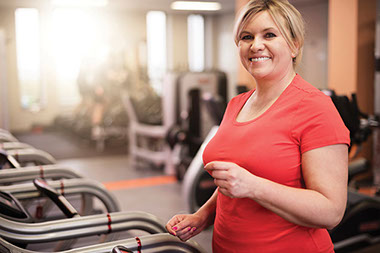
    Image of women using treadmill at a gym.

    Getting started with an exercise plan is a big step toward a healthier life. But, sticking with that exercise program can be tough when you’re not seeing results as quickly as you want. When many exercise plans promise fast, dramatic results, being patient can be frustrating.

    Some people may find that they work hard but aren’t seeing weight loss or feel like they aren’t getting as fit as they want. This can lead to exercise burnout and quitting. Don’t give up! Find ways to push through the tough times. If you keep it up, the benefits of exercise are worth the effort.

    Tip #1: Step off the scale.

    Although you may be losing some weight with exercise, it’s not always obvious right away. This can happen when someone gains muscle, which weighs more than fat. Instead of worrying about a number, look at how your clothes are fitting or how you are feeling overall. Weigh yourself once a week to check in, but don’t let it be the only way you are measuring your progress.

    Tip #2: Don’t compare.

    People gain and lose weight in different ways and at different rates. A friend may drop pounds or get fit faster than you. That can be upsetting if you’re working hard. Try not to worry about how much progress someone else has made. Focus on yourself and what you have accomplished each day.

    Tip #3: Track progress.

    Use a notebook or an app on your phone to record your positive changes, no matter how small. Perhaps you did two more pushups, or walked for 10 extra minutes. Maybe you felt more energy than usual today. Whatever it is, record it so you can go back and see all of the ways exercise is boosting your health.

    Tip #4: Be mindful of your diet.

    Exercise can increase your hunger. It can be easy to overeat after a workout and consume more calories than you burned. Prepare a healthy snack before you work out, such as a banana with peanut butter or yogurt and fresh fruit. Having something ready can reduce the chances of grabbing something quick but unhealthy.

    You may not see “instant” results from exercise. But, believe that you are doing something great for your body. With time, you will improve your health and well-being.

    © American Institute for Preventive Medicine
  • Secrets To A Successful Life

    WELL-BEING

    Image of older man smiling.

    What do America’s elder citizens say about living a happy, healthy, and successful life? A Cornell University professor, Karl Pillemer, asked hundreds of seniors and gives their advice in his book 30 Lessons for Living: Tried and True Advice from the Wisest Americans.

    *Take risks to avoid regret.People in their 70s, 80s, 90s, and beyond endorse taking risks when you’re young, contrary to a stereotype that elders are conservative. They say that you are much more likely to regret what you didn’t do than what you did. Say yes to opportunities.

    *Make the most of a bad job.Pillemer said, “Remember that many of these folks who grew up in the Great Depression had bad jobs early on-in fact, their bad jobs make our bad jobs look like good jobs! They found, however, that they learned invaluable lessons from these less-than-ideal work situations. You can learn how the industry works, about communicating with other employees, and about customer service.

    *Choose excitement over money.Choose a career for its basic value rather than how much money you will make. Our elders are keenly aware of how short life is, and they think it’s a mistake to waste precious time in work you don’t like. According to our elders, you need to be able to get up in the morning excited about work, so choose your career with that in mind.

    *Regrets?Embrace travel, especially when you are young.

    © American Institute for Preventive Medicine