Tag: sunscreen

  • Plan For Summer Safety

    Home Safety

    Group of friends, holding sparklers around a picnic table.

    *  Use a broad-spectrum sunscreen with a sun protection factor (SPF) of 30 or higher.

    *  Wear sunglasses that block both UVA and UVB rays.

    *  Learn to swim and teach your children how to swim.

    * Check the depth of the water before diving into a pool. Don’t dive into water that is less than 9 feet deep. Never dive into an above-ground pool.

    Dos

    *  Watch a professional fireworks display in person or on TV.

    *  Wear and have children wear a personal flotation device when you are on a boat, water ski, etc.

    Don’ts

    *  Don’t play with fireworks or let your children play with fireworks.

    *  NEVER leave a child alone near a pool or water, not even for a few seconds.

    A Year of Health Hints book by the American Institute for Preventive Medicine. www.HealthyLife.com. All rights reserved.

    © American Institute for Preventive Medicine

  • How To Care For Mature Skin

    Mature Health: Over Age 50

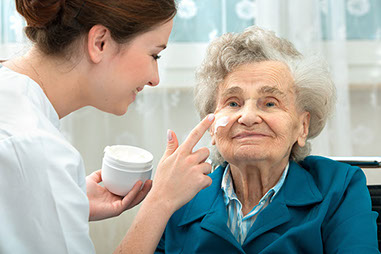
    Image of a caregiver placing cream on a mature women's face.

    As your skin ages, the sebaceous glands produce less oil, and the skin loses elasticity. The result is dry, wrinkled skin-unless you take steps to prevent (or minimize) those effects. Here’s what to do to stay one step ahead of Mother Nature.

    *  Shower or bathe with a mild soap or transparent glycerin soaps to prevent dry, flaky skin. Don’t use deodorant soaps on your face-they’re too harsh for sensitive facial skin.

    *  Avoid alcohol-based astringents, toners, or after-shave lotions, which dry the skin.

    *  Apply a moisturizing lotion immediately after showering or bathing. (Dry skin makes wrinkles more noticeable, so using a moisturizer makes wrinkles less noticeable.)

    *  Use a room or furnace humidifier during the winter months, to further prevent dry skin.

    *  When washing dishes or working with strong detergents, protect your hands with rubber gloves.

    *  Apply sunscreen lotion with a sun protection factor (SPF) of 15 or higher whenever you go outdoors.

    If you’re thinking about having a face lift, chemical peel, or collagen injection for wrinkles, contact your local medical society for the names of board-certified surgeons or dermatologists with experience in the procedure you’re considering.

    A Year of Health Hints book by the American Institute for Preventive Medicine. www.HealthyLife.com. All rights reserved.

    © American Institute for Preventive Medicine

  • Skin Cancer

    Skin Conditions

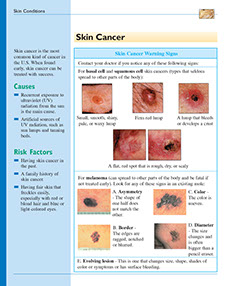
    Skin cancer is the most common kind of cancer in the U.S. When found early, skin cancer can be treated with success.

    Skin Cancer Warning Signs

    Contact your doctor if you notice any of these following signs:

    For basal cell and squamous cell skin cancers (types that seldom spread to other parts of the body):

    Small, smooth, shiny, pale, or waxy lump

    Firm red lump

    A lump that bleeds or develops a crust

    A flat, red spot that is rough, dry, or scaly

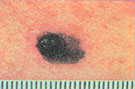
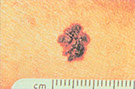
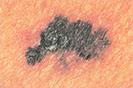
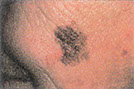
    For melanoma (can spread to other parts of the body and be fatal if not treated early). Look for any of these signs in an existing mole:

    A. Asymmetry – The shape of one half does not match the other.

    B. Border – The edges are ragged, notched or blurred.

    C. Color – The color is uneven.

    D. Diameter – The size changes and is often bigger than a pencil eraser.

    E. Evolving lesion – This is one that changes size, shape, shades of color or symptoms or has surface bleeding.

    Causes

    *  Recurrent exposure to ultraviolet (UV) radiation from the sun is the main cause.

    *  Artificial sources of UV radiation, such as sun lamps and tanning beds.

    Risk Factors

    *  Having skin cancer in the past.

    *  A family history of skin cancer.

    *  Having fair skin that freckles easily, especially with red or blond hair and blue or light-colored eyes.

    Treatment

    Depending on the size, type, and stage of the cancer, treatment includes:

    *  Surgery. There are many types.

    *  Chemotherapy. One form is a cream or lotion with anticancer drugs that is applied to the skin. Other forms are given through an IV.

    *  Radiation therapy. n Interferon drugs.

    *  Skin grafting.

    Questions to Ask

    Self-Care / Prevention

    Start prevention in childhood to protect against skin cancer later in life.

    *  Limit time in the sun, especially between 10 a.m. and 4 p.m.

    *  Use a broad-spectrum sunscreen with a sun protection factor (SPF) of 15 or higher as directed.

    *  Reapply sunscreen at least every 2 hours, more often if you’re sweating or going in and out of the water.

    *  Cover skin exposed to the sun, such as long-sleeved tops, pants, sunglasses, and wide-brimmed hats.

    *  Avoid sun lamps and tanning beds.

    Skin Self-Exam

    *  Do a skin self-exam monthly. The best time to do this is after a shower or bath. To check your skin, use a well- lit room, a full-length mirror, and a hand-held mirror.

    *  Locate your birthmarks, moles, and blemishes. Know what they look like. Check for a sore that does not heal.

    *  Check all areas.

    1.  Look at the front and back of your body in the mirror. Then, raise your arms and look at the left and right sides.

    2.  Bend your elbows and look carefully at the palms of your hands. Make sure to look at both sides of your forearms and upper arms.

    3. Look at the back and front of the legs. Look between the buttocks and around the genital area.

    4.  Look at your face, neck, and scalp. Use a comb or blow dryer to move hair so that you can see the scalp better.

    5.  Sit and closely examine the feet. Look at the soles and the spaces between the toes.

    {Note: Get a skin exam from your doctor or health care provider as often as advised.}

    Resources

    National Cancer Institute

    800.4.CANCER (422.6237)

    www.cancer.gov

    Healthier at Home book by the American Institute for Preventive Medicine. www.HealthyLife.com. All rights reserved.

    © American Institute for Preventive Medicine

  • Skin Safety

    Skin Conditions

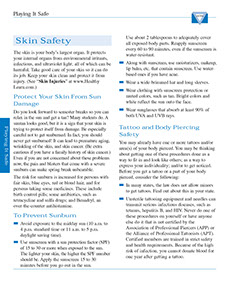
    The skin is your body’s largest organ. It protects your internal organs from environmental irritants, infections, and ultraviolet light; all of which can be harmful. Take good care of your skin so it can do its job. Keep your skin clean and protect it from injury.

    Tattoo and Body Piercing Safety

    You may already have one or more tattoos and/or area(s) of your body pierced. You may be thinking about getting one of these procedures done as a way to fit in and look like others; as a way to express your individuality; and/or to get noticed. Before you get a tattoo or a part of your body pierced, consider the following:

    *  In many states, the law does not allow minors to get tattoos. Find out about this in your state.

    *  Unsterile tattooing equipment and needles can transmit serious infectious diseases, such as tetanus, hepatitis B, and HIV. Never do one of these procedures on yourself or have anyone else do it that is not certified by the Association of Professional Piercers (APP) or the Alliance of Professional Tattooists (APT). Certified members are trained in strict safety and health requirements. Because of the high risk of infection, you cannot donate blood for one year after getting a tattoo.

    *  Tattoos and body piercings also carry the risk of less serious local infections. You will need to follow proper care procedures for weeks or months after the procedure to reduce the risk of getting an infection. You may also get large growths of scar tissues called keloids.

    *  Tattoos are not easily removed and in some cases may cause permanent discoloration. Keep a record of the dyes used in the tattoo you get. This includes the lot number of each pigment. If you choose to get a tattoo removed in the future, this information will be helpful. Think carefully before getting a tattoo and consider the possibility of an allergic reaction. Know that it is expensive, too, to get a tattoo removed. Don’t get a tattoo or body piercing done on an impulse. Wait at least 24 hours.

    *  Visit several tattoo parlors to see whether the tattooist follows recommended safety guidelines and sterilization techniques, such as using a heat sterilization machine regulated by the Food and Drug Administration (FDA).

    *  For body piercing, to avoid allergic reactions and infections, jewelry made from non- corrosive, non-toxic metals should be used. Examples are solid 14K gold (not gold-plated), niobium, surgical stainless steel, and titanium.

    *  After the procedure, follow the skin care guidelines provided by your skin piercer or tattooist. Care of the site will depend on its location and/or the procedure you had done.

    *  According to the APT guidelines, these practices should be followed:

    – The tattooist should have an autoclave (a heat sterilization machine regulated by the FDA) on the premises.

    – Consent forms (which the customer must sign) should be handed out before tattooing.

    – Immediately before tattooing, the tattooist should wash and dry his or her hands thoroughly and put on medical latex gloves, which should be worn at all times during application of the tattoo.

    – Needle bars and tubes should be autoclaved after each customer. Non-autoclavable surfaces, such as pigment bottles, drawer pulls, chairs, tables, sinks, and the immediate floor area, should be cleaned with a disinfectant, such as a bleach solution.

    – Used absorbent tissues should be placed in a special puncture-resistant, leak-proof container for disposal.

    Protect Your Skin From Sun Damage

    Do you look forward to semester breaks so you can relax in the sun and get a tan? Many students do. A suntan looks good, but it is a sign that your skin is trying to protect itself from damage. Be especially careful not to get sunburned. In fact, you should never get sunburned! It can lead to premature aging, wrinkling of the skin, and skin cancer. (Be extra cautious if you have a family history of skin cancer.) Even if you are not concerned about these problems now, the pain and blisters that come with a severe sunburn can make spring break unbearable.

    The risk for sunburn is increased for persons with fair skin, blue eyes, red or blond hair, and for persons taking some medicines. These include birth control pills; some antibiotics, such as tetracycline and sulfa drugs; and Benadryl, an over-the-counter antihistamine.

    To Prevent Sunburn

    *  Avoid exposure to the midday sun (10 a.m. to 4 p.m. standard time or 11 a.m. to 5 p.m. daylight saving time).

    *  Use sunscreen with a sun protection factor (SPF) of 15 to 30 or more when exposed to the sun. The lighter your skin, the higher the SPF number should be. Apply the sunscreen 15 to 30 minutes before you go out in the sun. Use about 2 tablespoons to adequately cover all exposed body parts. Reapply sunscreen every 60 to 90 minutes, even if the sunscreen is water-resistant.

    *  Along with sunscreen, use moisturizers, makeup, lip balm, etc. that contain sunscreen. Use water- based ones if you have acne.

    *  Wear a wide-brimmed hat and long sleeves.

    *  Wear clothing with sunscreen protection or muted colors, such as tan. Bright colors and white reflect the sun onto the face.

    *  Wear sunglasses that absorb at least 90% of both UVA and UVB rays.

    Student Self-Care book by the American Institute for Preventive Medicine. www.HealthyLife.com. All rights reserved.

    © American Institute for Preventive Medicine

  • Decoding Sunscreen Labels

    MEDICAL NEWS

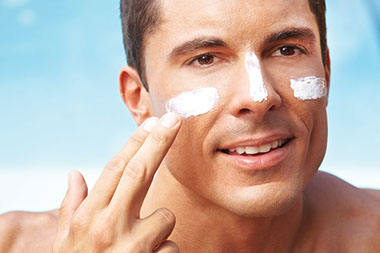
    Image of a man placing sunscreen on his face.

    You may already know you should wear sunscreen to decrease your risk of skin cancer and sun damage. In fact, the Skin Cancer Foundation says that wearing sunscreen regularly can decrease your chance of getting melanoma (the deadliest skin cancer) by 50 percent. Wearing sunscreen regularly will also help you avoid signs of aging like wrinkles and dark spots.

    But the sunscreen aisle at the store leaves many people feeling overwhelmed. There are so many choices, different labels, numbers and ingredients. How do you choose one?

    The best sunscreen is one you like, because you should use it every day, says the American Academy of Dermatology (AAD). Here’s how to narrow it down and choose the sunscreen that’s right for you:

    BROAD SPECTRUM

    Always look for the words “broad spectrum.” This means it protects against both kinds of UV rays, and it’s important for proper protection.

    SPF

    Choose an SPF of at least 30.

    SPF NUMBERS

    Don’t let high numbers fool you. The Skin Cancer Foundation says higher SPF sunscreens do protect more, but not by much. No matter what the SPF number says, you still need to reapply at least every two hours, and always after toweling off, sweating or swimming.

    WATER RESISTANT

    If you’re going to be sweating or swimming, choose one that says “water resistant.” There is no such thing as “waterproof” sunscreen. The bottle will say how long the sunscreen will remain water resistant. It may say “40 minutes” or “80 minutes.” That’s how often you need to reapply it when you’ve been in the water.

    LIPS

    Choose a sunscreen for your lips too. A lip balm with broad spectrum SPF 30 is also important. Skin cancer can – and does – affect the lips.

    GELS vs CREAMS

    Sunscreen gels are great for oily skin, while creams work well for dry skin.

    SENSITIVE SKIN

    If you have sensitive skin, consider a physical-only sunscreen. This means the active ingredients on the bottle will only include titanium dioxide or zinc oxide, or both. While chemical sunscreens work well, they can irritate some sensitive-skin types.

    PRICE TAG

    Expensive doesn’t always mean better. A higher price tag may be due to the brand name or certain extra ingredients that make it feel nicer or smell good. It doesn’t mean it will protect you more than a cheaper bottle.

    NO COMBINATION

    Don’t choose a combination sunscreen and insect repellant. The AAD says sunscreen should be reapplied liberally every two hours. But insect repellant should only be applied lightly every several hours as needed.

    BABIES

    Most sunscreens are only approved for babies over 6 months of age. Look for a physical-only sunscreen or one formulated for babies. Babies younger than 6 months should be kept in the shade and covered with lightweight protective clothing and hats, says the American Academy of Pediatrics.

    © American Institute for Preventive Medicine

  • Foot Health Tips For Summer

    WELL-BEING

    Image of bare feet on grass.

    When warm weather arrives, many people break out the flip-flops, sandals or forego shoes altogether. But the American College of Foot and Ankle Surgeons says this can be harmful to your feet if you’re not careful.

    Many flip-flops and summer shoes contain little to no support or protection. This increases your chances for foot injuries. They can also aggravate conditions such as plantar fasciitis, bunions, and other painful foot problems.

    You can still enjoy summer and keep your hard-working feet healthy by following these tips:

    *  Don’t go barefoot in public bathrooms. If you have a cut on your foot, it can get infected. You could also get a foot fungus or plantar wart. Use flip-flops in these cases to protect your feet.

    *  If you have diabetes or neuropathy, never go barefoot – even indoors.

    *  Don’t rely on flip-flops for daily wear. Use them in place of going barefoot around the pool, or in public bathrooms. Instead, choose sandals or lightweight shoes that have good arch support and are designed for comfort.

    *  Use sunscreen on the tops and bottoms of your feet any time they are exposed.

    *  Wear closed-toed shoes to mow the lawn or do yard work.

    *  If sandals are rubbing or causing blisters, don’t wear them. Don’t pop blisters. This leaves the foot open to an infection.

    *  Wear proper walking shoes and socks to the airport when traveling for summer vacation. Never try out new shoes on vacation. Pack shoes that you know are comfortable and won’t rub or cause blisters or pain.

    © American Institute for Preventive Medicine

  • Sun Sense

    SELF-CARE CORNER

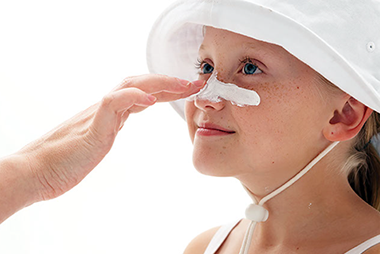
    Image of sunscreen being applied to a kid's face.

    Did you know … the term “sunblock” is no longer used on sunscreen labels because no sunscreen can block all of the sun’s rays? You’ll now see the term “broad spectrum” that indicates a level of protection offered from both UVA and UVB rays.

    Sunscreens really aren’t waterproof either. Apply and reapply at least every 2 hours, but question why you’re out in the sun for that long a period of time anyway.

    Remember, only broad spectrum sunscreens with an SPF value of 15 or higher can claim to reduce the risk of skin cancer and early skin aging, and that’s only if they’re used correctly and with other sun protection measures such as wide-brimmed hats (not baseball caps) and sunglasses.

    Nobody ever applies enough sunscreen. And many people forget about ears, backs of necks, nose, lips, and tops of feet (avoid wearing flip-flops).

    Source: University of Michigan Health System, Loyola University Medical Center

    © American Institute for Preventive Medicine

  • Yes, More Sunscreen!

    SELF-CARE CORNER

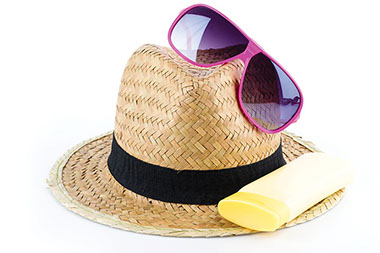
    Image of sun hat, sunglasses and sunscreen.

    Wear it. Wear plenty of it. And this summer is the first season for the new FDA regulations. Here’s what you need to know about labels and ingredients from Dr. Alan Friedman of Montefiore Medical Center.

    Water-resistant

    Sunscreens claiming to be waterproof and sweat proof are no longer on the shelves. In their place are 40- and 80-minute water-resistant sunscreens. They offer sun protection for a limited time when exposed to water. Choose the 80-minute water-resistant product and reapply after swimming or toweling off.

    Sun Protection Factor (SPF)

    Some people think that SPF measures the length of time users can be in the sun before getting sunburned. Not so. SPF defines the amount of ultraviolet B (UVB) radiation needed to cause sunburn, even while sunscreen is on. Sunscreens with SPF 2 through SPF 14 can prevent sunburn, but they provide no protection against skin cancer or premature skin aging. Such sunscreens must now carry a warning label stating, “Spending time in the sun increases your risk of skin cancer and early skin aging. This product has been shown only to help prevent sunburn, not skin cancer or early skin aging.”

    The FDA has yet to rule on whether products with SPF values higher than 50 provide extra protection compared to ones with SPF values of 50.

    For a sunscreen to reach its listed SPF, a full ounce (think of a shot glass full) needs to be applied. Recent research shows that people only apply 20-25% of this amount, unknowingly lowering the protection factor of their sunscreens. Best choice: SPF 30 or higher and plenty of it.

    Broad spectrum

    Until the final FDA requirements took effect, sunscreens were only evaluated and regulated for their ability to protect against UVB radiation, as measured by SPF. Now, sunscreens also are evaluated for their UVA protection. Sunscreens labeled as “broad spectrum” protect against both UVA and UVB radiation.

    “UVA penetrates deeper into the skin where it can accelerate skin aging and cause skin cancer. I call UVA the silent killer, because unlike UVB, it does not cause sunburns so it is hard to tell if you are getting harmful exposure,” said Dr. Friedman. “Broad spectrum sunscreen use should not be limited to beach outings or summer months. Recent research showed that the skin aging process is significantly slower among people who apply broad spectrum sunscreen daily, year round.”

    Read the ingredients

    Sunscreen companies use different mixtures of ingredients. Choose products that have a variety of sun-blocking agents. Dr. Friedman recommends selecting a sunscreen that contains several organic sun-blocking agents such as ecamsule, cinoxate, octyl salicylate, and benzophenones (oxybenzone). The different chemicals work in synergy to create greater sun protection than any one ingredient alone. Also, combining multiple agents allows companies to use less of each, which decreases the risk of any associated irritation.

    The best products also contain mineral, physical sun-blocking agents like zinc oxide and titanium oxide. In the past, these ingredients appeared chalky and left skin greasy, but newer products deliver “micronized” thinner, sheerer formulations. Products that contain talc and bentone gel prevent these ingredients from clumping, and improve cosmetic appearance.

    Look for pH stabilizers to hydrate and fortify the skin, like dimethicone, cyclomethicone, and sodium phosphate. When the skin is hydrated, its can heal and repair itself much more quickly.

    © American Institute for Preventive Medicine

  • 4 “S”S For Smooth Skin

    WELL-BEING

    Young female with a jar of lotion.

    Winter is hard on your skin. Dry indoor air, frequent washing and cold outside air can make skin itchy and painful. Your skin is the largest organ in your body and an important barrier. Protect it!

    1.  Stay safe with germs: Don’t skip handwashing because your hands are dry. You could end up sick or may spread germs to others. Instead, keep hand cream in your purse, pocket or desk. Apply the cream after you wash your hands.

    2.  Short showers: A long, hot shower strips skin of its protective oils. Keep showers and baths short and not too hot.

    3.  Slather moisturizer: After bathing, apply a rich cream or ointment before skin is fully dry. Petroleum jelly is a low-cost and effective choice.

    4.  Skip harsh soaps: Many products contain drying detergents. These can leave skin feeling irritated and dry. Look for products that don’t contain alcohol or fragrances.

    © American Institute for Preventive Medicine