Tag: support

  • Address Depression

    Healthylife® Weigh

    Part 6

    Man coping with depression.

    Signs & Symptoms

    *  Feeling sad, hopeless, helpless, and/or worthless

    *  Fatigue

    *  Loss of interest in daily activities, including sex

    *  Change in eating and sleeping patterns

    *  Anger, anxiety, or irritability

    *  Having a hard time concentrating or making decisions

    *  Thoughts of suicide or death

    Strategy

    *  Accept thoughts as they are. Focus on your response, rather than trying to shoo away the emotion.

    *  Be with and call relatives and friends who lift your morale and make you laugh.

    *  Do something to help someone else.

    *  Keep up with your regular exercise.

    *  Do something different. Walk or drive to someplace new.

    *  Challenge yourself with a new project. It doesn’t have to be difficult, but it should be enjoyable.

    *  Watch a funny TV show or movie.

    *  Reflect on your expectations and make adjustments –  it takes a long time to change habits and feel the new habits are “normal.”

    *  Change your clothes. Take a shower. Do small self-care activities.

    If you feel depressed for two weeks or longer, see a doctor.

    For a screening test for depression, contact:

    Mental Health America

    800-969-6642

    www.mhanational.org

    © American Institute for Preventive Medicine

  • Great American Smokeout

    MEDICAL NEWS

    Image of a man breaking a cigarette in half.

    Every year, on the third Thursday of November, the American Cancer Society asks tobacco users to make a plan to quit on this day, or plan in advance and then quit smoking that day.

    Earlier this year, the Surgeon General’s office released The Health Consequences of Smoking-50 Years of Progress. The report showed that adult smoking rates have fallen from about 43% in 1965 to about 18% today, but more than 42 million American adults and more than 3.5 million middle and high school students continue to smoke.

    Get help to quit

    Quitting tobacco is not easy. Nicotine is as addictive as cocaine or heroin.

    *  Use a nicotine replacement product, such as a patch, gum, or lozenges. Use as directed.

    *  Ask your doctor about prescribed medications that can help you quit.

    *  Take part in a non-tobacco use program  and events at work or in your community.

    *  Use the “Get Help to Quit” resources listed on this page.

    Ready, set, go…

    *  Set a quit date. The CDC advises doing this within 2 weeks.

    *  Write down the top reasons you want to quit.

    *  Tell others so they can encourage you. Ask others not to smoke around you.

    *  Get rid of tobacco products and related items from your home, car, and workplace. This includes matches, lighters, and ashtrays.

    *  Avoid drinking while you’re quitting cigarettes. Drinking alcohol can trigger cravings for a cigarette.

    *  When you get the urge to smoke, dip, or chew, take a deep breath through your mouth. Slowly exhale through pursed lips. Repeat 5-10 times.

    *  Have sugarless gum or mints or drink water.

    *  Hold a pen, stress ball, or other small object to keep your hands busy.

    *  Put the money you used to spend on tobacco products in a “ciggy” bank.

    *  Don’t give up if you relapse. Most people try several times before they succeed!

    Get help to quit

    American Lung Association

    800.LUNG.USA (586.4872)

    www.lungusa.org/tobacco

    National Cancer Institute’s Smoking Quitline

    877.44U.QUIT (448.7848)

    www.cancer.gov/cancertopics/smoking

    National Network of Tobacco Cessation Quitlines

    800.QUIT.NOW (784.8669)

    Smokefree Women

    www.women.smokefree.gov

    U.S. Department of Health & Human Services

    www.smokefree.gov

    © American Institute for Preventive Medicine

  • What Is Marriage Counseling?

    FAMILY LIFE

    Image of a couple with a marriage counselor.

    Marriage and relationships take lots of work. When a couple has a problem, they may wonder whether marriage therapy or couples counseling could help.

    Counseling usually includes talk therapy. This means you talk to a professional counselor about your issues. But, therapy isn’t just about talking. Your counselor may help one or both partners address mental health problems that can interfere with the relationship. For example, issues such as depression or anxiety may need treatment. This can go hand-in-hand with the couples counseling.

    When a couple goes to counseling, they can get “tools” to use in daily life that help them with their communications. For instance, therapy can give you new ways to look at challenges or problems. This can help you address issues before they become too big to handle. You may also learn ways to talk to each other so you can work out arguments in positive and constructive ways.

    However, if the marriage involves physical or emotional abuse, couples counseling is not going to be the answer. Instead, the person who is abusing their partner should seek treatment for their problems. The victim of abuse should speak privately with their doctor about how they can get away from the abuse.

    Help for resolving arguments

    If you need to talk something out with your spouse, try these tips:

    *  Listen first. Rather than tell your side, calmly listen to what your partner has to say. When he or she is done, then take your turn to speak.

    *  Don’t interrupt, and don’t yell.

    *  Be honest, but don’t insult. Talk about the behavior or incident that upset you. For instance: “When you did X, I felt like you didn’t care about my feelings.” Avoid name-calling.

    Sources: American Academy of Family Physicians, National Domestic Violence Hotline

    © American Institute for Preventive Medicine

  • Injury And Disability

    Healthylife® Weigh

    Part 5

    Doctor helping elderly man with fitness.

    Talk to your doctor or physical therapist about exercises you can do at home, at a gym, or in a pool. While there may be activities you can’t do, there are probably many that you can do. Plus, there are many exercises that can be adapted to suit your individual needs and abilities.

    *  Focus on what you CAN do.

    *  Choose low-impact exercises that don’t make an injury worse.

    *  Find a supportive buddy to help motivate you or assist you with exercises.

    *  Use flotation devices in a pool for support.

    *  Try new things as you lose weight. You may find some activities easier when you are carrying less weight on your joints.

    © American Institute for Preventive Medicine

  • Helping A Depressed Family Member

    FAMILY LIFE

    Image of man talking with a counselor.

    Depression is a medical condition that can be serious. The National Institutes of Mental Health say depression can affect how you feel, think and cope with daily life. Eating, sleeping, socializing and working can all be difficult for someone with depression.

    If a member of your family has depression, there are ways to support them.

    Tip #1:

    Don’t tell them to “just snap out of it.” Experts believe depression is caused by a chemical imbalance in the brain. This may be due to genetics or it may be triggered by a stressful event such as death of a family member, divorce or abuse. Sometimes, a cause cannot be found. It’s important to understand that the person’s everyday actions may be affected by this disease, and they can’t make it just go away.

    Tip #2:

    Take medical care seriously. Treatment for depression often involves medication  and/or therapy. It can take some time to find the treatment that works for your family member. Whenever possible, offer to go with them to doctor appointments. Support them in following their treatment plan. Do what you can to make sure they take medications as prescribed without forcing or arguing.

    Tip #3:

    Offer to take them out, but don’t push. Many people with depression struggle to get out of bed each day or leave the house. But, with treatment, it is possible to start enjoying life again. Ask the family member if they’d like to do something simple, such as go to the store or park. If they decline, wait a few days and offer again. Eventually, they may say yes.

    Tip #4:

    Listen when they want to talk. If your family member wishes to talk about his or her feelings, let them do so without judging or offering advice. Simply listen to their thoughts and feelings without trying to “fix” anything.

    Take loved ones’ comments about suicide or self-harm seriously. Many times a person will confide in a loved one prior to committing a harmful act.

    With help from a doctor, depression can be treated. Let your family member know you care, and ask them to get the medical help they need. Proper medical care can help them get on the path to a healthier, happier life.

    © American Institute for Preventive Medicine

  • What Our Aging Parents Fear Most

    FAMILY LIFE

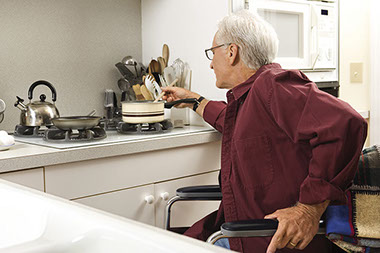
    Image of eldery man in wheel chair cooking at his stove.

    Seniors fear moving into a nursing home and losing their independence more than death, according to a new research study, Aging in Place in America, commissioned by Clarity and  The EAR Foundation.

    The study looked at the attitudes and anxieties of the nation’s elderly. The children of seniors also fear for their parents, with particular concern about their emotional and physical well-being should they have to enter a nursing home.

    One of the most significant findings of the study is that, when asked what they fear most, seniors rated loss of independence (26%) and moving out of their homes into a nursing home (13%) as their greatest fears. These two possibilities are a much higher concern than death, which was the greatest fear for only 3% of seniors surveyed.

    Other key findings include these:

    *  Most seniors want to age in place. That means they want to grow older without having to move from their homes. More than half are concerned about their ability to do so.

    *  Seniors cited three primary concerns that could jeopardize their ability to live independently: health problems, memory problems and inability to drive or get around.

    *  Many seniors said they are open to or would like to use new technologies that enable independence. More than half would consider the use of technology in their homes-specifically, sensors-to monitor their health and safety.

    *  Most Baby Boomers fear their parents will be mistreated in a nursing home and fear they will be sad. Almost two-thirds of Boomers provide some kind of help or support for their aging parents.

    “These findings tell us that, above all else, older Americans value their ability to live independently,” said Peter Bell, president of National Aging in Place Council. “As a society, we must find ways to help our parents and grandparents live their latter years at home.”

    © American Institute for Preventive Medicine