Tag: surgery

  • Keeping An Eye Out For Cataracts

    SELF-CARE CORNER

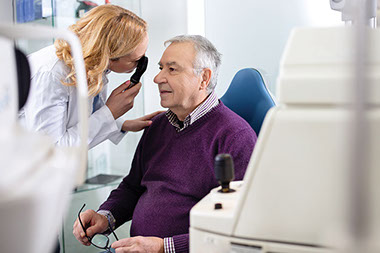
    Eye doctor examining patients eye.

    Most people will have cataracts by the age of 80. But they don’t have to mean loss of vision. They are treatable.

    What is a cataract?

    A normal lens inside the eye is clear. Cataracts happen when the proteins in the eye’s lens start to break down. Then they clump together. This causes cloudiness and problems with your vision.

    Cataracts may occur with normal aging. But they can also happen after an eye injury or if you had eye surgery.

    Signs of cataracts

    People often notice changes in vision when cataracts start to form. These changes include:

    *  Blurry or distorted vision

    *  Being sensitive to light

    *  Seeing a “halo” around lights

    *  Seeing double

    *  Trouble seeing at night or in dimly lit rooms

    *  Seeing colors as dull or yellow-tinted

    Prevention

    The best way to help prevent cataracts is with eye sun protection. Wear sunglasses that block out 100 percent of UV rays when you’re outside during the day. Not all sunglasses offer 100 percent UV protection. Check the packaging to be sure. Wear a wide-brimmed hat to keep sun off your face.

    Smoking increases the risk for cataracts, so quit smoking. Get help quitting if you need it.

    Finally, get a dilated eye exam regularly. Ask your eye care specialist or doctor how often you need one.

    Seeing a doctor

    If you think you might have cataracts, talk to a doctor. You may need an eye exam from an optometrist or ophthalmologist. During the exam, your eye care specialist can perform tests to look for cataracts.

    Treatment options

    If your doctor finds cataracts, don’t panic. There are ways to treat them.

    First, your doctor may recommend new glasses or contacts for mild symptoms. You may also find that using brighter lights or a magnifying lens is helpful for reading or working.

    If your cataracts are interfering with life, you may need surgery. Cataracts surgery involves putting a new artificial lens in the eye. It is a safe surgical procedure and works well for most people.

    Sources: American Academy of Ophthalmology, National Eye Institute

    © American Institute for Preventive Medicine
  • The Ins And Outs Of Ambulatory Surgery

    Medical Care

    Ambulatory surgery is surgery done on an outpatient basis. This can be done in a hospital. It can also be done at a freestanding center. One reason ambulatory surgeries are more common now than in the past is advanced medical practices. This includes the use of anesthesias that wear off quicker and have fewer side effects. Common ambulatory surgeries include:

    *  Endoscopy procedures.

    *  Hernia repair.

    *  Some plastic surgeries.

    *  Tubal ligation.

    *  Dilation and curettage (D & C).

    *  Breast biopsy.

    *  Tonsillectomy.

    *  Cataract and glaucoma procedures.

    *  Orthopedic procedures (such as arthroscopy of a knee).

    *  Benign and cancerous tumor procedures.

    Ambulatory or outpatient surgery has many advantages:

    *  Hospitalization poses the risk of exposure to infections and may also keep patients bedridden longer than is necessary.

    *  Ambulatory surgery gets you in and out quickly.

    *  The patient has a good deal of choice as to when the surgery will occur. The surgery is scheduled by appointment for patient convenience.

    *  Most people prefer healing at home in their own beds to staying in a hospital. The home can be a more comfortable place in which to heal than a hospital with its hectic schedules.

    *  Medical bills are much lower if you don’t have to stay in a hospital overnight.

    Things to consider:

    *  Many procedures need special preparation ahead of time. Follow your doctor’s orders exactly.

    *  You may need someone to drive you home and stay with you as you recover.

    *  Do not bring valuables with you when you have outpatient surgery.

    Page from A Year of Health Hints book by the American Institute for Preventive Medicine. www.HealthyLife.com. All rights reserved.

    © American Institute for Preventive Medicine

  • Reducing Presurgery Jitters

    Medical Care

    Image of older women looking nervous.

    Knowing what to expect prior to surgery can reduce pre-operation stress and make you feel more comfortable.

    *  The hospital will have you sign a surgical consent form. Take the time to read it over. Ask your doctor any questions you may have.

    *  Expect a visit from the anesthesiologist or the surgeon (or both). They will review the surgical plans with you. This includes the time and length of surgery, estimated recovery room time, and the type of anesthesia being used. The anesthesiologist will need to know about any previous surgeries, any medical conditions, and any allergies to medications. Ask him or her what time you can expect to return to your room.

    *  Eating in the hours prior to surgery can cause life-threatening vomiting during the operation, so there are usually a prescribed number of hours prior to surgery when no food should be eaten. If a meal is brought to you, don’t eat it until you’ve double-checked with a nurse. It may be a mistake that could cause your surgery to be canceled. Your patient chart should read NPO or non per os (nothing by mouth).

    *  Depending on the nature of the operation, some surgical “preps” may be ordered. This may include a special liquids-only diet, cleaning and shaving of the surgical area, placing a catheter into the bladder, giving an enema, or putting drops into the eyes.

    *  A sleeping pill may be offered the night prior to surgery. Most people will feel anxious about the surgery and find the medication helpful. You are not required to accept it, however, and your patient chart should indicate your preference.

    *  Before surgery, give all valuables or possessions to a friend or relative. These would include jewelry, watches, and eyeglasses. If you wear contact lenses, remove them.

    Page from A Year of Health Hints book by the American Institute for Preventive Medicine. www.HealthyLife.com. All rights reserved.

    © American Institute for Preventive Medicine

  • Types Of Surgery

    Medical Care

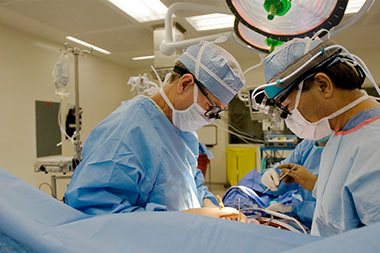
    Image of doctors performing surgery.

    It’s funny. People think of surgery as “major” when it happens to them and “minor” when it’s being done to someone else! In reality, surgery is thought to be major when it involves any vital organs and/or requires a long time period to perform. The following words classify various surgeries:

    Curative

    A procedure that rids the body of a problem or corrects a condition.

    Diagnostic

    A procedure that helps in making a diagnosis about a suspected problem.

    Elective

    A procedure that may or may not be done, depending upon the patient’s wishes.

    Emergency

    An immediate operation to save a life or maintain the use of a body part.

    Exploratory

    A surgery that explores a body organ or body area for a suspected disorder.

    Palliative

    A surgery that eases bodily pain but doesn’t cure the problem.

    Planned

    A surgery set up well in advance of the actual operation date.

    Urgent

    An operation that must be done within a matter of hours.

    Page from Health at Home book by the American Institute for Preventive Medicine. www.HealthyLife.com. All rights reserved.

    © American Institute for Preventive Medicine

  • When To Refuse Tests Or Surgery

    Medical Care

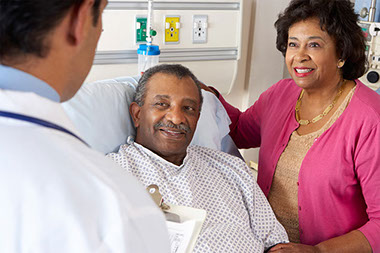
    Image of doctor talking to hospital patient and spouse.

    It has been estimated that at least one-quarter of medical tests done each year are not needed. A study published in the Journal of the American Medical Association found that nearly 60 percent of the study’s 2,800 pre-surgery tests were not warranted because there were no symptoms indicating that the tests should be done. Just 22 percent of the tests studied yielded results, and even these played a very small role in treatment. Yet medical tests make up about half of the typical patient’s hospital charges, according to David Sobel, M.D., the director of patient education at Kaiser Permanente.

    Be frank with your doctor and ask for an explanation of why a particular test is being done. You’ll want to ask the following:

    *  Will the test results determine the treatment?

    *  Are there risks to the testing?

    *  Are there alternatives?

    *  Can outpatient testing be considered?

    If your doctor recommends a hysterectomy, tonsillectomy, coronary bypass, or gallbladder removal, ask questions about alternatives. According to Eugene Rubin, M.D., of Stanford University, these procedures are among the surgeries performed excessively. Others that Dr. Rubin lists are:

    *  Dilatation and curettage (D and C).

    *  Cesarean sections.

    *  Pacemaker insertion.

    *  Joint surgery.

    Find out about the following:

    *  Alternatives that are not as radical as surgery.

    *  If it would be risky to postpone the surgery.

    *  If the surgery is not effective, what treatment you should try next.

    Page from A Year of Health Hints book by the American Institute for Preventive Medicine. www.HealthyLife.com. All rights reserved.

    © American Institute for Preventive Medicine

  • Cataracts Can Be Treated

    MEDICAL NEWS

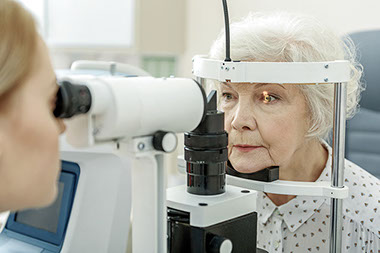
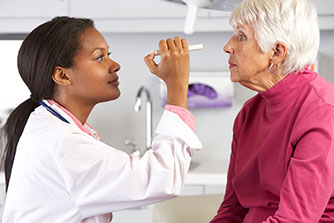
    Elderly women getting her eyes checked by a doctor.

    The eye has a clear lens inside that allows you to focus on things. But, as we get older, the lens may not be clear anymore. Proteins inside the lens stick together, causing a cloudy spot. This is a cataract.

    Cataracts are common. More than half of people age 80 and over have cataracts or had cataract surgery.

    What causes cataracts?

    Cataracts cannot always be prevented. Many people get them simply from getting older. This is because proteins in the eye’s lens start to break down with time.

    But there are some things you can do to reduce your risk of getting cataracts:

    *  Get regular eye exams.

    *  Don’t smoke – or quit if you do smoke.

    *  Limit or avoid alcohol.

    *  Protect your eyes with proper sunglasses and hats that shield the sun.

    *  Eat a healthy diet and get exercise. This can help prevent diabetes and high blood pressure, which may cause cataracts.

    Do I have cataracts?

    Many people don’t realize they have cataracts. This is because changes in vision happen very slowly over time.

    People who have cataracts may notice:

    *  Colors look faded or yellowed; things look blurry or cloudy

    *  Seeing a “halo” around lights

    *  It’s harder to read without a very bright light

    *  Trouble with night vision

    *  Double vision in one eye

    What can I do about cataracts?

    While cataracts may take away your clear vision, there is good news. Many cataracts can be corrected with surgery.

    The operation usually takes less than an hour. The doctor will replace the cloudy lens with a clear artificial lens. Usually, no stitches are needed. You may also have the surgery without general anesthesia, or being put to sleep. The doctor will numb the eye area so you won’t feel anything.

    People usually have only minor pain afterward. You may need to use eye drops after surgery to help the eye heal, or wear a protective eye shield when you sleep. Your doctor can let you know when it is safe for you to drive and do other activities.

    In most cases, the eye is totally healed within a few weeks and vision is much better.

    Sources: American Academy of Ophthalmology, National Eye Institute

    © American Institute for Preventive Medicine
  • Is Lasik Right For You?

    SELF-CARE CORNER

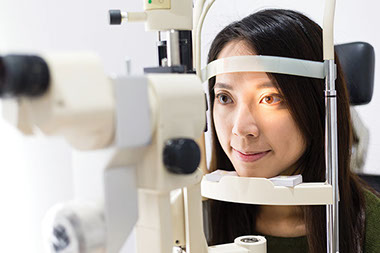
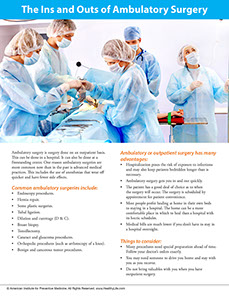
    Female getting her eyes examied.

    If you wear glasses or contacts, it’s possible you may be a candidate for LASIK eye surgery. LASIK stands for laser-assisted in situ keratomileusis, which simply means laser vision correction.

    The procedure uses a laser to correct the shape of your cornea and improve your vision. This type of surgery is used to treat:

    *  Myopia (nearsightedness)

    *  Hyperopia (farsightedness)

    *  Astigmatism (an imperfection in the shape of the cornea)

    Undergoing LASIK eye surgery may reduce or eliminate your need for glasses or contacts. But, it’s not right for everyone.

    How to qualify

    To find out if you are a candidate for LASIK, you first need to talk to your eye doctor. They will do a comprehensive eye exam and make sure you meet certain criteria such as:

    *  Stable vision for at least a year

    *  Eye prescription within the range LASIK can correct

    *  Thick healthy corneas

    *  18 years of age or older

    Some conditions may disqualify you from the procedure. These include:

    *  Severe dry eye

    *  Eye infections

    *  Cataracts

    *  Glaucoma

    *  Poorly controlled diabetes

    *  Pregnancy or breastfeeding

    The procedure

    During the procedure, you will be awake, resting comfortably on a table, and able to see for the majority of the time. It is painless and over in just a few minutes.

    1.  Drops will be put in your eyes to numb them.

    2.  An eyelid holder will be put in place to keep your eyes open.

    3.  A suction ring will be placed on your eye to hold it still. You will feel some pressure, and your vision will briefly fade.

    4.  The ophthalmologist will use a laser to cut a flap in your cornea.

    5.  A laser will precisely reshape your cornea, and the flap will be smoothed back into place.

    After LASIK surgery

    You will need to wear special glasses at first for eye protection and use several types of eye drops for the first few days to weeks until your eyes are healed.

    Side effects from the procedure are often temporary and may include:

    *  Dry eyes

    *  Light sensitivity

    *  Blurry vision

    *  Halos around lights, especially at night

    *  Glare

    Source: American Academy of Ophthalmology

    © American Institute for Preventive Medicine

  • Cataract

    Eye Conditions

    Older man with glasses trying to read a piece of paper.

    A cataract is a cloudy area in the lens of the eye.

    Get regular eye and physical exams to help detect when cataracts are forming.

    Imagine a thick cloud covering the lens of one or both eyes. This is what it is like to have cataracts. You may see glare from lamps or the sun and halos around lights. It is also harder to see at night. Let your doctor know if you have these problems.

    Cataracts are the leading cause of blindness around the world. Vision can be restored, in most cases, with cataract surgery, one of the safest and most common surgeries done.

    Consider cataract surgery when a cataract keeps you from doing the things you want to do. Find out more from the American Academy of Ophthalmology ataao.org.

    Health at Home Lifetime book by the American Institute for Preventive Medicine. www.HealthyLife.com. All rights reserved.

    © American Institute for Preventive Medicine
  • Cataract 2

    Eye Conditions

    A cataract is a cloudy area in the lens or lens capsule of the eye. A cataract blocks or distorts light entering the eye. Vision gradually becomes dull and fuzzy, even in daylight. Most of the time, cataracts occur in both eyes, but only one eye may be affected. If they form in both eyes, one eye can be worse than the other, because each cataract develops at a different rate.

    Signs & Symptoms

    *  Cloudy, fuzzy, foggy, or filmy vision.

    *  Pupils (normally black) appear milky white.

    *  Frequent changes in eyeglass prescriptions. Better near vision for a while, but only in far-sighted people.

    *  Sensitivity to light and glazed nighttime vision. This can cause problems when driving at night.

    *  Blurred or double vision. Changes in the way you see colors.

    *  Seeing glare from lamps or the sun. Halos may appear around lights.

    Causes

    *  The most common form of cataracts come with aging due to changes in the chemical state of lens proteins. More than half of Americans age 65 and older have a cataract.

    *  Cataracts can also result from damage to the lens capsule due to trauma; from ionizing radiation or infrared rays; from taking corticosteroid medicines for a long time; and from chemical toxins. Smokers have an increased risk for cataracts. So do persons with diabetes and glaucoma.

    Treatment

    Treatment includes eye exams, corrective lenses, cataract glasses, and cataract surgery, when needed.

    A person who has cataract surgery usually gets an artificial lens at the same time. A plastic disc called an intraocular lens (IOL) is placed in the lens capsule inside the eye.

    It takes a couple of months for an eye to heal after cataract surgery. Experts say it is best to wait until your first eye heals before you have surgery on the second eye if it, too, has a cataract.

    Questions to Ask

    Self-Care / Prevention

    To Help Prevent Cataracts

    *  Limit exposing your eyes to X-rays, microwaves, and infrared radiation.

    *  Avoid overexposure to sunlight. While outdoors, wear sunglasses with UV block and wear a hat with a brim.

    *  Wear glasses or goggles that protect your eyes whenever you use strong chemicals, power tools, or other instruments that could result in eye injury.

    *  Don’t smoke. Avoid heavy drinking.

    *  Keep other illnesses, such as diabetes, under control.

    *  Eat foods high in beta-carotene and/or vitamin C, which may help to prevent or delay cataracts. Examples are carrots, cantaloupes, oranges, and broccoli.

    To Treat Cataracts

    *  Be careful about driving at night. Let someone else drive if you can’t see well.

    *  Wear sunglasses with UV block.

    *  When indoors, don’t have lighting too bright or pointed directly at you. Install dimmer switches so you can lower the light level. Use table lamps, not ceiling fixtures.

    *  Use soft, white (not clear) light bulbs.

    *  Arrange to have light reflect off walls and ceilings.

    *  Read large print items. Use magnifying glasses, if needed.

    *  Schedule eye exams as advised by your doctor.

    *  Wear your prescribed glasses.

    Resources

    National Eye Institute (NEI)

    www.nei.nih.gov

    Healthier at Home book by the American Institute for Preventive Medicine. www.HealthyLife.com. All rights reserved.

    © American Institute for Preventive Medicine
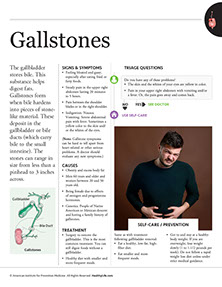
  • Gallstones

    Abdominal & Urinary Conditions

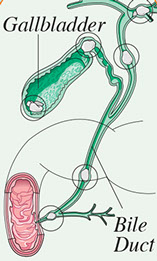
    Image of gallstones.

    The gallbladder stores bile. This substance helps digest fats. Gallstones form when bile hardens into pieces of stone-like material. These deposit in the gallbladder or bile ducts (which carry bile to the small intestine). The stones can range in size from less than a pinhead to 3 inches across.

    Signs & Symptoms

    *  Feeling bloated and gassy, especially after eating fried or fatty foods.

    *  Steady pain in the upper right abdomen lasting 20 minutes to 5 hours.

    *  Pain between the shoulder blades or in the right shoulder.

    *  Indigestion. Nausea. Vomiting. Severe abdominal pain with fever. Sometimes a yellow color to the skin and/or the whites of the eyes.

    {Note: Gallstone symptoms can be hard to tell apart from heart-related or other serious problems. A doctor should evaluate any new symptoms.}

    Gallstones

    Illustration of gallbadder with gallstones.

    Causes

    *  Ethnic background (i.e., Native Americans) and family history of gallstones. Being middle age.

    *  Obesity. Very rapid weight loss.

    *  Being female. Having had many pregnancies. Taking estrogen.

    *  Having diabetes. Having diseases of the small intestine.

    Treatment

    *  A low-fat diet.

    *  Surgery to remove the gallbladder. This is the most common treatment. You can still digest foods without a gallbladder.

    Questions to Ask

    Self-Care / Prevention

    *  Avoid high-fat foods. Don’t eat large meals.

    *  Get to and stay at a healthy body weight. If you are overweight, lose weight slowly (1 to 1-1/2 pounds per week). Do not follow a rapid weight loss diet unless under strict medical guidance.

    *  Eat a high fiber, low-fat diet.

    Healthier at Home book by the American Institute for Preventive Medicine. www.HealthyLife.com. All rights reserved.

    © American Institute for Preventive Medicine