Tag: swelling

  • What To Do About Varicose Veins

    SELF-CARE CORNER

    Doctor and patient talking.

    Do you have bulging veins on your legs? The veins may be blue, purple or red in color. If so, you may have varicose veins.

    What are varicose veins?

    Your heart is always pumping blood out to your organs. Then, the blood goes back to the heart through the veins. Veins have special valves that push the blood back toward the heart.

    Sometimes these valves stop working correctly. This may happen if valves get weaker over time. Then the blood pools in the vein, unable to move. Blood that is pooling in a vein may cause the bulge or bump of a varicose vein.

    Not just cosmetic

    Some people don’t like the look of varicose veins. But they can also cause other problems. Varicose veins may itch or cause pain, swelling or heaviness in the legs.

    They can also continue to weaken the vein over time. This can cause skin changes like open sores or hard, thick areas of skin.

    Medical options

    Ask your doctor about medical procedures that can help. Options may include:

    *  Lasers that heat the vein and close it off

    *  Injections that seal the vein closed

    *  Surgery to remove the vein if non-invasive options don’t work

    Helping at home

    If varicose veins bother you, there are some things you can do.

    *  First, work toward a healthy weight. Being overweight puts more pressure on the veins.

    *  Be active. Exercise gets your blood pumping. This helps move blood out of the veins.

    *  Ask your doctor about compression stockings. These can help relieve pain and heaviness for some people. These are available at drug stores and online without a prescription if your doctor gives you the okay to wear them.

    *  Put your legs up. When possible, keep your legs up above your heart.

    *  Don’t wear clothes that are very tight around the waist or upper thighs.

    Source: National Heart, Lung and Blood Institute, National Institutes of Health

    © American Institute for Preventive Medicine

  • Bites & Stings

    First Aid

    For Bites

    Image of arm with an insect bite mark.

    Signs & Symptoms

    *  Swelling. Redness. Pain. Itching.

    *  Bleeding.

    *  Tissue loss, if the wound is severe.

    *  Skin rash.

    *  Lockjaw. This is a painful, persistent stiffness of the jaw due to a toxin. Tetanus shots can prevent this.

    *  Allergic reaction, such as with insect bites.

    Causes

    *  Dog, cat, and human bites are the most common animal bites in the U.S.

    *  Deer tick bites can cause Lyme disease, a bacterial infection.

    *  Bed bug bites cause redness, swelling, and large, red welts or raised areas on the skin.

    *  Black widow and brown recluse spider bites can cause severe reactions.

    *  Less common, but more dangerous, are bites from skunks, raccoons, bats, and other animals that live in the wild. These animals can have rabies – a serious viral infection. It can be fatal. Most house pets are vaccinated for rabies. It’s unlikely they carry the virus.

    *  Mosquito bites can cause West Nile virus if the mosquito is infected with it.

    *  Snake bites can be fatal if the bite is from a poisonous snake (e.g., rattlesnakes, cotton mouths, copperheads, and coral snakes).

    *  Shark bites are a potential problem when swimming in shark-infested waters.

    Treatment

    Self-care can be used for dog and cat bites that cause scratches on the skin and for insect bites that do not cause a severe allergic reaction. All human bites that break the skin should be checked by a doctor due to the high risk for infection.

    A series of rabies shots can prevent the spread of rabies to humans. The shots should begin soon after a bite from an infected animal.

    Antivenom can be given for poisonous snake bites at emergency medical facilities. It should be given within 4 hours of the bite.

    For Stings

    Signs & Symptoms

    *  Quick, sharp pain.

    *  Swelling, itching, and redness at the sting site. These can occur beyond the sting site.

    *  Raised bump (with or without pus).

    *  Signs of a severe allergic reaction.

    Causes

    *  Insect stings.

    *  Marine animals that sting include jellyfish, Portuguese Man-of-War, and sea nettles.

    Treatment

    Self-care treats mild reactions to stings. A severe allergic reaction needs immediate care. Symptoms of a severe allergic reaction usually happen soon after or within an hour of the sting.

    Persons with a severe allergic reaction to a sting in the past should carry an emergency kit, prescribed by a doctor. A medical alert tag should be worn to let others know of the allergy. Persons who have had severe reactions to bee or wasp stings should ask their doctors about allergy shots.

    Questions to Ask

    Self-Care / First Aid

    For Poisonous Snake Bites Before Medical Care

    *  Carefully move the person away from the snake. Calm the person. Have him or her rest. Moving about can help spread the venom.

    *  Gently wash the bite area with soap and water. Keep the limb of the bite site level with the heart (or just below this). Apply a splint to the limb of the bite site to keep it from moving.

    *  Being careful, note, if you can, the shape of the snakes eyes, pupils, and head, the colors it is, and if it has rattles.

    *  Don’t try to kill the snake, cut the fang mark, or suck out the venom.

    *  Don’t apply a tourniquet, a bandage, or ice to the bite.

    For Non-Poisonous Snake Bites

    *  Gently wash the site with soap and water.

    *  Treat the bite as a minor wound.

    *  If you notice signs of an infection, call your doctor.

    For Poisonous Spider Bites Until Emergency Care Arrives

    *  Perform rescue breathing, if needed.

    *  If you can, keep the bitten area lower than the level of the heart.

    *  Calm the person and keep him or her warm.

    *  Gently clean the site of the bite with soap and water or rubbing alcohol.

    *  Put an ice pack over the bite site for pain relief.

    *  If you can, catch the spider in a closed container to show what kind it is.

    For Poisonous Spider and Scorpion Bites Before Medical Care

    *  Do rescue breathing, if needed.

    *  If you can, keep the bitten area lower than the level of the heart.

    *  Calm the victim and keep him or her warm.

    *  Gently clean the site of the bite with soap and water or rubbing alcohol.

    *  Put an ice pack over the bite site to relieve pain.

    *  If you can, catch the spider in a closed container to show the doctor. n Get emergency care!

    For Human Bites Before Medical Care

    *  Wash the wound area with soap and water for at least 5 minutes. Don’t scrub hard. Rinse with running water or with an antiseptic solution, such as Betadine.

    *  Cover the wound area with sterile gauze. Tape only the ends of the gauze in place. Then get medical care.

    For Deer Tick Bites

    *  Remove any ticks found on the skin. Use tweezers to grasp the tick(s) as close to the skin as you can. Pull gently and carefully in a steady upward motion at the point where the tick’s mouthpart enters the skin. Try not to crush the tick. The secretions released may spread disease.

    *  After you remove the ticks, wash the wound area and your hands with soap and water. Apply rubbing alcohol to help disinfect the area.

    *  Use an ice pack over the bite area to relieve pain.

    *  Save one tick in a closed jar with rubbing alcohol to show the doctor.

    For Dog and Cat Bites

    *  Wash the bite area right away with soap and warm water for 5 minutes. If the bite is deep, flush the wound with water for 10 minutes. Dry the wound with a clean towel. Then get medical care.

    *  If the wound is swollen, apply ice wrapped in a towel for 10 minutes.

    *  Get a tetanus shot, if needed.

    *  If the bite hurts, take an over-the-counter (OTC) medicine for pain.

    *  Report the incident to the animal control department. If a pet’s immunizations are not current, arrange with the animal control department for the pet to be observed for the next 10 days to check for rabies.

    *  Observe the wound for a few days. Look for signs of infection. Often, cat bite wounds need an antibiotic.

    For a Stingray Bite

    *  Remove the person from the water.

    *  Apply a local pressure bandage for a wound that bleeds a lot.

    *  Immerse the wound area in hot water for 30 to 90 minutes. Make sure the water is not hot enough to burn the skin.

    *  Scrub the wound area well with soap and water.

    *  Unless the wound is a slight one in only one limb, get medical help right away.

    For Stings from Jellyfish or Sea Nettles, etc.

    *  Remove the person from the water. Don’t touch the sting area with bare hands.

    *  Rinse the sting area with salt (not fresh) water right away. Don’t put ice on the skin. If you can, put vinegar or rubbing alcohol on the area several times for 30 or more minutes until the pain is relieved.

    *  Apply dry or moist heat to the sting area until the pain subsides. You can mix one part ammonia with 3 parts salt water and apply this to the sting area.

    *  Wear gloves when you remove stingers. Use a towel to wipe the stingers or the tentacles off. Use tweezers to lift large tentacles. Don’t scrape or rub them.

    *  To relieve itching, apply OTC calamine lotion or 1% hydrocortisone cream to the affected area as directed on the label.

    *  Contact your doctor for any signs of infection.

    Healthier at Home book by the American Institute for Preventive Medicine. www.HealthyLife.com. All rights reserved.

    © American Institute for Preventive Medicine

  • Bruises

    Skin Conditions

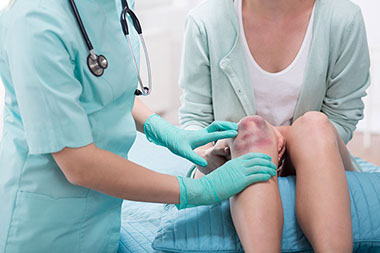
    Image of nurse examing patient bruise on knee.

    Bruises are broken blood vessels under the skin. In areas where the skin is thin, like around the eyes, the bruise will show up more. Bruises on the head or shin tend to swell the most because the bones in these areas are very close to the skin.

    Signs & Symptoms

    *  Black and blue or red skin. As it heals, the skin turns greenish-yellow.

    *  Pain or tenderness

    *  Possible swelling

    *  A bruise usually lasts less than 2 weeks.

    Causes, Risk Factors & Care

    Bruises are common. Most often, they occur after a fall or being hit by some force. They can, though, occur for no apparent reason. The risk of getting bruises increases with:

    *  Taking certain medications, such as aspirin, blood thinners, corticosteroids, water pills, and drugs for arthritis

    *  Being female, middle aged, or elderly

    *  Being an alcoholic or drug user

    *  Having certain medical conditions. Examples are anemia, a blood platelet disorder, liver disease, and lupus.

    Most small bruises need no treatment and will go away on their own. For some larger bruises, especially if there is pain or swelling, self-care can help. If bruises result from a medical condition, the medical condition needs to be treated.

    Self-Care

    *  Apply a cold pack to the bruised area within 15 minutes of the injury. Keep the cold pack on for 10 minutes at a time. Apply pressure to the cold pack. Take it off for 30 to 60 minutes. Repeat several times for 2 days.

    *  Rest the bruised area.

    *  Raise the bruised area above the level of the heart, if practical.

    *  Two days after the injury, use warm compresses. Do this for 20 minutes at a time.

    *  Do not bandage a bruise.

    When to Seek Medical Care

    Contact Doctor When:

    *  You have any of these problems with a bruise:

    – Vision problems with a bruise near the eye

    – Signs of infection (fever; increased pain; redness, and/or swelling; pus)

    – Nosebleeds or excessive bleeding from cuts

    – Loss of weight and appetite

    – Joint pain, fever, or swollen lymph nodes

    *  You have any of these problems:

    – Bruising on the hip after a fall

    – Bruises appear often and easily.

    – Bruises take longer than 2 weeks to go away.

    – Over a year’s time, more than 2 or 3 bruises appear for no apparent reason.

    Health at Home Lifetime book by the American Institute for Preventive Medicine. www.HealthyLife.com. All rights reserved.

    © American Institute for Preventive Medicine

  • Cellulitis

    Skin Conditions

    Cellulitis is an infection of the skin and tissues below it. Most often, cellulitis occurs on the arms and legs or on the face.

    Signs & Symptoms

    *  Red, swollen, painful, tender, and warm skin.

    *  Red lines that spread from the wound.

    *  Swollen lymph nodes near the wound.

    *  Chills and fever.

    Causes

    Cellulitis is caused by several types of bacteria. These usually enter the body through minor skin breaks (cuts, burns, other wounds). One cause for cellulitis that recurs is community-acquired MRSA (Methicillin- resistant Staphylococcus aureus.)

    Treatment

    Oral, topical, and/or IV antibiotics are given. The type(s) used depend on how serious the infection is. Medicine to relieve pain may be needed.

    Questions to Ask

    Self-Care / Prevention

    To Prevent Cellulitis

    *  Keep your skin clean and protect it from injury.

    *  Clean cuts, scrapes, and other skin wounds and injuries, thoroughly, with soap and water. Keep wounds and sores clean, dry, and covered until healed.

    *  To help prevent community-acquired MRSA, avoid contact with other people’s wounds or bandages in schools, health care settings and sports. Do not share towels, washcloths, razors, clothing, or uniforms that may have had contact with an infected wound or bandage. Shower right after sporting events, workouts, etc.

    To Treat Cellulitis

    *  Follow your treatment plan. Take all of your prescribed antibiotic(s).

    *  Take pain relievers as directed.

    *  Rest the affected area. Elevate it to reduce swelling.

    Healthier at Home book by the American Institute for Preventive Medicine. www.HealthyLife.com. All rights reserved.

    © American Institute for Preventive Medicine

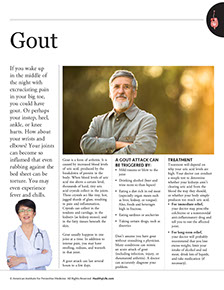
  • Gout: Relief At Last

    Abdominal & Urinary Conditions

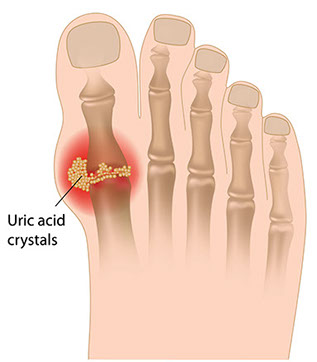
    If you wake up in the middle of the night with excruciating pain in your big toe, you could have gout. Or perhaps your instep, heel, ankle, or knee hurts. How about your wrists and elbows? Your joints can become so inflamed that even rubbing against the bed sheet can be torture. You may even experience fever and chills.

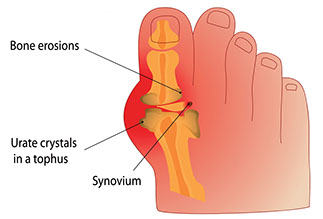
    Gout is a form of arthritis most common in men in their fifties. It is caused by increased blood levels of uric acid, produced by the breakdown of protein in the body. When blood levels of uric acid rise above a critical level, thousands of hard, tiny uric acid crystals collect in the joints. These crystals act like tiny, hot, jagged shards of glass, resulting in pain and inflammation. Crystals can collect in the tendons and cartilage, in the kidneys (as kidney stones), and in the fatty tissues beneath the skin.

    A gout attack can last several hours to a few days and can be triggered by:

    *  Mild trauma or blow to the joint.

    *  Drinking alcohol (beer and wine more so than distilled alcohol).

    *  Eating a diet rich in red meat (especially organ meats such as liver, kidney, or tongue).

    *  Eating sardines or anchovies.

    *  Taking certain drugs, such as diuretics.

    Illustration of gout.

    Don’t assume you have gout without consulting a physician. Many conditions can mimic an acute attack of gout (including infection, injury, or rheumatoid arthritis). A doctor can accurately diagnose your problem.

    If you do have gout, treatment will depend on why your uric acid levels are high. Your doctor can conduct a simple test to determine whether your kidneys aren’t clearing uric acid from the blood the way they should, or whether your body simply produces too much uric acid.

    The first goal, then, is to relieve the acute gout attack. The second goal is to normalize the uric acid levels to prevent a recurrence.

    *  For immediate relief, your doctor may prescribe colchicine or a nonsteroidal anti-inflammatory drug and tell you to rest the affected joint.

    *  For long-term relief, your doctor will probably recommend that you lose excess weight, limit your intake of alcohol and red meat, drink lots of liquids, and take medication (if necessary).

    A Year of Health Hints book by the American Institute for Preventive Medicine. www.HealthyLife.com. All rights reserved.

    © American Institute for Preventive Medicine

  • Heart Failure

    Heart & Circulation Problems

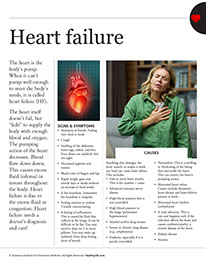
    The heart is the body’s pump. When it can’t pump well enough to meet the body’s needs, it is called heart failure (HF). The heart itself doesn’t fail, but “fails” to supply the body with enough blood and oxygen. The pumping action of the heart decreases. Blood flow slows down. This causes excess fluid (edema) in tissues throughout the body. The term congestive heart failure, used in the past, is due to the excess fluid or congestion. Heart failure needs a doctor’s diagnosis and care!

    Signs & Symptoms

    *  Shortness of breath.

    *  Feeling very tired or weak.

    *  Dry cough or a cough with pink, frothy mucus.

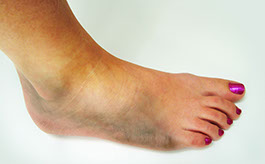
    *  Swelling of the lower legs, ankles, and feet. Your shoes can suddenly feel too tight.

    *  Decreased appetite and nausea.

    *  Rapid weight gain over several days or weeks without an increase in food intake. You could gain up to 1 pound a day.

    *  A fast heartbeat. Sometimes the heartbeat is irregular.

    *  Feeling anxious or restless.

    *  A feeling of suffocation. This is caused by fluid that collects in the lungs. It can be difficult to lie flat. You may need to sleep on 2 or more pillows. You may wake up suddenly from sleep feeling short of breath.

    Causes

    Anything that damages the heart muscle or makes it work too hard can cause heart failure. This includes:

    *  One or more heart attacks. This is the number 1 cause.

    *  Advanced coronary artery disease.

    *  High blood pressure that is not controlled.

    *  High blood pressure in the lungs (pulmonary hypertension).

    *  Alcohol and/or drug abuse.

    *  Severe or chronic lung disease (e.g., emphysema).

    *  Diabetes, especially if it is poorly controlled.

    *  Pericarditis. This is a swelling or thickening of the lining that surrounds the heart. This can restrict the heart’s pumping action.

    *  Abnormal heart valves. Causes include rheumatic heart disease and heart defects present at birth.

    *  Abnormal heart rhythm.

    *  A viral infection. This is rare and happens only if the infection affects the heart and causes cardiomyopathy, a muscle disease of the heart.

    Diagnosis

    Ways to Diagnose Heart Failure:

    *  A medical history and physical exam. Blood and urine tests.

    *  A chest X-ray to see if the heart is enlarged and if the lungs are congested.

    *  An ECG (also called EKG) to look for an enlarged heart, heart muscle damage, and abnormal heart rhythms.

    *  An echocardiogram. This test uses sound waves to show the heart’s size, shape, and movement.

    *  An exercise stress test.

    *  A cardiac catheterization. This test diagnoses coronary artery disease and checks for past heart attacks.

    Self-Care / Prevention

    Some causes of heart failure can be prevented. These include heart attacks, coronary artery disease, high blood pressure, rheumatic fever, and substance abuse.

    To Prevent Heart Attacks and Coronary Artery Disease:

    *  Don’t smoke. If you smoke, quit!

    *  Have regular medical checkups. Get your blood pressure checked at each office visit or at least every 2 years. Get your blood cholesterol tested as advised by your doctor.

    *  Take all medicines as prescribed. These include ones for high blood pressure, etc.

    *  Ask your provider about taking a low dose of aspirin (e.g., 1 baby aspirin) daily.

    *  Get to or stay at a healthy body weight.

    *  Strictly limit or avoid alcohol.

    *  Do regular physical activity. {Note: Talk to your health care provider before you start an exercise program. This is important if you have been inactive for a long period of time, are overweight, are over age 35, or have any medical problems.}

    *  Get a test to screen for diabetes as advised by your doctor. Having diabetes and high blood cholesterol increase the risk for heart disease.

    Self-Care

    *  Weigh yourself daily to check for excess fluid weight gain. Keep a record of what you weigh. Take it with you when you visit your health care provider. Call your provider, though, if your weight increases suddenly (3 or more pounds in 1 day).

    *  Limit sodium (part of salt) to about 2,000 milligrams per day.

    *  Limit fluids as advised by your health care provider.

    *  Have 5 to 6 small (instead of 3 large) meals a day.

    *  Stay as active as you can.

    *  Do not have more than one alcoholic drink a day, if at all. One drink equals 4 to 5 oz. of wine; 12 oz. of beer; or 1-1⁄2 oz. of 80 proof liquor.

    *  Eat healthy.

    *  Exercise on a regular basis as advised by your health care provider.

    *  Modify your daily activities as needed so you don’t place too heavy a demand on your heart. Alternate activity with periods of rest.

    *  Sit up when you rest, if this makes breathing easier. Sleep on 2 or more pillows and/or raise the head of your bed 6 inches when you sleep.

    *  Don’t smoke. If you do, quit!

    *  Lose weight if you are overweight.

    *  Follow your health care provider’s treatment program. Take your medication(s) as prescribed.

    Medical Care

    Call Health Care Provider For:

    *  A new onset of shortness of breath or fatigue when you do your normal activities or lie down.

    *  A new onset of swelling in the ankles and feet and it is harder to breathe when you lie down flat.

    *  Coughing up pink or frothy mucus with mild shortness of breath.

    *  An unexplained weight gain of 3 to 5 pounds.

    *  Having heart failure and you have symptoms of a cold or flu. These may add stress to your heart.

    *  Having heart failure and your symptoms worsen.

    Get Immediate Care For:

    *  Severe shortness of breath (you are too short of breath to say a few words) with or without wheezing (a high pitched whistling sound).

    *Heart Attack Warning Signs

    Resources

    American Heart Association

    800.242.8721

    www.heart.org/HEARTORG

    National Heart, Lung, and Blood Institute

    www.nhlbi.nih.gov

    Heart Failure brochure by the American Institute for Preventive Medicine. www.HealthyLife.com. All rights reserved.

    © American Institute for Preventive Medicine

  • Ingrown Toenails

    Skin Conditions

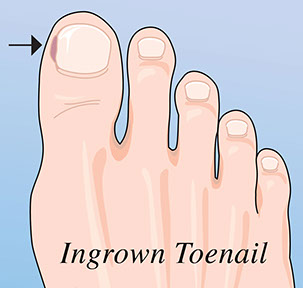
    An ingrown toenail digs into the skin next to the side of the nail. The most common site is the big toe. Other toes and even fingernails can be affected.

    Signs & Symptoms

    *  Redness.

    *  Tenderness.

    *  Discomfort or pain.

    Illustration of an ingrown toenail.

    Causes

    *  Jamming your toes.

    *  Wearing shoes or socks that fit too tight.

    *  Clipping toenails too short. The corners can penetrate the skin as the nail grows out.

    *  Having wider-than-average toenails.

    Treatment

    Self-care usually treats ingrown toenails. If this fails to work, a doctor or podiatrist may have to remove a portion of the nail.

    Questions to Ask

    Self-Care / Prevention

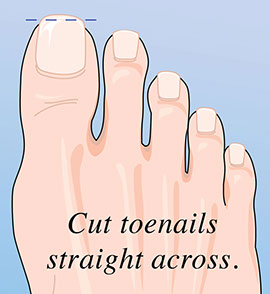
    *  Cut nails straight across. Don’t cut the nails shorter at the sides than in the middle. {Note: If you have diabetes or circulation problems, follow your doctor’s advice about clipping your toenails.}

    *  File the nails if they’re sharp after clipping them.

    *  Wear shoes and socks that fit well.

    To Treat an Ingrown Toenail

    *  Soak your foot in warm, soapy water for 5 to 10 minutes, 1 to 3 times a day.

    *  Gently lift the nail away from the reddened skin at the outer corners with the tip of a nail file.

    *  Soak a small piece of cotton in an antiseptic, such as Betadine. Place it just under the outer corners of the toenails, if you can.

    *  Repeat the previous 3 steps, daily, until the nail begins to grow correctly and pressure is relieved. Wear roomy shoes during this time.

    Illustration on cutting toenails straight across to prevent ingrown toenails.

    Resources

    American Academy of Dermatology

    866.503.SKIN (503.7546)

    www.aad.org

    Healthier at Home book by the American Institute for Preventive Medicine. www.HealthyLife.com. All rights reserved.

    © American Institute for Preventive Medicine

  • Insect Stings

    Skin Conditions

    Signs & Symptoms

    *  Quick, sharp pain.

    *  Swelling.

    *  Itching.

    *  Redness at the sting site.

    *  Hives.

    Insect stings can even result in a severe allergic reaction.

    Causes

    Insect stings come from bumblebees, honeybees, hornets, wasps, yellow jackets, and fire ants.

    Treatment

    Self-care treats mild reactions to insect stings. A severe allergic reaction needs immediate care. Symptoms of a severe allergic reaction usually happen soon after or within an hour of the sting.

    If you have had a severe allergic reaction to an insect sting, you should carry an emergency insect sting kit, prescribed by your doctor. You should also wear a medical alert tag that lets others know that you are allergic to insect stings. Persons who have had severe reactions to bee or wasp stings should ask their doctor about allergy shots.

    Questions to Ask

    Self-Care / Prevention

    To Avoid Insect Stings

    *  Keep food and drink containers tightly covered. (Bees love sweet things, like soft drinks.)

    *  Don’t wear perfume, colognes, or hair spray when you are outdoors.

    *  Don’t wear bright colors, like white or yellow. Choose neutral colors, like tan or khaki. Wear snug clothing that covers your arms and legs.

    *  Don’t go barefoot. If camping, look for insects in your shoes before you put them on.

    *  Wear an insect repellent, especially if you are sensitive to insect stings.

    *  Be careful when you work outdoors, pull weeds, mow tall grass, and work around shutters. Bees often build hives behind shutters.

    *  If an insect that stings gets in your car, stop the car. Put the windows down. Once the insect leaves, resume driving.

    *  Check for and repair openings in your window screens.

    To Treat an Insect Sting Without a Severe Allergic Reaction

    *  For a bee sting, gently scrape out the stinger as soon as possible. Use a blunt knife, credit card, or a fingernail. Yellow jackets, wasps, and hornets don’t lose their stingers.

    *  Don’t pull the stinger out with your fingers or tweezers. Don’t squeeze the stinger. It contains venom. You could re-sting yourself.

    *  Clean the sting area with soapy water.

    *  Remove jewelry from bitten fingers, wrists, etc. It may be difficult to remove jewelry once swelling occurs.

    *  Put a cold compress (ice in a cloth, etc.) on the sting. Don’t put ice directly on the skin. Hold the cold compress on the site for 10 to 15 minutes.

    *  Keep the sting area lower than heart level.

    *  Take an over-the-counter medicine for pain as directed on the label.

    *  For itching and swelling, apply a topical 1% hydrocortisone cream and/or take an over- the-counter antihistamine, such as Benadryl, if okay with your doctor. Follow directions on the labels.

    Signs of Severe Allergic Reaction

    *  Fainting or decreasing level of consciousness.

    *  Shortness of breath or difficulty breathing or swallowing.

    *  Severe swelling all over or of the face, lips, tongue, and/or throat.

    *  Pale or bluish lips, skin, and/or fingernails.

    *  Wheezing.

    *  Dizziness, weakness, and/or numbness.

    *  Cool, moist skin or sudden onset of pale skin and sweating.

    Healthier at Home book by the American Institute for Preventive Medicine. www.HealthyLife.com. All rights reserved.

    © American Institute for Preventive Medicine

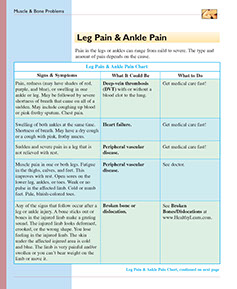
  • Leg Pain & Ankle Pain

    Bone & Muscle Problems

    Pain in the legs or ankles can range from mild to severe. The type and amount of pain depends on the cause.

    For Pain, in General

    *  Take an over-the-counter medicine for pain as directed on the label. If the pain is not better after a few doses, call your doctor.

    *  Use a heating pad (set on low), a hot pack, or a moist, warm towel on the area of pain. If the pain is due to an injury, don’t use heat for 48 hours. Use R.I.C.E.

    To Help Prevent Leg Pain & Ankle Pain

    *  Get to and stay at a healthy weight.

    *  Get regular exercise. This helps to keep ankle and leg muscles strong.

    *  Before you exercise, stretch and warm up your muscles. When you are done, cool them down.

    *  Protect your knees. Use knee pads when you garden or kneel. Always land on bent knees when jumping. Avoid deep knee bend exercises.

    *  Don’t wear high-heeled shoes. Keep your shoes in proper shape.

    *  Take good care of your feet.

    R.I.C.E.

    *  Rest the injured area for 24 to 48 hours.

    *  Ice the area as soon as possible. Keep doing this for 10 minutes every 2 hours for the first 48 hours. Use an ice pack, ice in a heavy plastic bag with a little water, a bag of frozen vegetables, etc. Put a thin towel between the ice pack and the skin.

    *  Compress the area. Wrap with an elastic bandage. Do not cut off circulation. Remove the bandage every 3 to 4 hours, for 15 to 20 minutes each time.

    *  Elevate the area above heart level, if possible. Place it on a pillow, folded blanket, stack of newspapers, etc.

    Baker’s Cyst

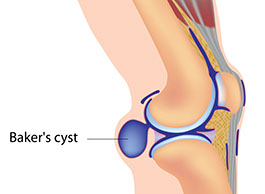
    Illustration of baker's cyst.

    Signs & Symptoms

    Painless or painful swelling behind the knee. May feel like a water-filled balloon.

    What to Do

    Call doctor.

    Broken Bone or Dislocation

    Image of broken foot bone.

    Signs & Symptoms

    Any of the signs that follow occur after a leg or ankle injury. A bone sticks out or bones in the injured limb make a grating sound. The injured limb looks deformed, crooked, or the wrong shape. You lose feeling in the injured limb. The skin under the affected injured area is cold and blue. The limb is very painful and/or swollen or you can’t bear weight on the limb or move it.

    Bursitis

    Signs & Symptoms

    Pain and swelling around a knee or hip joint. The pain gets worse with movement. Fever (maybe).

    What to Do

    See doctor.

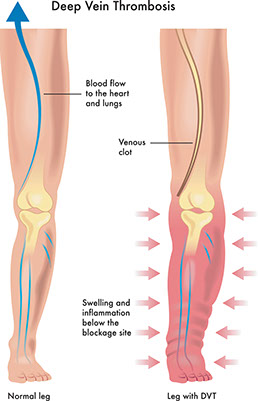
    Deep-vein thrombosis (DVT) with or without a blood clot to the lung

    Illustration of deep vein thrombosis.

    Signs & Symptoms

    Pain, redness (may have shades of red, purple, and blue), or swelling in one ankle or leg. May be followed by severe shortness of breath that came on all of a sudden. May include coughing up blood or pink-frothy sputum. Chest pain.

    What to Do

    Get medical care fast!

    Flu

    Signs & Symptoms

    Aches in leg muscles and joints with fever and/or chills. Headache. Dry cough. Sore throat. Fatigue.

    Gout

    Illustration of gout.

    Signs & Symptoms

    Sudden, severe pain in a toe, knee, or ankle joint. The pain can be felt even when clothing is rubbed against the joint. The joint area is swollen, red, or purplish in color. It also feels warm, and is very tender to the touch.

    What to Do

    See doctor.

    Heart Failure

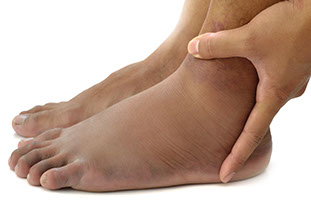
    Image of swollen feet.

    Signs & Symptoms

    Swelling of both ankles at the same time. Shortness of breath. May have a dry cough or a cough with pink, frothy mucus.

    What to Do

    Get medical care fast!

    Infection. Could also be Cellulitis.

    Signs & Symptoms

    Pain with fever, redness, tenderness, warmth and pus at a wound site. A red streak up the leg (rarely).

    What to Do

    See doctor.

    Leg Cramp

    Signs & Symptoms

    Sudden, sharp, tightening pain in the leg, often the calf. The muscle feels hard to the touch. The pain subsides after a minute or so and the muscle relaxes.

    Self-Care

    *  Walk on the leg.

    *  Shake the leg and then elevate it.

    *  Sit with your leg flat on the floor. Flex your foot upward, then toward your knee. Reach for your toes and pull them toward your knee. This stretches the calf muscles.

    *  Have someone massage the cramped muscle gently, but firmly.

    *  Apply a heating pad (set on low), a hot pack, or moist, warm towel to the muscle cramp.

    *  Rub the muscle that is cramping. Rub upward from the ankle toward the heart.

    (Note: Do not rub a leg if you suspect phlebitis or thrombosis.)

    To Prevent Leg Cramps

    *  Get good sources of calcium, potassium, and magnesium. See lists at left. Take calcium, potassium, and magnesium as advised by your doctor.

    *  Drink plenty of water and other fluids. Limit drinks with caffeine. Avoid drinks with alcohol. Doing these things can help prevent dehydration which could cause leg cramps.

    *  Warm up your muscles before you exercise. Cool down your muscles when you are done.

    *  With your doctor’s okay, wear elastic stockings while you are awake.

    *  Another way to stretch your calf muscles is to ride a stationary bicycle for a few minutes.

    *  Take a warm bath before bedtime.

    *  Sleep with loose-fitting blankets and night clothes. Keep your legs warm.

    *  If you have severe leg cramps or get them often, tell your doctor. Ask if any medication you take could cause your leg cramps. Ask for ways to treat your leg cramps.

    *  Before you go to bed, stretch your calf muscles. Here’s one way to do this:

    – Stand an arm’s length away from a wall. Lean against it with the palms of your hands.

    – Bend your left knee. Keep your right leg straight behind you. Keep both feet flat on the floor and your back straight.

    – Lean forward. Feel your right calf muscle stretch. Hold the stretch as you count to 10 slowly.

    – Repeat, switching leg positions.

    Lyme Disease

    Signs & Symptoms

    Muscle or joint pain and chronic swelling of the knee joints. These problems develop months or years after a deer-tick bite and a bulls-eye red rash with pale centers.

    What to Do

    See doctor.

    Osteoarthritis

    Signs & Symptoms

    Pain, stiffness, and sometimes swelling of the knee or ankle joints. Often, the joint has gotten tender over months or years and may look enlarged or deformed.

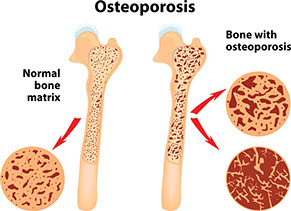
    Osteoporosis

    Illustration of osteoporosis.

    Signs & Symptoms

    Leg or ankle pain with gradual loss of height; stooped posture; backache; and/or past bone fractures, especially in the wrists and hips.

    Paget’s Disease

    This is a bone disorder that progresses slowly. Most persons with this disease do not develop symptoms.

    Signs & Symptoms

    Leg pain that radiates from the lower back. Pain or stiffness in the knees. Bowing of the legs or other bone deformity. Unexplained bone fractures. May have headache, dizziness, hearing loss, and/or ringing in the ears.

    What to Do

    See doctor.

    Self-Care / Prevention

    *  If needed, take an over-the-counter medicine for pain as directed on the label.

    *  Take other medicines as prescribed by your doctor.

    *  Get regular checkups to detect hearing loss.

    Peripheral Vascular Disease

    Signs & Symptoms

    Sudden and severe pain in a leg that is not relieved with rest.

    What to Do

    Get medical care fast!

    Signs & Symptoms

    Muscle pain in one or both legs. Fatigue in the thighs, calves, and feet. This improves with rest. Open sores on the lower leg, ankles, or toes. Weak or no pulse in the affected limb. Cold or numb feet. Pale, bluish-colored toes.

    What to Do

    See doctor.

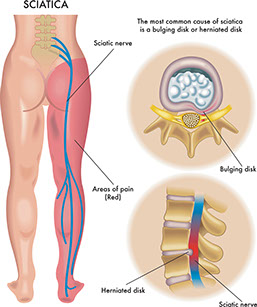
    Sciatica

    Illustration of sciatica.

    Signs & Symptoms

    Sharp pain from the buttocks down the leg. Numbness and tingling in the leg.

    Sprain, Strain, or Sport Injury

    Signs & Symptoms

    Pain in the leg or ankle after an injury that does not keep you from moving the limb.

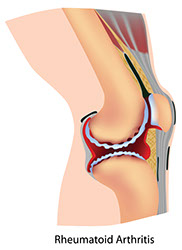
    Rheumatoid Arthritis

    Illustration of rheumatoid arthritis.

    Signs & Symptoms

    Pain, stiffness, and swelling, usually in both knees or ankle joints. The joint looks deformed. Weakness and fatigue. Dry mouth and dry, painful eyes.

    Varicose Veins

    Signs & Symptoms

    Pain or itching in the legs with swollen and twisted veins that look blue and are close to the surface of the skin. The veins bulge and feel heavy. Swelling in the legs and ankles.

    Healthier at Home book by the American Institute for Preventive Medicine. www.HealthyLife.com. All rights reserved.

    © American Institute for Preventive Medicine

  • Phlebitis & Thrombosis

    Heart & Circulation Problems

    Phlebitis is inflammation in a vein. Thrombosis is when a blood clot forms. When both of these occur together, it is called thrombophlebitis.

    Signs & Symptoms

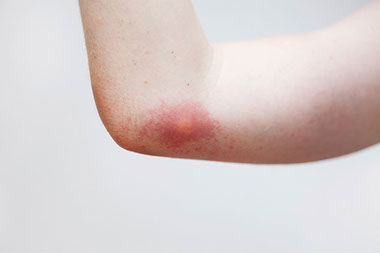
    *  Superficial phlebitis (SP) occurs just under the skin’s surface. The affected area is swollen and feels warm and tender. At times, a hard ropy vein is felt. This type seldom showers clots into the bloodstream.

    *  Deep-vein thrombosis (DVT) occurs within a muscle mass (commonly the leg). It is apt to release showers of clots (emboli) that often go to the lung (pulmonary emboli). The symptoms may resemble those of SP; the limb may swell and/or the muscle involved may ache. Often, DVT symptoms are silent and can’t be seen. In silent DVT, the first symptoms may be from a blood clot to the lung. These include sudden shortness of breath and severe problems breathing; sudden chest pain; and/or collapse.

    Causes, Risk Factors & Care

    Phlebitis is usually caused by infection, injury, or poor blood flow in a vein. It is common in women over age 50. Conditions that can lead to SP and/or DVT include:

    *  Inactivity. This could result from prolonged bed rest, a sedentary job, or a long trip, especially in a cramped space, such as sitting in the economy class section of a plane.

    *  Varicose veins

    *  Being overweight, in poor physical condition, or older in age

    *  Estrogen therapy

    *  Trauma to an arm or leg. Examples are a fall or injury to the vein, such as from injections or IV needles.

    *  Heart failure or a heart attack

    *  Some cancers

    A doctor needs to diagnose SP with or without DVT or DVT alone. Treatment for SP alone includes resting the affected limb, warm compresses, and pain relievers.

    Treatment for DVT includes blood thinning medicine, possible hospitalization, and surgery if a blood clot to the lung has occurred.

    Prevention

    *  Avoid sitting or standing for long periods without moving around.

    *  Inform your doctor if you have a history of varicose veins, superficial phlebitis (SP), or deep-vein thrombosis (DVT) and take estrogen.

    *  Don’t sit with your legs crossed. Don’t wear tight garments below the waist, such as knee-high hosiery.

    *  On trips, drink a lot of fluids (no alcohol) and move about at least every hour. While sitting, exercise the legs.

    *  If you’re confined to a bed or a chair, stretch often. Push with the feet, pretending you’re pressing on a gas pedal and then release it. Do this with one foot, then the other.

    *  Avoid tobacco.

    Self-Care

    It is best to let your doctor diagnose if you have phlebitis or thrombosis. If SP is diagnosed, you may be told to follow these self-care measures:

    *  Wear elastic support stockings as prescribed by your doctor.

    *  Rest the affected limb as advised. Elevate it when you rest.

    *  Apply moist, warm compresses to the area of pain.

    *  Take an over-the-counter medicine for pain and inflammation. Take the one your doctor advises.

    *  Don’t massage or rub the limb.

    *  Don’t sit or stand for long periods of time. When you sit, elevate the limb. Continue with your regular activities, though, as much as you can.

    *  Follow “Prevention” measures in this topic.

    When to Seek Medical Care

    Contact Doctor When:

    You have 1 or more of these problems:

    *  Redness, pain, and a burning feeling in the leg

    *  Swelling and the feeling of a cordlike vein beneath the skin along the length of the vein

    Get Immediate Care When:

    *  You have symptoms of a blood clot to the lung:

    –  Sudden onset of chest pain with calf pain

    –  Sudden shortness of breath and severe problems breathing

    –  Rapid heartbeat

    –  Cough with bloody sputum (sometimes)

    –  Chest pain in a person who has had a recent operation or illness that has kept them in bed

    *  You have symptoms of deep-vein thrombosis (DVT):

    –  Swelling and warmth in the leg

    –  Pain in the ankle, calf, or thigh that does not go away with rest

    –  The affected skin area is red and tender.

    Health at Home Lifetime book by the American Institute for Preventive Medicine. www.HealthyLife.com. All rights reserved.

    © American Institute for Preventive Medicine