Tag: symptoms

  • Chest Pain & Heart Disease

    Women’s Health

    Women making heart shape with hands and wearing a wear dress.

    Chest pain can be a warning sign for many things. It is often linked to a heart attack, especially in men. Women should be just as concerned. Heart disease is the number one cause of death for women in the U.S.

    Signs & Symptoms

    Angina

    With this, the heart does not get as much blood and oxygen as it needs for a given level of work. This causes pain, discomfort, or a squeezing pressure in the chest. Aching in a tooth, jaw or neck can also occur. Symptoms usually go away with rest and/or nitroglycerin. Angina attacks may occur with anger, excitement, or exertion, such as walking up a hill.

    Heart Attack

    *  Chest pressure or pain (may spread to the arm, neck, back, tooth or jaw).

    *  Feelings of chest tightness, squeezing, or heaviness that last more than a few minutes or go away and come back.

    *  Chest discomfort with: shortness of breath, nausea, sweating, fast or uneven pulse, or fainting.

    *  An uneasy feeling in the chest with: fluttering or rapid heartbeats, extreme fatigue or weakness, unexplained or extreme anxiety, or severe indigestion that doesn’t go away with an antacid.

    *  Unusual chest, abdominal or stomach pain.

    *  Dizziness, nausea, trouble breathing, jaw or arm pain without chest pain.

    {Note: For any of these signs, don’t delay. Call 911 right away!} After your call:

    *  Chew 162-325 mg uncoated aspirin (up to 4 baby aspirins), unless you are allergic to aspirin.

    *  Be sure to tell the EMS driver that you are having chest pain.

    Heart Failure

    With this, the heart “fails” to supply the body with enough blood and oxygen for its needs. This develops slowly. It becomes chronic. Symptoms are: shortness of breath, feeling very tired or weak, swelling in the lower legs, ankles, and feet, dry cough or one with pink, frothy mucus, rapid weight gain, and a fast heartbeat.

    Causes

    Heart disease is caused by atherosclerosis. This is the buildup of plaque in the inner walls of the arteries. The plaque is made up of blood, platelets, cholesterol, fibrous tissue, and sometimes, calcium. Blood flow to the heart is slowed or blocked. Besides heart disease, chest pain can also be a symptom of:

    *  Mitral valve prolapse (MVP), a heart-valve problem.

    *  Bronchitis, pneumonia, lung injuries, etc.

    *  Heartburn or a hiatal hernia.

    *  Shingles.

    *  A pulled muscle or even swallowing too much air.

    Treatment

    Heart disease needs medical treatment. It is not always easy to know whether or not to seek medical care for chest pain. When in doubt, check it out. Prompt medical treatment for a heart attack or severe lung injury could be life-saving.

    Questions to Ask

    Self-Care / Prevention

    Reduce the Risk of Heart Disease

    *  Have regular medical checkups. Get your blood pressure and blood cholesterol checked as often as advised by your doctor.

    *  Don’t smoke or use tobacco. If you do, quit.

    *  Be at a healthy weight.

    *  Take all medications, as prescribed.

    *  If you have diabetes, high blood pressure or high cholesterol, follow your treatment plan.

    *  Follow a diet low in saturated fats, trans fats, and cholesterol. Limit sodium to 1500 mg to 2,400 mg per day. Eat plenty of vegetables and fruit, fiber-rich whole grains, fatty fish, nuts, seeds, beans, lentils, and olive or canola oil. Limit processed meats and sugary foods and beverages.

    *  Do regular exercise.

    *  Avoid or limit alcohol to one drink per day.

    *  Manage stress. Practice relaxation techniques.

    Pulled Muscle or Minor Injury to the Rib Cage

    *  Do not strain the muscle or ribs while pain is felt.

    *  Rest.

    *  Take an over-the-counter medicine for pain.

    Heartburn or a Diagnosed Hiatal Hernia

    *  Lose weight, if you are overweight.

    *  Eat 5 to 6 small meals a day and chew thoroughly.

    *  Avoid tobacco and alcohol. Avoid “trigger” foods, such as caffeine, spicy foods, citrus juices, chocolate, and  carbonated drinks.

    *  Don’t bend over or lie down after eating.

    *  For heartburn, take antacids after meals and before going to sleep.

    *  Don’t have food 2 hours before bedtime.

    *  Do not wear tight clothes, tight belts or girdles.

    *  Sleep on a bed with the head raised about 6 inches.

    Anxiety and Hyperventilating

    *  Talk about your anxiety with someone you trust.

    *  When you hyperventilate: Open up a small paper bag. Loosely cover your nose and mouth with it. Breathe slowly into the bag. Rebreathe the air in the bag. Do this about 10 times. Set the bag aside. Breathe normally for a couple of minutes.

    *  Try to breathe slowly. Focus on taking one breath every 5 seconds.

    Inflammation of the Cartilage Where the Ribs Attach to the Breastbone (Costochondritis)

    *  Take aspirin, ibuprofen, or naproxen sodium for pain.

    Mitral Valve Prolapse (MVP)

    *  Follow your doctor’s guidelines for self-care.

    *  Eat healthy foods. Limit caffeine and alcohol.  Don’t smoke.

    *  After checking with your doctor, exercise regularly to improve cardiovascular fitness.

    *  Deal with and control stress and anxiety.

    Resources

    American Heart Association & Go Red For Women

    888.MY.HEART (694.3278)

    www.heart.org

    www.GoRedForWomen.org

    National Heart, Lung, and Blood Institute (NHLBI)
    www.nhlbi.nih.gov

    Women's Self-Care book by the American Institute for Preventive Medicine. www.HealthyLife.com. All rights reserved.

    © American Institute for Preventive Medicine
  • Minutes Count With A Stroke

    MEDICAL NEWS

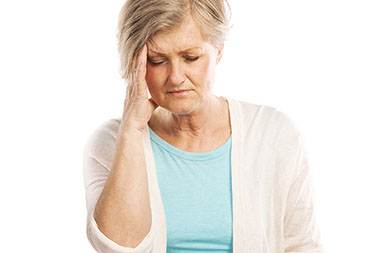
    Image of older women with hand on head.

    If someone were having a stroke, would you recognize the signs? Would you know what to do?

    These are important questions to consider. During a stroke, brain cells are damaged due to a blood clot or rupture of a blood vessel in the brain. This can lead to serious disability and death.

    According to the National Institute of Neurological Disorders and Stroke, about 795,000 strokes occur every year. It is the third leading cause of death in the U.S. But with fast action, you might save someone from permanent brain damage.

    Preventing stroke

    Health problems like atrial fibrillation (an irregular beating of the heart), high cholesterol, high blood pressure, heart disease and diabetes increase your risk. Take medicines to control risk factors and follow a heart-healthy lifestyle. Eat right, exercise, limit alcohol and don’t smoke. See your doctor as recommended for health exams and screenings.

    Aspirin may help reduce the risk of stroke due to a blood clot in women ages 55-79 years, but you should discuss the use of aspirin with your doctor before taking it.

    Know the signs of stroke

    The five most common signs and symptoms of stroke:

    *SUDDENnumbness or weakness of the face, arm or leg

    *SUDDENconfusion, trouble speaking or understanding others

    *SUDDENtrouble seeing in one or both eyes

    *SUDDENdizziness, trouble walking or loss of balance or coordination

    *SUDDENsevere headache with no known cause

    What to do

    Call 9-1-1 immediately. Hospital emergency rooms have medication that can dissolve blood clots and restore blood flow to the brain. The window of opportunity is three hours, but in order to receive treatment in time, patients must get to the hospital within 60 minutes. Don’t wait – if you see signs of stroke, seek emergency medical care!

    © American Institute for Preventive Medicine

  • Ectopic Pregnancies

    Pregnancy & Prenatal Care

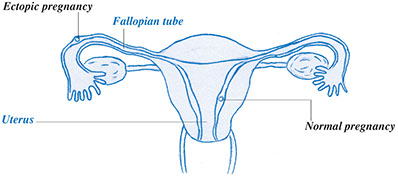
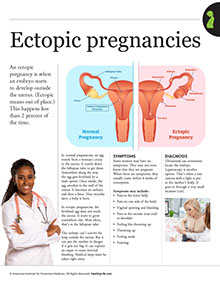
    An ectopic pregnancy is when an embryo starts to develop outside the uterus. (Ectopic means out of place.) This happens less than 2 percent of the time.

    In normal pregnancies, an egg travels from a woman’s ovary to the uterus. It travels down the fallopian tube to get there. Somewhere along the way, the egg gets fertilized by a male sperm. Once inside, the egg attaches to the wall of the uterus. It becomes an embryo and then a fetus. Nine months later, a baby is born.

    In ectopic pregnancies, the fertilized egg does not reach the uterus. It starts to grow somewhere else. Most often, that’s in the fallopian tube.

    The embryo can’t survive for long outside the uterus. But it can put the mother in danger if it gets too big. It can rupture an organ or cause internal bleeding. Medical steps must be taken right away.

    Symptoms

    Some women may have no symptoms. They may not even know that they are pregnant. When there are symptoms, they usually come within 8 weeks of conception. Symptoms may include:

    *  Pain in the lower belly

    *  Pain on one side of the body

    *  Vaginal spotting and bleeding

    *  Pain in the rectum (rear end) or shoulder

    *  Feeling like throwing up

    *  Throwing up

    *  Feeling weak

    *  Fainting

    Diagnosis

    Ultrasound can sometimes locate the embryo. Laparoscopy is another option. That’s when a tiny camera with a light is put in the mother’s body. It goes in through a very small incision (cut).

    Illustration of normal vs ectopic pregnancy.

    Causes

    There are many causes for ectopic pregnancies:

    *  Damage to the ovary or fallopian tube

    *  Scarring of the ovary or fallopian tube. Scarring can result from endometriosis, pelvic inflammatory disease or an STD.

    Also, the risk for an ectopic pregnancy is higher for women who:

    *  Have had an ectopic pregnancy in the past

    *  Have had fallopian tube surgery

    *  Have had problems getting pregnant

    *  Have used an IUD for birth control

    These women should call their health care provider when they miss a menstrual period.

    Treatment

    Medicines may be used. But if some time has passed, surgery may be needed. The embryo is removed. Any damage to the mother’s body is repaired. In some rare cases, a fallopian tube or ovary must be removed. But women have another set of these. So the mother may become pregnant again.

    Questions to Ask

    Self-Care / Prevention

    Tips to Lower the Risk of an Ectopic Pregnancy

    *  Talk to your health care provider about your risks for damage to your fallopian tubes from:

    – STDs

    – Pelvic Inflammatory Disease

    – Endometriosis

    *  Ask if you need to get tested for these and how often. Find out, too, if your health plan pays for these tests.

    *  Schedule any tests needed with your health care provider.

    Prenatal Self-Care book by the American Institute for Preventive Medicine. www.HealthyLife.com. All rights reserved.

    © American Institute for Preventive Medicine
  • Questions Answered About Mers

    MEDICAL NEWS

    Illustration of lungs with MERS.

    As concern increases about Middle Eastern Respiratory Syndrome, or MERS, in the Middle East and in Asia, Dr. Peter Hotez, dean of the National School of Tropical Medicine at Baylor College of Medicine, answers questions on what we need to know about this emerging infectious disease.

    What is MERS?

    It is a serious lower respiratory infection caused by the MERS coronavirus. This emerging viral pathogen was first acquired from camels, but now has limited human-to-human transmission.

    What are the symptoms?

    The symptoms include fever, cough, and respiratory symptoms that could lead to respiratory failure and other organ system breakdown. This infectious disease is similar to SARS (severe acute respiratory syndrome) that caused a severe and highly lethal outbreak in South China in 2002-2003. Some data from previous SARS outbreaks indicate that 13% of cases may have no symptoms and this could also be true for MERS.

    How is it spread?

    The mode of spread is still not well known. In general, it involves close contact, especially in health care settings. For SARS, a related coronavirus, sneezing and cough seems to facilitate transmission.

    Is there a treatment? Is there a vaccine?

    There is no proven antiviral treatment, yet, for MERS. Several prototype vaccines are in different stages of development.

    Who is at risk? Any groups more at risk?

    For about 30 to 40%, of people who get MERS, the disease is fatal. At greatest risk of dying are the elderly and those with underlying heart and lung disease or diabetes.

    Should we be concerned?

    The MERS epidemic in South Korea looks as though it will be contained soon with all new cases appearing among the estimated 3,000 people in quarantine. However, in Saudi Arabia and elsewhere on the Arabian Peninsula, new cases continue to appear. Individuals thinking about travelling to the Arabian Peninsula should consult their doctor if they are elderly or have underlying chronic disease conditions.

    © American Institute for Preventive Medicine
  • Heat Illnesses

    First Aid

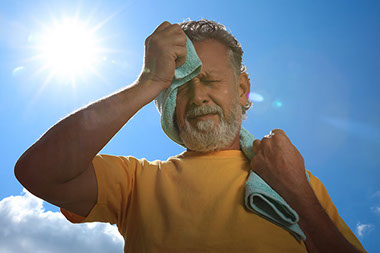
    Man outside in bright sun, wiping forehead with towel.

    Most heat-related deaths occur in the hot summer months. Elderly and very young persons and people with chronic health problems are most at risk.

    Sweating normally cools the body. During hot weather, sweating isn’t enough. Body temperature can rise to dangerous levels and you can develop a heat illness. This includes heat stroke, which can be life-threatening. Heat exhaustion, if not treated, can turn into heat stroke.

    A less serious heat illness is a heat rash. Signs include small red pimples, pink, blotchy skin, and itching. To treat a heat rash, bathe in cool water every couple of hours. Let your skin air dry. Put cornstarch or calamine lotion on itchy areas.

    When the heat starts to rise, slow down. Drink plenty of fluids (ones without alcohol or caffeine). Stay in the shade or indoors. Wear light, loose-fitting clothing and a wide brimmed hat. Do not stay in or leave anyone in a closed, parked car during hot weather.

    Health at Home Lifetime book by the American Institute for Preventive Medicine. www.HealthyLife.com. All rights reserved.

    © American Institute for Preventive Medicine

  • Sick Kid?

    FAMILY LIFE

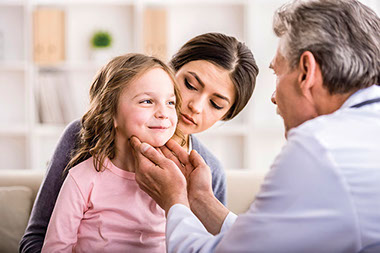
    Image of mother and child at the doctor's office.

    For many reasons, a child being home from school while sick can be stressful. Parents worry about the severity of their child’s illness and about the child missing school, all while trying to shuffle work schedules to be home.

    But when should kids stay home from school? Dr. Hannah Chow-Johnson, pediatrician at Loyola University Health System, gives some guidelines to help parents make that decision.

    Pinkeye.

    Extremely contagious and is usually caused by a virus. One of the first signs of pinkeye is discomfort. Other symptoms include a sticky discharge that can cause the eyelids to stick together, and the area around the eye can look red and swollen. Stay home until the redness is gone.

    Stomach problems.

    Gastroenteritis or the stomach flu can cause vomiting and diarrhea. Most often, it is caused by a virus. A child needs to rest and take gradual fluids to recover. Stay home until the vomiting and diarrhea are gone for 24 hours.

    Fevers.

    Most schools have a policy that a child can’t attend if they have a fever higher than 100 degrees F and the child needs to be fever-free for 24 hours before returning to school. Stay home and rest.

    Coughing.

    If a child has a steady cough, a hacking cough, or coughing fits, he or she should stay home. It’s also important for children and adults to be vaccinated against pertussis (whooping cough). Go back to school with a minor cough, but practice good coughing skills such as coughing into a tissue or elbow and washing hands often.

    Sore throat.

    Many parents think sore throat means strep throat, but in 70% of the cases the pain is caused by a virus. Symptoms of strep also include headache, stomachache, and fever. Sometimes there is a sunburn-like rash on the throat. Stay home if the doctor has given an antibiotic and the child has been on it for 24 hours. If the sore throat is viral, return to school when the child feels better.

    Lice.

    Unfortunately those stubborn bugs mean no school for kids. They can quickly spread through a classroom. Children need lice treatment and combing to remove all nits.

    © American Institute for Preventive Medicine

  • Menopause

    Women’s Health

    Menopause occurs when menstrual periods have stopped for one whole year. It is also called “the change of life.” In general, this occurs between the ages of 45 and 55. It can, though, occur as early as age 35 or as late as age 65. It can also result when both ovaries are removed by surgery.

    Signs & Symptoms

    Signs and symptoms usually span 1 to 2 or more years. This is called peri-menopause. Symptoms vary from woman to woman. They result from hormone changes, the aging process itself, fatigue, and stress.

    Physical Signs and Symptoms

    *  Hot flashes. These are sudden waves of heat that can start in the waist or chest and work their way to the neck and face and sometimes the rest of the body. They can occur as often as every 90 minutes. Each one can last from 15 seconds to 30 minutes; 5 minutes is average. Seventy-five to 80% of women going through menopause have hot flashes. Some women are more bothered by them than others. Sometimes heart palpitations come with hot flashes.

    *  Vaginal dryness. The vaginal wall also becomes thinner. These problems can make sex painful or uncomfortable. Irritation can increase the risk for infection.

    *  Loss of bladder tone. This can result in stress incontinence (leaking urine when you cough, sneeze, laugh, or exercise).

    *  Headaches.

    *  Dizziness.

    *  The skin is more likely to wrinkle.

    *  Hair grows on the face, but thins at the temples.

    *  Muscles lose some strength and tone.

    *  Bones become more brittle. This increases the risk for osteoporosis.

    *  Irregular periods:

    – Bleeding can occur between periods. This is the most common bleeding pattern in peri-menopause.

    – Periods get shorter and lighter for 2 or more years.

    – Periods can stop for a few months and then start up again and are more widely spaced.

    – Periods occur with heavy bleeding and/or the passage of many small or large blood clots.

    Emotional Signs and Symptoms

    *  Irritability.

    *  Mood changes.

    *  Lack of concentration. Memory problems.

    *  Tension, anxiety, depression.

    *  Insomnia. Hot flashes can interrupt sleep.

    Causes

    Hormone changes that come with aging cause menopause. The body makes less estrogen and progesterone.

    Treatment

    Self-care may be all that is needed. Just estrogen can be prescribed. This is estrogen therapy (ET). Estrogen plus progestogen can be prescribed. This is called EPT. The term hormone therapy (HT) is used for both ET and EPT. Hormone therapy helps protect against osteoporosis, but has health risks. Each women should discuss the benefits and risks of HT and non-estrogen treatments with her doctor.

    Questions to Ask

    Self-Care / Prevention

    For Hot Flashes

    *  Wear lightweight clothes made of natural fibers, such as cotton.

    *  Limit or avoid alcohol. Limit caffeine.

    *  Have cool drinks, especially water, when you feel a hot flash coming on and before and after you exercise. Avoid hot drinks.

    *  Keep cool. Open a window. Lower the thermostat when the heat is on. Use air conditioning and/or fans. Carry a small fan with you.

    *  Try to relax when you get a hot flash. Getting stressed out over one only makes it worse.

    *  Use relaxation techniques, such as meditation, biofeedback or yoga.

    *  Follow your doctor’s advice for taking herbal products, such as black cohosh; vitamin supplements; over-the-counter menopause aids; and soy products.

    *  If you suffer from night sweats (hot flashes that occur as you sleep):

    – Wear loose fitting cotton nightwear. Have changes of nightwear ready.

    – Sleep with only a top sheet, not blankets.

    – Keep the room cool.

    For Vaginal Dryness and Painful Sex

    *  Don’t use deodorant soaps or scented products in the vaginal area.

    *  Use a water soluble lubricant, such as K-Y Liquid®, Replens®, etc. These make penetration easier during sex. Avoid oils or petroleum-based products. These promote infection.

    *  Ask your doctor about the benefits and risks of using estrogen (pills, patches, vaginal cream, or rings).

    *  Stay sexually active. Having sex often may lessen the chance of having the vagina constrict. It also helps to maintain natural lubrication and pelvic muscle tone. Reaching orgasm with a partner or alone gives these benefits.

    *  If you can, avoid using antihistamines. They dry mucus membranes in the body.

    For Emotional Symptoms

    *  Exercise regularly. This helps maintain hormonal balance.

    *  Talk to other women who have gone through or are going through menopause.

    *  Avoid stress as much as you can.

    *  To deal with stress, use relaxation techniques. Examples are meditation, yoga, listening to soft music, and massages.

    *  Eat healthy. Take vitamins and minerals, as advised.

    Resources

    National Women’s Health Information Center

    www.womenshealth.gov

    North American Menopause Society (NAMS)

    www.menopause.org

    Women's Self-Care book by the American Institute for Preventive Medicine. www.HealthyLife.com. All rights reserved.

    © American Institute for Preventive Medicine
  • Signs Of Pregnancy

    Pregnancy & Prenatal Care

    What to Look For

    Do you think you might be pregnant? Here are some signs to look for:

    *  You have missed a menstrual period. You are at least 2 weeks late. {Note: Stress or illness can cause your period to be late, too. And, some women do not have regular periods. It may be hard for them to know if their period is  2 weeks late. Other women can have a light menstrual period or spotting and still be pregnant. So watch for other signs also listed here.}

    *  You feel tired. This is the most common sign.

    *  You feel sick to your stomach. You may even throw up. This is called “morning sickness.” But it can occur any time of day or night.

    *  You need to pass urine more often.

    *  You have food cravings.

    *  Your taste for certain foods changes.

    *  You have a metallic taste in your mouth.

    *  There are changes in your breasts.

    – They feel tender.

    – They feel tingly.

    – They are swollen.

    – The dark areas around your nipples are darker than before.

    – The tiny glands around your nipples stick up.

    Prenatal Self-Care book by the American Institute for Preventive Medicine. www.HealthyLife.com. All rights reserved.

    © American Institute for Preventive Medicine
  • Thyroid Awareness

    Ear, Nose & Throat Conditions

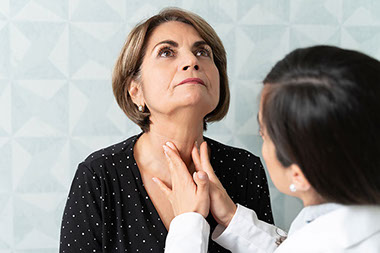
    Doctor examining women's neck.

    The thyroid is in front of the windpipe. It helps control your metabolism.

    An easy blood test can help diagnose thyroid problems. Be sure to tell your doctor if you have any symptoms.

    Low thyroid is called hypothyroidism. With this, body functions slow down because the thyroid gland does not make enough thyroid hormone. See your doctor if you have a lot of fatigue, are depressed, have dry, pale skin, feel cold often, and have constipation.

    High thyroid is called hyperthyroidism. The thyroid gland makes too much thyroid hormone. It gets larger. This is called goiter. Other symptoms include weight loss, irregular heartbeat, muscle weakness, sweating, trouble sleeping, and more.

    Do a “Neck Check:” In front of a mirror, tilt your chin up slightly and swallow a glass of water. Look at your neck as you swallow. Check for any bulges between your Adam’s apple and collarbone. If you see any, contact your doctor.

    Health at Home Lifetime book by the American Institute for Preventive Medicine. www.HealthyLife.com. All rights reserved.

    © American Institute for Preventive Medicine