Tag: target

  • Set Goals 2

    SleepWell® Program

    Week 2

    Image of wood blocks with letters spelling "smart."

    View sleep improvement as a long-term project, especially if you have had poor sleep for a long time. First, define small steps you want to take. Continue to reflect on your efforts.

    Small Steps

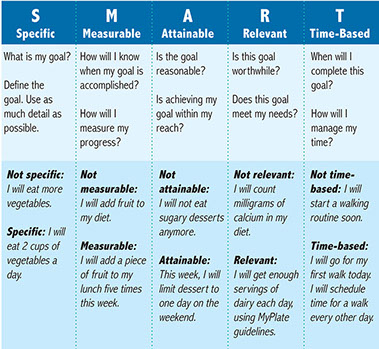
    Think of the actions you take on a daily basis as small steps towards your bigger goal. This guide has already given you many ideas for small steps. Examples are limiting caffeine and dimming the lights one hour before bedtime. Identify your next change and use the following guidelines to improve your goal. All goals should be:

    Chart on S.M.A.R.T.

    Stay motivated with the small successes you achieve along the way. Use your SleepWell® Tracker every day for feedback on the effect your actions have on your sleep.

    Reminder:If your sleep issues are chronic (last longer than three weeks), your primary goal should be to schedule an appointment with your doctor or a sleep specialist.

    Practice Goal-Setting

    Strengthen your goal using the S.M.A.R.T. tool. Start with a simple statement about what you want to accomplish. Next, write how your goal will be specific, measurable, attainable, relevant, and timely.

    Barriers to Change

    As you think more about your goal, roadblocks may appear. You may need tools or skills to achieve your goal. Identify what is making it difficult for you to change. Barriers do not mean you can’t make the change. Identify challenges that must be overcome to succeed.
    © American Institute for Preventive Medicine

  • Set Fitness Goals

    Healthylife® Weigh

    Part 5

    Active women with armband to hold smartphone.

    Set your own fitness goals. Other people may have suggestions, but choose a goal that you want to go after. Other people’s fitness goals should not interfere with one you set for yourself.

    *  Write down your goals. This gives them more importance.

    *  Your goals should be within reach, but challenging. Make sure your goals are S.M.A.R.T. Does your goal meet the criteria?

    *  Know why you are setting each goal. For example, you may be doing this exercise for stress relief or to try something new. Or, you are meeting a friend and want to help them stick to their goal.

    *  Review and adjust your goals as needed. It takes practice to know how to set reasonable but challenging goals for yourself.

    *  Track your progress and reward yourself for successes.

    © American Institute for Preventive Medicine
  • Set Goals

    Healthylife® Weigh

    Part 3

    The word Smart spelled out with wood lettering and hand writing definition for setting a smart goal.

    Think of the actions you take on a daily basis as small steps toward your bigger goal. This guide has already given you many ideas for small steps, such as making half of your plate fruits and vegetables and choosing fewer sugar-sweetened drinks. Identify your next step and use the S.M.A.R.T. tool to improve the chances of reaching your goal.

    Stay motivated with the small successes you achieve along the way. Use yourEating & Exercise Tracker™every day for feedback on the effect your actions have on your energy level, mood, and weight.

    S.M.A.R.T. chart.

    © American Institute for Preventive Medicine