Tag: taste

  • Is Sea Salt Better Than Regular Salt?

    HEALTHY EATING

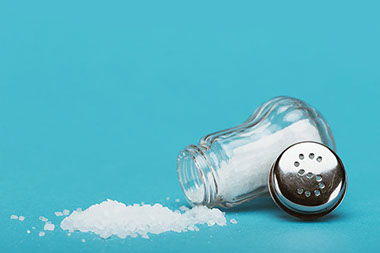
    A salt bottle opened with spilled salt.

    Many food products contain “sea salt” as an ingredient instead of table salt, also commonly called “salt.” In particular, many so-called natural food products say they use sea salt. But is sea salt any healthier than old-fashioned table salt?

    What’s the difference?

    In general, sea salt has a coarse, crunchy texture. Table salt has a more fine grind and may have a weaker taste. In foods like potato chips or sea salt caramels, some people prefer the flavor and texture of sea salt.

    Sea salt is made from evaporated sea water. It’s usually not processed, so it may be considered a more “natural” choice. It may contain trace levels of minerals like magnesium, potassium and calcium. But, these minerals are found in small amounts. So, eating sea salt is not a reliable way to get more minerals in your diet.

    Table salt comes from mined salt deposits. It is processed into a fine texture. During this process, it usually loses its other minerals. However, most table salt brands contain added iodine, which is a necessary nutrient that many people don’t get enough of. Table salt may also contain some additives to prevent clumping.

    Same in sodium

    Although sea salt shows up in many “natural” food products, it’s not usually healthier. Sea salt and table salt have about 40 percent sodium by weight.

    Some types of sea salt say that they contain less sodium than table salt. To check this, read the Nutrition Facts panel on the package. Table salt contains about 575 mg of sodium in ¼ teaspoon.

    Going coarser

    Some very coarse salts like kosher salt may have slightly less sodium, teaspoon for teaspoon. This is because the larger crystal size makes it less compact, so you can’t get as much salt into your measuring spoon.

    In these cases, using a coarse type of salt in cooking may help you reduce sodium content, but probably not by very much. Some people prefer the taste and texture of a very coarse salt. But don’t use it thinking that you’ll really reduce your sodium intake.

    Choose the type of salt you prefer, and use it sparingly. One type isn’t healthier than another. Talk to your doctor about how much sodium you should eat each day.

    Source: American Heart Association
    © American Institute for Preventive Medicine
  • Enhance Your Sense Of Taste

    Mature Health: Over Age 50

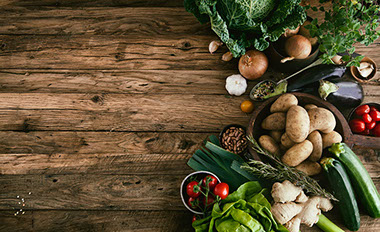
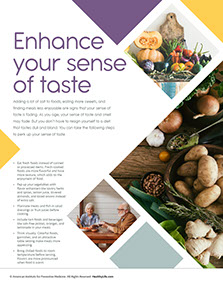
    Image of fresh foods and herbs, such as potatos, tomatoes, onions, etc.

    Adding a lot of salt to foods, eating more sweets, and finding meals less enjoyable are signs that your sense of taste is fading. As you age, you may lose up to 50 percent of your taste buds. But you don’t have to resign yourself to a diet that tastes dull and bland. You can take the following steps to perk up your sense of taste.

    *  Eat fresh foods instead of canned or processed items. Fresh-cooked foods are more flavorful and have more texture, which adds to the enjoyment of food.

    *  Pep up your vegetables with flavor enhancers like savory herbs, lemon juice, slivered almonds, and sliced onions instead of extra salt.

    *  Marinate meats and fish in salad dressings or fruit juices before cooking.

    *  Include tart foods and beverages like salt-free pickles, oranges, and lemonade in your meals.

    *  Think visually. Colorful foods, garnishes, and an attractive table setting make meals more appetizing.

    *  Bring chilled foods to room temperature before serving. Flavors are more pronounced when food is warm.

    A Year of Health Hints book by the American Institute for Preventive Medicine. www.HealthyLife.com. All rights reserved.

    © American Institute for Preventive Medicine
  • Sweet Sips, A Healthier Way!

    Healthylife® Weigh

    Part 3

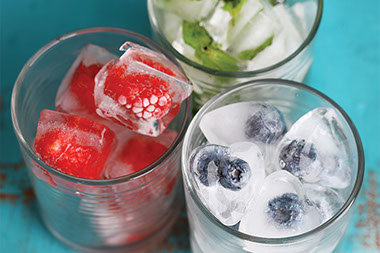
    Glasses of water with ice cubes that have berries frozen in them.

    Sugar-sweetened beverages can be a major source of added sugar. Cut back or eliminate these beverages from your everyday lifestyle. Save pop or soda for a once-in-a-while treat. As you reduce sugar in your diet, especially artificial sweeteners, you may find these drinks are too sweet for your new tastes!

    Make your own flavored water

    You can consume flavored beverages without added sugars AND get a few extra nutrients along the way! You will need:

    *  1-quart jars or a large pitcher

    *  Water

    *  Wooden spoon (or another long, sturdy spoon)

    Fruit and/or Fresh Herbs:

    You can start with just one cut-up fruit, but for a flavored water that will really pop, try combining at least two fruits or a fruit and an herb. Here are a few suggestions, but don’t be afraid to try your own combinations! For a single-serving, use less. For a whole pitcher, use more!

    Pineapple, Orange, & Ginger

    *  ½ cup cubed pineapple

    *  ½ an orange, sliced

    *  1 Tbsp. freshly-grated ginger

    Minty Cucumber Lime

    *  ½ a cucumber, sliced

    *  ½ a lime, sliced

    *  ¼ cup fresh mint leaves

    Orange and Blueberry

    *  1 Mandarin orange, broken into wedges

    *  Small handful of blueberries

    Strawberry, Lemon, & Basil

    *  ½ cup sliced strawberries

    *  ½ a lemon, sliced

    *  ¼ cup fresh basil leaves

    Watermelon Mint

    *  1 cup cubed watermelon

    *  ¼ cup fresh mint leaves

    Rosemary & Grapefruit

    *  ½ grapefruit (or ¼ grapefruit & ¼ orange)

    *  A few sprigs of rosemary

    Citrus with Cilantro or Mint

    *  2 large oranges, sliced

    *  1 lemon, sliced

    *  ½ large cucumber, sliced

    *  1 handful of fresh mint or cilantro

    Time to Build!

    1. Place the fruit, herbs, and any other ingredients in the bottom of a glass jar or pitcher. Or, using a wooden spoon, mash the ingredients to bring out the flavor. You can also scrunch the herbs in your hands before adding them to the jar. This helps bring out the flavor.

    2. Fill the jars with water and ice as desired. You can also add unsweetened carbonated/seltzer water if you are craving fizzy bubbles!

    3. The flavor will be more enhanced after the water sits for an hour. Or, refrigerate the water overnight. If you want to drink it right away, squeeze the fruit a little before you drop it in to help bring out the flavors faster.

    Other Sweet Beverage Ideas:

    Freeze ice cubes with fruit. Drop a few cubes of different colored fruits into a tall glass of cold water.

    Blend whole fruits in a smoothie with spinach, kale or other de-stemmed, leafy green vegetables.

    Diet or regular soda? Limit both.

    Most diet sodas contain artificial sweeteners. Studies have shown drinking diet soda is not any better at helping you manage your weight. Gradually cut back on soda.

    Even if you add a teaspoon of sugar to your coffee, this 4g of sugar is far less than the sugar found in the average soda. The average soda contains 39g of sugar in a 12-ounce can. In a 16-ounce bottle, a soda may contain 52g of sugar.

    © American Institute for Preventive Medicine