
Tag: therapy

  • Non-Drug Options For Chronic Pain

    SELF-CARE CORNER

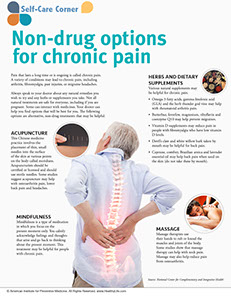
    Image of different herbs.

    Pain that lasts a long time or is ongoing is called chronic pain. A variety of conditions may lead to chronic pain, including  arthritis, fibromyalgia, past injuries, or migraine headaches.

    Always speak to your doctor about any natural remedies you wish to try and any herbs or supplements you take. Not all natural treatments are safe for everyone, including if you are pregnant. Some can interact with medicines. Your doctor can help you find options that will be best for you. The following options are alternative, non-drug treatments that may be helpful.

    Acupuncture

    This Chinese medicine practice involves the placement of thin, small needles into the surface of the skin at various points on the body called meridians. Acupuncturists should be certified or licensed and should use sterile needles. Some studies suggest acupuncture may help with osteoarthritis pain, lower back pain and headaches.

    Mindfulness

    Mindfulness is a type of meditation in which you focus on the present moment only. You calmly acknowledge feelings and thoughts that arise and go back to thinking about the present moment. This treatment may be helpful for people with chronic pain.

    Herbs and dietary supplements

    Various natural supplements may be helpful for chronic pain.

    *  Omega-3 fatty acids, gamma-linolenic acid (GLA) and the herb thunder god vine may help with rheumatoid arthritis pain.

    *  Butterbur, feverfew, magnesium, riboflavin and coenzyme Q10 may help prevent migraines.

    *  Vitamin D supplements may reduce pain in people with fibromyalgia who have low vitamin D levels.

    *  Devil’s claw and white willow bark taken by mouth may be helpful for back pain.

    *  Cayenne, comfrey, Brazilian arnica and lavender essential oil may help back pain when used on the skin (do not take these by mouth).

    Massage

    Massage therapists use their hands to rub or knead the muscles and joints of the body. Some studies show that massage therapy can help with neck pain. Massage may also help reduce pain from osteoarthritis.

    Source: National Center for Complementary and Integrative Health
    © American Institute for Preventive Medicine
  • What Is Marriage Counseling?

    FAMILY LIFE

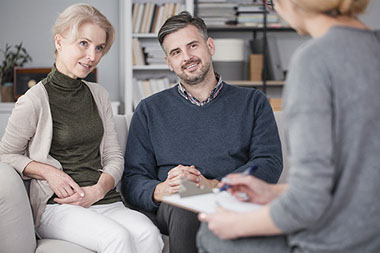
    Image of a couple with a marriage counselor.

    Marriage and relationships take lots of work. When a couple has a problem, they may wonder whether marriage therapy or couples counseling could help.

    Counseling usually includes talk therapy. This means you talk to a professional counselor about your issues. But, therapy isn’t just about talking. Your counselor may help one or both partners address mental health problems that can interfere with the relationship. For example, issues such as depression or anxiety may need treatment. This can go hand-in-hand with the couples counseling.

    When a couple goes to counseling, they can get “tools” to use in daily life that help them with their communications. For instance, therapy can give you new ways to look at challenges or problems. This can help you address issues before they become too big to handle. You may also learn ways to talk to each other so you can work out arguments in positive and constructive ways.

    However, if the marriage involves physical or emotional abuse, couples counseling is not going to be the answer. Instead, the person who is abusing their partner should seek treatment for their problems. The victim of abuse should speak privately with their doctor about how they can get away from the abuse.

    Help for resolving arguments

    If you need to talk something out with your spouse, try these tips:

    *  Listen first. Rather than tell your side, calmly listen to what your partner has to say. When he or she is done, then take your turn to speak.

    *  Don’t interrupt, and don’t yell.

    *  Be honest, but don’t insult. Talk about the behavior or incident that upset you. For instance: “When you did X, I felt like you didn’t care about my feelings.” Avoid name-calling.

    Sources: American Academy of Family Physicians, National Domestic Violence Hotline

    © American Institute for Preventive Medicine