Tag: thirst

  • Drink Water, The Nutrient For Every Cell

    Nutrition

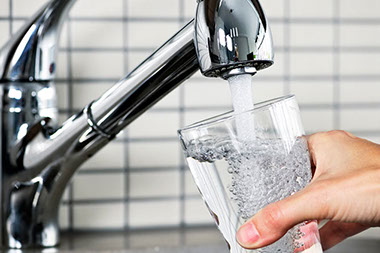
    Image of person filling up glass with tap water.

    Two-thirds of your body is composed of water, making it your body’s most vital nutrient. Water:

    *  Provides a valuable source of minerals, like calcium and magnesium.

    *  Helps digest food and absorb nutrients into the body.

    *  Carries nutrients to organs via the bloodstream.

    *  Moistens mucous membranes and lubricates the joints.

    *  Carries away bodily waste products.

    *  Cools the body through perspiration.

    Many people underestimate their need for water. The average adult should drink six to eight 8-ounce glasses of water (or its equivalent) a day. You can meet part of that quota by consuming high water content foods.

    Some examples include:

    *  Iceberg lettuce (95 percent water).

    *  Cantaloupe (91 percent water).

    *  Raw carrots (88 percent water).
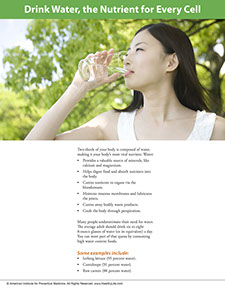
    Page from A Year of Health Hints book by the American Institute for Preventive Medicine. www.HealthyLife.com. All rights reserved.

    © American Institute for Preventive Medicine
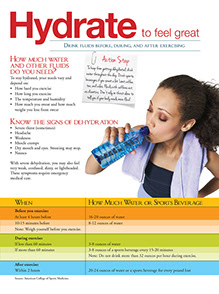
  • Hydrate To Feel Great

    Fitness

    Drink fluids before, during, and after exercising.

    How much water and other fluids do you need?

    To stay hydrated, your needs vary and depend on:

    *  How hard you exercise

    *  How long you exercise

    *  The temperature and humidity

    *  How much you sweat and how much weight you lose from sweat

    Know the signs of dehydration:

    *  Severe thirst (sometimes)

    *  Headache

    *  Weakness

    *  Muscle cramps

    *  Dry mouth and eyes. Sweating may stop.

    *  Nausea

    With severe dehydration, you may also feel very weak, confused, dizzy, or lightheaded. These symptoms require emergency medical care.

    Action Step

    To keep from getting dehydrated, drink water throughout the day. Drink sports beverages if you sweat a lot. Limit coffee, tea, and colas. Don’t rely on thirst alone to tell you if your body needs more fluid.

    Page image from the Ways to Well-Being book by the American Institute for Preventive Medicine. www.HealthyLife.com. All rights reserved.

    © American Institute for Preventive Medicine
  • Dehydration

    First Aid

    Image of women drinking a glass of water.

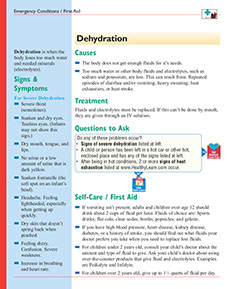
    Dehydration is when the body loses too much water and needed minerals (electrolytes).

    Signs & Symptoms

    For Severe Dehydration

    *  Severe thirst (sometimes).

    *  Sunken and dry eyes. Tearless eyes. (Infants may not show this sign.)

    *  Dry mouth, tongue, and lips.

    *  No urine or a low amount of urine that is dark yellow.

    *  Sunken fontanelle (the soft spot on an infant’s head).

    *  Headache. Feeling lightheaded, especially when getting up quickly.

    *  Dry skin that doesn’t spring back when pinched.

    *  Feeling dizzy. Confusion. Severe weakness.

    *  Increase in breathing and heart rate.

    Causes

    *  The body does not get enough fluids for it’s needs.

    *  Too much water or other body fluids and electrolytes, such as sodium and potassium, are lost. This can result from: Repeated episodes of diarrhea and/or vomiting; heavy sweating; heat exhaustion; or heat stroke.

    Treatment

    Fluids and electrolytes must be replaced. If this can’t be done by mouth, they are given through an IV solution.

    Questions to Ask

    Self-Care / First Aid

    *  If vomiting isn’t present, adults and children over age 12 should drink about 2 cups of fluid per hour. Fluids of choice are: Sports drinks; flat cola; clear sodas; broths; popsicles; and gelatin.

    *  If you have high blood pressure, heart disease, kidney disease, diabetes, or a history of stroke, you should find out what fluids your doctor prefers you take when you need to replace lost fluids.

    *  For children under 2 years old, consult your child’s doctor about the amount and type of fluid to give. Ask your child’s doctor about using over-the-counter products that give fluid and electrolytes. Examples are Pedialyte and Infalyte.

    *  For children over 2 years old, give up to 1-1/2 quarts of fluid per day.

    Healthier at Home book by the American Institute for Preventive Medicine. www.HealthyLife.com. All rights reserved.

    © American Institute for Preventive Medicine
  • Drink Water

    Healthylife® Weigh

    Part 3

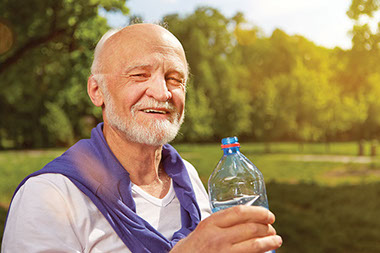
    Elderly man drinking water.

    Water does many important jobs for your body:

    *  Transports nutrients

    *  Helps you digest food

    *  Carries waste from the body

    *  Regulates body temperature

    *  Gives a feeling of fullness

    *  Helps break down fat for energy

    *  Lubricates joints

    *  Helps prevent muscle cramps

    Action Steps:

    *  Drink a glass of water before meals and snacks. This may help you manage your appetite.

    *  Replace a sugar-sweetened drink with water.

    *  Eat foods that are high in water, like cucumbers, leafy greens, and watermelon.

    *  Drink water regularly throughout the day.

    *  Keep a water bottle handy that you can refill when needed.

    *  If you are increasing your fiber intake, also increase your water intake to reduce the risk of constipation.

    How much should I drink?

    Your water needs depend on your activity level and weight. A general rule of thumb is to drink 8 cups of water per day. You may need more if you are very active or sweat a lot.

    How do I know if I’ve had enough?

    Check your urine. When you are properly hydrated, your urine should be light yellow or clear. If it is a darker yellow, you need to drink more water.

    © American Institute for Preventive Medicine