Stress Management
Time:
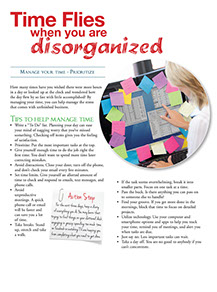
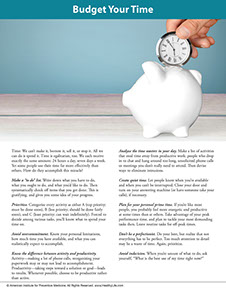
We can’t make it, borrow it, sell it, or stop it. All we can do is spend it. Time is egalitarian, too. We each receive exactly the same amount: 24 hours a day, seven days a week. Yet some people use their time far more effectively than others. How do they accomplish this miracle?
Make a “to do” list.
Write down what you have to do, what you ought to do, and what you’d like to do. Then systematically check off items that you get done. This is gratifying, and gives you some idea of your progress.
Prioritize.
Categorize every activity as either A (top priority; must be done soon), B (less priority; should be done fairly soon), and C (least priority; can wait indefinitely). Forced to decide among various tasks, you’ll know what to spend your time on.
Avoid overcommitment.
Know your personal limitations, how much time you have available, and what you can realistically expect to accomplish.
Know the difference between activity and productivity.
Activity-making a lot of phone calls, reorganizing your paperwork may or may not lead to accomplishment. Productivity-taking steps toward a solution or goal-leads to results. Whenever possible, choose to be productive rather than active.
Analyze the time wasters in your day.
Make a list of activities that steal time away from productive work: people who drop in to chat and hang around too long, unsolicited phone calls or meetings you don’t really need to attend. Then devise ways to eliminate intrusions.
Create quiet time.
Let people know when you’re available and when you can’t be interrupted. Close your door and turn on your answering machine (or have someone take your calls), if necessary.
Plan for your personal prime time.
If you’re like most people, you probably feel more energetic and productive at some times than at others. Take advantage of your peak performance time, and plan to tackle your most demanding tasks then. Leave routine tasks for off-peak times.
Don’t be a perfectionist.
Do your best, but realize that not everything has to be perfect. Too much attention to detail may be a waste of time. Again, prioritize.
Avoid indecision.
When you’re unsure of what to do, ask yourself, “What is the best use of my time right now?”
© American Institute for Preventive Medicine