Tag: timing

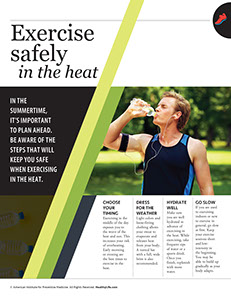
  • Exercise Safely In The Heat 2

    BE FIT

    Man outside drinking water and exercising.

    In the summertime, it’s important to plan ahead. Be aware of the steps that will keep you safe when exercising in the heat.

    Choose your timing

    Exercising in the middle of the day exposes you to the worst of the heat and sun. This increases your risk of overheating. Early morning or evening are the best times to exercise in the heat.

    Dress for the weather

    Light colors and loose-fitting clothing allows your sweat to evaporate and releases heat from your body. A vented hat with a full, wide brim is also recommended.

    Hydrate well

    Make sure you are well hydrated in advance of exercising in the heat. While exercising, take frequent sips of water or a sports drink.  Once you finish, replenish with more water.

    Go slow

    If you are used to exercising indoors or new to exercise in general, go slow at first. Keep your exercise sessions short and low-intensity in the beginning. You may be able to build up gradually as your body adapts.

    © American Institute for Preventive Medicine

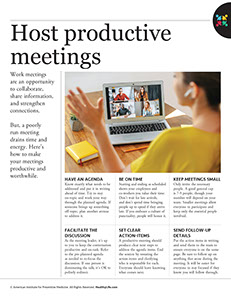
  • Host Productive Meetings

    WORK LIFE

    Video conferencing.

    Work meetings are an opportunity to collaborate, share information, and strengthen connections. But, a poorly run meeting drains time and energy. Here’s how to make your meetings productive and worthwhile.

    Have an agenda

    Know exactly what needs to be addressed and put it in writing ahead of time. Try to stay on-topic and work your way through the planned agenda. If someone brings up something off-topic, plan another avenue to address it.

    Be on time

    Starting and ending as scheduled shows your employees and co-workers you value their time. Don’t wait for late arrivals, and don’t spend time bringing people up to speed if they arrive late. If you embrace a culture of punctuality, people will honor it.

    Keep meetings small

    Only invite the necessary people. A good general cap is 7-9 people, though your number will depend on your team. Smaller meetings allow everyone to participate and keep only the essential people involved.

    Facilitate the discussion

    As the meeting leader, it’s up to you to keep the conversation productive and on-task. Refer to the pre-planned agenda as needed to re-focus the discussion. If one person is dominating the talk, it’s OK to politely redirect.

    Set clear action-items

    A productive meeting should produce clear next steps to address the agenda items. End the session by restating the action items and clarifying who is responsible for each. Everyone should leave knowing what comes next.

    Send follow-up details

    Put the action items in writing and send them to the team to ensure everyone is on the same page. Be sure to follow up on anything that arose during the meeting. It will be easier for everyone to stay focused if they know you will follow through.

    © American Institute for Preventive Medicine

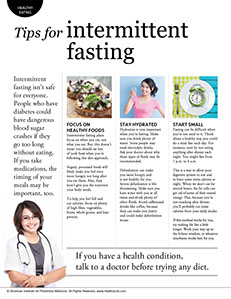
  • Tips For Intermittent Fasting

    HEALTHY EATING

    Clock sitting on top of a white plate.

    If you have a health condition, talk to a doctor before trying any diet.

    Intermittent fasting isn’t safe for everyone. People who have diabetes could have dangerous blood sugar crashes if they go too long without eating. If you take medications, the timing of your meals may be important, too.

    Focus on healthy foods

    Intermittent fasting plans focus on when you eat, not what you eat. But, this doesn’t mean you should eat lots of junk food when you’re following this diet approach.

    Sugary, processed foods will likely make you feel even more hungry not long after you eat them. Also, they won’t give you the nutrients your body needs.

    To help you feel full and cut calories, focus on plenty of high fiber, vegetables, fruits, whole grains, and lean protein.

    Stay hydrated

    Hydration is very important when you’re fasting. Make sure you drink plenty of water. Some people may need electrolyte drinks. Ask your doctor about why these types of fluids may be recommended.

    Dehydration can make you more hungry and is not healthy for you. Severe dehydration is life-threatening. Make sure you have water with you at all times and drink plenty of other fluids. Avoid caffeinated drinks like coffee, because they can make you jittery and could make dehydration worse.

    Start small

    Fasting can be difficult when you’re not used to it. Think about a healthy way you could do a mini fast each day. For instance, start by not eating anything after dinner each night. You might fast from   7 p.m. to 6 a.m.

    This is a way to allow your digestive system to rest and to burn some extra calories at night. When we don’t eat for several hours, the fat cells can get rid of some of their stored energy. Plus, because you’re not snacking after dinner, you’ll probably cut some calories from your daily intake.

    If this method works for you, try making the fast a little longer. Work your way up to the 8-hour window, or whatever timeframe works best for you.

    © American Institute for Preventive Medicine

  • Eating For Peak Performance

    Fitness

    Image of oat cereal with fresh fruit.

    No pill or magic formula can instantly turn you into a super-athlete. But eating right can help you perform at your best.

    Carbohydrates-from bread, pasta, potatoes, and fruit-provide energy for vigorous activity. So active people need to replenish this fuel frequently.  Don’t expect to get a quick energy boost from a snack you eat just before starting out, though.  Instead, consuming a high-carbohydrate food like skim milk and a banana, whole wheat bread, or an orange an hour or two before a workout acts like a time-release capsule of energy.

    Because you lose electrolytes (potassium, sodium, magnesium, and calcium) in sweat during vigorous activity, drink plenty of water and eat foods that are rich in these minerals. Almost all fruits and vegetables are rich in potassium, but potatoes, bananas, orange juice, winter squash, cantaloupe, sweet potatoes, and cooked beans are especially high. Sodium is rarely lost in quantities greater than amounts you would normally consume, so you don’t need to worry about getting extra.

    Page image from the A Year of Health Hints book by the American Institute for Preventive Medicine. www.HealthyLife.com. All rights reserved.

    © American Institute for Preventive Medicine

  • Knowing When Not To Weigh Yourself

    Weight Control

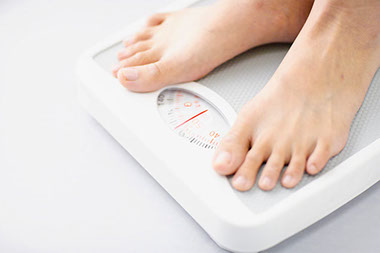
    Image on feet on a scale.

    If you weigh yourself every day, you’ll regret it. Of course, daily weigh-ins are tempting. When you’re working so hard to stay on a diet, you’re eager to see how you’re doing. But weighing yourself more than once a week may undermine your efforts. Here’s why:

    *  Praise each family member’s existing healthy habits. Note who takes the best care of their teeth, hair, or skin, for example.

    *  Set up health goals for each family member so that the heavy child isn’t the only one working on improving health.

    *  A moderate, acceptable weekly weight loss is around 1 pound. This comes out to an average of 2.3 ounces per day, which most scales do not register.

    *  You could easily get discouraged if no weight loss is recorded on a particular day. After a week, your weight loss is more likely to register.

    *  As much as 70 percent of your body weight consists of water. Your weight on the scale can go up and down daily due to fluctuations in water, so you can’t judge how well you did on your diet yesterday by what you weigh today. Consistent progress over many weeks is a true indication of fat being lost.

    *  Don’t become obsessed with the weight registered on your scale. The important issue is whether or not you’re learning new eating habits and exercising regularly. As you improve your eating and exercise habits, you will lose weight.

    Page from A Year of Health Hints book by the American Institute for Preventive Medicine. www.HealthyLife.com. All rights reserved.

    © American Institute for Preventive Medicine

  • How To Take Painkillers Safely

    Medication

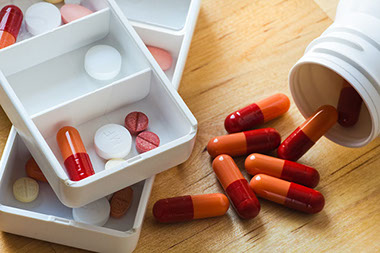
    Image of pills.

    Millions of Americans suffer from some form of chronic or severe pain. Many will seek relief with painkilling drugs or analgesics. Painkillers treat the symptom of pain rather than the root cause.

    Simple analgesics. This type of painkiller, such as aspirin or acetaminophen, provides relief from pain at the site of the injury or inflammation. (Aspirin decreases inflammation in addition to its analgesic effect.) These are not habit forming and they maintain effectiveness even after repeated use.

    Narcotic analgesics. Analgesics such as codeine or morphine provide relief by acting on the central nervous system, rather than by decreasing inflammation. The cause of the pain does not disappear, but it is easier to endure. These drugs also cause sedation. As the body builds up a tolerance to the narcotic, dosages may need to be increased. When discontinued, withdrawal symptoms can occur.

    To minimize unwanted effects of painkillers:

    *  Take painkillers with a full glass of milk or water. It will speed entry into the digestive system and minimize stomach upset.

    *  Remember that all drugs have side effects. Find out early what to expect by asking the pharmacist for the drug package insert or asking your physician.

    *  Take only the weakest form and the smallest dosage that will provide relief.

    *  Don’t wait until the pain is too severe to begin your medication. Delay makes it more difficult for the painkiller to be effective, and you may need a stronger dose.

    *  If pain keeps you from sleeping, never take a sleeping pill along with painkillers. Use analgesics only for the pain itself.

    *  If you are a cigarette smoker, painkillers may be metabolized at a different rate so tell your doctor if you smoke.

    *  Before considering switching painkillers because of side effects, ask your doctor if he or she can reduce your dosage.

    *  If you are taking a narcotic type of painkiller, check with your physician about alternating it with aspirin or an acetaminophen analgesic. This will help reduce the possibility of developing a tolerance.

    *  Don’t think of painkillers as your only weapon against pain. There are other techniques, such as relaxation training or cold compresses that your physician can help you with.

    Page from A Year of Health Hints book by the American Institute for Preventive Medicine. www.HealthyLife.com. All rights reserved.

    © American Institute for Preventive Medicine

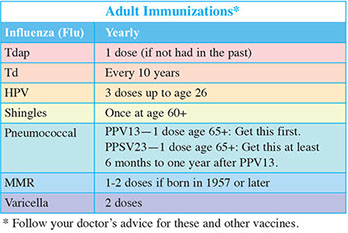
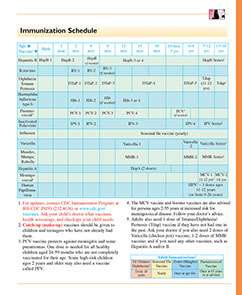
  • Immunization Schedule

    Medical Exams

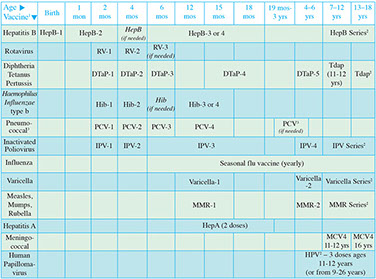
    1.  For updates, contact CDC Immunization Program at 800.CDC.INFO (232.4636) orwww.cdc.gov/vaccines. Ask your child’s doctor what vaccines, health screenings, and checkups your child needs.

    2.  Catch-up vaccines should be given to children and teenagers who have not already had them.

    3.  PCV vaccine protects against meningitis and some pneumonias. One dose is needed for all healthy children aged 24-59 months who are not completely vaccinated for their age.

    Vaccines for Traveling Abroad

    Before you travel to other countries, find out if you need certain vaccines. Get information from the CDC Travelers’ Information Line. Call 800.CDC.INFO (232.4636) or use thewww.cdc.gov/travelWeb site. Discuss your needs with your doctor.

    Page from the Healthier at Home book by the American Institute for Preventive Medicine. www.HealthyLife.com. All rights reserved.

    © American Institute for Preventive Medicine

  • Exercise Safely In The Heat

    BE FIT

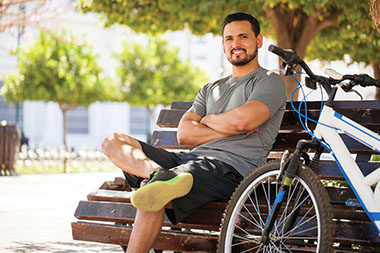
    Man sitting on bench beside his bike.

    Summer seems like an ideal time to exercise. After all, you don’t have to worry about slipping on ice or wearing extra layers to keep warm.

    But summer comes with its own set of safety issues. Heat illness can affect anyone, even people who are in great shape and healthy.

    What is heat illness?

    Heat illness happens when a person’s body gets too hot. This often happens when a person exercises in high temperatures.

    Heat illness can be mild to severe. Sometimes it’s just a sign that you need to cool off and get out of the sun. But other times, it can be dangerous or life-threatening.

    Time to chill out

    Signs of a mild heat illness include heat rash and heat cramps. A heat rash may be red and look like pimples. Heat cramps are muscle cramps or spasms.

    If you notice either of these signs when exercising, seek some shade and cool off. These are not usually serious conditions.

    People who have heart conditions or who follow a low-salt diet should talk to a doctor if they notice muscle cramps or spasms with exercise. If your heat rash doesn’t go away within a couple of days, see your doctor.

    When the heat is an emergency

    Heat exhaustion may cause:

    *  Heavy sweating

    *  Cold or clammy skin

    *  Feeling weak

    *  Weak but fast pulse

    *  Feeling sick

    *  Headache

    *  Fainting

    *  Dizziness

    If you notice these signs in yourself or another person, don’t wait. Seek shade or go indoors. Put cool, wet cloths on the body and head or take a cool bath. Get medical help if it doesn’t get better within an hour or if the person is throwing up.

    Heat stroke is the most severe kind of heat illness.

    It may cause:

    *  Temperature over 103ºF

    *  Skin that is clammy, hot or red, and even dry to the touch.

    *  Fast and strong pulse

    *  Headache or confusion

    *  Dizziness and/or fainting

    *  Feeling sick

    If you suspect heat stroke, get emergency medical care. Call 911 right away. Move the person to a cooler place. Apply cool cloths to their body. Do not give them anything to drink.

    Sources: Centers for Disease Control and Prevention, American Academy of Family Physicians

    © American Institute for Preventive Medicine

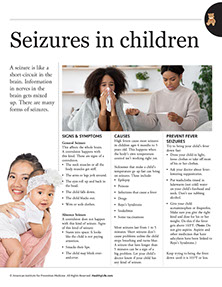
  • Seizures

    Children’s Health

    And How to Keep Your Child From Getting Fever Seizures

    Signs, Symptoms & Causes

    A seizure is like a short-circuit in the brain. Information in nerves in the brain gets mixed up. There are many forms of seizures.

    A general seizure. This affects the whole brain. A convulsion happens with this kind. These are signs of a convulsion.

    *  The neck muscles or all the body muscles get stiff.

    *  The arms or legs jerk around.

    *  The eyes roll up and back in the head.

    *  The child falls down.

    *  The child blacks out.

    *  The child wets or soils his or her clothes.

    An absence seizure. A convulsion does not happen with this kind of seizure. These are signs of this kind of seizure:

    *  The child stares into space. It looks like the child is not paying attention.

    *  The child smacks his or her lips.

    *  The child may blink over-and-over.

    Seizures that come with a high fever.

    In fact, high fevers cause most seizures in children ages 6 months to 5 years old. This happens when the body’s own temperature control isn’t working just right yet.

    Sicknesses that make a child’s temperature go up fast can bring on seizures. Here are some other causes of seizures:

    *  Epilepsy.

    *  Poisons.

    *  Infections that cause a high fever.

    *  Drugs.

    *  Reye’s Syndrome.

    *  Snakebites.

    *  Some vaccinations.

    Most seizures last from 1 to 5 minutes. Short seizures don’t cause problems unless the child stops breathing and turns blue. But a seizure that lasts longer than 5 minutes can be a sign of a big problem. Let your child’s doctor know if your child has any kind of seizure.

    How to Keep Your Child From Getting Fever Seizures

    Keep trying to bring the fever down until it is 101ºF or less. Try to bring your child’s fever down fast:

    *  Dress your child in light, loose clothes or take off most of his or her clothes.

    *  Ask your doctor about fever-lowering suppositories.

    *  Put washcloths rinsed in lukewarm (not cold) water on your child’s forehead and neck. Don’t use rubbing alcohol.

    *  Give your child acetaminophen or ibuprofen. Make sure you give the right kind and dose for his or her weight. Do this if the fever gets above 103°F. (Note: Do not give aspirin. Aspirin and other medicines that have salicylates have been linked to Reye’s Syndrome.)

    Questions to Ask

    Self-Care

    Don’t panic! A fever seizure will stop by itself in a few minutes. The two things you can do are:

    *  Try to keep your child from getting hurt during the seizure.

    *  Lower his or her fever.

    Follow these tips during the seizure:

    *  Protect your child from falling and hitting his or her head. (Watch out for tables and sharp things.)

    *  Make sure your child can breathe:

    – Roll the child on his or her side so spit can drain from the mouth.

    – Gently pull on the jaw and bend the neck back. (This opens up the throat.)

    *  Don’t put anything in your child’s mouth. Children hardly ever bite their tongues during a fever seizure.

    *  Don’t give your child any medicine, food, or drink by mouth.

    Follow these tips after the seizure:

    *  If the seizure was from a fever, start lowering the fever. Sponge your child’s body with lukewarm water. Don’t use rubbing alcohol. Don’t put the child in a bathtub. Don’t use an ice pack. It drops the temperature too fast.

    *  Your child will probably be sleepy after the seizure. He or she may not remember anything. This is O.K.

    *  Dress the child in light, loose clothes. Put him or her to sleep in a cool room.

    *  Let your child’s doctor know about the seizure.

    Children's Self-Care book by the American Institute for Preventive Medicine. www.HealthyLife.com. All rights reserved.

    © American Institute for Preventive Medicine

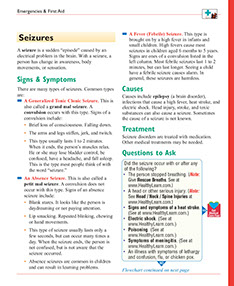
  • Seizures 2

    First Aid

    A seizure is a sudden “episode” caused by an electrical problem in the brain. With a seizure, a person has change in awareness, body movements, or sensation.

    Signs & Symptoms

    There are many types of seizures. Common types are:

    A Generalized Tonic Clonic Seizure

    This is also called a grand mal seizure. A convulsion occurs with this type. Signs of a convulsion include:

    *  Brief loss of consciousness. Falling down.

    *  The arms and legs stiffen, jerk, and twitch.

    *  This type usually lasts 1 to 2 minutes. When it ends, the person’s muscles relax. He or she may lose bladder control, be confused, have a headache, and fall asleep. This is the type most people think of with the word “seizure.”

    An Absence Seizure

    This is also called a petit mal seizure. A convulsion does not occur with this type. Signs of an absence seizure include:

    *  Blank stares. It looks like the person is daydreaming or not paying attention.

    *  Lip smacking. Repeated blinking, chewing or hand movements.

    *  This type of seizure usually lasts only a few seconds, but can occur many times a day. When the seizure ends, the person is not confused, but is not aware that the seizure occurred.

    *  Absence seizures are common in children and can result in learning problems.

    A Fever (Febrile) Seizure

    This type is brought on by a high fever in infants and small children. High fevers cause most seizures in children aged 6 months to 5 years. Signs are ones of a convulsion listed in the left column. Most febrile seizures last 1 to 2 minutes, but can last longer. Seeing a child have a febrile seizure causes alarm. In general, these seizures are harmless.

    Causes

    Causes include epilepsy (a brain disorder), infections that cause a high fever, heat stroke, and electric shock. Head injury, stroke, and toxic substances can also cause a seizure. Sometimes the cause of a seizure is not known.

    Treatment

    Seizure disorders are treated with medication. Other medical treatments may be needed.

    Questions to Ask

    Self-Care / First Aid

    For Seizures with Convulsions

    *  Stay calm. Protect the person from injury. Cushion the head with a pillow, a coat, etc. Move sharp objects out of the way.

    *  Loosen tight clothes, especially around the neck.

    *  If the person vomits, clear the mouth of it.

    *  Do not hold the person down or throw water on the face. Don’t put anything into the mouth. (A spoon in the mouth does not prevent tongue biting.)

    *  If the seizure in a child is due to a fever, start bringing the child’s temperature down as soon as the seizure stops. Sponge the child’s body with room temperature water. Do not put the child in a bathtub. Do not use ice. Do not use rubbing alcohol.

    *  Report how long the seizure lasts and the symptoms that occur.

    *  After the seizure, lay the person on his or her side. Let the person sleep. Check for a medical alert tag. Respond as needed. Do not embarrass the person.

    *  Call 9-1-1 (except for a febrile seizure or a seizure in a person you know has a seizure disorder).

    Febrile Seizure Prevention

    For a child who has had a febrile seizure in the past, give acetaminophen or ibuprofen at the first sign of a fever. Give the right kind and dose for his or her weight. Insert suppositories that lower fevers, instead, if prescribed by the child’s doctor. {Note: Don’t give aspirin to anyone less than 19 years old.}

    *  Dress the child in light, loose clothes.

    *  Apply washcloths rinsed in lukewarm (not cold) water to your child’s forehead and neck. Sponge the child’s arms, legs, and trunk with lukewarm water. Don’t use cold water, ice, or rubbing alcohol.

    *  Keep trying to bring the fever down until it is 101ºF or less.

    Healthier at Home book by the American Institute for Preventive Medicine. www.HealthyLife.com. All rights reserved.

    © American Institute for Preventive Medicine