Tag: tobacco

  • Buddy System

    Healthylife® QuitWell™

    Part 3

    Image of 3 friends talking over tea and coffee.

    Who could support you in your effort to quit? Having someone to hold you accountable-and who you want to share success with-can be a powerful part of your quit plan. Support from others can help:

    *  Motivate you and lift you up when you stumble.

    *  Hold you accountable.

    *  Give you new ideas and inspiration-especially if they have gone through quitting themselves.

    *  Make activities more fun, like taking a walk together instead of a smoke break.

    Start With One Person

    1. Choose a buddy-someone you will talk to daily. This person should be someone you trust and who you can be completely honest with.

    2. Let them know what you are trying to do.

    3. Ask them if they would be willing to support you. If they are, thank them!

    4. Let them know how to help you. This may change over time.

    5. Share your feelings and actions truthfully with your buddy. If you don’t, you are losing out on the benefits of an accountability buddy.

    6. Thank this person often. Let them know the impact they are having on your lifestyle change.

    Involving Others

    Even when someone wants to help you, they may not know how. You have probably experienced this already, like when someone gives you cliché advice or says “just one won’t hurt.”

    Be specific when you tell others how to help you. These are suggestions for those people who want to help you. Read over the list and choose the ones you think will be most helpful. Write these down and show your list to the people who want to help.

    © American Institute for Preventive Medicine

  • Identify Your Strengths

    Healthylife® QuitWell™

    Part 2

    Image of smiling women.

    *  What are you really good at?

    *  What have you overcome in your life?

    *  How do you help others?

    *  How do you take care of yourself?

    Trust that the things that make you strong will continue to be there during your quit attempt. Repeat after me: “I am strong.” Say it again. And again. Say it out loud to add some ‘oomph’ to your statement. Continue to repeat as needed!

    © American Institute for Preventive Medicine

  • Other Aids For Quitting

    Healthylife® QuitWell™

    Part 3

    Image of the word Stop spelled out in tobacco.

    Pharmaceutical:

    *  Buproprion (brand names Zyban and Wellbutrin) is a prescription, non-nicotine pill. This medication is used to treat depression and help with quitting smoking. To use, begin taking 1 to 2 weeks before your quit date. It must build up in your system before you quit. It can be taken for 7 to 12 weeks. It may cause dry mouth and insomnia.

    *  Varenicline (brand name Chantix) is another prescription, non-nicotine pill. It works by cutting the pleasure of smoking and reducing withdrawal symptoms. To use, begin taking one week before your quit date. It must build up in your system before you quit. It is taken once or twice daily for 12 weeks. If quit, it can be taken for another 12 weeks. It can cause nausea, headache, vomiting, gas, insomnia, abnormal dreams, and a feeling that food tastes different.

    Non-Pharmaceutical:

    *  Counseling or coaching can help you identify triggers and challenges, give you support and encouragement, and help you set personal goals. Coaching can double your chances of success.

    *  Text or smartphone apps offer goal setting, reminders, and encouragement. Some even send text messages to keep you motivated.

    *  Hypnosis helps you learn to relax and identify triggers. It also helps your subconscious mind look at your habit differently.

    *  Acupuncture uses special thin needles placed in specific spots to help you relax and fight cravings for nicotine.

    Hypnosis and acupuncture are not proven ways to quit tobacco/nicotine, but they have helped many people. Be a smart consumer when choosing one of these therapies. Continue to work on behavior change and stress management. You will still need these skills to prevent relapse.

    © American Institute for Preventive Medicine

  • Spend Time With Animals

    Healthylife® QuitWell™

    Part 4

    Man and his dog.

    Spend time with a pet. Volunteer at a shelter. Spend time with a friend or family member’s pet. Go to a pet store, or look into adopting a rescue animal.

    Spending time with a pet can:

    *  Decrease production of cortisol, a stress hormone that can put you on edge and make you ill over time.

    *  Increase serotonin, which helps you feel relaxed and happy.

    *  Help you feel secure. Pets, especially dogs, can love unconditionally and may sense when you need extra support. Some pets are trained to help you manage certain emotions, like anxiety.

    © American Institute for Preventive Medicine

  • Buy Smaller Amounts

    Healthylife® QuitWell™

    Part 3

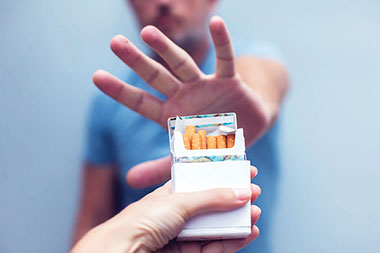
    A hand offering cigarettes and another hand rejected them.

    If you smoke, buy cigarettes one pack at a time, not by the carton. If you dip, buy one can at a time. If you vape, smoke cigars, or use another form of tobacco/nicotine, buy the smallest quantity available. If you vape, buy a lower concentration of nicotine or fewer cartridges. This makes your habit less convenient (more trips to the store) and it will be helpful to have less at home when you are ready to be completely done.

    Note for e-cigarettes: Start by stepping down to the next lowest concentration. If you’re using 18 mg cartridges, switch to 12 mg, and so on, until you’re down to 0 mg.

    While you’re cutting back:

    *  Focus on keeping your inhaling as consistent as possible. It might be tempting to inhale more forcefully to get a bigger nicotine hit.

    *  Avoid taking more hits than you did on higher doses of nicotine.

    © American Institute for Preventive Medicine

  • Keep What Is Truly Calming

    Healthylife® QuitWell™

    Part 4

    Image of smiling man.

    Removing tobacco/nicotine doesn’t mean your entire strategy for managing stress has to go away. Many things you are doing ARE healthy and genuinely calming to your body and mind.

    Reasons why you may feel calmer after taking a smoke break at work:

    *  Getting away from your work area

    *  Getting away from the people that you work with (that may be contributing to your stress)

    *  Fresh air/being outside

    *  Movement-walking from place to place or pacing around outside

    *  Deep breathing as you inhale

    *  Looking off into the distance, versus looking at something right in front of you or at a screen

    *  Talking to co-workers outside of the office (maybe even venting a bit!)

    *  More open space, especially if you work in a crowded, noisy environment

    Why else do you feel taking a smoke break is calming for you?

    Modified smoke break strategy ideas:

    *  Plan to step away from your work for 5-10 minutes.

    *  Walk to a drinking fountain or bathroom far away from your desk to get in extra movement.

    How can you practice taking a tobacco-free break today or tomorrow?

    © American Institute for Preventive Medicine

  • Review & Prepare

    Healthylife® QuitWell™

    Part 2

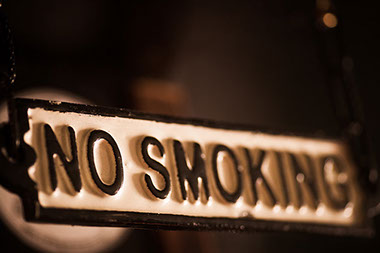
    Image of no smoking sign.

    In this section, you were guided to understand the barriers you face with quitting. By carefully reading, thinking about each part, and answering questions along the way, you are getting yourself ready for success.

    *  How have you prepared yourself to quit? Write the steps you have taken, mentally and physically, to get to this point.

    *  Look back at your list of barriers. Do any of them feel more manageable now?

    *  Which of your strengths do you think will come in handy for quitting? Be confident in what you know you are good at and what makes you a strong person.

    © American Institute for Preventive Medicine

  • Take Small Steps To Get Started

    Healthylife® QuitWell™

    Part 3

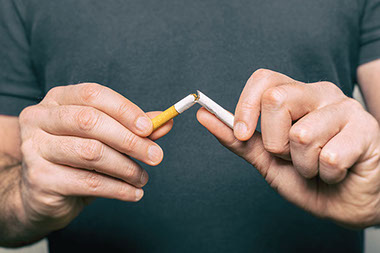
    Close up of hands, breaking a cigarette in half.

    Taking small steps can help build confidence. Seeing the “wins” right away can show you how strong and capable of change you are. The activities in this section may not feel very exciting, but they are small on purpose. Once you get going, taking bigger steps will feel easier and you will be more successful with them.

    These activities can also help you learn more about what causes your urges and what you do without thinking. These activities can start weakening your old habits and strengthening new, healthy habits.

    © American Institute for Preventive Medicine

  • Carry & Store In A New Place

    Healthylife® QuitWell™

    Part 3

    Image of man with thumbs up.

    Change where you keep your tobacco/nicotine products. For example, instead of keeping them in your desk or in a locker, keep them in your car. Better yet, put that pack or can in the trunk of your car. When reaching in the usual place without thinking, coming up empty will be a reminder of what you are working on. If you have always kept a pack in your right pocket, switch to your left.

    This pause allows you to be more mindful and deliberate, instead of acting without thinking. This is another way to put a speedbump in your usual way of doing things every day.

    © American Institute for Preventive Medicine

  • Know Your Triggers

    Healthylife® QuitWell™

    Part 5

    Group of teens.

    Relapse triggers can be placed into one of four groups:

    1. Emotional relapse triggers

    2. Interpersonal relapse triggers

    3. Internal relapse triggers

    4. Environmental relapse triggers

    Emotional Relapse Triggers

    These are events in which either uncomfortable feelings, such as boredom, sadness and worry or positive feelings, such as joy, happiness, or being relaxed increase the chances you might use tobacco/nicotine. Which of the following have been triggers for you in the past?

    *  When I am happy and celebrating

    *  When I am relaxed

    *  When I feel tired

    *  When I am bored or have nothing to do

    *  When I am alone and feeling sad

    *  When I am frustrated or angry about something

    *  When I feel unsure and rejected by someone

    *  When I am worried about a loved one

    *  When I am afraid

    *  When I am tense and restless

    *  When I am put under pressure at my job

    Interpersonal Relapse Triggers

    These are events in which you may feel either direct or indirect pressure from other people. Which of the following have been triggers for you in the past?

    *  When other people around me are using tobacco/nicotine

    *  When someone offers me tobacco/nicotine

    *  When I want to show how tough, sophisticated, or liberated I am

    *  When I want to fit in with others who are using tobacco/nicotine

    *  When I want to feel different from other people

    *  When I become angry with someone

    *  When my friend or spouse goes back to using tobacco/nicotine after quitting

    *  When I want to avoid talking to a friend or spouse

    *  When I feel “trapped” in a relationship

    *  When I am upset that I cannot solve a problem with another person

    Internal Relapse Triggers

    These are times when you may have an urge without having a clear-cut reason. Which of the following have been triggers for you in the past?

    *  When I get a strong craving

    *  When I have intense withdrawal signals

    *  When I have a feeling of emptiness

    *  When I want to test my willpower by smoking just one cigarette (or having just one dip, etc.)

    *  When I am curious about the taste of a cigarette, e-cigarette, or chew

    *  When I have a difficult time paying attention

    *  When I think smoking/vaping/chewing is going to make a situation more fun

    *  When I’ve had too much to drink

    *  When I am hungry

    *  When I have trouble falling asleep

    *  When I wake up at night and can’t get back to sleep

    *  When I’m having pain in my body (back pain, headache, cramps, etc.)

    Environmental Relapse Triggers

    Certain times, places, and activities may be linked with your tobacco/nicotine habit. Which of the following have been triggers for you in the past?

    *  When I come across a pack of cigarettes, can of chewing tobacco, or discarded e-cigarette

    *  When I’m in a store where I used to buy tobacco/nicotine

    *  When I take a break from work

    *  When I drink coffee

    *  When I finish a meal

    *  After sex

    *  When I first get up in the morning

    *  When having fun/doing activities that were triggers in the past (e.g. playing cards, during a concert intermission, fishing, hunting, golfing)

    *  When driving

    *  When partying

    *  When I’m on vacation

    *  When I put off an unpleasant task
    © American Institute for Preventive Medicine